Politics

Read about the latest political news, views and analysis

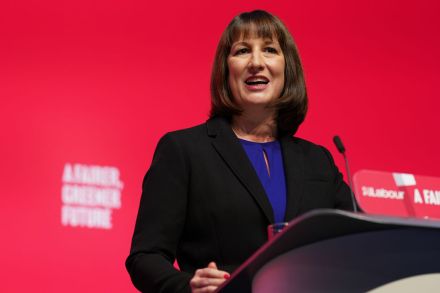
Rachel Reeves takes aim at ‘Tory trickle-down economics’

Rachel Reeves's speech to Labour conference was very warmly received – though her thunder was rather stolen by the rapturous reception for Ed Miliband shortly before. The shadow chancellor made her refrain 'it is time for a government that is on your side, and that government is a Labour government'.  Like her other frontbench colleagues, she took care to be upbeat about the future, rather than merely focusing on how dreadful things are at the moment. She talked about the potential that British workers had, saying: 'The world is changing fast but the British capacity for enterprise for innovation and for hard work remains undimmed.' She claimed that a Labour government would oversee 'cranes going up, shovels in the ground, the sounds and sights of the future arriving'.
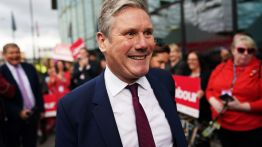
Labour try to show they are serious about governing

The mood at Labour conference so far has been pretty upbeat. Last night on the fringes, frontbenchers were visibly happier and more relaxed than they’ve been for years, feeling emboldened to criticise left-wing groups such as Momentum (Wes Streeting told one meeting they’d be better named ‘Inertia’). The broadcast screens around the centre underline why the party is feeling confident: the fall of the pound is just, in Labour’s view, the latest sign that the wheels have come off the Conservative party. The fall of the pound is just, in Labour’s view, the latest sign that the wheels have come off the Conservative party That’s not to say that everyone is delighted with the way the leadership is approaching the big issues of the autumn.

Life among the Russian refuseniks

Yerevan, Armenia It was getting dark outside Yerevan Airport when I arrived, but there were still a dozen flights from Russia yet to land. Groups of young men in their twenties and thirties were milling around the terminal building, stacking suitcases onto trolleys, changing money and working out what to do next. Armenia is one of the few countries they can still fly to since much of the western world closed its skies to Russian planes; it is almost alone in not requiring them to have visas. ‘I’m just here for a holiday,’ one weary traveller carrying four heavy bags insists, ‘everything is fine in Moscow.’ Others are more up front about their reasons for leaving.

How worrying is the falling pound?

19 min listen

Following Chancellor, Kwasi Kwarteng's 'mini' budget, the pound has fallen to a record low against the dollar, fueling speculation that the Bank of England will hike interest rates. How worrying are these figures?'I think the pound falling is a bit of a distraction from the real problem' - James ForsythKaty Balls speaks to Kate Andrews and James Forsyth.Produced by Natasha Feroze.

The Bank of England has no good options

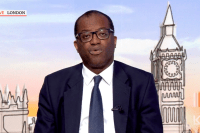
How will and how should the Bank of England, and the Treasury, react to this morning's continued fall in the value of the pound? I've been talking to former Bank of England executives and ex-Treasury officials, who make clear that the stakes are incredibly high and that reassuring markets will not be easy. This further devaluation in the currency is a serious problem for Chancellor Kwasi Kwarteng after his maxi ‘mini-Budget’ on Friday because it means the price of imports will continue to rise, stoking already-high inflation. And it raises the spectre that the government will struggle to borrow what it needs at acceptable interest rates, because of the falling value (in dollar terms) of sterling-denominated assets.

Will the Bank of England now move to steady the pound?

After a weekend where the markets digested the Kwasi Kwarteng plan for growth, the pound hit $1.03 in early trading in Asia – the lowest rate since the dollar was invented in 1792. The fall was shortlived – it later rebounded to $1.07 – but the fact that it touched such a low at all has set off speculation that the Bank of England will stage an emergency intervention putting up interest rates by as much as one percentage point. ‘We’ve entered the part of the currency crisis where psychology takes over. That could mean the markets continue to test the Bank and the pound falls further, suggesting that the Bank has to have another go to assert its authority,’ said Paul Dales, Chief UK Economist at Capital Economics.

Lisa Nandy takes aim at BT

The wine was flowing last night at Labour conference as delegates toasted the fall of Boris Johnson. And before Mr S staggered off to Dawn Butler's Jamaica night – where 'Beijing Barry' Gardiner enlivened the crowd with his dancing on the DJ decks – it was time to go behind enemy lines at the New Statesman annual party. This year's star attraction at the Museum of Liverpool was the shadow levelling up secretary Lisa Nandy, a woman who has never been shy at making her feelings known.

Can Starmer convince voters to back his vision of Labour?

Here in Liverpool, at the start of Labour conference, politics feels more familiar than it has for many years, and also quite confusing and not wholly predictable. And the cause, mostly, is Friday's budget, which very deliberately delivered the bulk of additional income from tax cuts to those on highest earnings. This feels in many ways like a return to the kind of class based politics – what used to be called class war – we haven't seen since the Thatcher years of the 1980s. After all, ever since the election of Blair's New Labour in 1997 we are all supposed to be middle class.

Andy Burnham: ‘Where is the fight?’

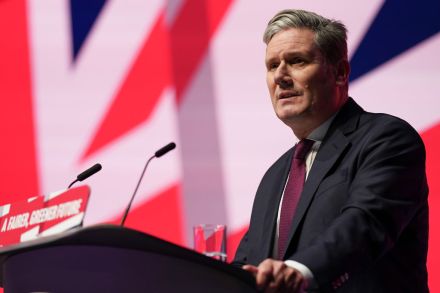
Keir Starmer is having a pretty good Labour conference so far. His decision to kick off the annual meet with a rendition of 'God Save the King' went off without hitch. There are few tricky motions or crunch votes heading to the conference floor. A new ComRes poll says the party is on course to win a majority of 56 in the next election. Yet there is still an internal row brewing: how should Labour fight the Tories? Labour's prince across the water in Greater Manchester Andy Burnham has been touring the studios and fringe events to share his thoughts on exactly this.

Can Starmer pitch Labour as a government-in-waiting?

Party conferences offer oppositions space to set out their stall and get far more attention than any other time in the political year. But this year's Labour conference will see the party being much more reactive than it might have hoped, given this is supposed to be the point where Keir Starmer sets out his stall for Labour as a government in waiting.  The government's 'Plan for Growth' was unveiled on the very eve of this meeting in Liverpool, and it is so big that naturally the party's spokespeople are going to spend a fair amount of their time in interviews, speeches and fringe debates responding to it. This conference is supposed to see the party shift from talking to itself to the country.

How will Truss tackle immigration?

Despite its leading lights having spent more than a decade spent promising us they will bring down immigration we can now say for sure that Conservative party is not going to do that. Liz Truss and Kwasi Kwarteng are preparing to expand the number of economic sectors to be declared as suffering from labour shortages and thus permitted to bring in both skilled and unskilled workers from abroad. Not only this, but they are also pushing for a trade deal with India that will involve 'open access' immigration arrangements. In his watershed financial statement in the Commons on Friday, Kwarteng included immigration in a list of areas where barriers to economic expansion were going to be removed by new policies to be announced in the coming weeks.

Sunday shows round-up: Kwarteng defends ‘mini-Budget for the rich’

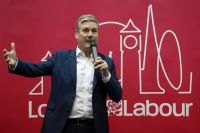
Keir Starmer – Labour would reintroduce 45p tax rate The battle lines for the next election are being drawn. Friday’s ‘mini-Budget’ turned out to be a major event in its own right, with a raft of measures aimed unashamedly at whirring the UK’s economy back to life. The statement has also put a new spring in the step of Labour’s leader Sir Keir Starmer, who was interviewed this morning by Laura Kuenssberg as his party conference gets underway in Liverpool. Kuenssberg asked where Labour stood on the changes to income tax, which most notably saw the scrapping of the 45p top rate: https://twitter.com/BBCPolitics/status/1573959846751338497?

Starmer’s monarchist crib sheet

Labour are very keen these days to be seen as the natural party of government. And it’s in that spirit that Sir Keir and his aides have hit upon a brilliant wheeze: singing the national anthem on the first morning of their annual Party conference. It’s intended to mark the death of Her Majesty and show that the Starmer Army is A Serious Party once more.Unfortunately for the onetime republican, not all his fellow socialist are happy to play at being merry monarchists. Delegates arriving in the Liverpool conference hall are greeted by leaflets from the Labour for a Republic campaign, who are none too happy at pledging fealty to Charles III. And it seems that Labour HQ are worried that not all attendees share their leader’s patriotic fervour.

Starmer sets himself apart from Truss

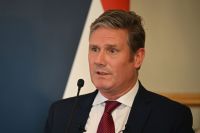
One of the reasons members of Liz Truss's team remain upbeat despite the onslaught of criticism towards government's tax-cutting budget is that they think it pushes Labour into uncomfortable territory. Will Keir Starmer respond to a Tory programme of mass tax cuts with tax rises? This morning, he offered a partial answer. Starmer repeatedly accused Truss's government of having the wrong priorities and helping the rich over the poorest in society Appearing on the BBC's Sunday with Laura Kuenssberg from Liverpool for Labour party conference, Starmer was pressed on what he would keep and what he would reverse if Labour take power at the next election.

Could Balochistan secede from Pakistan?

The rain and the cold in Quetta, the capital of the Pakistani province of Balochistan, did not deter them. Neither did the floods that ravaged their homes. The families of Balochistan’s missing had been protesting for days outside the provincial government’s headquarters. On August 25, one of the protestors, Seema Baloch, the sister of Shabbir Baloch, a student leader who had been missing for weeks, fell unconscious and had to be taken to a nearby hospital. The others simply kept protesting. Government officials gently asked them to leave, but when the protesters asked about the missing—all allegedly abducted by Pakistani security forces—the officials professed ignorance or, worse, helplessness.

Mick Lynch savages Keir Starmer

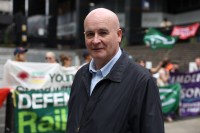
It's day one of Labour conference and already there's demands for Sir Keir Starmer to quit. With his party well ahead in the polls, you might have thought that would buy the Labour leader some respite. Not a bit of it, for over at The World Transformed festival – the breakaway Corbynite tribute act – Mick Lynch, the boss of the RMT union last night took aim at Starmer's moderate leadership with the oratorical equivalent of a double-barreled shotgun. In a fiery 13-minute speech, the 'people's Mick' told his audience at "The Working Class Strike Back" rally: The working class is back. We need to be in the community with the people who are struggling. We have to tell the Labour party to put your shoulder to our wheel. If you do that, we'll support you.

The Tories are to blame for Scotland’s tax mess

Lost amid much of the commentary on Kwasi Kwarteng’s income tax and stamp duty cuts is that they will not apply to Scotland. Income tax is largely devolved to Holyrood, as is stamp duty, or land and buildings transaction tax as it is now known north of the border. The Barnett formula, the fiscal mechanism by which the Scottish government is funded, means the devolved administration will be given an additional £630 million as a result of the Chancellor’s new measures. However, Nicola Sturgeon is under no obligation to use it for similar tax cuts in Scotland. She can spend it elsewhere or not spend it at all. The SNP leader was quick to deprecate Kwarteng’s tax cuts, saying the 'super wealthy’ would be ‘laughing all the way to the actual bank'.

How will Sturgeon respond to Kwarteng’s budget?

Kwarteng’s £45 billion tax cuts will have given Nicola Sturgeon a headache. She has power over income tax and has indicated that she won’t replicate his cuts (especially for the best paid). Which means that Scots could end up paying hundreds of pounds more in income tax next year. Already, there is talk about Scottish tax exiles heading to London (with a particular focus on Edinburgh’s financial service industry.) The Chartered Institute of Taxation has run the figures. If the 1p cut to the basic rate isn’t passed on in Scotland, anyone earning more than £14,732 will pay more tax than those in the rest of the UK. Those earning £30,000 will pay nearly £200 more each year.