Politics

Read about the latest political news, views and analysis

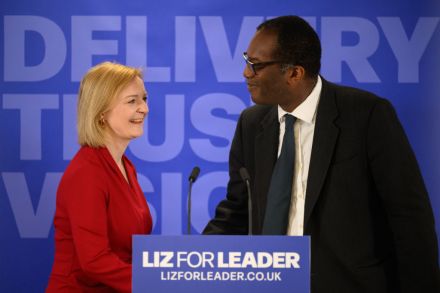
NI rise scrapped: how much further will Kwasi go?

16 min listen

With hours to go till the Chancellor's fiscal statement, we've heard today that the National Insurance hike will be scrapped, as promised during Liz Truss's leadership campaign. This comes as the Bank of England increases the base rate to 2.25 per cent. How much further will Kwasi Kwarteng go, and just how willing is the Truss government to be unpopular? Katy Balls talks to James Forsyth and Isabel Hardman.Produced by Cindy Yu.
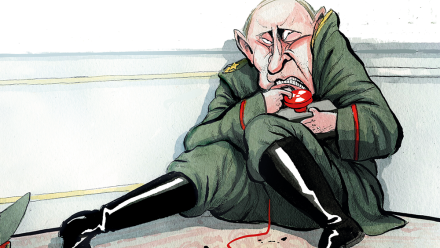
The truth about Putin’s nuclear threats

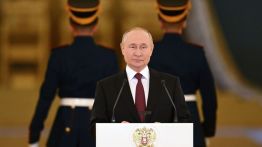
Putin has been preparing for this war for a long time. I first began writing about Putin and Nikolai Patrushev’s [head of the Russian security council] doctrine in 2009. It was based on the fact that these two, these scoundrels, thought that they had come up with a way to beat the West using blackmail – audacious, cynical blackmail – by threatening the use of tactical nuclear weapons. This was despite being inferior to the West in every way: economically, in terms or civility or conventional warfare. The scenario they envisaged for war, not only with Ukraine but with the whole of the West, with Nato, was spoken about and analysed repeatedly at different levels.

Europe should welcome fleeing Russians

In the wake of Vladimir Putin’s surprise announcement of partial mobilisation on Wednesday, thousands of young Russian men decided that the time had come to flee. Google searches for ways to leave Russia (as well as for ‘how to break your own arm’, another way out of military service) spiked. Flights sold out, and long lines of cars formed at usually-sleepy border crossings into Georgia, Mongolia and Kazakhstan – as well as the more conventional transit point to Finland.   But for most would-be refugees, escape from Putin’s Russia and possible involuntary service in Ukraine remains an impossible dream.

Therese Coffey’s NHS plan won’t avert the winter crisis

How much of a difference will the 'Plan for Patients' unveiled by Therese Coffey really make to the NHS crisis? The health service is already operating in winter mode (which generally means not really working and under extreme pressure) and the temperatures have scarcely dropped. The Health Secretary's opening big announcement today was what she described as 'the first step' in the government's 'journey' of addressing the challenges facing the health service. It followed her priories of ABCDD – ambulances, backlog, care, doctors and dentists – with new measures on each.

‘The strategy is do everything now’: Truss’s big mini-Budget

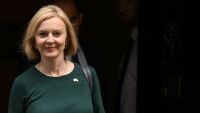
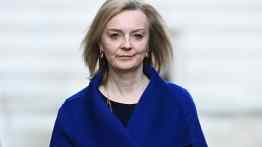
Liz Truss is in a race against time. It's not just the prospect of an election in two years. It's the political problems – from party management to events outside of one's control – that quickly clog up a prime minister's in-tray. It's why for all the efforts to play down Friday's fiscal event as a mini-Budget, it is likely to be anything but small. Truss and her Chancellor Kwasi Kwarteng plan to push through as much as possible while their stock is highest. The official budget – complete with a long-awaited OBR forecast – will come later this winter, but, inside government, Friday is viewed as the bigger event. Given it is all about tax cuts and growth, Friday’s fiscal event may be the more significant in terms of government actions.

Why the interest rate rise might frustrate Liz Truss

Rising interest rates is a key pillar of Trussonomics. Liz Truss herself has always stopped short of saying this explicitly, pointing fingers instead at the Bank of England for its failure to curb spiralling inflation. But the economists advising her have made clear, in no uncertain terms, that they think interest rates have been too low for too long.  Right from the start of her leadership campaign, Truss was far more vocal about her criticisms of the Bank; a point made even clearer once she entered No. 10 and her Chancellor Kwasi Kwarteng set up bi-weekly meetings with the Bank’s governor Andrew Bailey. With this new pressure being applied on the Bank, many thought it would make history today by implementing its first 0.

Northern Ireland’s future isn’t Catholic or Protestant

For the first time in Northern Ireland's history, Catholics now outnumber Protestants. Census data on national identity and religious from 2021, which was published today, shows that Catholics born into or practising their religion make up 45.7 per cent of the population, with Protestants at 43.5 per cent. In the bleak zero-sum world of Irish confessional demographics, that translates into a headcount victory for those champing at the bit to end British rule there. There’s no denying the figures are momentous. They will be gleefully weaponised by those who have no interest in a truly shared or reconciled future. But the headline numbers don't reveal everything about the state of play in Northern Ireland.

Is the EU’s crackdown on Hungary a bluff?

Brussels appeared to be finally getting serious with a rogue member state this week. A couple of days ago it announced that it would use its power – which it obtained last year – to withhold €7.5 billion (approximately £6.4 billion) from Hungary unless Viktor Orbán’s Fidesz government cleaned up its act on corruption. The EU, it is fair to say, has a point. Like a number of other eastern European countries, Hungary is not known for the trustworthiness of its officials, or for its scrupulous avoidance of nepotism and favouritism in awarding state contracts. Nevertheless, as is often the case with EU affairs, outward appearances can be misleading. The reality is a good deal murkier. But it is also rather more interesting.

Putin’s conscripts won’t fix the Russian army’s big flaw

Vladimir Putin’s decision to call up reservists is a sign of Russia’s desperation. It is also unlikely to do anything to address the real problem facing the country’s military: the woeful way in which its troops are organised. ‘No plan of operations,’ wrote Moltke the Elder in 1871, ‘extends with any certainty beyond the first encounter with the main enemy forces.’ The Russian military struggled from the outset in Ukraine, but particular structural issues within the army itself have exacerbated their woes. Sending more troops to Ukraine risks simply plugging gaps left by poor military structuring.

In search of Trussonomics

When Liz Truss entered the leadership race there was no such thing as ‘Trussonomics’. She began her campaign with no real expectation of winning and without any serious guiding philosophy. Rishi Sunak did her a great service by portraying her throughout the leadership campaign as a crazed tax-cutter, a disciple of Ronald Reagan. But in truth, her economic policy was nowhere near as coherent as Sunak made out. Truss just about scraped through the soundbite war of the debates, but without any real pro-growth, tax-cutting agenda. All she pledged to do during her campaign was to freeze forthcoming corporation tax rises and shave 1 per cent off National Insurance. This she did mainly because the 2019 Tory manifesto promised not to raise tax.

Wes Streeting: we need the private sector to help reform the NHS

When Labour MPs gossip about who could be their next leader, Wes Streeting’s name invariably comes up. Like Angela Rayner, the party’s deputy leader, Labour’s shadow health secretary spends half his time insisting he’s not running for the top job. Also like Rayner, he’s never actually stood for it – yet. But there have been plenty of moments in the past year when some of his comrades have wished he was the leader of the opposition rather than Keir Starmer. Streeting became suspiciously more visible as the ‘Beergate’ investigation into whether Starmer and Rayner breached Covid restrictions reached its climax earlier this year.

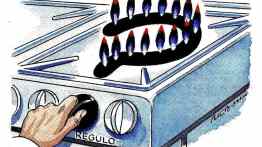
The Energy Price Guarantee may cost much less than is feared

Critics of ‘Trussonomics’ – and there are many – have been quick to claim that the new energy price plan puts its economic credibility at risk. Indeed, early estimates suggested that the ‘Energy Price Guarantee’ could cost the taxpayer £150 billion or more over two years, making it the most expensive economic policy in history. More than the furlough scheme, more than even the bank bailouts. Fortunately, the bill looks like it will be a lot smaller and sceptics are set to be proved wrong. The Prime Minister proposes to cap the unit price of energy for households for two years, starting next month, with the government compensating suppliers for any additional costs.

Liz Truss’s first big test

Liz Truss and Kwasi Kwarteng are determined to show that Britain’s economy is under new management. They want to indicate through their decisions – such as cancelling the corporation tax rise and reversing the National Insurance rise – that they are breaking away from the fiscal approach of recent years. More broadly, they want to emphasise that growth is their priority. In contrast to Boris Johnson’s attempts at people-pleasing, Truss is happy to declare she is prepared to be unpopular if that is what it takes to get the economy moving. She is dismissive of arguments about the distributional impact of tax cuts.

Is this really the moment to scrap bankers’ bonuses?

Chancellor Kwasi Kwarteng – keen to sharpen the City’s competitive edge, we’re told – wants to remove the legislative cap, imported from Brussels in 2014, that limits bankers’ bonuses to 100 per cent of their base salary, or up to 200 per cent with shareholder approval. That raises interesting questions. Was the cap a good idea in the first place? If not, why wasn’t it binned as soon as we left the EU? Is now the ideal moment to do so? And are bankers still a breed of greedy bastards? The answer to the first question is certainly not. This column called the cap a ‘boneheaded’ measure that would merely provoke wily moneymen to find ways of gaming an unwelcome restraint on their wealth.

Labour has a problem – but it’s not Keir Starmer

I see that Green campaigning groups are angry that the Conservative party has received donations from the aviation industry, because they are not in favour of aeroplanes. Or, at least, these campaigners are not in favour of aeroplanes until they need to use one to get somewhere. A holiday at some eco lodge in Indonesia, perhaps, where they get to gurn at an orangutan and chide the locals about logging. The protestors, then, simultaneously want the aviation industry not to exist but still to avail themselves of its services: this is another marvellous example of the left’s flight from reality. It is all a little like the various institutions which have decided to stop their sponsorship agreements with petroleum and gas companies.

The painful road to lower inflation

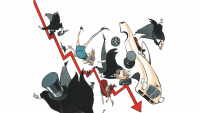
In the end, it could have been worse. The Federal Reserve might have followed Sweden’s lead, with a whole one point rise in interest rates, or it could have even decided to short-circuit the whole process and go straight for a 1.5 per cent increase. Instead, it opted for the safer course, imposing a 0.75 per cent increase in rates much as the market expected. Even so, it made one thing absolutely clear. It is not going to let up in its battle to bring inflation back under control – and the rest of the world will have no option but to follow its lead. The markets were primed for another rise in rates from the Fed chairman Jay Powell today. That was precisely what he delivered. American interest rates will go up to 3.

Will Truss’s plans to spend big work?

Big spending announcements tend to come alongside big press conferences. During the pandemic years, furlough announcements, extensions and business support were delivered in front of a podium, with rough figures usually attached to each policy. It was the same for the energy crisis, at the start. But as the costs of the support schemes rose, we started to lose transparency. The £9 billion announcement in February came with a headline figure and a rough breakdown of where the money would come from. The £15 billion announcement in May came with a headline figure, but much of the funding stream was glossed over, assumed to be borrowed.