Politics

Read about the latest political news, views and analysis

Politicians haven’t been honest about immigration to Britain

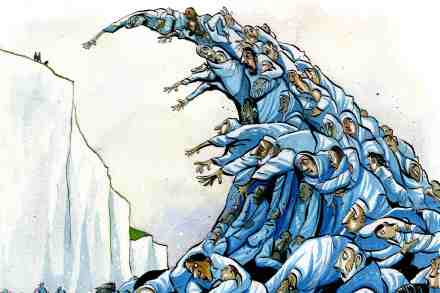
What’s the most important story in Britain over the last 25 years? The financial crisis? Brexit? These events both changed our country dramatically. But neither has had such a big impact on the make-up of Britain than immigration. In 1991, Britain’s foreign-born residents made up 6.7 per cent of the population. In 2021, one in six people (16.8 per cent) living in England and Wales were born outside the UK, according to Census data released yesterday by the Office for National Statistics. The pace of change is both staggering and accelerating. Some four in ten of that foreign-born population arrived over the last decade. To put this into context, from 1981 to 1990, total net migration of non-UK citizens totalled 445,000.
How to balance immigration and jobs

Immigration is now at the top of the political agenda in a way that it hasn’t been since the vote to leave the European Union in 2016. Two factors have propelled it up the list, one very real (the small boats arriving across the Channel) and the other theoretical (economic modelling). The market reaction to Kwasi Kwarteng’s mini-Budget made the Office for Budget Responsibility’s next forecast all the more important. In an attempt to increase economic growth, Liz Truss wanted to formalise a more liberal immigration policy. She wanted to show the OBR that her policies would produce decent growth, but her tax cuts would not be enough to do this. So she thought more immigration would help to increase GDP figures, as it had in the Labour years.

Why is Rishi now going to Cop?

13 min listen

Rishi Sunak has said that he will now attend the Cop 27 summit in Sharm el-Sheikh, which begins on Sunday. What's behind the U-turn, and should we expect more policy reversals from the new PM?  Katy Balls speaks to Fraser Nelson and James Forsyth. Produced by Oscar Edmondson and Max Jeffery.

Did Chris Bryant mislead parliament?

Labour MP Chris Bryant could not have been clearer: the ugly scenes that unfolded last month in parliament during the vote on fracking amounted to bullying:  ‘I saw members being physically manhandled into another Lobby and being bullied. If we want to stand up against bullying in this house, of our staff, we have to stop bullying in the chamber as well don’t we,’ he told MPs. It was a serious allegation and the House of Commons responded by launching an immediate inquiry. The verdict is not good for Bryant.  You can read the report, which was published this week, in full here. In short, it dismisses Bryant's claims. ‘There is no evidence that anyone was bullied into voting in a particular way,’ the report, says.

PMQs: Starmer’s astonishing Nigel Farage imitation

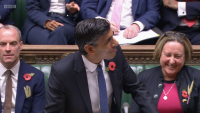
The small boats have landed. PMQs was dominated by the migration issue and the flotillas of dinghies struggling across the channel each day. So far this year over 40,000 doughty oarsmen have braved the seas in inflatable rafts. And they’re not just desperate to flee France with its rude waiters, pretentious language and over-complicated cheese menus. There’s another motive. We were about to hear it in plain language from the despatch box.  Sir Keir started it. At first he merely sought to destabilise Suella Braverman and reinforce the clamour for her removal.  ‘The Home secretary says our asylum system is broken. Who broke it?’ he asked.  Rishi Sunak, usually lightening-quick, paused for a second. ‘Let’s look at the record on immigration,’ he said.

Sunak and Starmer clash over ‘broken’ asylum system

Short questions are always best at PMQs – and Keir Starmer’s first one was very short indeed. He asked Rishi Sunak if the asylum system is broken as the Home Secretary had said – and if so, who broke it? (I wonder if Starmer got the idea from Nick Robinson’s interview with Sunak over the summer, in which he used a very similar device.) Sunak responded by arguing that Labour had voted against measures that would help deal with the problem and accused the party of having no plan to tackle immigration. But the Tories need to show that they are gripping this problem. The situation is now such that changes to the facts on the ground are needed, rather than empty rhetoric. After PMQs came news that No.

Why is Rishi Sunak going to COP?

Whoever Rishi Sunak is taking his advice from, evidently it isn’t me. Last Friday I wrote here supporting his decision to skip COP27 in Egypt, arguing that it is futile trying to persuade the big carbon emitters like China and the US to follow our example and make a legal commitment to eliminating net carbon emissions by 2050 or by any other date – unlike us they simply aren’t going to take a blind leap into a green future without first knowing how they are going to achieve it without ruining their economies.

The police service is rotten to the core

A report published today by His Majesty’s Inspectorate of Constabulary and Fire & Rescue Services for England and Wales should come as no shock to those of us that campaign to end male violence, such as rape and domestic abuse.   The report was commissioned following the case of Sarah Everard who was kidnapped, raped and murdered in 2021 by serving Metropolitan police officer Wayne Couzens. The Everard case could have been written off as a rare and extreme example of police violence and misogyny, which is what the former Met Commissioner Cressida Dick tried to do when she said that there was an occasional ‘bad un’ in the job. But it has long been known that violent and predatory male police officers are not a rarity, far from it.

Rishi Sunak’s first U-turn as PM

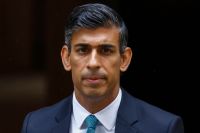
Just over a week into Rishi Sunak's premiership and the new prime minister has performed his first government U-turn. After Downing Street initially said Sunak would not attend the COP27 climate summit as he was too busy preparing for the 17 November Autumn statement, he will now go. Announcing the decision on social media, Sunak said: 'There is no long-term prosperity without action on climate change. There is no energy security without investing in renewables. That is why I will attend COP27 next week: to deliver on Glasgow's legacy of building a secure and sustainable future'. So, what's behind the change of heart? There have been signs since the weekend that Sunak could go after all.

It looks like Bibi is back from the dead

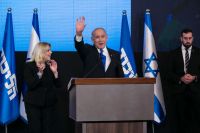
Could it really be over? As Israeli political reporters stand before their cameras or hunch over their keyboards, their brains screaming with caffeine, that is the one question they’re asking. As are millions of voters, who remarkably turned out on Tuesday in impressive numbers, despite their election fatigue.    As I write this, there are still a quarter of the votes in Israel’s general election waiting to be counted. Many of the ballot boxes come from Bedouin communities in the Negev desert and other Arab communities. Who knows, perhaps they could still change the outcome? Mathematically it’s certainly possible.

Robert Buckland: ‘Let asylum seekers work – and pay tax’

When the small boats crisis began, it was seen by some in government as a positive sign. ‘It was an emblem of success,’ says Robert Buckland, who was solicitor general at the time. ‘If you remember, the previous mode of entry for migrants was on lorries.’ Heat scanners had been introduced at the Channel Tunnel in 2015, which meant more stowaways were being caught. The switch to boats, it was argued at the time, was a desperate tactic on the part of the people-smugglers. No one guessed what a problem it would become. Back in 2014, the UK asylum system was coping: 87 per cent of cases were handled within six months. Now that number is just 7 per cent. The challenge of accommodating tens of thousands of applicants is too much for the Home Office to handle.

What Scholz should bear in mind on his trip to Beijing

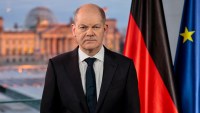
Olaf Scholz will be in Beijing this weekend, making the first visit of a western leader to China since the start of the Covid-19 pandemic. What might at any other time be regarded as a routine piece of diplomatic outreach is instead a matter of deep concern. China’s leader, Xi Jinping, has just cemented his position as dictator-for-life at the Chinese Communist party’s 20th congress. Beijing has followed this up with a series of high-profile visits from countries taking Chinese money for major infrastructure projects. The President of Vietnam arrived on Monday, the Presidents of Tanzania and Pakistan on Wednesday. This will culminate in Scholz’s arrival, the first G7 leader to accept Xi’s invitation. China’s sphere of influence is truly global.

At sea: can Sunak navigate the migrant crisis?

It’s not hard to see why migrants come here. For those who make it across the Channel illegally, there is only a small chance of deportation. About 72 per cent of the predominantly young males who leave the safety of France can expect to have their UK asylum claims granted. The success rate is more than twice the EU average (34 per cent). That’s part of the reason for the extraordinary growth in numbers coming across. Three years ago, 2,000 people arrived in small boats. So far this year, it’s 40,000. It’s funny to think that when 40 migrants crossed the Channel on Christmas Day in 2018, the then home secretary Sajid Javid was forced to cut short his family holiday amid the outcry. Last Saturday alone, 1,000 people made the crossing.

The dire state of Scotland’s hospitals

In hospitals, waiting lists have become so long that people have to queue for over two days to be seen. Patients are advised to avoid turning up if they can help it. Bed shortages mean people spend nights on corridor floors. Over 30 patients markedly deteriorate or even die each week as a result of delays. You could be forgiven for thinking this dire situation is unfolding in a developing country, perhaps without proper health infrastructure. It's not: this is happening all across Scotland. Since the pandemic, A&Es in Scotland have gone from bad to worse. Extreme wait times have increased tenfold: over 4,000 people spent more than 24 hours waiting in emergency departments over the last year. Almost 250 patients had to wait more than two full days.

What’s Matt Hancock up to?

17 min listen

Matt Hancock has signed up to be a contestant on I'm a Celebrity... Get Me Out of Here! What's behind the former health secretary's move into reality television? Robert Jenrick, the immigration minister, took to television studios this morning to defend how the government has handled overcrowding at the Manston processing centre for asylum seekers. Is there a rift growing between him and the Home Secretary, Suella Braverman? Max Jeffery speaks to Fraser Nelson and Katy Balls.  Produced by Max Jeffery.

Why Matt Hancock signed up for I’m a Celeb

Matt Hancock has this morning had the whip suspended over his decision to appear on the new series of ITV’s I’m a Celebrity… Get Me Out of Here. Less than an hour after the news broke that the former health secretary – who resigned over a breach of Covid rules through an extra-marital affair – plans to head to the jungle to appear on the primetime reality show, the new chief whip Simon Hart suspended the whip with immediate effect. Announcing the news, Hart said: ‘Following a conversation with Matt Hancock, I have considered the situation and believe this is a matter serious enough to warrant suspension of the whip with immediate effect’. Now this decision ought not to have come as a complete surprise to Hancock. There is precedent here.

Matt Hancock loses whip after signing up to I’m A Celeb

Einstein defined insanity as doing the same thing over and over again and expecting different results. So what are we to glean from Matt Hancock’s latest comeback initiative under a third successive Tory premier? According to The Sun, the Casanova of the Commons has signed up to appear on the upcoming series of I’m A Celebrity, Get Me Out of Here. What an irony in a man whose career was brought down by intrusive cameras turning to that same medium for rehabilitation.  Such a move is, of course, just the latest initiative for Hancock: a man with no beginning to his political talents. There’s also his bid to become the new Treasury select committee chair and his forthcoming pandemic diaries about his Covid misadventures – a Richard Curtis project if ever there was one.