Politics

Read about the latest political news, views and analysis

Is it too much to expect the Home Secretary to obey the law?

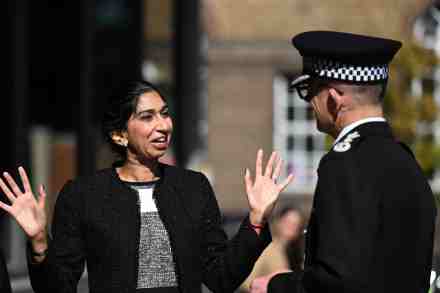
As Home Secretary, on the whole, you’ll want to stay on the right side of the law, right? I mean, you’re in charge of the police, the prisons, national security, immigration and all that sort of thing. Your portfolio is definitely what might be termed law-adjacent or, on Tinder, ‘law-curious’. On the principle of leading by example, you might be expected to comply not only with the letter but with the spirit of the law. So it is not a little concerning that in the matter of Manston asylum processing centre Suella Braverman is accused of knowingly breaking the law as a matter of policy.  I know: compassion for traumatised and penniless refugees isn’t part of the brief.
How many Russians have fled Putin?

Ever since the war in Ukraine started there have been reports about Russians emigrating, either fleeing conscription or simply dismayed at the conflict and Vladimir Putin’s authoritarian turn. Moscow has previously dismissed reports that as many as 700,000 could have fled. But that figure no longer looks so far-fetched in the light of data just released by the FSB saying 9.7 million trips out of the country were made in the third quarter of this year (July to September), almost double the number made between April and June.  This figure was slipped out over the weekend and has so far gone unreported in the English-language press. It’s significant as it covers 21 September, the day that Putin announced his military enlistment plan.

Risk aversion and the failure of our emergency services

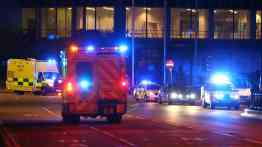
The litany of errors in the emergency services’ response to the Manchester Arena attack has been widely detailed this week, from a senior police officer who failed to pass on crucial information, to a key fire officer who spent an hour driving in from his home, and a specialised paramedic unit that took 44 minutes to arrive from Stockport. The only paramedic to turn up in that three quarters of an hour – because he had ‘self-deployed’ – was supposed to triage patients but forgot his triage cards and never went back to his vehicle to get them. A ‘risk averse’ senior fire officer set off a chain of events that led to a two hour and six minute delay in their arrival to the arena, despite knowing they might be needed to extract patients.

Sunday shows round-up: Tories ‘committed to honouring our 2019 manifesto’

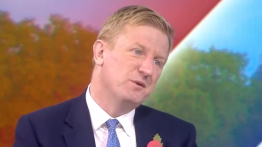
Oliver Dowden: Williamson’s messages ‘were not acceptable’ Cabinet Office minister Oliver Dowden joined Laura Kuenssberg this morning, and was asked to account for a series of irate and expletive-laden messages sent by the Conservative MP Gavin Williamson to the previous Chief Whip Wendy Morton. Williamson, who has since been reappointed to Rishi Sunak’s cabinet, had accused Morton of punishing MPs by not inviting them to Queen Elizabeth’s funeral, and declared his unwillingness to follow the government’s lead. Kuenssberg asked if Sunak had shown good judgement of character in welcoming Williamson back to Whitehall: https://www.youtube.com/watch?

Football’s problems run far beyond the Qatar World Cup

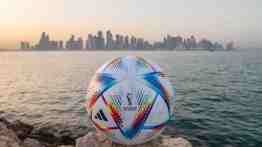
Are there any redeeming features of the Qatar World Cup? Perhaps one: the tournament has a sane and logical format. Having 32 teams reduced to 16 after the group stage, followed by a straight knock out is easy to understand and should produce an exciting third round of games and plenty of thrills thereafter. But if you do have the stomach for Qatar 2022 savour this comforting crumb: it could be the last time a major tournament is organised in a way that makes sense from a footballing – rather than a revenue generating – standpoint. For let’s look ahead to USA 2026. There might not be human rights concerns here, but the tournament will certainly be controversial for other reasons.

How Turkey and Ukraine called Putin’s grain deal bluff

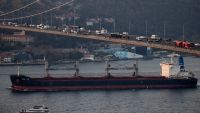
Earlier this week, Vladimir Putin declared an end to the deal allowing Ukraine to export its grain to the world. This threatened to send prices surging, with a potentially devastating impact on world hunger. But his bluff was called. Turkey, Ukraine and the UN held talks and continued a deal without Russia – and three days later, Putin returned to the agreement. Why? And what does this tell us about Russian vulnerabilities? The trigger for Putin pulling out was a drone strike on Russian ships near Sevastopol last Saturday. This was devastating for Moscow: until recently, Ukraine simply didn’t have such military capabilities. Now, suddenly, it does.

We need to talk about boomer radicalisation

Andrew Leak, the man named as the perpetrator of the petrol bomb attack on Dover migrant centre was, on the surface, an unlikely terrorist. Aged 66 and living in High Wycombe, reports paint him as a somewhat odd but largely harmless character. His internet history told a different story. Though he does not appear to have been led on to his attack by anyone else, there is a clear pattern of self-radicalisation. Analysis from Hope Not Hate, the anti-far-right campaign group, shows that his online presence was riddled with racism. He seemed to support Tommy Robinson and engaged with several other personalities who post inflammatory coverage of issues around migration.

Matt Hancock is perfect for ‘I’m A Celebrity…’

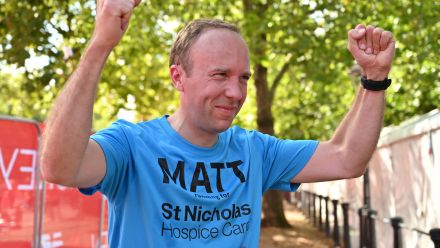
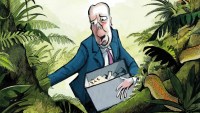
How can a man have such good and bad judgement? Matt Hancock’s wife is an absolute babe, but his career – and marriage – came to an abrupt end when he chose to snog his (admittedly gorgeous) aide during the strict social distancing of a pandemic lockdown. What a clown. Now Hancock is jungle-bound. By taking part in I’m A Celebrity…Get Me Out Of Here! he’s following in the footsteps of political titans like Edwina Currie and Lembit Opik. It’s been said politics is show business for ugly people, and though the reality TV choices of politicos can range from the sublime (Michael Portillo, sassy and classy on various train journeys) to the ridiculous (George Galloway wearing a pink leotard and pretending to be cat) there is always something grimly appropriate about it.

Zero-Covid is the new one-child policy

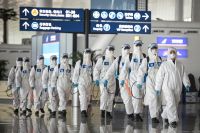
It has been a remarkable few days for China’s increasingly absurd and at times chilling zero-Covid campaign. There was outrage on social media after the death of a three-year-old boy from carbon monoxide poisoning, which his father blamed on delays obtaining treatment because of a lockdown. Angry residents who took to the streets were confronted by riot police. While videos from the world’s largest iPhone factory in the central Chinese city of Zhengzhou, where 350,000 are employed, showed workers scaling barricades in what amounted to a mass break-out following attempts to lock them in their dormitories after a Covid outbreak. A surge in cases across the country has seen restrictions imposed in 28 cities, home to more than 200 million people.

Mark Galeotti, Katja Hoyer and Tanya Gold

19 min listen

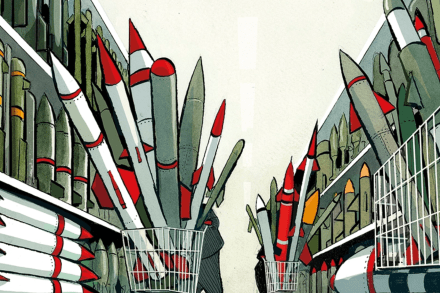
This week: Mark Galeotti tells us why Ukraine has become a weapons testing ground (00:53), Katja Hoyer discusses Germany’s extreme monarchists (09:12), and Tanya Gold reads her Notes on … espressos (15:24).  Produced and presented by Oscar Edmondson.

Britain needs to take back control of its borders

Britain has lost control of its borders. Over the last four years, the number of asylum-seekers and illegal migrants who have arrived unlawfully in Britain in small boats, after passing through safe countries, has rocketed from just 299 to nearly 40,000.  This year, so far, the number of people crossing the Channel each month has surged from 1,000 back in January to more than 7,000 in September. Last week, nearly 1,000 people in 24 boats crossed the Channel in a single day.  Make no mistake. Many of the people who are making this perilous journey are genuine refugees fleeing war and persecution — including conflicts that were started by hapless western leaders.

Is Russia preparing to surrender Kherson?

Will they stay or will they go? The southern Ukrainian city of Kherson has become the current focus of the toughest fighting in the war, and what was once seen as Moscow’s potential gateway to Odessa and the rest of the Black Sea coast is now looking like Kyiv’s access towards occupied Crimea. However, it is unclear whether the Russians are finally preparing to withdraw from the city. On the one hand, Russia’s generals have reportedly been petitioning the Kremlin for weeks to be allowed to fall back. As it stands, Kherson is almost impossible for them to defend. It is on the western bank of the Dnipro River, and with the Antonivsky Bridge and the Kherson Rail Bridge heavily damaged, reinforcing and resupplying it is proving difficult and dangerous.

Why are excess deaths higher now than during Covid?

More people are dying every week than during Covid’s peak years. Last month there were 1,482 more deaths than average each week – known as excess deaths – compared with just 315 two years ago and 1,322 last year. In the week to 21 October (the most recent week of data) ONS figures reveal there were some 1,646 excess deaths alone. As has been reported before, excess deaths are most stark at home: with deaths in private homes nearly a third above average. Meanwhile in hospitals and care homes they’re just 15 and 10 per cent above average. The shift to dying at home, and the health service ceasing to function, continues.  What’s causing these deaths? It isn’t Covid: just 27 per cent of excess deaths in England for the most recent week have Covid as the underlying cause.

How the Albanian mafia corrupted Europe

In May 2000 a French newspaper published an article which declared that ‘The Albanian mafia is corrupting Europe’. Le Parisien reported on an official Interpol document that described a ‘perfectly organised’ criminal network emanating from Albania, with its tentacles spreading west. Drugs, prostitution, gun-running and illegal immigration were the pillars of this syndicate, which had strong links with the Italian and Turkish mafias.  The Interpol report noted that 40 per cent of the heroin dealers arrested in Austria the previous year were Albanian, and Le Parisien reminded its readers that recently prostitution networks in the cities of Nice, Toulouse, Strasbourg, Metz and Nancy had been run by the Albanian mafia.

Is now the time to make peace in Ukraine?

Since Russia’s invasion of Ukraine in February, British press and public opinion has been firmly behind Volodymyr Zelensky. But is it healthy to look at any subject so uncritically? If a year or more of fighting will achieve nothing, then why prolong the bloodshed? The How To Academy has just held a debate about this delicate subject in London. The motion was ‘Now is the Time To Make Peace in Ukraine’. I went along, with some of the Spectator team. Our colleague Svitlana Morenets, who writes our weekly Ukraine email (sign up here), was speaking against the motion. It was a fascinating debate. Peter Hitchens, opening for the motion, said that the British press was very good at whipping up fervour for war but not so good at campaigning for peace.

Why have the RMT cancelled the strikes?

14 min listen

Today the planned rail strikes have been cancelled at the 11th hour. Is this an indication that a deal may be soon reached to end the months of disruption?  Also on the podcast, after it was announced that Arts Council England would cut its funding, it looks like the English National Opera will be forced out of London. Is this 'levelling up'?  Katy Balls speaks to Fraser Nelson and James Forsyth.  Produced by Oscar Edmondson.

All change at CCHQ

The winds of change are blowing through the corridors of 4 Matthew Parker Street. Having turfed team Truss out of No. 10, it seems that the Sunak ascendancy has now coincided with a clear out in CCHQ. The past fortnight has seen a number of high-profile departures including chief executive Darren Mott, political director Ross Kempsell and party treasurer Malik Karim. Mott's departure was announced today after 31 years of service to the party, 'as jointly agreed with the party chairman and Prime Minister.' It means that there are now some big jobs currently going at CCHQ. The w4MP website lists vacancies for the director of CRD and head of the chairman's office as the newly-appointed Nadhim Zahawi seeks to make his mark.