Politics

Read about the latest political news, views and analysis

Is 2023 the year Starmer throws caution to the wind?

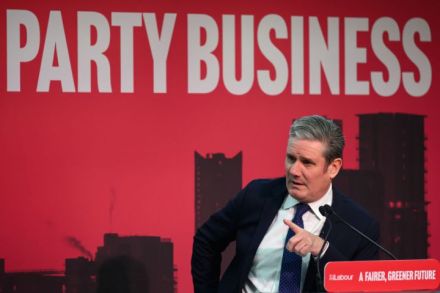
With Labour twenty points ahead of the Conservatives and leading in most policy areas – including, crucially, the ability to best manage the economy – the next election seems to be Keir Starmer’s to lose. Divided and distraught Conservative MPs appear to have accepted their fate. Indeed, some supporters of Boris Johnson and Liz Truss relish the prospect of opposition so they can properly settle accounts with their enemies. Yet Rishi Sunak still has a slim hope of retaining power, should the economy start to right itself by 2024 and if he can convince voters a Labour government would ruin any observable recovery. This requires him to attack Labour’s bona fides and especially those of its leader.

Is it too late for the Tories to fix the NHS?

Anyone who thinks the NHS isn't in a state of collapse hasn't been paying attention. This is the 75th year of the health service, and it is arguably its worst. Emergency doctors are now warning that A&E delays are ‘killing up to 500 people a week’. They say as many as 500 people could be dying each week because of delays in emergency care, with horrific individual stories about 99-hour waits and patients lying on the floors of A&Es. What is harder even for those who are paying attention to spot is what the government is doing to respond to this crisis.  Rishi Sunak has been worried about the NHS ever since he took over as Prime Minister, and long before.

Why yesterday’s men will loom large in 2023

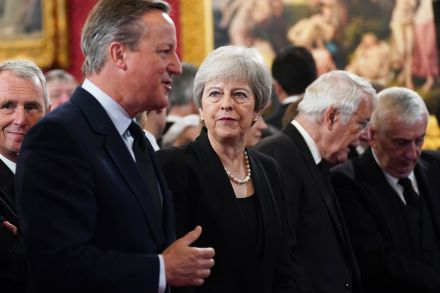
New year, old politicians.  Yesterday’s men will loom large in the politics of 2023.  British politics has a nostalgia problem, often to the benefit of our over-large population of former prime ministers. They may have disappointed in office, but the urge to rose-tint our memories means failure is no bar to a lucrative or influential post-premiership.  How else to explain the £2 million earned by Theresa May since the end of her painful, pedestrian premiership? Her reputation has also been enhanced through the power of hindsight: during the chaos of 2022’s politics, the history of her shambling, stumbling government was quietly rewritten and she became a 'grown-up' politician from a lost age of sensibleness.

How the Tories can defuse their demographic timebomb

Even in their most difficult moments, there’s an aura of invincibility about the Conservative party. It is, after all, one of the oldest political parties in the world, if not the oldest – depending on whether you count back to the founding of the party’s current iteration in 1834, or the Tory party’s origins in the 1670s. This has given political journalists plenty of time to develop hoary old chestnuts about the party’s admittedly impressive capacity to adapt to an ever-changing electorate. ‘The purpose of the Conservative party is to win power’ (and after the last 12 years, you’d be hard-pressed to argue what else it could be). ‘The Conservative party is an absolute monarchy tempered by regicide’.

Putin’s wish for 2023

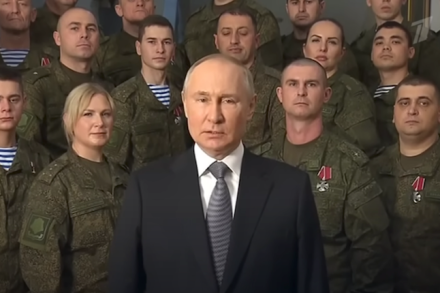
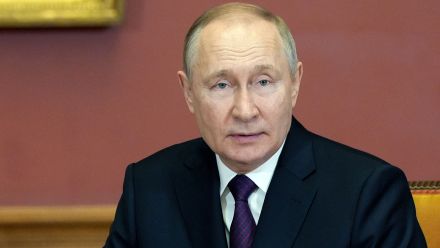
Following an unusually quiet December for the Russian president, Vladimir Putin has emerged to deliver his traditional New Year’s Eve address. The first since his invasion of Ukraine ten months ago, many across Russia’s eleven time zones will today be glued to TV screens and internet live-streams at five minutes to midnight to hear what he has to say. With 2023 already beginning in half of those time zones, we too have been able to view his speech. In years gone past, Putin’s typically predictable and formulaic pre-recorded New Year’s Eve speech has been a staple fixture of Russia’s countdown to midnight. It is a useful touchstone for Putin and the Kremlin to feign a connection with the Russian people.

Is the government’s Chinese travel policy really necessary?

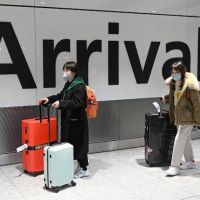
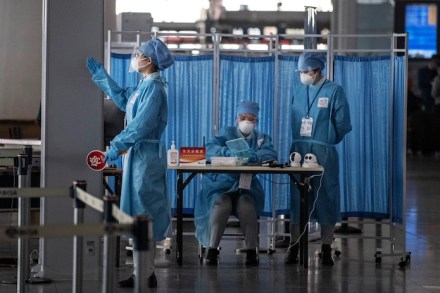
Anyone travelling from China to the UK will now be asked to present evidence of a negative Covid-19 test before they are allowed to enter the country. But what will this achieve and is this measure even necessary?  It’s often argued that these sorts of restrictions don’t work, and this is a reason the UK should not have impeded travel from China. But this depends entirely on where the bar for success is set. If the measures are intended to completely stop all infected individuals then they clearly won’t work. This kind of testing isn’t accurate enough to identify everyone who is infected and someone will always find a way around the rules.

Labour’s race policies would be deeply damaging

The parlous state of the Conservative party would matter very much less were it not for the fact that the alternative is a Labour government led by Keir Starmer. Recent days have given us two examples of how a Starmer administration would be very far from the moderate and sensible force he tries to depict. First, it emerged that Labour is still very much in the gender self-ID camp. Then came a reminder that Labour in power will implement a corrosive and extreme stance on matters to do with ethnicity that ascribes any difference in outcomes across different groups to ‘structural racism’ that the state has an urgent duty to eradicate.

Why I’m giving up on diehard Remainers

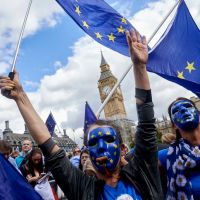
What’s your New Year’s resolution? Eat less, move more? Or perhaps you’re a contrary cuss aiming to eat more and move less? Ever perverse, I plan a little exercise which will leave me both more streamlined yet more replete; by culling what I can only call ‘swivel-eyed Remainers’ from my friendship group, both online and IRL. ‘Swivel-eyed’ is thought to have originated in the early 1990s of a certain type of Conservative politician; Simon Hoggart wrote of those who had a ‘swivel-eyed belief in privatisation’. When John Redwood was first appointed to the Cabinet in the 1993 reshuffle, some clubbable Tory sneered ‘We want fewer swivel-eyed ideologues, not more’.

Why it isn’t mad to oppose the World Economic Forum

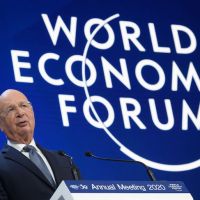
The World Economic Forum (WEF) and its long-serving founder and Executive Chairman, Professor Klaus Schwab, are the subjects of many insane conspiracy theories. This NGO, which again this January will bring together politicians, business leaders, journalists, academics, and assorted celebrities in Davos, has been accused, among other things, of being a secret cabal of paedophiles who used the Covid-19 pandemic to harvest children’s blood so as to hasten in a Satanic New World Order. It isn’t mad, however, to regard the WEF as a dangerous force in global politics. The WEF is a dangerous force in global politics. To adapt Joseph Heller, just because you are paranoid, doesn’t mean the WEF isn’t after you.

Most-read 2022: Why is Canada euthanising the poor?

We’re finishing the year by republishing our ten most popular articles from 2022. Here’s number one: Yuan Yi Zhu’s piece from April on Canada’s euthanasia policy. There is an endlessly repeated witticism by the poet Anatole France that ‘the law, in its majestic equality, forbids the rich as well as the poor to sleep under bridges, to beg in the streets, and to steal bread.’ What France certainly did not foresee is that an entire country – and an ostentatiously progressive one at that – has decided to take his sarcasm at face value and to its natural conclusion. Since last year, Canadian law, in all its majesty, has allowed both the rich as well as the poor to kill themselves if they are too poor to continue living with dignity.

Why should we test all travellers from China?

What’s the point in asking people flying in from China to present a negative Covid test? Rishi Sunak has stepped in to order this, but he hasn’t quite explained why this is necessary or how it would help. Covid is still widespread worldwide but British resistance (through exposure and vaccination) is such that the virus is not seen as a threat to the NHS (collapsing for other reasons) or public health. Data in Singapore from travellers in China confirms Beijing’s evidence that the variants it’s dealing with are BA.5.2 and BF.7 which have been in the UK for months. They can cause mayhem in an unexposed, badly-vaccinated country like China – but not to us.

Twixmas and the truth about why people liked lockdown

We don’t have a standardised name for the little clutch of strange days between Christmas and New Year. There is an aesthetic to Boxing Day – hearty walks, reheated leftovers, scraps of wrapping paper – but from then till New Years Eve we enter an in between time. I’ve heard several informal and colloquial references to it, things like The Lull, The Interregnum, The Aftermath – but the lack of a recognised term seems fitting. There is the merest echo of the pre-modern twelve days of Christmas, or Twelvetide, though nowadays we are all back at work long before the drummers drumming make their appearance.  No name means no rules, no rituals, nothing in particular that you should or should not be doing.

Why Mermaids hit the rocks

Mermaids was once, not long ago, the darling of the charity world: Starbucks sold Mermaids-branded cookies and famous faces including Emma Watson queued up to support the transgender organisation. But 2022 was the year Mermaids hit the rocks. The Charity Commission launched an inquiry into Mermaids last month after identifying concerns about its management. The charity which, a few years ago, could do no wrong in the eyes of corporations and policy makers faces an uncertain future. Despite what Mermaid's dwindling band of supporters might say, this is good news. Susie Green, the charity's media savvy chief executive, has been forced out following a staff revolt.

Most-read 2022: Is an unknown, extraordinarily ancient civilisation buried under eastern Turkey?

We’re finishing the year by republishing our ten most popular articles from 2022. Here’s number two: Sean Thomas’s piece from May on Karahan Tape. I am staring at about a dozen, stiff, eight-foot high, orange-red penises, carved from living bedrock, and semi-enclosed in an open chamber. A strange carved head (of a man, a demon, a priest, a God?), also hewn from the living rock, gazes at the phallic totems – like a primitivist gargoyle. The expression of the stone head is doleful, to the point of grimacing, as if he, or she, or it, disapproves of all this: of everything being stripped naked under the heavens, and revealed to the world for the first time in 130 centuries. Yes, 130 centuries.

Why won’t the Conservatives stand up for conservatism any more?

Is it supposed to be enough for those of us of a culturally and socially conservative persuasion to know that some Tory MPs share our outlook? Are we meant to look back over the radical left’s march through the public realm during these past 12 years of Tory-led governments and think: 'Well, at least some Conservative MPs tried to make a bit of a fuss about it, so we’d better vote Tory again?' It should not take a genius in Conservative Campaign HQ to realise that no, it isn’t enough. Not when one of the Tory prime ministers from this long phase of nominally conservative government has just come out to say she agrees with the SNP’s policy of gender self-ID.

SNP welcomes sex pest back with open arms

A new year beckons but old habits die hard. So it's no surprise then that the SNP have opted to begin 2023 by welcoming one of their disgraced brethren back into the fold. Patrick Grady, the party's former chief whip, has this morning had the SNP whip restored at Westminster – despite being found to have sexually harassed a teenage party employee. Is that what the nats meant when they talked about preserving 'Scotland's future' eh? Grady was reported to have 'resigned' last summer from the nationalists after the Commons authorities ruled he had made an unwanted sexual advance towards a male staff member.

The BBC is failing impartiality with its history documentaries

A good history book generates in the mind of its readers a series of visual images of people, places and events, blurry and perhaps not very accurate, but nevertheless the sort of thing that can be held in the memory. Television history challenges this because it provides ready-made versions of many of the visuals, and they too can become locked in one’s memory of historical events. Put differently, television takes over from individual imagination in portraying the past, and that is a particular problem for documentaries that do not admit to spicing up the past, as a costume drama will inevitably do. Rather, documentaries claim to uncover the truth.

The ten most-read Steerpikes of 2022

And you thought 2021 was crazy. It's been another remarkable 12 months in British politics: three Prime Ministers, the death of the Queen, a year that began with Covid that ends with a cost of living crisis. Abroad, there's been Putin's war in Ukraine, China's rumblings over Taiwan, the Qatari World Cup and soaring inflation too. Below is a round-up of Steerpike’s most read articles from 2022, with a smattering of snark alongside the serious. In January, SNP pin-up girl Devi Sridhar admitted defeat in her 'Zero Covid' crusade. March brought with it Emmanuel Macron's bizarre tribute act to President Zelensky. And September saw (yet another) New York Times attack on Britain – this time on the late sovereign. Classy!