Yuan Yi Zhu

Dr Yuan Yi Zhu is an assistant professor of international relations and international law at Leiden University.

The Chagos deal could spell environmental catastrophe

From our UK edition

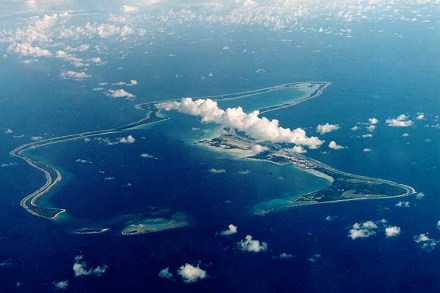
This week, the government will try to push its draft deal to surrender the Chagos Islands through Parliament. There are many, many reasons why the deal is bad – from security, to the legitimate rights of the Chagossians, to the fact that the legal basis on which it is constructed is bunk. But there is another reason why the Chagos deal should be canned: it will be a catastrophe for the world’s environment. Currently, the Chagos are protected by one of the world’s largest and strictest marine protected areas, in which all fishing is forbidden. An initiative of the last Labour government, the Marine Protected Area (MPA) has safeguarded one of the world’s most important natural environments, in which hundreds of animal and coral species exist away from human interference.

Donald Trump was Mark Carney’s greatest asset

From our UK edition

This election could have been a lot worse for Canada's Conservatives. As I write, they have taken 41.7 per cent of the popular vote, their highest share since 1988, and are on track to pick up two dozen seats. They have also managed to make inroads with young people and unionised workers – groups that are famously hard for right-wing parties to win over. Yet the victor of the night was Mark Carney, who will have a thin but real minority to work with as prime minister of Canada, and now the Conservative leader Pierre Poilievre is expected to lose his seat. Ill-informed pundits will say that the Tories threw away their double-digit lead ahead of the election, but it would be far more accurate to say that Carney’s Liberals closed the gap, and then some.

The landmine ban hands Britain’s enemies an advantage

From our UK edition

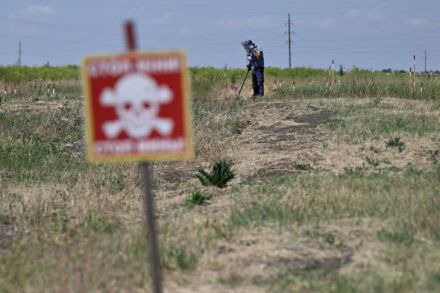
There are few better symbols of Europe’s military fecklessness during the brief era of relative peace that followed the end of the Cold War than the 1997 Ottawa Treaty, which banned the use of anti-personnel landmines by its signatories. The same is true of the 2008 Convention on Cluster Munitions (CCM), which outlawed cluster munitions. This was championed by Gordon Brown, despite the strong opposition of the British armed forces. The return of war to Europe has focused minds It is easy to understand the humanitarian impulses which lay behind both treaties, both of which count the United Kingdom among its signatories.

There is still no rationale for our Chagos surrender

From our UK edition

The government’s iron determination to surrender the Chagos Islands to Mauritius is puzzling. Why are ministers so keen to hand over territory that has been British since 1814, which is home to a critical UK-US military base, to a country thousands of miles away? And why does Britain need to pay Mauritius a reported £9 billion for the privilege of giving up its own territory? Initially, the government stuck to making vague noises about international law. The deal with Mauritius was necessary, parliament and the public were told, because the International Court of Justice (ICJ) had said that the UK had to hand over the islands, never mind that the ICJ opinion in question was an advisory one which is not legally binding on Britain or on anyone else.

The assisted suicide bill’s shameful lack of scrutiny

From our UK edition

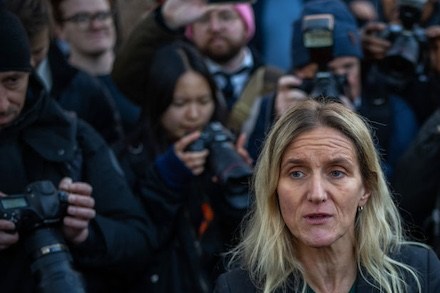
Last November, when the House of Commons voted on her assisted suicide legislation, Kim Leadbeater told her colleagues that the Bill would face ‘further robust debate and scrutiny’, including ‘line-by-line scrutiny in Committee’. But judging by the disgraceful scenes at her Bill committee’s first formal sitting on Tuesday, Kim Leadbeater and her supporters have given up on any pretence of caring about scrutiny and fairness. The procedural shenanigans began much earlier.

The Chagos Islands deal is uniquely terrible

From our UK edition

Last year, a Mauritian politician raised eyebrows in Britain when he told a political rally that ‘England has agreed to pay us a compensation’ to the tune of ‘many billions of rupees’ as part of the deal to hand over the Chagos islands to Mauritius. Still, a billion Mauritian rupees only converts to around £17 million, so observers were none the wiser about the financial provisions of the still-secret agreement between the two countries. If the deal goes through, Britain will be paying a king’s ransom to give away sovereign territory to a foreign power with no rightful claim to it Now we know that ‘many billions of rupees’ also means ‘many billions of pounds’.

History will not be kind to the MPs who backed assisted dying

From our UK edition

Before MPs voted to support the Terminally Ill Adults (End of Life) Bill, Kim Leadbeater, who has sponsored the bill, rose on a point of order. There were murmurs in the House. Then Leadbeater said, a little sheepishly, that she wanted to correct the record. She had wrongly implied that serving members of the judiciary had indicated they support the bill. The Judicial Office had written to her, telling her off; and now she was repenting at the eleventh hour. It was a fitting conclusion to a debate that has been, from beginning to the end, characterised by falsehoods. Still, MP after MP stood up and thanked Leadbeater for the way she had conducted the debate.  I say this is Leadbeater’s bill, but it is perhaps more accurate to say this is Dignity in Dying’s bill.

The ICC has destroyed its own credibility 

From our UK edition

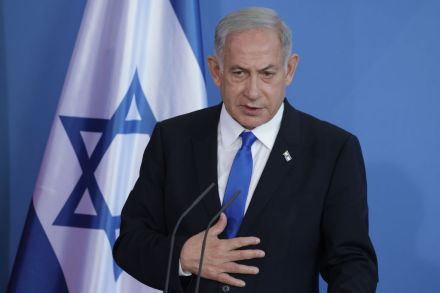
The International Criminal Court (ICC) has issued arrest warrants against Israeli prime minister Benjamin Netanyahu and his former defence minister Yoav Gallant for alleged war crimes and crimes against humanity (a third warrant was issued against a Hamas commander, believed to be dead). In so doing, the ICC has undermined – perhaps fatally – its own credibility, as well as prospects for a peace settlement in Gaza. The process which led to the warrants was compromised from the very beginning, when the ICC’s Prosecutor, Karim Ahmad Khan KC, who is currently being investigated for alleged sexual misconduct (he denies the allegations), convened a ‘Panel of Experts in International Law’ to provide support for his decision to seek the warrants.

Keir Starmer’s choice of Attorney General should concern conservatives

From our UK edition

Of all Keir Starmer’s appointments to government, none have been so personal or politically significant as his choice of Attorney General. The Prime Minister’s politics have been shaped, refined and hardened by his time as a human-rights barrister. The role of Attorney General – the government’s chief legal adviser and the minister responsible for the Crown Prosecution Service, which Starmer ran as director of public prosecutions – is of critical importance to him. While the PM may or may not take a close interest in who is minister for planning, veterans or food security, he will have thought very carefully about who should be his AG. The choice of Richard Hermer is deeply revealing – and should be profoundly worrying.

Most-read 2022: Why is Canada euthanising the poor?

From our UK edition

We’re finishing the year by republishing our ten most popular articles from 2022. Here’s number one: Yuan Yi Zhu’s piece from April on Canada’s euthanasia policy. There is an endlessly repeated witticism by the poet Anatole France that ‘the law, in its majestic equality, forbids the rich as well as the poor to sleep under bridges, to beg in the streets, and to steal bread.’ What France certainly did not foresee is that an entire country – and an ostentatiously progressive one at that – has decided to take his sarcasm at face value and to its natural conclusion. Since last year, Canadian law, in all its majesty, has allowed both the rich as well as the poor to kill themselves if they are too poor to continue living with dignity.

How the Commonwealth reacted to the Queen’s death

From our UK edition

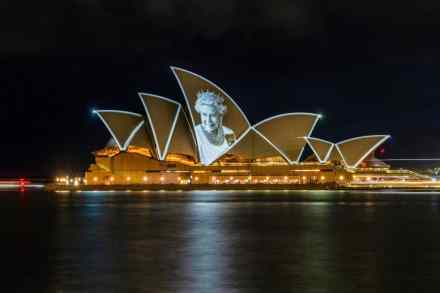
Without Queen Elizabeth II, Head of the Commonwealth, there would be no Commonwealth today at all. Long after the organisation had lost its charm for both British progressives, who increasingly saw it as an imperial hangover, and conservatives, dismissive of what they viewed as a grouping of ex-colonials asking for money and making awkward demands, the Queen carried on championing it, sometimes against her own British prime ministers. But it is impossible if not reckless to speak of a unified Commonwealth reaction to her death. The association's motley members range from countries where the Queen was head of state, to former British colonies which have adopted other forms of government, to newcomers such as Togo and Gabon, which have never spent a day under British rule.

Why is Canada euthanising the poor?

From our UK edition

There is an endlessly repeated witticism by the poet Anatole France that ‘the law, in its majestic equality, forbids the rich as well as the poor to sleep under bridges, to beg in the streets, and to steal bread.’ What France certainly did not foresee is that an entire country – and an ostentatiously progressive one at that – has decided to take his sarcasm at face value and to its natural conclusion. Since last year, Canadian law, in all its majesty, has allowed both the rich as well as the poor to kill themselves if they are too poor to continue living with dignity. In fact, the ever-generous Canadian state will even pay for their deaths. What it will not do is spend money to allow them to live instead of killing themselves.

British judges are right to cut ties with Hong Kong

From our UK edition

The resignations of Lords Reed and Hodge from Hong Kong’s highest court is not much of a surprise, except perhaps to those who did not realise that serving British judges still administered justice in the territory. Their decision to quit follows soon after the Foreign Secretary, Liz Truss, decided to withdraw government support for the continued presence of serving British judges in Hong Kong. It marks the end of a long association between the British judiciary and Hong Kong which goes back to the 19th century, and is the inevitable conclusion of the ongoing crackdown on civil liberties there, which shows no signs of slackening.