Politics

Read about the latest political news, views and analysis

The green movement faces a painful confrontation with reality

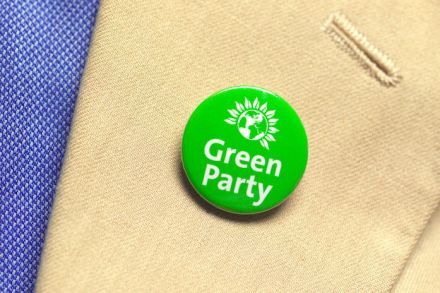
Environmentalism is the ruling ideology of our times. Forget neoliberalism. That peaked around 2000 and was definitively dethroned by the financial crisis in 2008, the same year Parliament passed the Climate Change Act which paved the way for Net Zero. Since then, environmentalism has won victory after victory, so it might appear paradoxical that one of the founders of the British green movement struck a defeatist note. Speaking at an event to celebrate the Green Party’s 50th anniversary, Michael Benfield suggested that the 'battle for the world's environmental survival is, at this moment, lost.' The Greens had succeeded in raising consciousness, Benfield said, 'but we have failed in dealing with the battle for environmental survival.
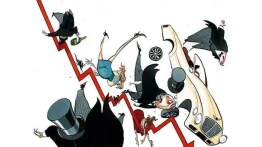
Will the last company to leave the City please turn out the lights?

It would have been bad enough if just one major British company had decided to list its shares in New York rather than London in the space of a single week. But two? First it was the chip-maker Arm, one of the UK’s very few major technology companies. Then came the building materials giant CRH. Shell also said they came very close to shifting their base to the US. The moment has surely arrived for the UK to radically deregulate its listing regime – or else watch the City slowly wither away. At this rate, within a few years there might only be a couple of retailers and a bus company on the London Stock Exchange Fewer and fewer companies have been bothering to list their shares in London for many years.

The problem with the BBC’s Manchester bombing coverage

The BBC have reacted to the Manchester Arena bombing, carried out by an Islamist maniac, by providing us with a cautionary tale of how easy it is to be radicalised by…the extreme right. The fifteen-year-old boy, named as John, who is featured in the online article describes how he was manipulated into ‘hating Islam’ by consuming hours of dodgy online content and eventually attending some demonstrations.  'To see Manchester attacked – a city where I spent a lot of time – really fuelled my anger,' he said. 'I stopped caring who knew about my involvement and moved from mainly speaking online to actively trying to recruit people and sharing propaganda.' John was a plainly troubled young man in need of some solid parenting and guidance.

Is Humza Yousaf’s campaign starting to sink?

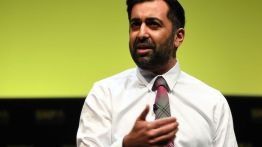
The SNP leadership has turned into open civil war. Alex Salmond has shafted the frontrunner Humza Yousaf who tried to shaft Kate Forbes, who was, in turn, shafted by Nicola Sturgeon. No wonder long-suffering deputy First Minister, John Swinney, has resigned.  Swinney’s departure came on the day Salmond torpedoed Yousaf, Sturgeon’s chosen successor, by claiming he had skipped Holyrood's landmark gay marriage vote in 2014 due to 'religious pressure'. Yousaf says his ‘recollection is different’, but his position is now untenable. His account is contradicted by the minister who was in charge of the 2014 equal marriage vote, Alex Neil, and now the then first minister, Salmond.

Four things we learnt from the Boris Partygate probe

Today the privileges committee has published its initial report into whether Boris Johnson lied to the House of Commons about Partygate. This inquiry does not look at whether gatherings in lockdown happened or not – we know they did. Rather, it is going to investigate whether Johnson was aware such gatherings were taking place and, if he did, whether he 'knowingly' lied to the House of Commons when he told MPs that 'the rules were followed at all times'. It also focuses on why the then prime minister did not correct the record at the earliest opportunity when it became clear that the Covid rules had not been followed at all times. Below is a summary of the top lines from the 24-page report and Johnson's bullish response, ahead of his evidence session later this month.

Captain Cook’s Aboriginal spears belong in Cambridge, not Australia

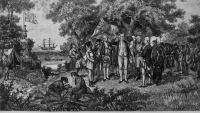
On the eve of the First World War, Trinity College, Cambridge deposited four spears collected by Captain Cook during his first encounter with native Australians in the Museum of Archaeology and Anthropology of Cambridge University. There they could be seen and studied by any visitor to Cambridge, rather than being hidden away in a cabinet of curiosities in the Wren Library at Trinity. Now, more than 250 years after Cook’s visit to Australia, they are to be returned to Sydney and to members of the tribe that originally made them. After they arrived in what became known as Botany Bay, Cook’s men confiscated about 40 of these rods from members of the Gweagal clan.

Sue Gray defects

14 min listen

Cindy Yu speaks to Katy Balls and Fraser Nelson about Sue Gray's new role as Keir Starmer's chief of staff and what happened on the Tory MP's away day in Windsor.

Why have we become numb to the failing social care sector?

Helen Whately, the care minister, gave a moving speech this week. It was personal and emotional, but it won't get much attention. Whately told a health conference organised by the Nuffield Trust about the final months of her grandmother's life. Her grandmother had reached the age of 100 and was living independently, enjoying walks in the countryside, a spot of gardening and reading, she told the audience. But then, she had a fall, and while Whately said she would spare the conference the details of what happened next, there was a period of five months in which the centenarian was stuck in hospital. She was 'occasional receiving treatment, but mostly waiting for discharge', Whately said.

The madness of the lockdown trials

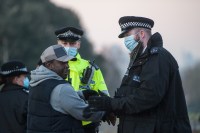
I think we can now admit that Covid sent us all a little loopy. Matt Hancock certainly seems it, handing over more than 100,000 highly sensitive texts to a hostile journalist. Today’s revelations show Hancock telling colleagues ‘we are going to have to get heavy with the police’. While everyone gets excited about the lockdown files, there are still plenty of lockdown trials going before the courts. Which, even if a gratuitous breach, seems a little pointless now. Rules are being enforced that are no longer in place. Rules that, the Daily Telegraph reports, weren’t based purely on ‘the science’.

Stormont isn’t worth saving

It is a question all good cardiologists must ask themselves every day: when do you stop trying to resuscitate the patient on the operating table? The same question could be asked of Stormont, Northern Ireland's ever crisis ridden legislature: when do we stop bothering? In the latest round of life-saving treatment, His Majesty the King, Rishi Sunak and EU Commission president Ursula von der Leyen assembled at Windsor to proclaim a new dawn and the remaking of the Northern Ireland Protocol. And, hopefully, another end to the latest Stormont boycott. The deal unveiled this week will, we're told, ensure the uninterrupted flow of Scottish seed potatoes and Asda sausages to Ulster. But it doesn't address the far more fundamental existential question.

Five things we’ve learned on day three of Hancock’s lockdown files

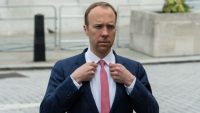
Ping! It's day three of the 'Lockdown Files' and a whole new tranche of former Health Secretary Matt Hancock's WhastApp messages has just landed. Mr Steerpike has taken a look at what the Telegraph released last night: Matt Hancock said ‘we are going to get heavy with the police’ A worried Hancock told Cabinet Secretary Simon Case that the police needed to get a grip on mandating lockdown restrictions. Somewhat concerningly, the head of the civil service asked Hancock ‘who actually is delivering enforcement?’  Case found hotel quarantine ‘hilarious’ In an attempt at humour, the Cabinet Secretary said he found imagining ‘the faces of people coming out of first class and into a Premier Inn shoe box’ funny.

What next for women in tech?

30 min listen

Women make up half of the workforce in the UK. Yet when it comes to high-skilled, high-income jobs in tech, just 26 per cent of the workforce are women and 77 per cent of tech leaders are men. Jobs in tech filter into almost every sector and women from all walks of life are discovering they don’t need a maths or tech background to retrain and reinvent themselves. Over the last five years the UK’s tech sector has seen massive proliferation and investment, but given this level of growth, where are all the women? The government’s approach to bridging the gap has focused on teaching in schools.

How long can Simon Case cling on?

It's not been a great day for the Civil Service. First it's announced that Partygate prober Sue Gray has been offered the role of Chief of Staff for the Leader of the Opposition. And now the Telegraph has released WhatsApps that show Simon Case, the Cabinet Secretary, mocking those affected by the government's lockdown policies. Talk about classy, eh? As Britain began a forced quarantine for returning holidaymakers in February 2021, Case messaged Matt Hancock to ask 'Any idea how many people we locked up in hotels yesterday?' After the Health Secretary replied 'None but 149 chose to enter the country and are now in quarantine hotels due to their own free will!' Case responded 'Hilarious.

Why is an Israeli politician calling for a village to be ‘wiped out’?

‘I think the village of Huwara needs to be wiped out. I think the State of Israel should do it.’  I have read those words and read them again – and again. I have checked various news sources to be sure there was no error in translation or transcription. I have tried to parse the words to construe a meaning other than the one I know in my gut to be true. But it won’t work. The words mean what they say. They are a call for ethnic cleansing.  The words were spoken by Bezalel Smotrich, Israel’s finance minister and leader of Tkuma, a religious nationalist party of the far right. Smotrich was interviewed yesterday morning at a conference hosted by Tel Aviv based financial newspaper, The Marker.

Does Boris have a point on the Protocol?

17 min listen

Boris Johnson delivered his first speech since leaving No.10 and told the audience he would not be able to back Rishi Sunak's Brexit deal. Although the Windsor Framework has largely received a lukewarm reception, does Boris have a point? Also on the podcast, Sue Gray has just resigned from the civil service to become Keir Starmer's chief of staff. What could this mean politically for both parties? Natasha Feroze speaks to Katy Balls and Sam Lowe, partner at Flint.

Trans row rocks Guardian towers, again

Oh dear. It seems that life in the offices of the world's wokest paper isn't all its cracked up to be. For the Guardian's sister paper – with which it shares an office – has been accused of 'institutionalised transphobia' by a disgruntled former writer. James Wong, the Observer's garden columnist departed last week with a parting shot at his onetime employer. He wrote on Instagram that he left after being reprimanded by an editor for publicly criticising one of his paper's articles about trans rights: After formally complaining about an article that likened politicians who support trans rights to alleged sex traffickers, the editor ignored my complaint and reprimanded me for revealing that I had even made it.

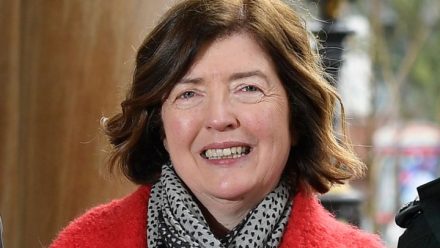
Is Sue Gray really a coup for Keir?

Well, there we are then. Less than 24 hours after reports emerged that Sue Gray could be Keir Starmer's next chief of staff, the lady herself has confirmed the story by resigning from the civil service. The Partygate investigator will however have to wait at least three months before she can start working for Labour, as per government guidelines. And, deliciously, she will also have to get final approval from, er, the Prime Minister Rishi Sunak. Will he hold the process up? Timings aside, it seems it is a fairly extraordinary decision for a senior civil servant to make. How, frankly, are ministers expected to trust their mandarins if they are going to defect to the Opposition? 'We're a joke' said one despairing official to Steerpike, 'I've completely lost respect for her.