Politics

Read about the latest political news, views and analysis

Rachel Reeves’s Budget ‘bollocks’ & Britain’s everyday crime crisis

48 min listen

To submit your urgent questions to Michael and Maddie, go to: spectator.co.uk/quiteright This week on Quite right!: Rachel Reeves goes on the offensive – and the defensive. After her surprise Downing Street address, Michael and Maddie pick over the many kites that have been flying in advance of the Budget at the end of the month. Was she softening the public up for tax rises, or trying to save her own job? Michael explains why Reeves is wrong to say that Labour’s inheritance is the reason for our current economic misfortune and says that it is ‘absolute bollocks’ that Brexit is to blame. Next, a chilling weekend of violence sparks
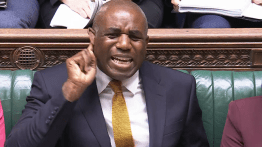
Watch: Lammy humiliated by prisoner release

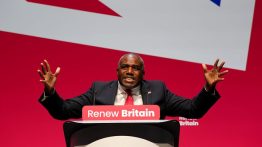
They say that pride comes before a fall – and so it proved today at PMQs. In the wake of the Epping sex offender debacle, James Cartlidge, the Shadow Defence Secretary, opted to lead on the accidental release of prisoners. After forcing David Lammy at the beginning of the session to apologise (again) to the family of Hadush Kebatu’s victim, Cartlidge asked five times in a row whether any other aylum seeker offenders have been inadvertently let out since. Cue Lammy’s expostulation ‘Get a grip man! I know I am the Justice Secretary, that’s why I am at the despatch box’. But fast forward 30 minutes and the reason for

David Lammy's missing PMQs poppy

Oh dear. It seems that the hapless hero of Haringey has done it again. David Lammy is filling in for Keir Starmer today as our under-fire premier jets off to Brazil for COP30. So it is up to his deputy to fill in at today’s PMQs session. Lammy stepped up to the despatch box with relish, with a nice planted question from a loyal backbencher to kick things off. Connor Rand gushed his congratulations on Lammy’s ‘historic achivement’ to which the Deputy PM graciously gave his thanks. The bear pit of the Commons at its best…. Unfortunately though for Lammy, it seems that he had forgotten what time of the

William's Rio trip risks being overshadowed

Cometh the hour, cometh the Prince of Wales. At least, that is what Prince William and those around him will be desperately hoping the result of his trip this week to Rio de Janeiro will be: a reset for the royal family after weeks of terrible, existentially damaging headlines, mainly but not entirely revolving around the Andrew formerly known as Prince. Whether he will be successful in this – especially given the current actions of his estranged younger brother – is another question altogether. William’s trip to South America has been with the worthiest of purposes in mind. He has headed down there both to hand out the Earthshot Awards

The ‘John Lewis approach’ won’t fix workshy Britain

Like the John Lewis Partnership he used to run, Sir Charlie Mayfield, who has just completed the government’s ‘Keep Britain Working’ review, comes across as terribly nice and civilised. It’s just a shame he can’t quite bring himself to put the boot in and deal properly with the problem of mass worklessness he correctly identifies. Had the job been given to a more ruthless business operator – perhaps someone from Amazon, Aldi or one of the other businesses which is steadily devouring John Lewis’s lunch – government might actually have a hope of a workable solution. Mayfield all but ignores the real problem: it has become far too easy to

Could private credit cause the next financial crash?

The recent bankruptcies of a little-known auto-parts supplier called First Brands and auto lender Tricolorhas sparked talk about a looming financial crisis in a booming but much misunderstoodcorner of finance. Jamie Dimon, the CEO of JP Morgan, sent shivers through financial markets earlier this month when he referred to these bankruptcies as a ‘cockroach’ and warned: ‘When you see one cockroach, there are probably more.’ His comments were taken as a broadside against private credit, a niche corner of debt markets that has seen blazing growth in recent years. In private credit, non-bank financial firms such as Apollo Global Management, Blackstone and KKR pool capital from investors to lend out to corporations, and,

Why do white men’s feelings matter more than black lesbians’?

So there you have it: the feelings of white men matter more than the rights of black lesbians. That’s the takeaway from the mad fracas at a Gold’s Gym in Los Angeles this week, where a female gym-goer by the name of Tish Hyman says her membership was unceremoniously revoked. Her offence? She dared to complain about the presence of a person with a penis – what we used to call a bloke – in the women’s changing room. Women’s rights have been broken on the wheel of the trans ideology Ms Hyman is a lesbian and a singer originally from the Bronx in New York. She says she encountered

How to make Britain great again

Here we are again. Fifty years ago the fashionable view was that Britain was ungovernable. Chancellors wrote their budgets kow-towing to the bond markets, and, if they did not make their obeisance low enough, had to beg from the International Monetary Fund. The unions had turned out one democratically elected government and were giving the next one a good kicking. People said we needed a ‘strongman’ who did not have to bother with elections, implausibly suggesting Lord Mountbatten. The public had noticed there was another candidate already rehearsing for the role, the Secretary General of the Transport and General Workers’ Union, Mr Jones, whom they saw, said the opinion polls,

How to fix Britain’s energy policy

‘If nothing happens, it will be too late’. That’s the dire warning from an academic I spoke to recently in Aberdeen about Britain’s energy independence. He’s right to worry: last year, 44 per cent of the energy used in the UK last year was imported. This month’s Budget could be one of our final chances to save the UK from becoming increasingly reliant on energy from overseas, and to improve the lot of Britain’s suffering energy firms. One quick solution Rachel Reeves should reach for is scrapping the Energy Profits Levy (EPL). A windfall tax brought in by the Conservative government in 2022, the EPL was intended as a temporary tax on

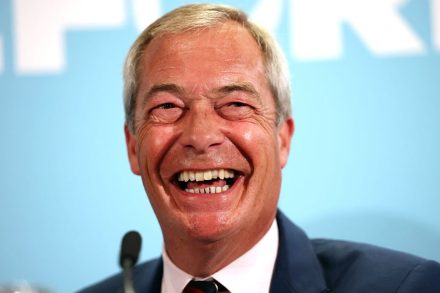
Reform launches its own Research Department

Since returning to politics in May 2024, Nigel Farage has had one central goal: replacing the Conservatives as one of the two great parties of British politics. Having led in the polls since April, Reform UK has focused in recent weeks on the intellectual battle, by attracting bright thinkers on the centre-right. Danny Kruger MP defected last month, followed shortly by the academic James Orr. The former now heads the party’s ‘Preparing for Government’ unit; the latter is tasked with building the intellectual pipeline from the universities to a future Farage administration. Today, the party has sought to lay down a fresh marker. Reform is launching its own Research Department

Trump's nuclear weapons testing is a dangerous idea

It is often difficult to discern the exact meaning of President Trump’s public statements. He does not consider words carefully, being a politician of pure and visceral instinct, but he is also not especially articulate, and this can produce ambiguous jumbles of language. Last week, minutes before he met President Xi Jinping of China at Busan Airport in South Korea, Trump made an extraordinary statement on his Truth Social platform: The United States has more Nuclear Weapons than any other country… Russia is second, and China is a distant third, but will be even within 5 years. Because of other countries testing programs, I have instructed the Department of War

Bridget Phillipson must not abandon special needs children

Bridget Phillipson, Secretary of State for Education, has finally turned her attention back to her brief – and there is a big group of school parents who wish she hadn’t. Parents whose children have special needs are up in arms about the latest announcement that has come from the Department of Education. It was bad enough to hear that, given Phillipson’s other pressing commitments (her doomed attempt to be elected deputy Labour party leader earlier in the Autumn being one), the publication of the white paper on schools’ special needs (SEND) provision would be postponed until next year. Concern over this delay – sinister murmurings about a total overhaul of

Reeves prepares the public for tax hikes

11 min listen

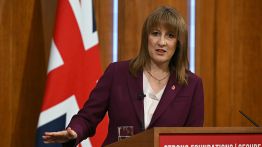
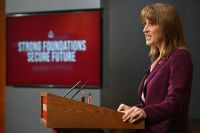
It is three weeks until the Budget – and Rachel Reeves wants to get her narrative out there. The Chancellor held an early morning press conference today to, in her words, ‘set out the circumstances and the principles’ guiding her thinking on 26 November. Her speech followed a familiar pattern. First, there was the evisceration of the ‘austerity’, ‘reckless borrowing’ and ‘stop go of public investment’ which characterised the last 14 years. In her 25-minute speech in Downing Street, one line in particular stood out: ‘If we are to build the future of Britain together’, Reeves said, ‘we will all have to contribute to that effort. Each of us must

Badenoch has a new favourite word: work

After Nigel Farage’s address on Reform’s tax plans yesterday and Rachel Reeves’s effort to lay the groundwork for the Budget this morning, Kemi Badenoch completed the trifecta of economic speeches this lunchtime. Appearing at the Royal Academy of Engineering, the Conservative leader sought to wrestle back the limelight for her party, as pre-Budget speculation ramps up ahead of 26 November. In the era of multi-party politics, it is no longer good enough for Badenoch to simply bash Labour. With the Tories no longer commanding a monopoly on the right, she must focus her attacks on Reform too. Badenoch’s chosen battleground today was welfare. After the shambles of the summer, when

Can the last 'working person' in Britain please turn out the lights?

Early morning surprises can be lovely, but not when they involve Rachel Reeves. Probably the last thing anybody wants to see as they wipe the sand from their eyes is the Chancellor looming over them. The sudden, unexpected appearance of Reeves at cock crow this morning – ‘My office, first thing, sharp!’ – felt like a dawn raid, the age-old military tactic for attacking when the human body is at its weakest. Well, it didn’t work. The recent wranglings over the exact definition of ‘working people’ wouldn’t fool a four-year-old We learnt today that despite Reeves having ‘fixed the foundations’ last year (don’t laugh!), ‘the world’ keeps throwing ‘challenges’ her

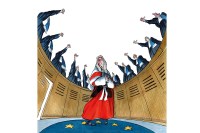
The rise of anti-democratic human rights

Seventy-five years ago today the European Convention on Human Rights was signed in Rome by the 12 states, including Britain, that then formed the Council of Europe. There will be official celebrations: in Strasbourg tonight, a solemn ceremony of speeches and a gala classical concert at the Opéra national du Rhin, and in London next month a formal lecture by our recently-retired man in Strasbourg followed by a Foreign Office reception. But one thing is very noticeable: beyond the great, the good and the earnest (such as the human rights bar and organisations like Amnesty and Liberty), few care. Most of the public, and for that matter most of our

Britain's stingy state pension is good news

That Britain has the least generous state pension in the G7 should be recognised for what it is: good news. The fact that it won’t be celebrated tells us a lot about the mismatch between policy and politics around pensions in the UK. The nature of Britain’s state pension isn’t an accident or a failure. It’s the product of deliberate design. For the past three decades, British policymakers have chosen to provide retirement income largely through private saving rather than tax-funded state benefits. They’ve done so quietly, but rationally. The alternative would be to copy France – a country that still treats the state pension as a social guarantee and

What does Rachel Reeves really mean that we must all 'do our bit'?

It is three weeks until the Budget – and Rachel Reeves wants to get her narrative out there. The Chancellor held an early morning press conference today to, in her words, ‘set out the circumstances and the principles’ guiding her thinking on 26 November. One line in particular stood out: ‘If we are to build the future of Britain together’, Reeves said, ‘we will all have to contribute to that effort. Each of us must do our bit’ Her speech followed a familiar pattern. First, there was the evisceration of the ‘austerity’, ‘reckless borrowing’ and ‘stop go of public investment’ which characterised the last 14 years. Then came the global