Politics

Read about the latest political news, views and analysis

Why I’m giving my money to maths

When I was a teenager, mathematics saved my life. Diagnosed with Asperger’s, I had a knack for saying the wrong thing at the wrong time – usually the truth, which rarely wins popularity contests. Only in maths class did I find that the pursuit of truth was not a vice but a superpower. In a world full of grey areas and half-truths, here was a subject where things were either right or wrong, and no one could accuse you of being rude for pointing it out. My resulting passion for maths took me to Oxford, where I studied mathematics and computer science, and from there into the world of finance.

Labour’s Luton expansion plans get the green light

The economy may not be expanding, but Labour is determined Britain’s airports will. Transport Secretary Heidi Alexander has today approved proposals to expand Luton Airport – with plans for a new terminal given a green light. So keen is the Labour minister to push the project, Alexander has overruled the Planning Inspectorate’s advice that she reject the Development Consent Order over environmental concerns. How interesting… The move will pave the way for the cap on passenger numbers to be raised from 18 million to a whopping 32 million. The existing Terminal 1 is to be expanded while a new Terminal 2 will be constructed alongside taxiways and car parks. More

Cruel Labour, the decline of sacred spaces & Clandon Park’s controversial restoration

51 min listen

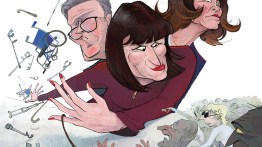
This week: Starmerism’s moral vacuum‘Governments need a mission, or they descend into reactive incoherence’ writes Michael Gove in this week’s cover piece. A Labour government, he argues, ‘cannot survive’ without a sense of purpose. The ‘failure of this government to make social justice its mission’ has led to a Spring Statement ‘that was at once hurried, incoherent and cruel – a fiscal drive-by shooting’.  Michael writes that Starmer wishes to emulate his hero – the post-war Prime Minister Clement Atlee, who founded the NHS and supported a fledgling NATO alliance. Yet, with policy driven by Treasury mandarins, the Labour project is in danger of drifting, as John Major’s premiership did.

The BBC isn’t even pretending to be impartial about Trump

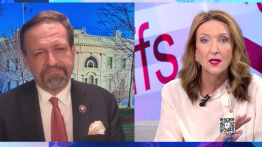
If, for some unfathomable reason, you missed Newsnight last night, do make sure you see, somehow, the interview between presenter Victoria Derbyshire and the former deputy assistant to Donald Trump, Sebastian Gorka. Derbyshire has had it coming for a long time. She believes it is sufficient, when interviewing somebody who takes a Trumpish view of the world, simply to screech her idiotic objections and prevent the interviewee from speaking at all. This happens every time a supporter of Trump is allowed on to her show. She is as bad as Maitlis, except without the charisma. Gorka refused to stand for it and told her three times to shut up –

How Farage can win power

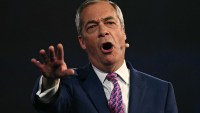
There can be no doubt that Nigel Farage was one of the big political winners of 2024. His decision to lead Reform UK into the general election shaped the campaign and was a significant factor in the scale of the Conservative defeat. Reform won more than four million votes and polls suggest they have gained further support since, raising the real possibility that they could replace the Conservative party as the primary voice of small ‘c’ conservative Britain. Nigel Farage and his party have several things going for them. Number one is that immigration continues to be a key issue for the British public. We know that immigration and asylum

How Trump’s tariffs will hurt China

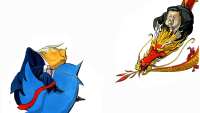
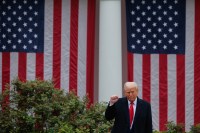
China has been hit hard by President Trump’s tariff list, which he unveiled yesterday in the White House rose garden. As part of his ‘Liberation Day’, Trump imposed new 34 per cent tariffs on China. This seems to be in addition to the 20 per cent tariffs levied on the country by the US since January. And in addition to 11 per cent tariffs previously applied after Beijing was accused of violating international trade and harming US commerce. That means the average tariff on imported goods from China possibly stands at 65 per cent. Next month, things will get even worse for China when the ‘de minimis’ exemption will be phased

Keir Starmer plots retaliatory tariffs

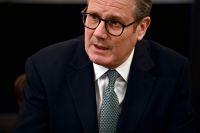
How will the UK respond to Donald Trump’s ‘Liberation Day’? After the US President announced a batch of new tariffs yesterday, including a 10 per cent blanket levy on imports from the UK, ministers are discovering the pros and cons of the new normal. Supporters of Keir Starmer have taken comfort that the White House has imposed the lowest rate on the UK.  China faces total effective tariffs of 54 per cent, and the EU will be on levies of 20 per cent. While some around the Prime Minister have suggested that the UK is receiving preferential treatment because of clever diplomacy, others point to the trade deficit and fact

Starmer is teaching Europe a lesson on tariffs

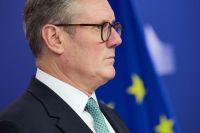
The reactions to Donald Trump’s tariffs between London and Brussels could not be more different. Where Keir Starmer was conciliatory, stressing that his government still hoped to negotiate with the US, European Commission President Ursula von der Leyen was quickly out of the blocks with threats of retaliation, saying that a package of measures was being finalised. It has since emerged that the EU plans to wait four weeks before imposing any retaliatory measures. Nevertheless it does rather expose the difference between the EU and post-Brexit Britain. The EU sees itself as a match for the US, and views Trump’s declaration of trade war as a power game. Britain, on the other

Trump’s tariffs could help China

Donald Trump is, at least, a man of his word. Before he won the US election, Trump said that China had ‘really taken advantage of our country’ and vowed to slap punitive tariffs on imports from the People’s Republic. As we have repeatedly seen, Trump carries through on his threats. ‘Liberation Day’ saw China hit with 54 per cent tariffs as payback for what the president deemed unfair policies, the highest rate on any country. Punishing US allies in Asia is not helpful for countering the threat from Beijing That this is part of a wider move against Beijing was made clear this week when, in a leaked memo, US

Israel is playing a dangerous game in Syria

As Donald Trump’s tariffs dominate the headlines, in the Middle East, Israel is stepping up its campaign against Syria. Israeli air strikes hit targets across the country, including the T4 airbase in Homs, last night. The latest campaign which has been conducted over the last few months – involving dozens of air strikes and the deployment of troops – is a big escalation. The strikes in Syria overnight were intended to deter Turkey from making use of bases inside the country. The bombings were to ‘convey a message to Turkey,’ an Israeli official told the Jerusalem Post. Turkey has made much of its closeness to the new leadership of Syria. It had an uneasy relationship with the now-dissolved

Japan has been stunned by the Trump tariffs

Virtually the whole world is waking up to the reality, not threat now, of President Trump’s Liberation Day tariffs, but in few places will the sense of shock and resultant anxiety be greater than Japan, where a whopping 24 per cent has been slapped on exports to the US. The Japanese, who have grown used to a decent relationship with successive American administrations and a whopping trade surplus, will have many sleepless nights ahead. The reaction here has not been one of anger or resentment – more stunned bemusement. Prime Minister Shigeru Ishiba, who did his best to cozy up to Trump on a recent summit in Washington (he presented Trump

Scottish Tory MSP storms out ‘Trump-esque’ party

All is not well in the Scottish Tory party. Onetime leadership hopeful Jamie Greene MSP has dramatically quit the party today, announcing his exit in a scathing letter to current leader Russell Findlay. Raging that the group has become ‘Trump-esque in both style and substance’, Greene fumed that the Scottish Conservatives were at risk of being once again labelled the ‘Nasty Party’ by ‘chasing the votes’ of Reform voters. Ouch. The Scottish politician – who believes he was sacked from the party’s frontbench in 2023 over his support for Nicola Sturgeon’s gender reforms – blasted his party for a rightwards shift as Reform UK continues to gain momentum north of

Trump’s tariffs explained

12 min listen

It’s the day after America ‘reclaimed it’s destiny’, or so Donald Trump says. The President announced a raft of ‘reciprocal’ new tariffs from the White House rose garden, including a 10% levy on the UK which – before it comes into effect on 5th April – the government hope to negotiate down.  Other countries have come off much worse. China, for example, will experience a 34 per cent ‘discounted reciprocal tariffs’, compared to the 67 per cent Trump claims China puts on US goods. The European Union will experience 20 per cent levies, compared to the 39 per cent Trump also says is put on US goods. ‘We’re a very

This could be the largest US tax rise in half a century

Across the world, markets are plunging as they respond to the global tariffs Donald Trump unleashed from the White House rose garden last night – with the president’s top economist describing the falls as ‘short-term bumps’. The pound passed $1.30 for the first time in six months while stocks in Tokyo fell 4 per cent. On opening, the FTSE 100 fell nearly 2 per cent, despite the slightly more favourable 10 per cent levy we face compared to the 20 per cent Trump hit Europe with. How bad could these ‘bumps’ get for the US though? Trump returned to office promising tax cuts. But however he may spin his new

Trump’s tariffs are just bizarre

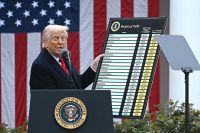
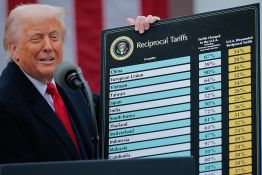
They would restore manufacturing, force trade barriers to be taken down, and allow new industries to be created. There have been various different explanations for why President Trump’s new tariff regime made sense. And yet when they were finally revealed yesterday one point was clear. There was no logic. The tariffs were just weird. The big reveal turned out to be a board that flapped around in the wind outside the White House. Donald Trump marked Liberation Day by holding up a placard with a list of countries – each one with a number next to it. The White House has worked out the tariffs it estimates American goods face in

Can Trump defend his tariff calculations?

When President Trump held up an easel in the White House Rose Garden illustrating each country’s ‘tariffs charged to the USA’ and the new ‘U.S.A. discounted reciprocal tariffs’, there appeared to be some small print underneath the first column, barely readable. Then printed copies started to circulate the garden. Underneath the column showing each country’s ‘tariffs charged’, it read: ‘including currency manipulation and trade barriers’.  It was clear that the figures published by the Trump Administration were their interpretation of tariff calculations. It was also immediately clear that some countries were going to dispute the figures. But exactly what had been calculated was not immediately obvious. The picture is still hazy

The growing controversy over Ireland’s neutrality

As the war of words between Donald Trump and the EU continues to escalate, European countries have become increasingly concerned about their military reliance on the United States. As a result, the need to increase defence spending has become a major issue. Germany has abandoned its ‘debt lock’ as it seeks to raise more funds for its military, while Macron has repeatedly spoken of the need to gain more ‘strategic autonomy’ away from America. Now the debate has even spread to Ireland, the country on the furthest western edge of the EU. Traditionally, Ireland has prided itself on its neutrality or ‘military non-alignment’, while also enjoying a long-standing record of

Britain needs a Rearmament Isa

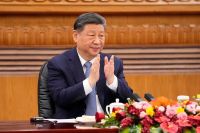
The City’s self-styled ‘cheerleader in chief’, Lord Mayor Alastair King, on a recent visit to Beijing and Shanghai found leading Chinese banks keen to expand in London. What with Chinese diplomats also keen to establish a fortress-embassy at Royal Mint Court on the City’s eastern edge, that may ring alarm bells with those who regard Xi Jinping’s neo-Maoist regime as anything but friendly. But as King also observes, ‘the tectonic plates are shifting’. All geopolitical relationships are up for review – though what follows is my own analysis, not the Lord Mayor’s. A previous British visitor to Shanghai, chancellor George Osborne in 2015, declared an urge to be ‘China’s best