Politics

Read about the latest political news, views and analysis

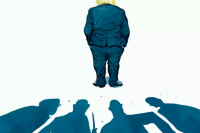
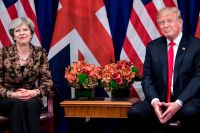
Poor Theresa May. In Trump-speak, ‘very good relationship’ means he can’t stand you

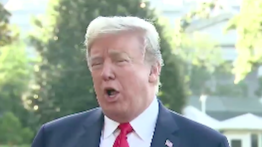
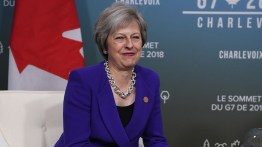
Uh oh – Poor Theresa.  You know that when Donald Trump, the most powerful man in the world, tells the media that you and he have a ‘very good relationship’, it means he doesn’t like you at all. It’s what he said about Theresa May this morning, just before he left for Europe. It’s also what he says about Justin Trudeau (‘good relationship’), Angela Merkel ('really great relationship’),  Mitch McConnell ('relationship is very good') and even Barack Obama (‘very good relationship’). In fact, in Trump-speak, ‘very good relationship’ means ‘I can’t stand him/her.’ Boris Johnson is a different matter. ‘Boris Johnson is a friend of mine,’ said the President this morning.
Theresa May’s weakness is a virtue | 10 July 2018

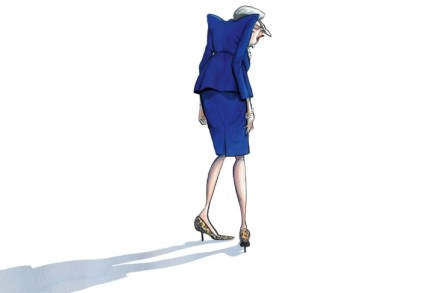
Something rather remarkable happened yesterday: Theresa May had a good day. This counts as news and is itself testament to the miserable time she has endured since she became Prime Minister. Some of this – much of it, in fact – was her own fault. Or at least her own responsibility. If she had called an election in September 2016 it seems likely she would have been rewarded with a handsome majority and, just as usefully, a thumping mandate for her own interpretation of Brexit. Delaying until June 2017, however, meant she missed her chance. By that stage the moment had passed. The election became another unwanted imposition.

President Trump: UK is in turmoil, Boris is my friend

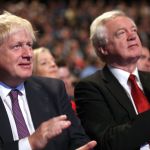
Theresa May's bad week just got worse. After two Cabinet Brexiteers – David Davis and Boris Johnson – resigned on Monday, the Prime Minister attempted today to suggest it was business as usual tweeting of a 'productive Cabinet meeting this morning - looking ahead to a busy week'. However, right on cue, President Trump has arrived on the scene to enter some drama. Ahead of the US president's working visit on Friday, Trump has been commenting on the UK political situation which, by the way, is in 'turmoil'. The part that will particularly concern No 10 is not Trump suggesting his trip to Helsinki to see Putin will be easier than the UK one. Instead, it's Trump's comments on the former Foreign Secretary.

Watch: Evan Davis taken to task over Brexit bias

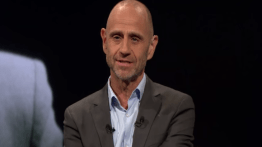
Brexit supporters are used to getting a hard time when they appear on TV, but enough was enough for Iain Dale when he popped up on Newsnight last night. After being introduced as a Brexit supporter – in contrast to Matthew Parris and Rachel Shabi, who were called a ‘Times columnist’ and a ‘Labour-supporting columnist’ – Dale took Evan Davis for task: Iain Dale: ‘Why do I get called Brexit supporter and these two – you don’t describe these two as Remain.

The Remainers are in charge now | 10 July 2018

There has been a Remainer coup. Remainers now inhabit virtually all of the highest offices in the land. Overnight, adherents to this minority political viewpoint seized the final levers of political power. This is the one downside — and what a downside it is — to the belated outbreak of principle among the cabinet’s Brexiteers: their walking away has allowed Theresa May to further surround herself with fellow Remainers, and pretty much expel the Brexit outlook from her cabinet. The new foreign secretary, Jeremy Hunt, voted Remain. As did his replacement at the Department of Health, Matt Hancock. Hancock is a former acolyte of George Osborne, arch-Remainer and now chief media ridiculer of Brexit via his newspaper the Evening Standard.

Westminster tube staff troll feuding Tories

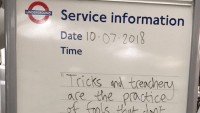
After a day of high drama in Westminster, tensions are running high in Parliament. And also, it seems, in the buildings attached to Parliament – like Westminster Underground. This is the 'service information' message on today's board: 'Tricks and treachery are the practice of fools that don't have enough brains to be honest' Who ever could they be referring to?

Only a second referendum can save us from Jeremy Corbyn

It would be easy to dismiss the Independent Commission on Referendums as a branch of the lobby trying to overturn the Brexit result – even if it does contain a token Leave campaigner, Gisela Stuart. Its pretentious title could easily lead people to mistake it for an official, government-sanctioned inquiry rather than a unsolicited piece of work by academics at the Constitution Unit, UCL. It is utterly certain that the commission would not have been set up had the Remain side won the day two years ago. Yet even so, the commission is right when it concludes that referendums “work best when they are held at the end of a decision-making process to choose between developed alternatives.

Matt Hancock gets serious as new Health Secretary

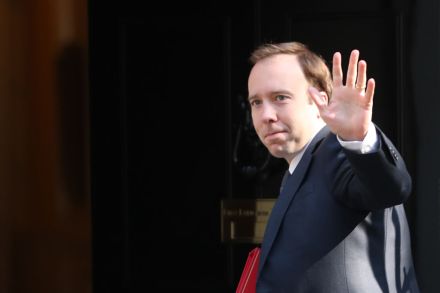
Theresa May's mini emergency reshuffle is complete. After David Davis and Boris Johnson resigned over the Prime Minister's Brexit position, No 10 appointed Dominic Raab Brexit Secretary and moved Jeremy Hunt from Health to the Foreign Office. Now Matt Hancock – the Culture Secretary – has been appointed Health Secretary. This is a big promotion for Hancock who up until recently had been banished to the junior ministerial ranks. As George Osborne's former Chief of Staff, Hancock had been regarded with suspicion by May's No 10. When May's reshuffle earlier this year hit difficulties – with ministers refusing to move – Hancock was reluctantly granted a return to the frontbench. The fact that he has now received a second promotion suggests two things.

What Jeremy Hunt got right – and wrong – as Health Secretary

You couldn’t get a stronger contrast between the new Foreign Secretary and his predecessor. Jeremy Hunt is a minister who has earned the absolute trust of two Prime Ministers in an extremely politically charged job. He was brought in by David Cameron to clear up the mess after Andrew Lansley’s Health and Social Care Act disaster, and Theresa May kept him in place, quickly learning that he was one of the few ministers she really could leave to their own devices. This was a huge accolade from May, given her propensity to micromanage. Hunt earned that trust because he is a very loyal Cabinet minister. He does not style himself as an operator, unlike many of those he has served alongside.

Jeremy Hunt gets the Foreign Office

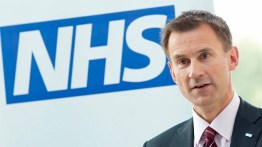
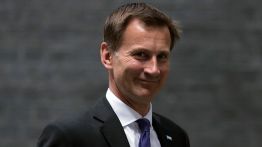
Jeremy Hunt is the new Foreign Secretary, replacing Boris Johnson. Having secured a new funding settlement for the NHS, Hunt has—finally—agreed to move jobs. I suspect it will be quite some time before anyone beats his record as the longest serving Health Secretary ever. Hunt was a Remainer during the referendum campaign. But since he has become one of those ministers who have talked with some genuine enthusiasm about the opportunities that Brexit might offer. Having lived in Japan and having family links on his wife’s side to China, Hunt does know something of the world outside Britain. He is also naturally diplomatic. I suspect that Foreign Office officials will find it easy to get along with this son of an admiral. This is a significant promotion for Hunt.

What happened when Theresa May met with her MPs

Having lost two of her most senior Cabinet Ministers, Theresa May went to address her MPs in a stuffy, hot room. But the occasion went off fairly-well for her. The vast majority of the questions were supportive and even the veteran Eurosceptic Edward Leigh made clear that the 1990s showed that a leadership contest wouldn’t achieve anything. Perhaps, the most hostile moment came towards the end of the session when Philip Davies asked if she regretted how Friday was handled given it appeared like a Remain coup. Other than Davies, most of the questions were fairly friendly. Former Cabinet Ministers Damian Green, and Patrick McLoughlin were supportive. Maria Caufield, a party vice-chair, was slightly more critical.

We don’t know where Brexiteers are going now. And neither do they | 9 July 2018

In happier days when Britain was not on the brink of disintegration, David Davis told me a story about the 19th century French politician Alexandre Auguste Ledru-Rollin. Little did I suspect that soon he would be living it. The Francophiles among you will recall the apocryphal tale of Ledru-Rollin enjoying his lunch at a Parisian café when a revolutionary crowd stormed past. Ledru-Rollin leapt from his seat and cried “There go the people. I must follow them, for I am their leader." Where were they going? He did not know. What was his plan? He did not have one. True believers in Brexit are revolting, and not without cause.

The EU is now in control of Britain’s Brexit destiny

The list of things about the European Commission that many people at Westminster don’t understand is long. My favourite is that in quite a lot of the EU, the Commission, regularly accused in Britain of spewing out red tape, has often been accused of wanting to deregulate domestic markets and expose cosy economic arrangements to the bracing winds of “Anglo-Saxon capitalism”. Today though, what’s more important is this: the Commission understands British politics. Understands it very well, in fact, and sometimes better than people in the Westminster village. Brexit is a case in point.

Boris Johnson’s resignation letter, full text

Dear Theresa It is more than two years since the British people voted to leave the European Union on an unambiguous and categorical promise that if they did so they would be taking back control of their democracy. They were told that they would be able to manage their own immigration policy, repatriate the sums of UK cash currently spent by the EU, and, above all, that they would be able to pass laws independently and in the interests of the people of this country. Brexit should be about opportunity and hope. It should be a chance to do things differently, to be more nimble and dynamic, and to maximise the particular advantages of the UK as an open, outward-looking global economy. That dream is dying, suffocated by needless self-doubt.

The British government is in crisis, again. Enter Trump, stage right, again

Trump says he likes things ‘nice and complicated’ – well, in that case, he couldn’t be coming to Britain at a better time. Theresa May’s newly hatched soft Brexit plan, announced on Friday, has triggered two major resignations from her cabinet and another political crisis in Britain. David Davis, the Brexit Secretary, went late last night. Then Boris Johnson, the Foreign Secretary followed early this afternoon. Westminster is now alive with whispers of an imminent leadership coup; the Tory party looks hopelessly divided, the political system unable to cope. We may even have another general election, the third in four years.   Enter Trump, stage right. He must be licking his lips.

Theresa May faces the music in the Commons

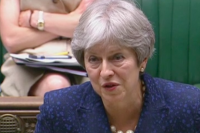
When Theresa May envisaged herself giving a statement in the Commons on the Cabinet agreement made at Chequers, she didn't expect to do so with her Brexit Secretary and Foreign Secretary no longer by her side. And so it was after a morning of high drama, a lonely Prime Minister this afternoon had to face questions from a divided party over a Brexit position she yesterday thought her Cabinet agreed upon. It wasn't a pleasurable experience for the beleaguered Prime Minister. Labour’s Kevin Brennan asked May whether the BBC's Laura Kuenssberg was right that 48 letters had been sent calling for a 'no confidence' vote. May simply said she was getting on with her job.

The Tory Brexiters’ ultimatum to Theresa May

With the resignations in the past 24 hours of two of Theresa May's four most senior ministers – Boris Johnson as Foreign Secretary, and David Davis as Brexit Secretary – something very important died. But it is not clear whether what has been snuffed out is Theresa May's Brexit plan or Theresa May's leadership of the Conservative Party. That at least is what Tory Brexiter MPs tell me. Like Davis and Johnson, they see her Brexit proposal – to permanently be governed by EU rules for the making of goods and food, and also to collect EU tariffs at our borders – as a betrayal of the 17.4m people who voted to leave the EU.

Theresa May’s troublemakers resign. What now for the PM?

In the past 24 hours, Theresa May has lost two of the Cabinet ministers who have caused her the most trouble. Boris Johnson and David Davis were widely considered to be immovable, despite a number of crises entirely of their own making. The only way for them to go was by resignation, which lends them an appearance of strength. This strength has little to do with the achievements of either minister, though. David Davis had been increasingly sidelined from the negotiation process, which does appear to have been a key factor in his decision to go, given no-one likes to be treated as though they don’t matter. But it isn’t impossible to understand why Number 10 didn’t fully trust the Brexit Secretary.