Politics

Read about the latest political news, views and analysis

Boris Johnson resigns as Foreign Secretary

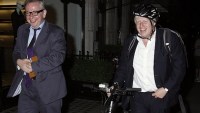
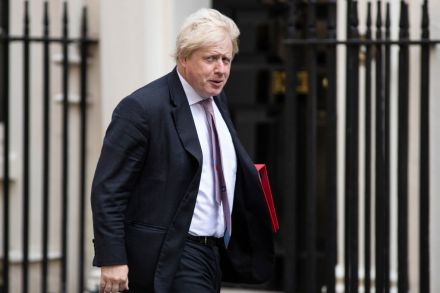
Boris Johnson has resigned. The Foreign Secretary becomes the second senior Cabinet Minister to quit over the deal agreed at Chequers, which he reportedly called a ‘turd’. At the weekend, those close to Boris were clear that he wouldn’t resign. They said that the only people who would benefit from his resignation would be Michel Barnier and co and that he intended to stay and fight against further concessions to the EU. So, what has changed? Well, a cynic would say David Davis’s resignation. But I understand another factor for him has been how he would defend this plan in public. The more he thought about it, the more he felt he couldn’t do it. I understand he is now of the view that no deal is better than this deal.
Dominic Raab’s appointment is a smart move by Theresa May

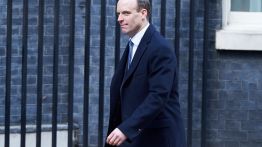
The appointment of Dominic Raab as Brexit Secretary to replace David Davis is very smart politics by the prime minister. He is regarded by the True Brexiters as one of them. In fact, David Davis sees Raab as his protege. For what its worth, his promotion shows the influence in Downing Street of the director of communications, Robbie Gibb – late of the BBC – in that Gibb has been a fan of Raab's for some time. If there is a mystery, it is why Raab took the job. The point is that it is pretty unlikely that he fundamentally disagrees with Davis that May's plan to take EU rules for how we produce goods and food represents a breach of what the British people thought they were voting for in the referendum.

Watch: Steve Baker savages Theresa May’s Brexit plan

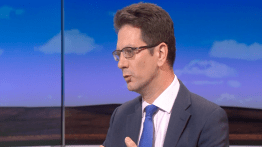
Theresa May's nightmare Monday morning is going from bad to worse. Steve Baker, who followed David Davis out of the exit door at the Brexit department, has savaged the Prime Minister's Chequers plan on the Daily Politics. When asked whether the Brexit blueprint was delivering Brexit in name only, he had this to say: 'The problem with this particular Brexit is that it will not allow us to have proper control over what goes on in the United Kingdom. We need to get out from treaty obligations that automatically oblige parliament to accept any particular rules and instead be in a position where what we do it is a matter for us.' So why didn't Baker speak out sooner?

Why No 10 made Dominic Raab Brexit Secretary

Dominic Raab has this morning been appointed as David Davis's successor as Brexit Secretary. Raab moves from his role as minister of state for Housing to his first Cabinet post as Secretary of State for Exiting the EU. Well-liked among colleagues, Raab is someone who is seen to have been consistently overlooked for promotion. He was recently asked in a television interview, why he hadn't been promoted given that he was so consistently loyal in defending the government's position. He is also a savvy hire by No 10 thanks to the fact Raab is a Davis ally and a dedicated Leaver. It will help to send the signal that this is still a Brexit Brexiteers can get behind. Also getting a Brexiteer to take on this job shows that the revolt against the Chequers deal is, still, relatively limited.

No 10’s opposition briefing highlights the Prime Minister’s Brexit conundrum

The Brexit rebellion has begun. After murmurs of discontent and Jacob Rees-Mogg editorials over the weekend, the kickback to Theresa May's soft Brexit agreement has arrived in the form of a resignation from David Davis. Steve Baker – a former chair of the European Research Group – has followed suit and things are looking very fraught. No 10 remain confident that should 48 letters be fired off to Graham Brady – the chair of the 1922 committee – they would win that confidence vote. But there's another problem in all this. The European Research Group – made up of Eurosceptic Tory backbenchers – have turned on the Prime Minister and her Brexit blue print. A blue print that is expected to be watered down further.

The next Brexit Secretary: runners and riders

David Davis had left DexEU – and taken most of his colleagues with him. Steve Baker – junior minister– at the Brexit department has resigned and there are rumours Suella Braverman could also quit. So, with a growing Brexit rebellion brewing, Theresa May's next move is pivotal. Who will replace Davis? No-one: The department for Exiting the European Union has been repeatedly sidelined by No 10. There's a chance that Theresa May will respond by merging that department into another – the Cabinet Office or the Foreign Office. However, the optics of closing the Department for Brexit at a time when critics say the Brexit dream has died would not be so great for the beleaguered PM.

David Davis breaks his silence on his resignation

David Davis has broken his silence on his resignation. Unsurprisingly his comments on the Today programme are devastating for Theresa May’s Brexit strategy. The now-departed Brexit secretary said his position was no longer tenable because he simply didn’t believe in the PM’s approach. In his resignation letter last night, he had said that ‘that the national interest requires a Secretary of State in my Department that is an enthusiastic believer in the approach, and not merely a reluctant conscript’. He went further on the Today programme, calling the PM’s approach a ‘dangerous strategy’.

David Davis’s special adviser lashes out

Oh dear. At one point this weekend, it seemed as though Theresa May had pulled off a blinder – getting her Cabinet Brexiteers to sign up to her soft Brexit plan. Not so anymore after Davis Davis resigned late last night. And it seems, Davis and his band of Brexiteers are not about to make life easy for their Remain-minded colleagues in the Tory party. Steve Baker has followed Davis in resigning from DexEU. As for Davis's special adviser and former MP Stewart Jackson? Well, he spent last night lashing out at journalists and MPs.

Theresa May’s reply to David Davis: 12 reasons why Brexit is safe.

Dear David, Thank you for your letter explaining your decision to resign as Secretary of State for Exiting the European Union. I am sorry that you have chosen to leave the Government when we have already made so much progress towards delivering a smooth and successful Brexit, and when we are only eight months from the date set in law when the United Kingdom will leave the European Union. At Chequers on Friday, we as the Cabinet agreed a comprehensive and detailed proposal which provides a precise, responsible, and credible basis for progressing our negotiations towards a new relationship between the UK and the EU after we leave in March. We set out how we will deliver on the result of the referendum and the commitments we made in our manifesto for the 2017 general election: 1.

David Davis’ resignation letter

There have been a significant number of occasions in the last year or so on which I have disagreed with the Number 10 policy line - ranging from accepting the Commission’s sequencing of negotiations through to the language on Northern Ireland in the December Joint Report. At each stage, I have accepted collective responsibility because it is part of my task to find workable compromises, and because I considered it was still possible to deliver on the mandate of the referendum, and on our manifesto commitment to leave the Customs Union and the Single Market. I am afraid that I think the current trend of policy and tactics is making that look less and less likely.

Don’t blame Cameron for the government’s Brexit mess

I listened to the Coffee House podcast about Danny Dyer’s David Cameron rant. Fraser Nelson appears to live in a parallel universe. It is true that Cameron probably expected to be in a coalition with the Lib Dems again in 2015 and to never have to fulfil the promise of an EU referendum. However it is absurd to lay the blame for the government’s disastrous handling of Brexit negotiations at Cameron’s door. After all, was it David Cameron or Theresa May who triggered Article 50 with no clear negotiating plan? Was it David Cameron or Theresa May who called a snap election in a fit of hubris only to lose their majority?

Moggmentum reaches the Commons

Although Moggmentum has been building for some time among the Tory grassroots, conventional wisdom dictates that Jacob Rees-Mogg is still very unlikely to make it to No 10 – no matter how enthusiastic the members – thanks to the fact that he doesn't have the support of enough Tory MPs to get onto the ballot paper in the first place. However, is a change a coming? Mr S only asks after Theresa May's soft Brexit proposal appeared to get a number of Tory MPs wondering who would do a better job. Writing in the Mail on Sunday, Andrew Bridgen – the outspoken Brexiteer and member of the European Research Group – says that the Chequers meeting saw Cabinet Brexiteers sell out.

Sunday shows round-up: Michael Gove – Chequers Brexit deal will honour the referendum result

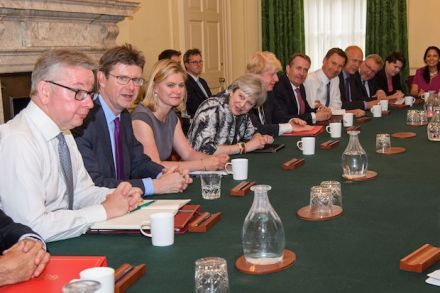
After an away day at Chequers on Friday, the Cabinet has finally agreed on a compromise approach for negotiating the UK's future Brexit deal. The proposals include a 'free trade area for goods', a joint institutional framework for the European Court of Justice and a 'common rulebook' to maintain high regulatory standards in a variety of areas. Environment Secretary Michael Gove, a prominent member of the official Leave Campaign, joined Andrew Marr to express why he felt his fellow Conservatives should now back the government's new strategy: AM: Is your message to those colleagues wondering about what to do next - 'This isn't perfect... but it is by far the best we can possibly get now'? MG: Yes. Critically, we have got to ensure that this country leaves the European Union in March 2019.

How much more unpalatable will the EU make this deal?

From the flurry of joint op-eds from Cabinet Ministers today, you might be forgiven for thinking that the Chequers deal is the deal. But, of course, it is not. Rather, it is the UK’s government opening position in the negotiation on the future relationship. So, logically, you would expect the government to have to make more concessions. The problem for the ministerial Brexiteers is that what the EU is likely to demand will make the deal much more difficult to defend. Take, for instance, parliament’s role in having to pass any changes to the so-called ‘common rulebook’ between the UK and the EU. Number 10 likes to talk about this as a ‘parliamentary lock’ on any changes that could be detrimental to the UK.

Why won’t the BBC call ‘Mexico’s Corbyn’ a populist?

The career of the new President of Mexico, Andrés Manuel López Obrador (‘Amlo’), suggests he is a populist. He jumps from party to party and ends up founding his own. He advocates price ceilings for tortillas. Disputing his defeat in the presidential election of 2006, he proclaims himself ‘legitimate President’, wearing a presidential sash. Yet the BBC — with the honourable exception of Justin Webb on Today — avoids calling Amlo a populist, attributing the word only to his enemies (‘His critics call him a cheap populist’). This contrasts with its ready application of the word to Trump, Orban and Salvini. Amlo, of course, is left-wing, and the three just mentioned are not.

How Theresa May trounced the Brexiteers

Tory MPs and ministers have consistently under-estimated their leader. What Theresa May achieved at Chequers yesterday was extraordinary. She persuaded her cabinet to sign up for a Brexit plan that drives a coach and horses through what the Brexiters in her team – especially Boris Johnson and Michael Gove – said Brexit was all about, during that historic referendum campaign. What is more, at Chequers yesterday, Gove was a cheerleader for a plan that would enshrine in treaty what is supposedly anathema to his Brexit cause – that the UK now and forever would be subject to European Union rules and regulations governing the quality and safety of the goods we make and buy and also the food we produce and consume.

The reason May’s third way won approval? Cabinet Brexiteers have no alternative plan

Theresa May is through Chequers with a plan that proposes having the UK follow EU rules on goods and agri-foods. This isn’t what the Cabinet’s Brexiteers would have expected two years ago, or even nine months ago. But as I say in The Sun this morning, the biggest single reason they are putting up with this is that they don’t have an alternative plan. When Boris Johnson invited the Cabinet’s Brexiteers plus Gavin Williamson and Sajid Javid, who were pivotal to the Brexiter inner Cabinet’s rejection of Theresa May’s new customs partnership plan, to his office for a meeting on Wednesday morning it only highlighted the group’s problems. First, Javid declined the invitation, as he didn’t want to get factional.

Brexit isn’t the cause of High Street woes

As someone who follows the news on Radio 4 at 6, 7 and 8 each morning, I notice that the bulletins begin very leftish and become slightly less so later. I assume the unit responsible, ‘Newsgathering’, works through the night from its default political position. So it relies heavily on the ready supply of ‘news’ from pressure groups, NGOs and right-on charities: ‘A new report warns that millions will die unless the government immediately injects £400 billion into X’; ‘A survey by an independent, Brussels-based think tank reveals that independent, Brussels-based think tanks believe that Brexit will be a disaster for Britain’. As actual news gets going, this dreary propaganda is sometimes dislodged by reality.