Politics

Read about the latest political news, views and analysis

Why the Labour party deserves to be destroyed

So after months of prevarication, Labour have announced that they will back a second referendum under any circumstances and will campaign for Remain to stop a 'no deal or a damaging Tory Brexit'. The reaction has dismayed Labour MPs in vulnerable Leave-leaning seats, but delighted Nigel Farage. Indeed, the decision has played perfectly into the Brexit party's strategy of targeting working-class voters in the North and Midlands. Three months ago, many assumed that a Tory wipe-out at the next election was inevitable. But now the tables are turned and it is difficult to see anything but electoral doom for Labour. The Brexit party will surely siphon off Leave voters in Labour’s industrial heartlands.

Kim Darroch and the myth of the special relationship

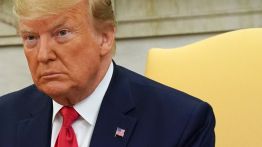
Like a priest standing before the bronze gates of a temple, the British ambassador to Washington serves as the guardian of one of the great modern myths: the idea, conceived by Winston Churchill, that a special relationship exists between the UK and the US. The impression that British ambassadors can wield disproportionate influence in Washington is a legend successive British governments have been keen to burnish – so much so that it has arguably become the central pillar of UK foreign policy since 1945. But the reality – as Donald Trump's spectacular defenestration of Sir Kim Darroch shows – is rather different. Perhaps only one ambassador has really ever lived up to the myth.

The moment the European project first went wrong

At a time when the EU is at its least popular and, worse still, least respected, it is worth reflecting on how the idea for a united Europe developed – and where it went wrong. The Spectator’s reprint last week of Christopher Booker’s 2014 article ‘How the first world war inspired the EU’ is a timely reminder of the real genesis of the EU. Yet it was only after the Second World War amid fear of a renascent Germany, that the concept of an 'ever-closer union' became the shibboleth of European construction. It was here that the European project took a mistaken turn. The First World War led to France and Britain's economies becoming closely aligned. This partnership involved inter-allied commissions to oversee the distribution of wheat, sugar, coal and credit.

Sajid Javid’s Tory leadership reflections: Bailey, Boris and Brexit

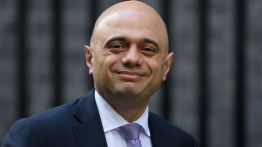
Although Sajid Javid was knocked out of the Tory leadership contest, the Home Secretary could soon have a consolation prize in the form of the keys to No. 11. Javid is tipped as the frontrunner for the hotly coveted role of Boris Johnson's chancellor. Speaking at Tuesday night's Policy Exchange summer reception, Javid reflected on what he was proud of from his campaign: 'As for the leadership campaign, I’m not sure what more I could have done! I showed off my little dog, Bailey, I showed off my mother and her cooking, even my daughter’s letter. Although I didn’t have to reveal any unusual artistic hobbies that I might have. I made a pitch to my colleagues, and I’m proud of the support that I’ve got from some of the colleagues that I admire most.

Why won’t Brexiteers stand up to Donald Trump?

There’s a new way of testing if someone is genuinely committed to the ideal of national sovereignty. Let’s call it the Darroch Test. Will you stand up to any foreign leader who arrogantly presumes the right to tell Britain who its ambassadors overseas should be? Or will you cave in to that foreign leader and effectively let him or her dictate the make-up of Britain’s diplomatic corps? That’s the Darroch Test. That’s the new national sovereignty test. And, sadly, many Brexiteers, the people who are meant to be standing up for the sovereign rights of the British nation against foreign oligarchies and bureaucratic bullies, have failed it. Yes, this concerns Kim Darroch, who resigned today as ambassador to the United States.

‘A personal tragedy’: the Foreign Office responds to Kim Darroch’s resignation

As a lifelong diplomat, it was probably the closest Sir Simon McDonald, the head of the UK diplomatic service, has ever come to publicly showing a sliver of emotion, when speaking to MPs today about the resignation of the Sir Kim Darroch. The head of the diplomatic service had been summoned by the Foreign Affairs Select Committee to discuss the leaking of sensitive diplomatic cables to the Mail on Sunday, which were highly critical of the US President Donald Trump. Shortly before the committee, Sir Kim Darroch announced his shock resignation.

Corbyn and May were busy fighting other people at PMQs

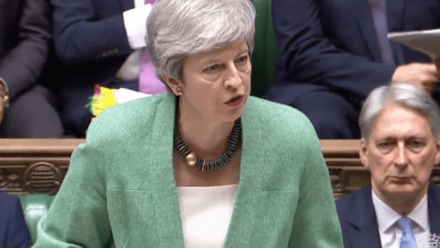
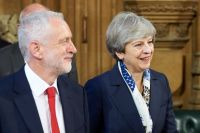
Jeremy Corbyn took a bizarre approach to today's Prime Minister's Questions, choosing largely to have a go at the likely leader of the Liberal Democrats Jo Swinson, rather than the woman opposite him. He choose to focus his questions to Theresa May on cuts to legal aid, branding them a 'Lib Dem decision' and pointing out that Jo Swinson was the junior coalition minister who took the cuts through the Commons. It was additionally odd that Corbyn chose to talk about legal aid, given it offered a reasonably easy leap for May into the way the party is handling tonight's Panorama on anti-Semitism. But the big story of the day was Sir Kim Darroch's resignation as UK Ambassador to Washington, something Corbyn should have exploited to his advantage.

Northern Ireland, gay marriage and the great liberal power-grab

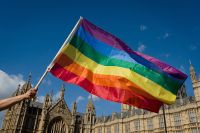
Yesterday, the Welsh government announced new guidelines to make school uniforms gender-neutral, which would mean an end to trousers being advertised for boys and skirts for girls. You can imagine the outrage if the UK government now tried to over-ride that decision, saying it was a load of silly nonsense. The rumblings in Cardiff would bring down a building or two: how dare you interfere with the decisions of Wales’ democratically-elected government, would come the cries. And they would have a point. When the Welsh voted – very narrowly – for devolution in 1997 that was that.

Why Boris Johnson failed to defend Kim Darroch

Boris Johnson’s failure to rebuke Donald Trump for his unpresidential attacks on the serving British prime minister and our US ambassador show that he takes for granted he’ll be the next PM, despite his insistence on the ITV debate last night that it would be presumptuous for him to do that. He is looking beyond the short-term attraction of being seen to stand up for Britain against a bullying US, to the relationship that he thinks will determine whether his early weeks in office are forceful or farcical. Johnson has been attacked by putative Tory friend and foe alike for refusing to manifest adequate solidarity with Sir Kim Darroch, who on Wednesday morning resigned after his criticisms of Donald Trump were leaked.

Sir Kim Darroch resigns as British Ambassador after leak

In the past few minutes, Sir Kim Darroch has resigned as UK Ambassador to Washington. The Foreign Office has just released a letter in which Sir Kim says says the leak of diplomatic cables in which he described President Trump as 'insecure' has made it 'impossible for me to carry out my role as I would like'. He may well be right that it is now impossible for him to continue working with the Trump administration. It might also have been impossible for him to continue in the role for much longer, given Boris Johnson is set to become Prime Minister, and pointedly refused to back him last night. But this will have long-lasting implications for the way the UK conducts its diplomatic work.

Change UK splitters become ‘The Independents’

You may have struggled to keep up with all the twists and turns of the group of independent MPs who left Labour and the Conservatives to form their own political party. First, Heidi Allen, Chuka Umunna and co. became the 'Independent Group', which was hastily renamed 'Change UK'. After several more name changes, Change UK then split after the European elections, with half its MPs becoming independent MPs, and the other half (led by Anna Soubry) becoming 'The Independent Group for Change’. If that wasn't confusing enough, Mr S is sorry to say that another independent group has entered the fray today.

Jeremy Hunt shows he doesn’t know how to handle Donald Trump

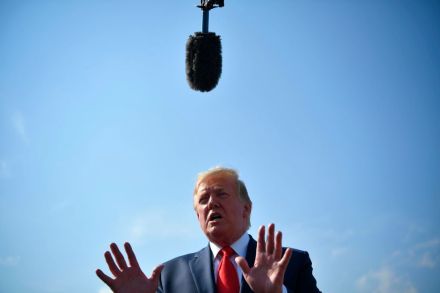
Jeremy Hunt has tried to end the war of words between Donald Trump and Britain's ambassador in Washington. But his open warning to the US president – that Trump's foul-mouthed broadsides against Sir Kim Darroch are “disrespectful and wrong to our Prime Minister and my country” – is bound to backfire. Instead of calming the situation, Hunt is pouring more fuel onto the fire. Trump lobbing another grenade across the pond later in the day is now virtually guaranteed. Of course, as Foreign Secretary, Hunt has a responsibility to defend his employees.

Why the Queen should appoint Johnson or Hunt as PM

Should the Queen appoint as Prime Minister the winner of the Conservative Party leadership election? Not necessarily, argued Professor Meg Russell and Professor Robert Hazell in a recent paper, covered in the Guardian last Sunday. If a handful of Conservative MPs defect, Russell and Hazell say, the winner may not be able to command a majority in the House of Commons, in which case Theresa May should remain in office and supervise a process to find some other person who does command the House’s confidence. Russell and Hazell go further, and argue that if the next government loses a vote of no confidence in the autumn and an election follows, the new Prime Minister would be constitutionally obliged to apply to the EU for an Article 50 extension.

My strange new life as a Brexit party MEP

I never thought I'd become a politician but Theresa May’s failure to deliver Brexit changed my mind. As a result, I decided to stand as a Brexit party candidate and, in May, I was elected as an MEP for London. For someone with no political experience, the weeks since have been surreal. Yet the strangest moment so far came last week, when my fellow Brexit party members and I travelled to Strasbourg for the inaugural meeting of the European parliament. My experience there has convinced me that Britain is right to leave the EU. Even travelling to Strasbourg seemed slightly strange. After all, what is wrong with the perfectly good parliamentary building in Brussels? This being the EU, there is no straightforward answer to this question.

Optimistic Boris looks ahead to turbulent term as PM in TV debate

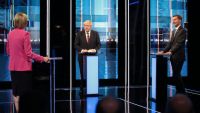
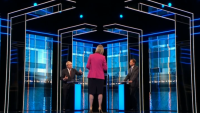
Jeremy Hunt managed to sum up the Tory leadership contest very aptly this evening when he accused Boris Johnson of 'peddling optimism'. The line, delivered in ITV's leaders' debate, did the Foreign Secretary no favours, though. He was pitching himself as the truthful realist, who wouldn’t make promises he couldn’t deliver on. Johnson ridiculed this as ‘defeatist’, telling the audience in his summation that Britain needed to get off ‘the hamster wheel of doom’. Had Hunt suggested Johnson was ‘peddling myths’ or ‘peddling nonsense’, then his line would have had better force for his cause. Instead, it underlined why the former Mayor of London is doing so well in the contest.

Watch: what do Boris Johnson and Jeremy Hunt admire about each other?

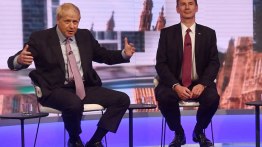
Tonight’s ITV debate was a much livelier contest than many expected, as both Boris Johnson and Jeremy Hunt engaged in blue-on-blue warfare as they battled to become the next PM. Even in one of the lighter moments of the evening the candidates struggled to be cordial on stage, with both opting to go on the attack when asked by an audience member what they admired about their opponent. Boris, after struggling for several moments to think up any answer, eventually settled on: 'I greatly admire his ability to change his mind, and campaign for Brexit now' – helpfully drawing attention to the fact that Hunt campaigned for Remain in 2016. While Jeremy Hunt, replied that: I really admire Boris's ability to answer the question.

Watch: Hunt accuses Johnson of ‘peddling optimisim’

Tonight, ITV hosted the first head-to-head debate between Boris Johnson and Jeremy Hunt as they vie to become the next Prime Minister, and leader of the Conservative Party. And while Jeremy Hunt may initially have entered the race as the candidate least likely to engage in blue-on-blue warfare, it didn't take long for the two candidates to begin tearing into each other on live TV. In one exchange, the pair clashed over no deal and whether Britain would actually leave the EU on 31 October. Remarkably, Hunt accused Johnson of 'peddling optimism' with his plan to take Brexit out by Halloween, saying that: 'Being prime minister is about telling people what they need to hear, not just what they want to hear. And the difference between you and me, is that you are peddling optimism...

Could Boris Johnson make Jeremy Hunt his deputy?

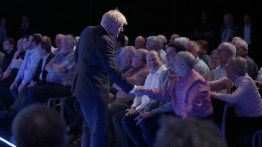
Who will Boris Johnson appoint as his deputy? Now that voting in the Tory leadership is well underway - with 60 per cent of party members expected to have sent back their ballots by Thursday - most MPs are starting to think more about what the next prime minister's cabinet will look like, and less about who that prime minister will be. There are more than enough candidates to fill the cabinet twice over, given the number of MPs who have backed Johnson. Some of their colleagues mock them for supporting someone merely because they hope he will give them a government job, but it's quite understandable that someone might make that calculation: after all, even non-politicians tend to want to go as far as they can in their line of work and to earn as much as possible.