Politics

Read about the latest political news, views and analysis

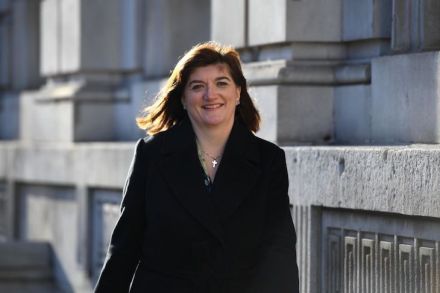
Cabinet minister Nicky Morgan announces she’s quitting as an MP

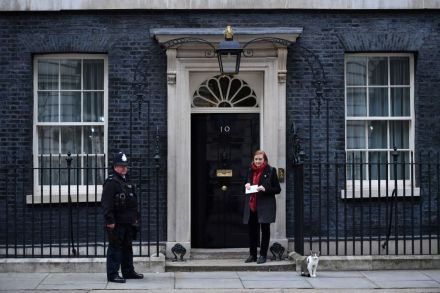
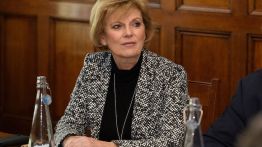
Nicky Morgan has announced she is standing down as a Conservative MP at the next election. She isn't the first to say she's off, but what's different about this resignation is that Morgan is a serving member of Boris Johnson's cabinet. In her resignation letter, she cites the need to send more time with her family - and the toxic political environment: 'But the clear impact on my family and the other sacrifices involved in, and the abuse for, doing the job of a modern MP can only be justified if, ultimately, Parliament does what it is supposed to do - represent those we serve in all areas of policy, respect votes cast by the electorate and make decisions in the overall national interest.
The shamelessness of the Labour moderates

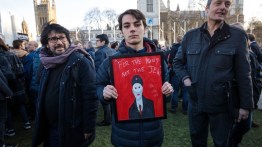
Anti-racism campaign Labour Against Anti-Semitism (LAAS) has today issued its position on the General Election. LAAS, responsible for exposing a litany of anti-Semites in Labour’s ranks, warns party members that ‘Jeremy Corbyn is unfit to be Prime Minister and that the Labour Party is unfit to be in government’. It says Labour poses ‘the greatest risk to our democracy and to the safety and security of the British Jewish community’. As such, they urge the general public to vote ABC: ‘Anyone but Corbyn’.  Other positions are available, most notably from Labour MPs who once spoke of Corbyn in the same terms as LAAS. But where are they now?

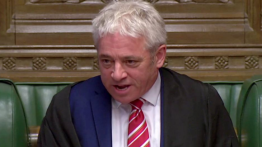
John Bercow wasn’t the only one crying at his final PMQs

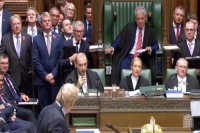
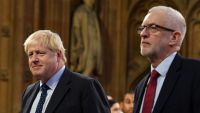
John Bercow, at his last ever PMQs, heard tributes from all sides of the house. ‘Best speaker I’ve seen,’ said veteran Ronnie Campbell. ‘You have stood up for democracy,’ oozed the SNP’s Ian Blackford. Tory Nigel Evans: ‘No one has done more to promote LGBT rights than you. I salute you.’ And he dipped his head like a nun honouring a marble Virgin. Jeremy Corbyn managed a dig at the Speaker’s self-regard. ‘I hope you’ll indulge me one moment while I say a word about you.’ He paused. ‘I’m sure you will.’ The best tribute came from Boris whose playfully ironic speech contained a charge-sheet of near-criminal acts.

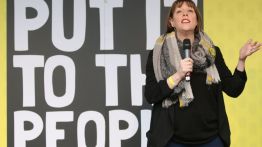
Jess Phillips: Boris Johnson ruined my son’s birthday

Jess Phillips's frustration at Britain's trains is a feeling plenty of commuters can relate to. But Mr S isn't so sure the MP for Birmingham Yardley is right to blame Boris Johnson for the current misery at Euston – or for spoiling her son's birthday: The problems at Euston are caused by a broken down train that is blocking the line in and out of London, according to Virgin Trains. It's possible to blame the PM for plenty of things, but Mr S isn't sure this is one of them...

Amber Rudd’s treatment is a warning to Tory MPs

Amber Rudd was one of the more high profile ex-Tory MPs, quitting the cabinet and the party whip in protest at the way her colleagues who had rebelled on taking control of the order paper had been treated. It is therefore particularly awkward that her status has become the subject of such controversy. This morning, it seemed the Hastings and Rye MP was headed back into the party fold along with the ten colleagues who were handed the whip back last night. Then she announced she was standing down as an MP but hoped to do so with the whip back in place after a ‘good meeting with the Prime Minister’. But shortly after this, Tory chief whip Mark Spencer sent her a letter telling her she wouldn’t be getting the whip back after all, because he didn’t trust her.

It’s time for economists to stop forecasting Brexit

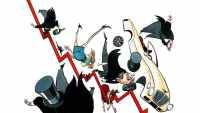
The uncertainty will be lifted. Businesses will know where they stand. Our politics can return to something approaching normality, and the government can get on with tackling all the other issues the country faces. Whatever the precise pluses and minuses of Boris Johnson's Withdrawal Agreement for getting out of the EU, you might think that finally resolving the issue would be helpful for the economy. Except apparently not. Just when you might think we had seen enough forecasts of this deal or that to last several lifetimes along comes the National Institute of Economic and Social Research with the alarming news that not only will leaving the EU make us poorer, this particular way of leaving will make us even poorer than Theresa May's deal. By how much?

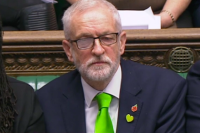
Corbyn reveals his election attack lines at PMQs

The last PMQs before the general election offered a teaser for what to expect over the next six weeks. With Boris Johnson keen to fight the incoming election on a promise to get Brexit done so the UK can focus on domestic issues, it's clear Jeremy Corbyn plans to respond by suggesting the Prime Minister's Brexit would be damaging to public services. Top of that list is the NHS. The Labour leader used the final session to lead on the NHS – suggesting the Prime Minister's 'sell-out deal' with Donald Trump would mean NHS money going into private profit. Corbyn pointed to a recent Channel 4 Dispatches investigation to claim the government had been discussing the health service with US officials.

Watch: Boris Johnson bids backhanded farewell to John Bercow

There is no love lost between John Bercow and Boris Johnson but the Prime Minister managed to bite his tongue as he bid farewell to the Speaker in the Commons just now. Boris paid tribute to Bercow's 'Tony Montana scowl' and called Bercow an 'uncontrollable tennis ball machine' for peppering parliament with his numerous interventions during debates. Boris went on to say that Bercow had 'done more than anyone since Stephen Hawking to stretch time in this session' and that he had had 'the longest retirement since Frank Sinatra'.

Boris Johnson’s Brexit deal won’t cost Britain £70bn by 2029

Yet again, listeners to the Today programme awoke this morning to hear a dire forecast for the economic consequences of leaving the EU – with no critical analysis nor even explanation of how the forecast was arrived at. This morning’s horror story came courtesy of the National Institute for Economic and Social Research (NIESR), a think tank which claims the economy will be 3.5 per cent – or £70bn – smaller in 10 years’ time than if we had never voted to leave the EU. The NIESR claims the economy is already 2.5 per cent smaller than it would have been had we voted to remain in 2016 and that this loss will last ‘in perpetuity’. Well, there it is.

Ten seats that could win or lose the election for the Tories

Will the Tories' election gamble pay off? Or will Boris Johnson follow in the footsteps of his predecessor and regret his decision to call a snap poll? Win or lose, the Boris's fortunes are likely to be decided in a handful of marginal seats up and down the country. If the Conservatives can win back Brexit party voters – and also stave off a challenge from the Lib Dems – then PM Boris could enjoy the kind of healthy majority which eluded Theresa May. But if he loses, Britain could wake up to Jeremy Corbyn in Number 10 on 13 December. These are the seats which will determine who wins: 1: North East Fife If one voter had stayed at home at the June 2017 snap election, North East Fife could have had a different MP.

Boris Johnson rallies Tory MPs as Commons backs snap election

The House of Commons has just voted by 438 to 20 for a 12 December election. Given that amendments on extending the franchise were not selected as they were out of scope, the Commons has also backed an election with the existing general election franchise. Even in these unpredictable times, it would be jaw dropping if the House of Lords tried to amend this bill tomorrow. So, it looks pretty much nailed on that we are heading for a 12 December election. We can see in the parties who have been most enthusiastic about this poll—the Tories, the SNP and the Lib Dems—who thinks they will benefit from it. In truth, they all could unless Labour has a campaign bounce.

Anna Soubry: Parliament really wants a People’s Vote

At long last, it looks like there's going to be a general election to break the Brexit deadlock. The House of Commons has voted to hold an election on 12 December, after MPs on both sides of the political aisle backed a one-line government bill, which now moves on to the House of Lords. But rather unfortunately, one MP did not exactly react to the news that Parliament would be dissolved for a Christmas contest with good grace. Shortly after the vote, the former Conservative MP Anna Soubry used a point of order to put her bizarre spin on the Commons' decision. The 'Change UK – The Independent Group' MP began by saying that, despite just voting by 438 to 20 for a general election, the House did not actually want one: 'I know it is uncomfortable sometimes to speak truth to power.

10 Tory rebels have the whip restored

As a vote on the government's plan to hold an election beckons, the Prime Minister has made the decision to restore the Conservative whip to 10 of the 21 Brexit rebels. This group collectively lost the whip when they voted for the Benn bill which forced the government to seek an Article 50 extension rather than leave the EU with no deal. These MPs have been welcomed back following a meeting with Boris Johnson: Alastair Burt Caroline Nokes Nicholas Soames Greg Clarke Ed Vaizey Margot James Richard Benyon Stephen Hammond Steve Brine Richard Harrington Those who have returned to the fold have voted with the government on key votes: for the programme motion and against the Letwin amendment.

A vote for Labour is a vote for anti-Semitism

The December election that now looks inevitable will be, as all elections are, a test. A test of a decade-old government that isn’t entirely sure what its achievements in office have been. A test of the public’s continuing appetite for Brexit and its tolerance for parliamentary histrionics. A test, too, of whether the country is ready to return to majoritarian government or whether volatile voter intentions and hung parliaments will be with us a while longer.  None of these is the most important metric. That dubious honour goes to the anti-Semitism test: will the UK put a party of Jew-haters into power? All of us will have to confront that test and each and every one will be judged on how they measure up.

Why would anyone normal want to be an MP?

Heidi Allen has announced she is standing down at the election, citing the culture of abuse and intimidation in politics as one of the reasons. In a letter to her constituents, she writes: 'I am exhausted by the invasion into my privacy and the nastiness and intimidation that has become commonplace. Nobody in any job should have to put up with threats, aggressive emails, being shouted at in the street, sworn at on social media, nor have to install panic alarms at home. Of course, public scrutiny is to be expected, but lines are all too regularly crossed and the effect is utterly dehumanising. In my very first election leaflet I remember writing "I will always be a person first and a politician second" - I want to stay that way.

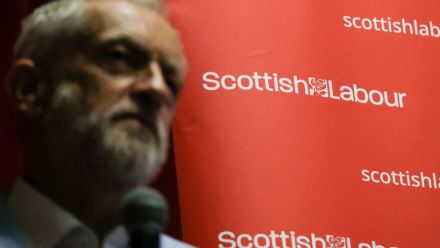
Jeremy Corbyn kicks off ‘fun’ snap election

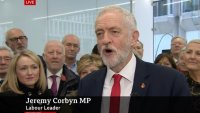
'It's going to be fun'. Thus a beaming Jeremy Corbyn announced that he had decided his condition for a general election had been met, namely that there won't be a no-deal Brexit on October 31. And so he fired the starting gun on six weeks of campaigning before a polling day (probably) of December 12. I personalise the decision as Corbyn's because that is how his fellow shadow cabinet members characterised it to me. "This is what Jeremy wants", one told me. "He was dead set on it", said another. And some of them are filled with foreboding – either because they would much rather there is a Brexit referendum before we're asked to choose a new government, or because they fear Labour cannot repeat its popularity surge of 2017.

Boris and Corbyn don’t deserve an election win

The first thing to be said about a general election in December is that it is necessary. This is the case regardless of your particular Brexit preference (though should that preference be a wish for it all to go away, I am afraid not even an election can offer you any relief). The government lacks a majority and no other government can be formed in this House of Commons. So an election is required. This is not Belgium and, indeed, the United Kingdom is not capable of being Belgium. The second thing to be said about a general election in December is that there are vanishingly few good outcomes available. This is not a Conservative party that inspires any great confidence. But nor, in spades, does the Labour party.

Why Labour are backing a Christmas election

Jeremy Corbyn has said that Labour will back a December election. This means that it is now highly likely to happen. Indeed, the only thing that could prevent it  would be if an amendment was added to the bill changing the franchise: for example, giving 16 and 17-year-olds or EU nationals the vote. In those circumstances, the government would likely not proceed with the bill. Labour’s change in stance from last night’s vote, when it whipped its MPs to abstain on the motion under the Fixed-term Parliaments Act, looks like it has been driven by the SNP’s willingness to back the government on a pre-Christmas election. If you add the SNP’s 35 MPs to the 299 votes the government got last night, you have a majority.