Politics

Read about the latest political news, views and analysis

What Farage’s Brexit ultimatum means for the Tories

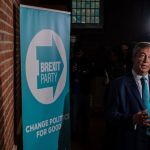
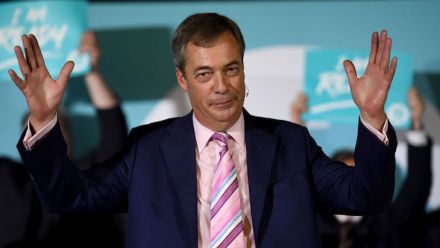
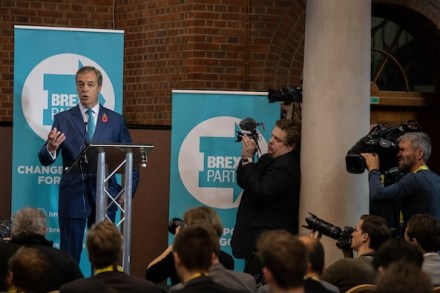
There's been much speculation this week about how the Brexit party will approach the incoming general election. Varying reports suggested Nigel Farage's party could choose to target anything from 20 to 100 seats. However, speaking in Westminster this morning, Farage made clear that he had bigger ambitions. The Brexit party leader said that unless Boris Johnson changed his Brexit position, his party would stand candidates in every seat in England, Wales and Scotland: 'We will contest every single seat in England, Scotland and Wales. Please don't doubt that we are ready. Do not underestimate our determination or organisation.
Nigel Farage has doomed his party to failure

Until this morning, Nigel Farage’s creation of the Brexit Party stood as an object lesson in how to found a new political party in a two party system. Many have tried this of course, from David Owen to Chuka Umunna, and all have floundered – some quicker than others. The Brexit party, by contrast, went from nothing to winning the European elections in under five months. It did so because it had a very clear purpose and because its foundation was perfectly timed in order to exploit that issue. But as of 11 o'clock this morning, that is gone. The Brexit Party is doomed to follow the same sad trajectory of other failed parties – to become the Natural Law Party for Brexiteers.

Nigel Farage risks destroying his own Brexit dream

Never knowingly undersold. The slogan of one of our best-loved retailers could equally be applied to Nigel Farage. Despite poll ratings softer than a collapsing souffle, the Brexit party leader had Britain’s political media exactly where he wanted them today: in a state of feverish excitement about his general election plans. With the kudos of that Donald Trump radio scoop confirming his status as a great political showman, there was sufficient suspension of disbelief in the air for Nigel to be able to make an offer to Boris Johnson of a “Leave Alliance”. This was predicated on the Prime Minister ditching his painstakingly agreed new Withdrawal Agreement on the grounds that “it isn’t Brexit”.

Letters: What would be the point of a second referendum?

Another referendum? Sir: Matthew Parris’s article ‘What question should a second referendum ask?’ (26 October) occasioned a wry smile from me this morning. His first question — whether Britain should remain in or leave the European Union — has already been asked and answered, at great expense and trouble, in 2016. The only logical reason why it should be re-asked is if the first time it was asked was illegitimate in some way. But it was only after the result was known that questions were raised about its legitimacy. At the time, not a breath was raised. However, I do like Mr Parris’s second question. We shouldn’t have a second referendum, but if we do let’s make the choice ‘deal or no deal’.

How unusual is a December general election?

A December election How unusual is a December general election? Of the 56 elections held since 1800, 5 essentially took place in December: in 1868, 1900, 1910, 1918 and 1923, although prior to the first world war voting took place over several days and weeks and so cannot be pinned down to a single date. In 1910, voting took place between 6 December and 19 December. — The month with the most elections is May, with 8 (5 of which have been held since 1979, followed by June and August with 7 apiece). No election has been held in September. We haven’t had an election in the second half of the year since October 1974. The last December election, in 1923, resulted in the first Labour government, although Ramsay MacDonald relied on support from the Liberals. How many people?

The Tories are Boris Johnson’s Conservatives now

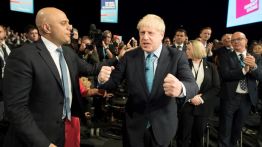
How much does Boris Johnson’s move to an early election resemble Mrs May’s disastrous one in 2017? In two important respects, not at all. He had to call an election because of the numbers in parliament: she did not. Voters understand this. He is also a born campaigner, while she — well, no more need be said. But there is a possible similarity between the two situations. In 2017, the manifesto described the Tories as ‘Theresa May’s Conservatives’. All the eggs were in her basket. It feels as if the Tories will be ‘Boris Johnson’s Conservatives’ this time, though no doubt that phrase won’t be in the manifesto. Whenever Boris is seen to falter or err, voters will then ask ‘Who are the Conservatives? Do I like them?

Nick Timothy: Theresa May folded like a Brompton bike during the Brexit negotiations

As my train hurtles northward, my phone starts to buzz. Jeremy Corbyn has agreed to hold a December election. So: a Tory prime minister, miles ahead in the polls, fighting an election pledging to get Brexit done — and facing a useless opposition. It all feels very familiar. And yet comparisons with 2017 are not so simple. Last time round, Labour successfully faced both ways on Brexit. Now their indecision means they are being squeezed between pro-Leave Tories and pro-Remain Liberals. Last time, Corbyn won the consolidated anti-Tory vote, but today it is fragmenting. And the differences continue. Boris Johnson is a born campaigner, whereas Theresa May wilted under pressure. Boris has ended austerity, while Theresa refused to change fiscal policy.

If you do one thing this election, stop your kids voting

As I write this, MPs are arguing about whether a general election should be on 9 December or 12 December. One argued it must be the 9th because other-wise an election might get in the way of vital rehearsals for school nativity plays. I have long been of the opinion that our politicians are mentally ill and most stuff that happens these days seems to confirm it. The more salient reason for the opposition wanting the earlier date is that universities may have broken up by the 12th and the Lib Dems and Labour will therefore risk losing a tidal wave of support from voters who are pig ignorant, pay no taxes and who, when delighted by something, do not clap their hands but wave them in the air like Al Jolson singing ‘Mammy’.

Election 2019: how the Tories plan to break Labour’s ‘red wall’

Of all those fighting this general election, the Conservatives are the only ones who need a majority. Labour just needs enough seats to club together with the SNP in order to form a government. The nationalists aim to win almost every seat in Scotland and then call a new independence referendum. The Liberal Democrats would like (at the very least) to double their count of 19 MPs, and stand a good chance of doing so. As for the Tories, they cannot rely on the DUP or anyone else to get over the line. Nothing less than an overall majority will do. In theory, this is not so hard: Boris Johnson needs to win eight more seats than Theresa May did in 2017. The trouble is government ministers say that they find it easier to name the seats the party will lose than those it will gain.

General election 2019: can Boris Johnson succeed where Theresa May failed?

This general election isn’t the most important in a generation, it is the most significant in the lifetime of anyone born since 1945. It will decide whether Brexit happens, whether Britain has the most left-wing prime minister in its history, whether the Scottish Nationalists are able to secure a second independence referendum and whether Britain’s two--party system can survive. Boris Johnson has taken a risk. A winter poll at a time of unprecedented electoral volatility is dangerous and he has no safety net. The Tories have to win outright to govern: they have no potential partners anymore. The Liberal Democrats’ position on Brexit is irreconcilable with the Tory one; the DUP won’t be doing another deal with them any time soon.

Watch: Trump urges Farage to work with Boris

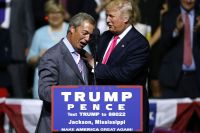
Could Donald Trump help Boris Johnson stave off the threat of the Brexit party and enable the Tories to win the snap election? He certainly seems to be doing his best to help out the PM. https://twitter.com/LBC/status/1189955162602909696?ref_src=twsrc%5Etfw Nigel Farage has interviewed Donald Trump for his radio phone-in show on LBC tonight and the president urged the Brexit party leader to work with Boris Johnson. Trump said Boris is a  'fantastic man' and is the 'exact right guy for the times'. He then added: 'I know that you and him will end up doing something that could be terrific. If you and he get together it's an unstoppable force.

Watch: John Bercow and Andrew Bridgen’s remarkable spat

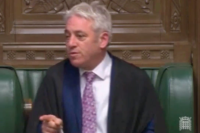
John Bercow has received his fair share of fawning eulogies of late, as the House of Commons laments his departure as Speaker. But, unsurprisingly, several MPs are equally happy to see him go. Today was Tory MP Andrew Bridgen's turn to pass on his farewell – the MP was in Parliament to debate the recent report on Keith Vaz's suspension. Bridgen began by discussing the report, but rather got under John Bercow's skin when he turned to the Speaker's own conduct in the Vaz affair: 'There have many tributes to you today, and I would wish to add my own. In that  if you had acted on the letter I wrote to you in September 2015... where I raised my concerns with you that the actions and activities of [Keith Vaz]... if they came to light, would risk seriously damaging...

Why a Tory-Brexit party pact isn’t likely

Nigel Farage’s European election-winning machine is the guest that has not yet turned up to the 2019 general election party. This can only be because it has certain fundamental questions still to settle about the nature of its campaign. Such as how many seats to fight. And whether to adopt a strategy of being slightly cuddly towards the Tories or one of strict “equi-hostility” towards all parties that do not back its “clean break” version of Brexit. Which, in effect, would mean all other parties.

How the Tories plan to ramp up their digital operation

As Jeremy Corbyn launches the Labour campaign today, talk has turned to the key battlegrounds that will decide the result of the general election. However, when it comes to where the most pivotal campaigning will take place, increasingly the answer is online. Digital campaigning has risen in importance with each election. With bad weather likely to put off some of the less enthusiastic campaigners this year, the efforts online will be particularly crucial. This poses a challenge to the Tories. In 2015, the Conservatives were praised for running a carefully planned digital campaign that focused on key voter groups. But in 2017 they dropped the ball.

Watch: Labour MP slams Green leader for ‘mansplaining’

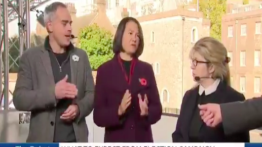
There is no doubting Labour's green credentials, according to the party's MP Catherine West. After all, Jeremy Corbyn has a bike – and an allotment. Speaking on Sky News, West said of the Labour leader: 'He was green before the greens existed. He rode a bike. He's got an allotment. He will do both. He will bring social justice and a green revolution.' Unfortunately when the Green's co-leader Jonathan Bartley tried to put his argument across it didn't go down well with West who accused him of 'mansplaining': 'Can you stop mansplaining? If you continue to mansplain I'll have to complain.' Watch the clip here: https://twitter.com/matthaig1/status/1189557172922966016?

Can Labour be ‘populist’ without a Brexit position?

So Jeremy Corbyn has finally agreed to back Boris Johnson’s demand for a December election. In the end he had little choice but to bow to the inevitable: Johnson already had the votes thanks to the SNP and the Liberal Democrats. But Corbyn also wanted this election. What had been holding him back was the fears of his own MPs – who were aware of the Conservative's ten point lead in most opinion polls and their own leader’s dreadful personal ratings. In contrast, Corbyn’s closest advisers and loudest supporters are hopeful the campaign will end in a Corbyn-led government.

The family that helped Maro Itoje become a sports star

‘Education, education, education.’ At the time when Tony Blair was repeating this phrase after Labour’s victory in 1997, a Nigerian special needs teacher living in north London named Efe Itoje was drumming that same lesson into his young son. The boy was superb at football, rugby and athletics but his father insisted he focus just as hard on his studies. Or, as he later put it: ‘I told him he needed to make a decision. If he wanted to play rugby then fine, but if his grades dropped I’d declare war on him.’ He ended up at Harrow and when the rugby scouts came knocking, the Itojes insisted that a university education was the minimum required downpayment.

Maro Itoje is a national hero for our time

Sport is a paradox. It’s supposed to be. Sport divides, but then again, sport unites. The England rugby union team play in the World Cup final in Japan on Saturday morning, thereby dividing the English from the South Africans, and dividing those who follow the game into two camps — England supporters and everybody else. Closer to home, it divides the English most particularly from the Welsh, who suffered the great misfortune of losing their semi-final to the South Africans. But in these times of bitter divisions — perhaps the deepest the country has known since the time of the General Strike — England will, at least for a couple of hours, feel united.