Politics

Read about the latest political news, views and analysis

New polling: where do parents stand on schools reopening?

As the coronavirus threat level moves from four to three, Boris Johnson has declared today that he is 'sure' all children will be able to be back in school full-time from September. Speaking at the daily press conference, Education Secretary Gavin Williamson repeated this pledge. But should Johnson hit his target, will parents comply? So far of the year groups allowed to return to school, there have been mixed results when it comes to the level of uptake. New polling for Coffee House, carried out on Thursday by Redfield & Wilton Strategies of a sample of 2,000, points at the problems ahead in convincing parents to send their children back.

What the new alert level means for lockdown easing

15 min listen

The government has downgraded the coronavirus alert level from 4 to 3, with the support of its scientific advisers. So is it about time to ease lockdown even further? Katy Balls talks to James Forsyth and Fraser Nelson about this and the discovery of the magic money tree, as debt is now worth more than British GDP.

Is the Covid alert level still too high?

Cynics might wonder whether the timing of Matt Hancock’s announcement this morning that the Covid alert level is to be reduced from four to three is an attempt to deflect the government’s embarrassment from the failed test and trace app. The cynics may well be right with the timing (although the decision is ultimately in the hands of the Chief Medical Officer, Chris Whitty, and his counterparts in Scotland, Wales and Northern Ireland). But more to the point: why was the alert level still at four when, by the government’s own definition, it should have been at three, and why is it now not being reduced to two? These are the Covid alert levels as described by the government: 5. As level 4 and there is a material risk of healthcare services being overwhelmed4.

Dexamethasone isn’t a coronavirus breakthrough

It’s welcome news, of course, that dexamethasone can reduce mortality in people with moderate to severe respiratory complications due to Covid-19. But to hail it as a big breakthrough – as the Health Secretary Matt Hancock did this week – is a step too far. Perhaps next week, Hancock will be shouting about the use of paracetamol as a treatment for headaches. Dexamethasone has been around for decades – which explains why it is relatively cheap and there is lots of it – and is already used widely for those suffering from respiratory distress. In other words, it is pretty much a standard treatment for those afflicted with symptoms similar to those caused by Covid-19.

School’s out: the true cost of classroom closures

35 min listen

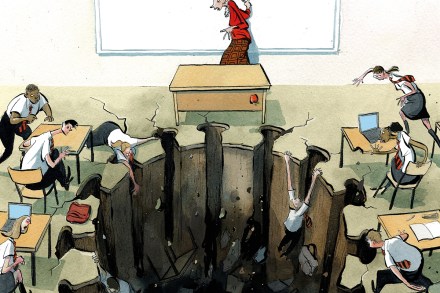
Schools have been closed for almost three months - what is the true cost of these closures on pupils (1:00)? Plus, have Brexit negotiations started looking up (13:15)? And last, are the statue-topplers of Rhodes Must Fall going about their mission the wrong way (22:45)?With teacher Lucy Kellaway; the IFS's Paul Johnson; the Spectator's political editor James Forsyth; the FT's public policy editor Peter Foster; journalists Tanjil Rashid and Nadine Batchelor-Hunt.Presented by Cindy Yu.

Is Macron Boris’s best friend now?

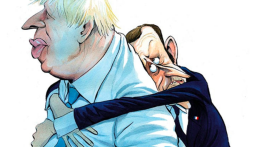
If Emmanuel Macron is intending to extract a pound of flesh from the United Kingdom as the price of Brexit, that’s certainly not the optic he projected today. On his visit to London, he deployed the French air force to fly over the capital in formation with the RAF in a display of entente cordiale that will have come as a welcome respite to the besieged inhabitant of Downing Street. Macron and Boris Johnson have seemed thick as thieves for months and they both beamed broadly as the president arrived at Downing Street this afternoon. But the dynamics have changed for both of them since the plague descended. If political misery loves company, then the two are more than ever made for each other. Macron and Johnson are both widely believed to have fumbled the corona crisis.

The coronavirus app was always doomed to fail

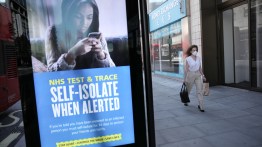
For months now, the British public has been told there’s only one way to resume normal life: a successful virus-tracing scheme. Early on in the pandemic, the UK decided to go its own way in this area, rejecting Apple and Google’s established, decentralised app model by trying to launch its own one. NHSX would create a centralised app that funnels contact details to public health officials once somebody reported their symptoms via their phone. Bad for privacy, good for knowing exactly where infection rates were spiking in something close to real-time. Hailed as a soon-to-be ‘world beating’ app by the Prime Minister, it was launched on the Isle of Wight in early May and touted as a necessary part of the UK’s lockdown easing.

Could ‘Waitrose protectionists’ block a UK-US trade deal?

Will the UK agree a trade deal with the US? Such an agreement has long been cited by Leave campaigners as a prize for Brexit Britain. When Donald Trump became President it was seen to increase the chances of such a deal being struck. While Barack Obama had suggested the UK would be at the 'back of the queue', Trump suggested a deal could be thrashed out quickly. However, the idea of it being agreed before the US election now seems unlikely.  As the UK and US begin a second round of negotiations, America's chief negotiator Robert Lighthizer has warned that a deal is unlikely to be approved before the US presidential election in November: 'That would be very, very, very quick time. I think it’s unlikely that that happens'.

Four ways the Bank of England could ensure a V-shaped recovery

At least we now know where Rishi Sunak is getting all the money from. The Bank of England has today unveiled the latest round of what should probably be called Covid rather then Quantitative Easing. It will print another £100 billion which in the roundabout way these things work will find itself in the Treasury’s bank account. That’s another couple of months of the furlough scheme paid for, with a bit left over for whatever grand-looking infrastructure scheme the guy next door is keen on this week. And yet, in truth, the Bank should have been bolder. Just funding an eye-watering government deficit is neither especially healthy nor particularly innovative. Every major central bank in the world is doing that.

Britain must begin its recovery – before more damage is done

The discovery in Britain that a £5 steroid, dexamethasone, can be effective in treating Covid marks a potential breakthrough in our understanding of the virus. Much remains to be learned about the wider potential of the drug but the claims made about its success are striking: that it reduces deaths by a third in patients on ventilators and by a fifth in patients receiving oxygen only. It has not been shown to benefit Covid patients who do not require oxygen. But this can still, in a global pandemic, mean thousands of lives saved. There are two further points to be made. With Covid-19, there is a better chance of finding a treatment for the virus than of finding a vaccine.

The five most explosive Trump claims in Bolton’s new book

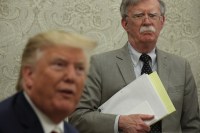
Donald Trump's former national security advisor John Bolton has made a series of bombshell revelations in a new tell-all biography. Claims that the White House does not want aired in public, with Trump's administration launching a legal bid to block the book's publication. However the volume, which is supposed to be released next week, has been leaked in its entirety to the New York Times and the Washington Post. American newspapers have been plastered full of the most outlandish claims about the embattled President, so Mr S has compiled the five most explosive claims from the disgruntled former staffer:  1.

Is a Brexit deal within reach?

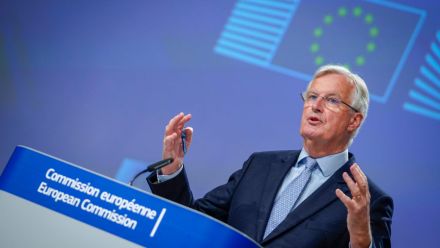
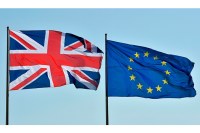
Trade talks between the UK and the EU are in a better place than they have been at any point since they started back in March. Now, in one way this is not impressive — the diplomatic equivalent of being the tallest mountain in Holland. For the first three months of these negotiation both sides were bullish, restating their maximalist positions, and coronavirus forced the negotiations online, making diplomacy and quiet compromise trickier. But now an intensive series of talks have been agreed, some of which will be face to face. Both sides appear to be in earnest about trying to break the deadlock. The British side is, privately, far more optimistic than it has been at any previous point in the negotiation.

Sturgeon is failing Scotland’s students

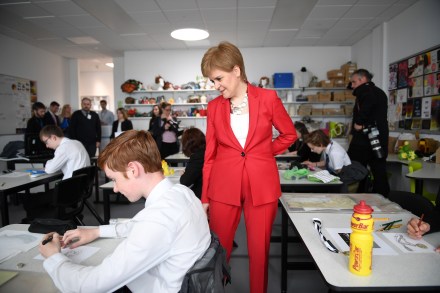
There is a crisis brewing in Scottish education. Not the long-running crisis of attainment gaps, falling exam performance and limited external oversight. The emerging crisis is about getting children inside the classroom in the first place. Scotland’s schools have been closed for 90 days now in response to the Covid-19 pandemic and are not due to return for another 55, and even then only part-time. This ‘blended learning’ approach will see pupils split their week between in-school learning and remote working from home. What that split will look like will vary from council to council. Schools in Edinburgh will only allow one-third of students to attend classes while in Fife high school pupils will have to make do with one day a week at first.

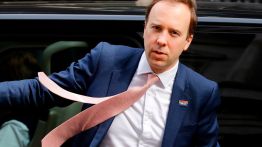
Watch: Hancock’s social distancing slip up

Oh dear. It seems Matt Hancock has forgotten his own rules. Shortly before PMQs this afternoon, the Health Secretary was spotted slapping a chum on the back in a blatant breach of the two-metre distancing regulations.  Less than a minute later, Hancock again disregarded his ministry's own guidance when he leaned in to have a chat with another MP. Perhaps Hancock could use the Ferguson defence and plead immunity given the fact he has already had the virus. Then again, that didn't end too well for professor lockdown... UPDATE Hancock has now released a statement apologising for the breach, saying:  I'm so sorry for a human mistake on my part.

Is Boris Johnson’s week starting to look up?

21 min listen

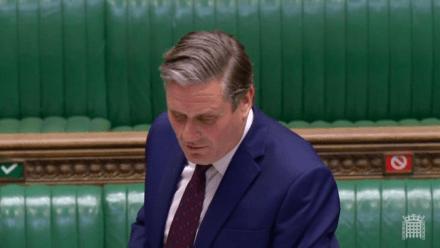
At Prime Minister's Questions, Boris Johnson cornered Keir Starmer on the Labour party's ambivalent position on schools reopening. After a bumpy start to the week, is the Prime Minister's luck turning? Katy Balls talks to James Forsyth and Fraser Nelson about this, the 1922 committee meeting, and Westminster reopening.

Boris should keep calm and ignore the polls

When those words and phrases of the year lists come out there is bound to be a place in them for 'the new normal'. It is a phrase that invites us to expect that short-term shifts in how things are will become new long-term equilibriums. A socially-distanced lifestyle; governments being able to borrow vast sums very cheaply; face masks on public transport: these are just a few of the things that have in 2020 been labelled 'the new normal'. For Brits who craves some stability in turbulent times it can be a comforting concept. For many Conservative politicians, 'the new normal' seems to have begun a year or so ago – when Boris Johnson became Prime Minister and turned Theresa May’s horrific opinion poll ratings into something much more appetising.

Is Boris brave enough to break his triple lock pension pledge?

It would not have been obvious to those drafting the Conservative manifesto last autumn that they were planting a very large bomb beneath the government. After all, the triple lock had already featured in three general election campaigns and had yet to cause the public finances a problem. But the very special circumstances of the Covid-19 crisis have lit the fuse. The inevitable explosion is either going to cost dearly the Conservatives’ reputation in the eyes of pensioners – or else widen an already gaping public deficit, as well as offend millions of younger people who might already be seething at what they see as intergenerational unfairness. The problem is that furloughed workers are going to cause havoc with the calculation of average incomes.