Politics

Read about the latest political news, views and analysis

Sunday shows round-up: Sunak condemns protest violence

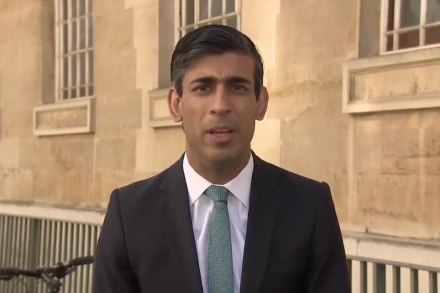
Rishi Sunak – Protest violence 'shocking and disgusting' The Chancellor of the Exchequer led the batting for the government this morning. Recent weeks have seen considerable unrest playing out in the heart of British cities, and on Saturday central London played home to a 'counter-demonstration' prompted by the defacing of the Cenotaph and the statue of Winston Churchill in Parliament Square. Six people were hospitalised as a result and the Metropolitan police made more than 100 arrests. Speaking to Sophy Ridge, Sunak condemned the violence that had taken place: https://twitter.com/RidgeOnSunday/status/1272080603974979585?ref_src=twsrc%5Etfw RS: I think the scenes we saw yesterday were both shocking and disgusting.
The Brexitland soap opera of the New York Times

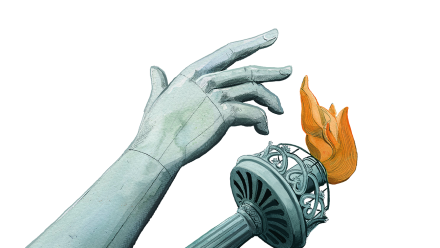
The New York Times doesn’t much like the United Kingdom. By that, I mean the dystopian fantasy United Kingdom the Grey Lady has confected to explain Brexit and Boris Johnson’s electoral triumph in December. Objectively observed, Britain today is further to the left on public spending, equalities legislation and social attitudes than just a decade ago. Not if you scan the pages of the Times, however, where the Britain that glowers back at you is a grey and unpleasant land, a grim shudder of cruelty, racism and imperial nostalgia buffering about in its late dotage after renouncing civilised Europe. A dull, foreigner-free retirement community with nothing but Spam, Union Jack tea towels and global obsolescence to look forward to.

When will the two-metre rule go?

The Tory parliamentary party is in a febrile mood. As I say in the Times on Saturday, the two-metre rule has become a particular focus of MPs ire. It is now symbolic for them of a cautious approach to lockdown easing, which they fear could lead to the UK having one of the slowest economic recoveries, as well as one of the worst death tolls, in Europe. Optimists in government are confident that the two-metre rule will be gone by the time that pubs and restaurants reopen on the 4 July. Interestingly, the guidance to those establishments that will be given the go-ahead to resume then doesn’t emphasise the two-metre rule.

Conservatives – corporations are not your friend

Amazon is suspending police use of its face-recognition software, HBO Max has pulled Gone With the Wind and Paramount Network announced the cancelling of long-running series COPS. These and a steady stream of other corporate giants have taken unambiguous political stances in the wake of George Floyd’s killing and the protests that followed. It is a mistake to doubt their sincerity. There was a time when corporations feigned interest in black and ethnic minority consumers.

The EU’s ‘Hamilton moment’ looks set to backfire

The European Union has always been quintessentially risk averse. What a surprise therefore to see it jeopardising its very existence by playing a high-stakes multi-handed poker game involving debt mutualisation, financial reflation and constitutional law against a backdrop of anti-EU sentiment. The founding fathers of the European project championed progress towards an ever-closer union by evolution not revolution. Opportunistically the European Commission – guardians of the treaties – seized on important international moments to widen and deepen European integration, as with the end of the Cold War and German reunification to extend state membership, pass the Maastricht treaty and institute the euro.

Do Chinese lives matter to Jesus College?

Sonita Alleyne, the Master of Jesus College, Cambridge, issued a passionate ‘personal message’ about the killing of George Floyd on her college’s website: ‘The message posted on the College Twitter account “If one man can’t breathe, we all can’t breathe” were my words,’ she revealed. ‘Be angry at this moment.’  Ms Alleyne’s message was published on 5 June — the day, in 1989, when the world watched the famous pictures of a young man confronting a line of tanks in Tiananmen Square. Soon 10,000 Chinese could not breathe, being dead.

How fast can Britain recover from its economic free-fall?

Putting the UK into lockdown was only going to send growth in one direction: down. While today’s figures from the Office for National Statistics were expected, they nevertheless confirm that the UK has experienced its largest monthly economic contraction on record. The UK economy shrank 20.4 per cent in April. Combined with March’s GDP drop (now the second largest fall since records began), the British economy is a quarter smaller than it was in February. Putting these figures alongside other monthly slumps makes for stark comparison. Hits taken for additional bank holidays and for the pain experienced during the financial crash barely compare to what’s happened in light of the shutdown of Britain’s economy.

The Tory fightback against identity politics

14 min listen

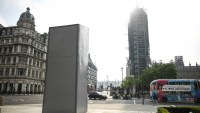
Late last night, the statue of Winston Churchill on Parliament Square was boarded up over fears the monument could again be targeted by Black Lives Matter protestors. This morning, Boris Johnson intervened saying that it is 'shameful that this national monument should today be at risk of attack'. Katy Balls talks to Fraser Nelson and James Forsyth about the looming Tory fightback against identity politics.

Justin Welby could solve the government’s schools headache

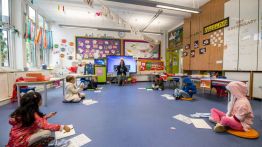
The government may have resigned itself to keeping schools closed for the majority of pupils until September but there’s a simple solution to the classroom capacity problem sitting at the heart of every town and village in Britain. The Archbishop of Canterbury Justin Welby has been busy speaking out about everything from future government austerity to historic racism in the Church of England in recent weeks, while a dozen of his bishops publicly denounced Boris Johnson’s decision to keep Dominic Cummings in post. All the while, the Church of England is residing over a huge pile of sizeable real estate that could enable schools to scale up in the same way as the NHS did with their Nightingale hospitals at the start of the pandemic.

The dire effects of Italy’s coronavirus lockdown

Locking down Britain sooner would have saved thousands of lives, according to Neil Ferguson. But while Ferguson’s claims have been rightly contested – and the merits of shutting down Britain, particularly in view of today’s woeful GDP figures – remain debatable, one thing is very clear: lockdown is having a dreadful effect on the lives of many. A survey from Italy, which went into lockdown a few weeks before Britain, shows why. 20,000 people were quizzed by researchers at the Mario Negri Institute in Milan on the psychological consequences of forcing people to quarantine themselves. And the findings – almost certainly replicable in Britain – make for grim reading.

In defence of liberalism: resisting a new era of intolerance

45 min listen

Are we witnessing the death of the liberal ideal? (01:02) Next, what's behind the government U-turn on primary schools and what effect could it have on the poorest students? (20:14) And finally, Britain's ash trees are facing a pandemic of their own, with so-called ash dieback sweeping the nation. Can Britain's ash trees be saved? (30:12)With Douglas Murray; The Spectator's economics editor Kate Andrews; Coffee House contributor Melanie McDonagh; political editor James Forsyth; associate editor of the Evening Standard Julian Glover; and professor at the Laboratory of Tree-Ring Research at the University of Arizona Valerie Trouet. Presented by Katy Balls.Produced by Gus Carter and Matthew Taylor.

How long can the two-metre rule last?

12 min listen

Tory MPs are increasingly concerned about the impact of the two-metre rule, with No. 10 facing pressure to relax the policy to help save businesses. Gus Carter talks to James Forsyth and Katy Balls.

Why it’s vital that schools are fully open by September

Chris Whitty, the chief medical officer, was explicit at Wednesday’s press conference about how concerned he was about a second Covid-19 spike in the winter months. This would coincide with the flu season, placing maximum pressure on the NHS. One consequence of this is that if something is not open by the beginning of October, it isn’t going to be open until the end of February next year. As one of those at the heart of coronavirus policy-making warns: ‘If Sage are this cautious going into summer, then they are not going to want to be playing fast and loose with the R number heading into winter.’ This shows why it is so imperative that all year groups return to school in September.

‘Global Britain’ should learn from New Zealand’s mistakes

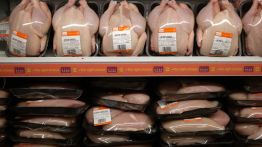
One of the greatest prizes from Brexit is the opportunity to make the Global Britain aspiration a reality. Included is a leadership role at the World Trade Organisation (WTO) where the UK, the fifth biggest economy in the world, could help drive much-needed progress to facilitate global trade. Leadership, however, requires respect to back it up. In trade terms, that means walking the talk of trade liberalisation at home. Once free of the EU, the UK knows that its thriving farming sector will therefore require access to global markets. But the trade agreements to deliver that access must be consistent with WTO rules. Recent talk of the UK adopting a tiered tariff system, based on perceptions of animal welfare and health standards, would be a direct breach of those rules.

It’s time for the PM to take back control from the scientists

There is a grim inevitability to the trickle of round-robin letters from scientists who feel aggrieved at the government’s handling of the Covid-19 crisis. Right from the beginning, the Prime Minister gave scientific advisers a very public platform at the heart of government. He realised that if it became necessary to impose the most severe restrictions on personal freedom any government has had to introduce in peacetime, it would help if the public could see policy was being shaped by experts who understood the threat. But as time has gone on it has become increasingly clear that there is no such thing as ‘the science’ — a mythical set of incontrovertible truths. Scientists are as divided as politicians and the general public on how to tackle Covid-19.

What is Dominic Raab not telling us about Hong Kong?

The government’s promised ‘pathway to citizenship’ to Hong Kong people is wonderful, but has the Foreign Office arranged a get-out clause? Last week, Dominic Raab told parliament that ‘if China enacts the [proposed new security] law, we will change the arrangements for British National (Overseas) passport holders in Hong Kong’. He added, however, that ‘We do not oppose Hong Kong passing its own national security law’. Behind this lies the fact that the Basic Law of Hong Kong, arising from the Sino-British Agreement of 1984, prescribes that Hong Kong ‘shall enact its own laws to prohibit any act of treason, secession, sedition or subversion against the Central People’s Government’. So far, it has not done so.

Why Boris Johnson poached Prince William’s right-hand man

The appointment of Simon Case to the role of No. 10’s new permanent secretary last month is already creating an interesting new power dynamic in Boris Johnson’s top team. Dominic Cummings, Downing Street’s resident grenade-thrower, is now working with someone more adept at defusing bombs. Case, a Barbour-wearing career civil servant, was poached from Kensington Palace, where he was Prince William’s right-hand man, by cabinet secretary Sir Mark Sedwill. In his new role, Case sees anything Covid-related that crosses the Prime Minister’s desk. He is being hailed as the man to rescue the government’s erratic handling of the coronavirus crisis. His experience with the dysfunctional royal household will stand him in good stead.