Can Keir Starmer get under Boris’s skin?
13 min listen
Read about the latest political news, views and analysis
13 min listen
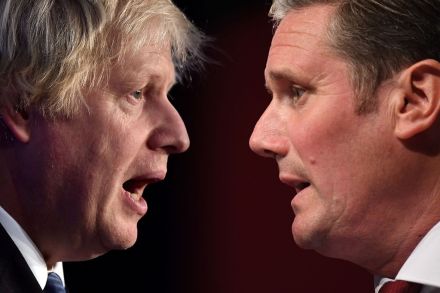
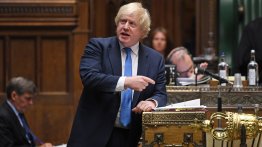
Barristers say there are two types of performers in court. The rhinos use brash, crude, overpowering blows. The snakes are subtle, unpredictable and deadly. Today at PMQs, the two beasts met. Boris came out of the jungle at full charge. ‘I think the honourable gentleman has been stunned by the success of the test and trace operation,’ he bellowed. He was responding to Sir Keir Starmer’s criticism of the government’s testing regime. ‘Contrary to his prognostications of gloom,’ Boris went on, ‘it has got up and running much faster than expected.’ Sir Keir, all serpentine cunning, asked him about the failure of the app to trace every relevant contact. Boris thrashed and snorted. Starmer's certainly a class act.
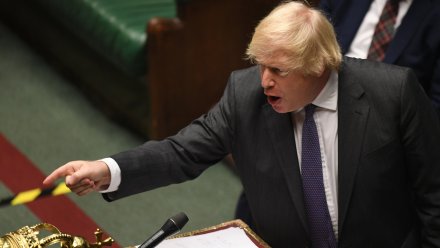
The clash of styles continued at PMQs today. Keir Starmer came with a set of detailed questions and Boris Johnson attempted to push him back with a sheer weight of rhetoric. Johnson’s approach isn’t particularly edifying but it does deny Starmer the opportunity to land many blows in these sessions. The Labour leader hasn’t quite worked out how to adapt to Johnson’s tactics. He finds himself vulnerable as the Tory leader changes the subject, as he did today effectively to ding Starmer on schools. Starmer used his last question to come back on an answer the Prime Minister gave last week on child poverty. Starmer accused Johnson of giving ‘dodgy answers’.
The decision to significantly ease lockdown from early July marks a new chapter when it comes to the government's approach to coronavirus. After a miserable few months, the hope in Downing Street is that with the number of confirmed new cases down to pre-lockdown levels, the government can return some form of normality – and get back to delivering its election manifesto promises.It was this message that Dominic Cummings was keen to get across in his meeting with special advisers on Monday night. Boris Johnson's senior aide acknowledged that recent events had made this difficult. First, Brexit, which dominated Boris Johnson’s first few months in office. Second, a global pandemic that arrived on these shores on the day the UK left the EU.

It’s an inconvenient truth for campaigners trying to persuade Boris Johnson’s government to explore a four-day working week that the idea was first proposed by Jeremy Corbyn. During the 2019 General Election, Conservative MPs lined up to attack what became one of Labour's flagship policies. With the election in full swing, one Tory MP went as far as saying it would ‘wreck the economy’. But with the general election and Jeremy Corbyn now a distant memory, the Conservative Party should look at the idea in a different light and seriously examine its merits as a way to build up the economy post Covid-19. With an unemployment crisis on the horizon, a four-day week makes a lot of sense and the Conservative Party would be foolish to ignore it.
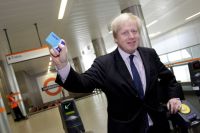
Even in these strange political times, it looks very difficult for a Conservative politician to become Mayor of London. In the 20 years since the advent of the mayoralty and the introduction of the London Assembly, only Boris – as we all know, an unusual politician – has managed to beat Labour, with successive terms in 2008 and 2012. He succeeded in this by being more popular than the Conservative party in London; a politician, even then, with an independent brand. In contrast, Ken Livingstone was less popular than the Labour party at the time. These favourable winds are unlikely to blow again.
13 min listen
Boris Johnson has announced further measures to ease the lockdown, and from the 4th July, more venues will be open than not, including restaurants, pubs, and galleries. It also marks a new phase in the lockdown, when social distancing will be guidelines, not law. But does the public actually want the lockdown to be eased? Katy Balls talks to James Forsyth and Fraser Nelson.

Speaking in the Chamber this lunchtime, the Prime Minister declared that ‘our long national hibernation is coming to an end’ as he unveiled the most drastic easing of lockdown yet. Phase three of the road map will see parts of the hospitality industry reopen from 4 July while individuals will be able to socialise with greater freedom. Announcing the changes, Boris Johnson emphasised that his government was only able to make these changes due to the progress made as a result of people abiding by the rules. Should this fail to be the case in the future or the number of cases rise, Johnson warned he would not hesitate to put the brake on as 'caution will remain our watchword'.
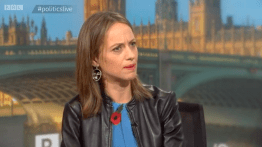
Helen Whately, the care minister, is being tarred and feathered. She wrote a letter to an MP about student nurses, saying they are ‘supernumerary and not deemed to be providing a service’. The outpouring of fury online and, sadly, from some traditional media outlets provides an object lesson in all that’s wrong with the way Britain debates politics and government in the era of Twitter. Whately’s comments should not be ‘controversial’ or even newsworthy, because she said nothing wrong. Student nurses are indeed ‘supernumerary’, which means that they are not counted towards the total of nursing staff in the NHS. This is not just sensible, it’s something recognised and demanded by bodies such as the Royal College of Nursing (RCN).
Imagine if on Saturday evening a white neo-Nazi had stabbed three men to death. Imagine, furthermore, if in the wake of the killings it had turned out that all three of the victims were gay. Or ‘members of the LGBT community’, to use the lexicon of the time. And then imagine if two days later nobody in the UK or anywhere else was very interested in any of this. So what if the victims were all gay? Why bother sifting around for motives. What are you trying to say? Bigot. Well something that might well be analogous to that happened in Reading on Saturday evening and over the days since. On Saturday evening, Khairi Saadallah went on a stabbing spree in Forbury Gardens, Reading. His victims were three gay men, James Furlong, David Wails and Joe Ritchie-Bennett.

15 min listen
There's a rebellion brewing on the backbenches - MPs claim that there are over 50 backbenchers who oppose the government's proposal to loosen Sunday trading laws. On the podcast, Katy Balls talks to James Forsyth and Fraser Nelson about whether there might be more to this rebellion than initially meets the eye.
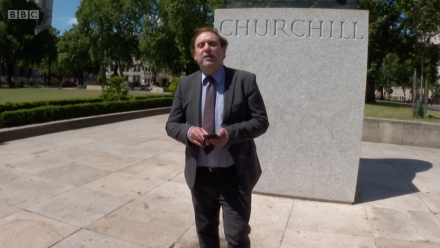
Today, the UK Independence Party announced that Freddy Vachha will become the newest leader of the party. Vachha has been Ukip’s London Regional Chairman since 2016 and takes the reins from Richard Braine, who resigned just weeks before the general election last year after clashing with the party’s NEC. For those who’ve struggled to keep up, Vachha becomes the sixth leader of the party since Nigel Farage stepped down in 2016. At the leadership announcement this afternoon in front of Churchill’s statue in Parliament square, Vachha read a speech from his phone out loud, and said it was ‘time for Ukip to get back to business'. Mr S was most intrigued though by Vachha’s action-packed CV.
Here are the outstanding questions to be taken by the Prime Minister and the coronavirus strategy committee he chairs (CS) today about how far lockdown will be eased on 4 July and thereafter. First, on socialising inside where we live; will we be allowed to meet with anyone we like indoors in groups of up to half a dozen, or will we be restricted to socialising with a single family or household of our choice with whom we would form a long-term 'bubble'? This is a choice between a rule more likely to be actually followed, namely the permission to mix with whomever we like so long as there are no more than six of us, versus a rule that the scientists believe is more likely to reduce the risk that the rate of viral transmission will increase dangerously again.
Is Boris Johnson heading for his first Commons defeat since the election? Plans are afoot in government to bring in legislation to suspend Sunday trading laws as part of a wider effort to get the economy going again. The Prime Minister and Chancellor first thought up the idea of relaxing Sunday trading as a way to make it easier for key workers to shop amid queues and rushes but research then suggested that such measures could have a significant economic impact as well. However, early signs suggest that if the government presses ahead, MPs could move to block it. The Telegraph reports that 50 Conservative MPs have signed a letter to the Prime Minister urging him to abandon the plans.
It has become a truism that there are not enough liberal voters to get Labour a majority at the next general election. That Labour need to recapture some of the socially conservative vote to win. That they need the ‘red wall’ seats back to give them even the slimmest chance of victory. But for a period last year, however brief, the Lib Dems were as high as 24 per cent in the national polls. If Starmer can tap into this potential electorate I believe he can win, and Labour can become the biggest party in England and Wales – which would probably allow the party to govern. It looks like the Lib Dems are willing to help.
With the Covid alert level being reduced from 4 to 3 it is surely only a matter of days before the government announces that it is relaxing the two metre rule – a move for which the hospitality industry has been lobbying for heavily, warning that pubs and restaurants will not be able to reopen until it happens. Another sign of impending change came from Professor Calum Semple of the University of Liverpool, a member of the Sage committee, who told the Today programme this morning that he had changed his mind on the two metre rule and now believes that infection levels are low enough to make it safe. But was there ever any scientific justification for the two metre rule?

26 min listen
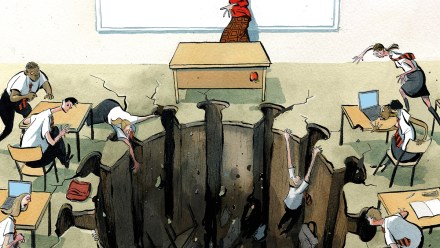
This week's episode features actor Laurence Fox on the pitfalls of wrongthink; teacher Lucy Kellaway on the true cost to students of classroom closures; and Toby Young on what happened when he tested negative for antibodies.
23 min listen
The plans for a merger between the two departments has united three former prime ministers in their criticism. Andrew Mitchell, Tory MP and former International Development Secretary, certainly thinks it's a disastrous idea, and claims that Boris Johnson promised to his face that this would not happen. Andrew joins Katy Balls and Jame Forsyth on the podcast, together with David Lidington, former Cabinet minister and previously at the Foreign Office, who thinks that it's actually a good idea.
Russia, the old joke goes, has long been a country with an unpredictable past. On September 22, 1939, for instance, Soviet Brigade Commander Semyon Krivoshein stood alongside German Generals Mauritz von Wiktorin and Heinz Guderian in Brest-Litovsk, Poland, to review a joint parade of Wehrmacht and Red Army troops who had recently occupied the town. The street was decorated with joined swastika and hammer-and-sickle banners celebrating the Nazi-Soviet Pact signed in Moscow less than a month before. Under the terms of the now-infamous secret annexe to that agreement, Hitler and Stalin agreed to divide Poland and the Baltic states between them - and less famously but more importantly to Berlin, the Soviets agreed to provide millions of tons of raw materials to fuel the German war machine.
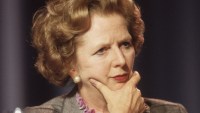
No one seems to think Boris Johnson has handled this crisis particularly well. But who might have done a better job than him? According to the Great British public, the answer is obvious: Mrs Thatcher. A poll carried out by Redfield & Wilton Strategies suggests that 34 per cent of people think that Maggie would have handled coronavirus better than Boris – beating any other modern PM. Whatsmore, 47 per cent of those in the north east said Thatcher would have done a better job, the highest proportion out of any UK region. Until the last election, just three of the 29 constituencies in the north east voted in a Tory MP. Boris Johnson managed to achieve the best result for the Conservatives there since 1959, returning 10 Tories to the Commons.