Politics

Read about the latest political news, views and analysis

Extinction Rebellion’s plan for eco-oligarchy

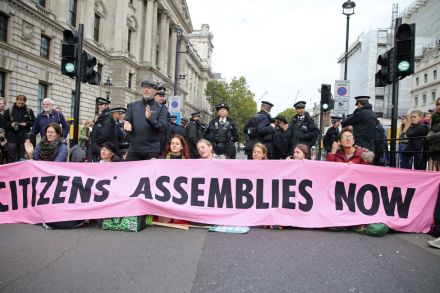
It is very rare (although not unprecedented) for law breakers to attempt to be law makers. But Extinction Rebellion is trying to do both, simultaneously. This weekend they are planning to illegally blockade airports and Parliament, reportedly launch cyber-attacks, while pushing a new law to be laid before Parliament when it reopens this week by Caroline Lucas, the sole Green Party MP. It is called the Climate and Ecological Emergency (CEE) Bill. I have huge sympathy for the objectives of Extinction Rebellion – we have an absolute moral duty to pass on a sustainable world to the next generation, and it must be a political priority for which tough decisions need to be made. But I do not agree with their methods.
Can Scotland afford independence?

How would an independent Scotland have fared during the pandemic? We found out this week on the annual release of Gers, which adds up all Scottish spending and taxes and states the size of the gap. This year it's estimated at about 27 per cent of GDP, according to the Institute for Fiscal Studies, which would make it the worst-hit country in the developed world. It's unlikely that a small country could sustain a deficit of this size even in a pandemic: the UK has been hit bad, but we have the pound and the Bank of England's QE to lower the cost of issuing debt. For a country of five million to run a deficit of 27pc would be far, far harder.

Is this the next cladding scandal?

18 min listen

After the Grenfell Tower fire, new fire safety legislation was introduced in an attempt to ensure the tragic incident was never repeated. But the new rules have left some tower block tenants unable to sell their properties, and they could be forced to pay tens of thousands to replace dangerous classing. Why? Fraser Nelson speaks to Emma Byrne, assistant editor of the Spectator, alongside the Telegraph's Liam Halligan.

Boris’s back to work campaign is strangely un-Conservative

If you want a measure of how in control of things the government currently feels, look no further than today's briefing on encouraging workers back into offices. A nationwide campaign to reassure people that employers have made their workplaces 'Covid-secure' will launch next week, as ministers worry about the impact on city centres of workers continuing to stay at home. But a row has raged today over whether the government is less interested in reassuring employees and more interested in threatening them. Labour has accused ministers of the latter after a briefing appeared in this morning's Telegraph suggesting that workers will be encouraged to think of the cost of not going back into the office.

Who could replace Shinzo Abe as Japanese PM?

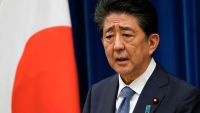
Japan’s longest-serving Prime Minister, Shinzō Abe, has announced that he will step down, as soon as his replacement is selected. This is the second time that Abe has resigned the premiership (the first being in 2007) and ill health has again been cited as the reason. Abe has visited hospital several times in recent weeks and has looked tired on his rare public appearances as his chronic bowel disease has recurred. The news has sparked two debates – the first, urgent one, is over Abe’s successor. The front-runner is probably Shigeru Ishiba, the 63-year-old former defence minister and Abe critic. The hawkish Ishiba is relatively liked by voters, but is less popular with his LDP colleagues; a serious obstacle.

Can Boris get people back in the office?

17 min listen

The government will launch a new publicity campaign to coax people back into the office, it was announced today. This morning's headlines took a hardline approach, telling readers that they could lose their jobs unless they returned to work. Is this really the government's approach, and why are offices important? John Connolly speaks to Fraser Nelson and James Forsyth.

Children who died of Covid-19 were already seriously ill, new study shows

It has been clear from the start of the Covid-19 crisis – from Wuhan’s experience, before cases were confirmed in Britain – that it was a disease with relatively little impact on children. A broad study led by Liverpool University and published in the British Medical Journal today confirms that – and sheds a lot more light on how Covid-19 affects children. The study looks at data from 260 hospitals in England, Scotland and Wales, to which 69,516 patients were admitted with Covid symptoms between 17 January and 3 July. Of these, 651 were aged under 19 and 225 were aged under 12 months. Serious underlying medical conditions were present in 42 per cent of the children.

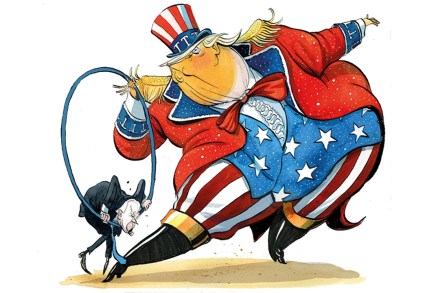
The Trump Show: he could just win again

35 min listen

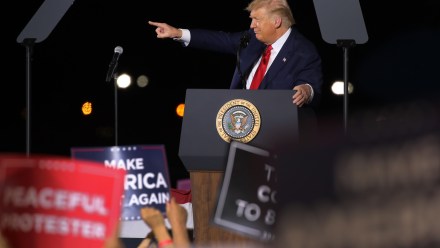
With protests in American cities continuing and the Democrat and Republican conventions drawing to a close - are there signs that Donald Trump could win again? (00:45) Plus, could planning reforms be the next Tory battle? (13:05) And finally, can daily commutes really be enjoyable? (25:45)With editor of the Spectator's US edition Freddy Gray; the Spectator's economics correspondent Kate Andrews; the Spectator's political editor James Forsyth; economist and author Liam Halligan; the Spectator's features editor; and author Sara Yirrell.Presented by Cindy Yu. Produced by Cindy Yu and Max Jeffery.

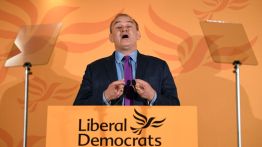
Ed Davey can make the Lib Dems liberal again

It seems as though Layla Moran's offer to make the Lib Dems 'more radical than Labour' has been decisively rejected. Her rival Ed Davey won over 60 per cent of the votes cast and is the party's new leader after an interminable and dire leadership contest. After the result was announced, Davey got up and gave a short, remarkably good speech. It was humble and to the point. The Lib Dems have lost touch with most voters, he said, and he was going to make it his mission to try and win back as many as he could by getting in touch with their true concerns. His words immediately reminded me of the way Keir Starmer had won the leadership of his party in April. Has Ed Davey pulled the same trick here?

What Ed Davey’s election means for the Lib Dems

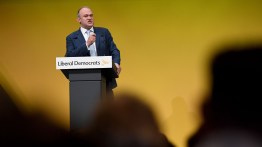
For many Lib Dems, this leadership election felt like an existential choice. The party is now on its fourth leader in almost as many years, while Brexit has left the party a polarising – and increasingly irrelevant – force in British politics. Sir Ed Davey made clear that he knows his party is facing serious problems during his livestreamed acceptance speech. The MP for Surbiton explained: ‘Our party has lost touch with too many voters.’ Davey has been acting leader since Jo Swinson lost her seat at the 2019 general election – and he was widely seen as the favourite during the contest. In the event, he won twice as many votes as the more radical Layla Moran.

Can Boris build support for his planning reforms?

The government always knew it would have to expend political capital to get its planning reforms through. Making it easier to build houses was never going to be popular with Tories in leafy areas. The benefit of an 80-seat majority was meant to be the ability to push through difficult but important changes. The problem is, as I say in the magazine this week, that the government has been expending political capital on rather a lot of other things recently. Tory MPs are in a fractious mood, irritated by the number of U-turns, and opposition to planning reform is beginning to build up. One normally mild-mannered former cabinet minister tells me: ‘If you think A-levels were bad, wait until people get their heads round these reforms.

Zoom falling: has the video-call novelty worn off?

A takeover battle for BT would bring much-needed excitement to the City — as well as a major political row. The privatised telecoms giant that rarely pleases its customers and regulators has seen its shares fall by four-fifths since late 2015. While many other tech-related stocks have rebounded, BT’s price is still down where it was when the market plunged in February — lockdown having interfered with BT Openreach’s broadband installation programme, slashed new orders from business customers and even knocked out the fixtures that might have been shown on BT Sport’s television channels. On top of all that, there’s a gaping hole in the pension fund.

Boris the builder mustn’t buckle over planning reform

The government will pass the test it has set itself: schools in England will return next week. Pupils may well have to wear masks at times, but they will be back in the classroom. Yet ministers privately acknowledge this isn’t the real challenge. The bigger question is what effect the return of schools has on the prevalence of the virus and what happens to education in the case of further local outbreaks. The exams grading debacle and the various other summer U-turns have been damaging. As one minister concedes: ‘There’s only a limited amount of time before the “incompetence” label sticks. It hasn’t yet — but we can’t afford many more mistakes.

Will the next U-turn be on face masks at work?

13 min listen

The government reversed its position on masks in schools late yesterday evening, announcing that secondary school pupils in local lockdown areas would be mandated to wear face coverings in communal areas. Could masks in offices be next? John Connolly speaks to Fraser Nelson and James Forsyth about why the government keeps changing its mind.

The new cladding scandal that could bankrupt a generation

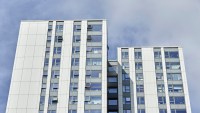
Within the next year or two, I could go bankrupt. My mistake: to join a government-backed affordable housing scheme and purchase a one-bedroom flat in east London. For the past four years, it has been my pride and joy — not to mention my savings, my pension and my financial future. I was grateful for the government’s help in getting a foothold in the city. But now another government policy is hurtling towards me, against which I have no defence. Nor do potentially tens of thousands of first-time buyers and the owners of affordable housing in my position. It might be the next big scandal to hit the government. It’s about cladding.