Politics

Read about the latest political news, views and analysis

Could Trump save the capital letter?

Irrespective of whether Donald Trump ends up being a two-term president, surely no modern political figure has done more to raise the profile of the capital letter. Joe Biden, in contrast, does not seem as enamoured with his caps lock button as the current Tweeter-in-Chief. No more FAKE NEWS, WITCH HUNT or MAKE AMERICA GREAT AGAIN if Biden is in the White House. At one point, Trump’s love of upper case was even mooted as the possible final straw which would lead to a third world war, after the President’s famously cautious tweet in July 2018: ‘To Iranian President Rouhani: NEVER, EVER THREATEN THE UNITED STATES AGAIN OR YOU WILL SUFFER CONSEQUENCES THE LIKES OF WHICH FEW THROUGHOUT HISTORY HAVE EVER SUFFERED BEFORE.

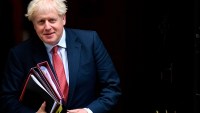
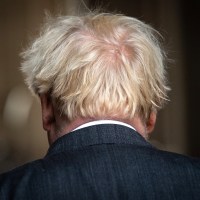
A second lockdown would be a disaster for Boris

Could Britain be heading for a second lockdown? Boris Johnson says his government is doing 'everything in our power' to prevent one, but failed to rule it out if coronavirus cases don't stop rising. Yet even if the Prime Minister does end up ordering Britain back indoors, it's worth asking whether he has the political capital to carry out such an order. Amidst a stormy few weeks in which the PM has alienated both wings of his own party, angered the frontrunner to become the next US president and been blasted by most of the press, I'm not convinced. When the first lockdown happened in March, there was a lot of goodwill throughout the country for both the idea of locking down and the government’s handling of the crisis.

I admit it: I was wrong to back Boris

A friend emailed me earlier this week in despair about the Prime Minister. ‘Boris reminds me of a hereditary king — Edward II or Henry VI — who is so staggeringly incompetent that he must be removed before doing too much damage,’ he wrote. ‘I felt the same way about May but Boris is worse.’ He is not the only person feeling like this. It pains me to say it, but I too have given up on Boris. The final straw was hearing him talk about his plans to create an army of ‘Covid marshals’ last week — Britain’s very own, curtain-twitching version of the Stasi. What on earth happened to the freedom-loving, twinkly-eyed, Rabelaisian character I voted for? Oliver Hardy has left the stage, replaced by Oliver Cromwell.

The Internal Market Bill isn’t radical enough

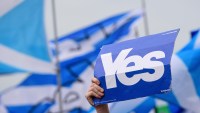
The more the SNP decries the Internal Market Bill, the more I warm to it. Initially, I considered it sensible enough but wholly insufficient given the constitutional threat facing the United Kingdom. (Less keen on the law-breaking bit, mind.) But now Mike Russell, SNP constitution minister and professional hysteric, says the Bill will ‘undercut the existing settlement’ by allowing devolved administrations to be ‘overridden by the whim of the UK Secretary of State’ and by permitting ministers to spend ‘in opposition to the Scottish government’ in what he calls ‘an enormous assault on the devolved powers’. Now, that’s more like it.

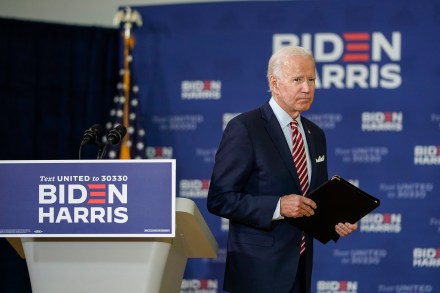
Joe Biden weighs in on the Brexit stand-off

Today has not been a good day for the government. The government’s decision last week to be so explicit that the Northern Ireland clauses of its Internal Market Bill would break international law in a ‘specific and limited way’ has caused all sorts of problems. First, it created a Tory backbench rebellion on the issue. A chunk of Tory MPs felt that the government’s position meant that they just could not support the legislation as proposed. The government has today pacified this rebellion by agreeing to table an amendment ensuring that the Commons would get a vote before these clauses are used.

Has the government’s Brexit plot backfired?

12 min listen

The government's Internal Market Bill won't reach the House of Lords until after the October EU Council, James Forsyth tells Katy Balls and Fraser Nelson on the podcast today. This means that the bill won't become law anytime soon, and provides the government leverage for a deal in that Council. So was this a ploy to get a better deal all along?

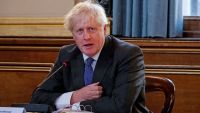
Five things we learnt from Boris’s liaison committee grilling

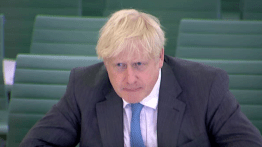
As the government comes under fire over its Brexit tactics, testing capacity and coronavirus guidelines, Boris Johnson was this afternoon summoned before the liaison committee to answer questions on all of the above. Although dialogue remained civil between the PM and the panel – made up of select committee chairs – there were signs that Johnson might prefer to be somewhere else, at one point rolling his eyes. Here are the five main takeaways from the session: 1. The EU is not negotiating in good faith Earlier today, Northern Ireland Secretary Brandon Lewis suggested the EU is negotiating with the UK in good faith. However, it seems the Prime Minister takes a different view.

PMQs exposed Angela Rayner’s two major faults

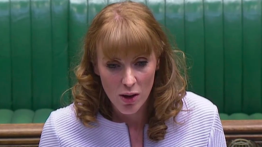
Sir Keir Starmer did a Greta at PMQs today. Without their leader, Labour invited Angela Rayner to duff up Boris in public. On her feet she announced that this would be ‘the Battle of Britain’. And she believed that ‘the whole country’ would be watching.  It was more like a game of hop-scotch between two flirtatious teenagers. The air zinged with puppy-love. ‘I congratulate her on her elevation,’ said Boris, eyeing her up with a Trumpian twinkle. Rayner couldn’t stop smiling as she made a joke about Keir Starmer’s absence which she blamed on failures in the testing system. ‘I heard he’s had a negative test,’ said Boris chattily. ‘I don’t quite know why he's not here.

A second lockdown would be a big mistake

Coronavirus cases dropped after we locked down, therefore lockdown worked. But is that right? I'm not convinced. And now it seems the government may be considering imposing another lockdown in response to the latest surge in cases. Doing so would be a mistake. The 'Rule of Six', introduced this week, is only likely to add to the confusion. If there is no spike in cases, the law will take the credit. If it fails to work, harsher measures could come into force. I'm not alone in failing to see how this approach – which will inevitably inflict more damage on our ailing economy and send a confusing signal to those who were beginning to resume normal life – is sustainable. How long can we go on like this?

In praise of Boris Johnson’s justice shake-up

It ought to be a good day at the office (at last!) for Robert Buckland, the Secretary of State who has outraged the legal profession. He spent most of last weekend on the media rack defending the government’s position that it might break international law to defy an agreement with the EU that it had negotiated.  Today is much more straightforward. His ‘get tough’ sentencing white paper contains a myriad of proposals that will resonate with ordinary people baffled by a justice system ever more remote from the idea of public protection and punishment, lost in abstractions, passing sentences that bear little relationship to the gravity of the crime.

Kay Burley’s Abbott obsession

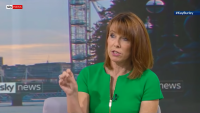
Robert Buckland was touring the Westminster studios this morning, batting away questions over the Internal Market Bill and touting his new sentencing white paper. What he probably wasn't expecting was yet another flurry of questions about a story that's now more than two weeks old.  Cue Kay Burley and her seemingly never-ending obsession with Tony Abbott, the former Aussie PM turned British trade negotiator. Burley kicked off her cross-examination by saying 'obviously the Abbott question is coming' – although it isn't quite obvious to Mr S why the Sky anchor is still ruminating over confected furore.

A tighter lockdown could be two weeks away

Significant further restrictions on our freedom to mix with people, in social or work settings, could be introduced in a fortnight, if the 'rule of six' does not lead to behavioural change and a flattening of the coronavirus infection rate. I have spoken to members of the government and to its scientific advisers, and am struck by how anxious they are that the virus may be spreading out of control again. One member of the Scientific Advisory Group for Emergencies (SAGE) told me : 'My big worry now is that we might be too late again to avert a major second wave. If we wait for deaths to go up again before taking decisive action we will be in trouble again.' A senior member of the government told me he was acutely aware of the scientists’ concern.

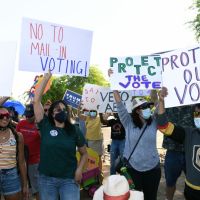
Is Trump right about mail-in voting?

17 min listen

President Trump is continuing to rail again mail-in voting, alleging that millions of unsolicited ballots could be heading into American postboxes. Is there anything corrupt about the postal voting system, and does it hurt or help the democratic process? Freddy Gray speaks to Marcus Roberts, director of international projects at polling company YouGov.

Can the government fix the testing meltdown?

14 min listen

Amid reports of local testing shortages, Matt Hancock told MPs today that the system is facing an 'enormous challenge' after a 'sharp rise' in demand. While the government has pledged to deliver 500,000 tests a day by the end of October, just 220,000 are currently being processed. Can the government fix the problem? Katy Balls speaks to Fraser Nelson and James Forsyth.

What do 111 calls tell us about the second wave?

Should we be looking at confirmed cases of Covid-19 to give us a guide as to how the epidemic is progressing – or at the number of people reporting symptoms? Over the past few months attempts to track the virus have been hampered by a very inconvenient fact: the number of tests being performed has increased hugely since the emergence of Covid-19, increasing tenfold between April and July. It makes reading the data extremely problematic – the more people you test, the more cases you are inevitably going to pick up. There is a possible alternative data set, however: the number of people ringing 111 to report symptoms.

Is unemployment about to surge?

Despite experiencing the largest economic contraction in over 300 years, UK unemployment figures haven’t budged for months. The furlough scheme seems to have proved successful in shielding many jobs from getting the immediate axe, while those who were made redundant often didn’t appear in the official figures as they were not immediately looking for work. But today’s labour market overview from the ONS shows they have started to tick upward: unemployment is now at 4.1 per cent, 0.3 percentage points up from last year and 0.2 points up from the last quarter.  Breaking down the rate by age, it’s clear the young have suffered the most so far: unemployment for 16 to 24-year-olds is up 76,000 this year, now totalling over half a million.

Tory faith in Boris is wavering

Having won that 80 seat majority for his party in December, it is really quite an achievement by Boris Johnson that so many Tory MPs want to talk to me about whether he'll stand down – willingly or not – next year.  There is even talk that no-confidence letters are already sitting in Graham Brady's bottom drawer calling for a leadership contest. Truthfully I don't take the notion of an organised coup seriously. But what should worry the PM – and what the chief whip should be telling him – is that many of those who were his enthusiastic supporters in last June's leadership contest say things to me like 'everything that's happening is on Boris', 'this is all about him' or, 'he's got till next year to turn this around'.