Politics

Read about the latest political news, views and analysis

How Boris’s ‘Operation Moonshot’ can get off the ground

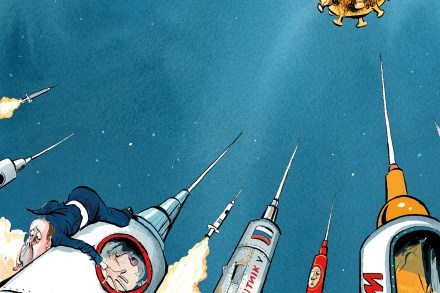
Jack Kennedy’s 1961 declaration 'We choose to go to the Moon’ was treated with a little more enthusiasm than Boris Johnson’s ‘Operation Moonshot’ pledge this week. Both caused eyebrows to be raised, on cost and practicality. But the former was done, eight years later; the later is, at best, a work in progress – at worst, it is just another pipe-dream. The siren voices, some better informed than others, have already dismissed it on scientific and economic grounds. Others say, like Lenin and the Duke of Windsor, that ‘something must be done’ to scale up rapid and reliable testing if we are to avoid losing a race somewhat more pressing and more vital than the space-race of the 1960s.
The growing Tory unease over lockdown

10 min listen

As England heads into stricter lockdown measures shortly, James Forsyth talks to Katy Balls and Fraser Nelson about the growing unease amongst backbenchers over the government's strict Covid response. Is it time for the government to try harder to make a case for its approach?

Will the economy continue to bounce back?

The UK economy continues to bounce back – but it’s the coming months that could pour cold water on a V-shaped recovery. The economy grew 6.6 per cent in July, according to data from the Office for National Statistics, with the return of pubs, restaurants, hairdressers and more non-essential shops giving us another boost back towards pre-Covid levels. But there’s still a long way to go: despite a record-breaking growth rate between May and July, Britain is still nearly 12 per cent below its GDP level in February 2020, having experienced a record-breaking contraction – the biggest seen in 300 years, and the worst of any major economy during the crisis so far.

Boris Johnson can’t afford many more weeks like this one

Boris Johnson will address his MPs tonight – and they are in need of some soothing. This week has strained relations between him and the parliamentary party. As I say in the Times, on Tuesday the government horrified the internationalist wing of the party by declaring that it was prepared to break international law in a 'specific and limited way'. On Wednesday, it infuriated the libertarian wing by making it illegal, with some exemptions, for more than six people to gather together. There was particular anger about the fact that all this happened without any fresh parliamentary vote or debate. There’s little overlap between these two factions. But picking a fight with two wings of the parliamentary party at the same time is dangerous for any prime minister.

UK agrees ‘historic’ trade deal with Japan

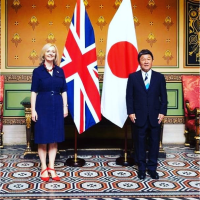
The UK and Japan have this morning agreed a new free trade deal between the two countries. With International Trade Secretary Liz Truss working to secure a number of FTAs for when the Brexit transition period ends, this is the first that goes beyond what the UK had under EU arrangements.  Announcing the news, Truss said this marked a 'historic moment' for the UK and Japan as the government's 'first major post-Brexit trade deal'.  According to government estimates, the agreement will boost trade with Japan by over £15 billion – though internal analysis suggests the overall net benefit will amount to 0.07% of GDP.

In defence of Boris’s ‘Rule of Six’

It wasn't supposed to be like this, was it? Six months after the imposition of lockdown, we were meant to be securely on a gentle path back towards normality, not facing fresh nationwide restrictions. So it is no wonder that the Government’s new 'Rule of Six' has proved to be the straw that has broken an increasingly grumpy camel’s back on the right of politics. Not only do the Government’s libertarian-minded detractors mock the arbitrary nature of the new restrictions, but they also take an increasingly hardline attitude towards the whole business of Covid. Toby Young, the general secretary of the Free Speech Union, has declared: 'The risk of a ‘second wave’ is a steaming pile of bullshit'.

Why is the UK breaking international law now?

If the UK government was just going to ignore international law, why did we bother leaving the EU at all? Before anyone gets too jumpy, allow me to explain. If you look at the Brussels laws the UK had to accept during its time as a member state, you’ll find that the government was almost always its own worst enemy. There was a tendency to ‘gold plate’ EU directives, meaning we would take the most extreme interpretation of the rules in question. Most EU directives have annexes that allow member states to play with any restrictions. While many member states shaped the rules around their needs, Britain had a tendency to apply the rules to their limits.

Winning shot: how the vaccines race has become a power struggle

34 min listen

Vaccines are normally in the realm of scientists; but not this time as world leaders race to be the first. (00:50) Brexit is heating up, but is the government in a stronger position than it seems? (13:35) And a modern day Caligula - the life and times of the Thai king Rama X. (22:40)With journalist Matthew Lynn; immunologist Beate Kampmann; our political editor James Forsyth; YouGov pollster Marcus Roberts; and Asia historian Francis Pike.Presented by Cindy Yu.

Are the Brexit talks about to break down?

11 min listen

The EU gave an ultimatum today that, unless the UK shelved its Internal Market Bill within three weeks, it would be taking legal action against the government. With negotiations in a more acrimonious stage than they have been for a long time, are the talks about to break down? Cindy Yu talks to James Forsyth and Katy Balls.

It’s hard to see a way through the Brexit deadlock

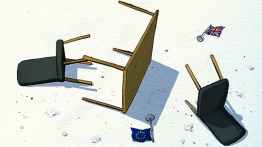
The drama has ramped up again in the Brexit talks. At today’s meeting of the Joint Committee on the Northern Ireland protocol, the EU demanded an explanation from the UK side of what was going on with the Internal Market bill. The UK argued that its clauses on Northern Ireland were needed as a safety net and to guarantee the peace process. The EU were not persuaded by this argument; and have demanded that these clauses are dropped from the bill by the end of the month. The EU statement is not explicit about what will happen if the clauses aren’t dropped. But the pretty clear implication is that the trade talks would likely be called off at that point. It is hard to see a way through this row.

The real problem with the Internal Market bill

In a very specific and limited way, I have concerns about the Internal Market bill. It’s not a bad bill; on the whole, it is a welcome piece of legislation that attempts to bring some cogency to regulation and practice as we exit the EU. The bill will make it easier to trade and contract with and within the UK, standardising and simplifying a regulatory terrain that currently resembles the obstacle course at Sandhurst. It also establishes in black and white UK ministers’ power to invest directly in devolved nations, including via transfers to local authorities. Since the first hint of the bill’s contents, the SNP has been squalling that the UK government is mounting a ‘power grab’ to undermine their bailiwick of belligerence at Holyrood.

Introducing Spectator TV, with Andrew Neil

Last week, we launched Spectator TV with The Week in 60 Minutes. Hosted by Andrew Neil and featuring James Forsyth, Katy Balls and yours truly, it aims to be a new fixture in your week: looking at the events passed in greater depth than you’d normally find.  Every Thursday at 6pm – posted later on our YouTube channel – we aim to take you through the most important news and add the context and analysis. It’s (very) new and we’ve been grateful for all of your feedback: our tech is rudimentary (we’re on Zoom, for now) but our ambitions are sky high.

Boris’s latest coronavirus crackdown is a sign of things to come

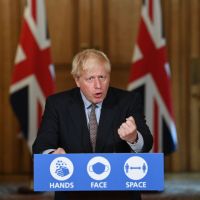
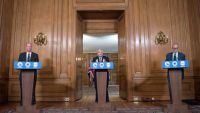
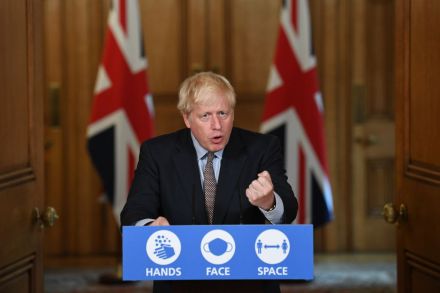
Boris Johnson confirmed in his coronavirus press conference yesterday that gatherings will be restricted to a maximum of six people from Monday onwards. This is the legal number allowed to meet (with a few exceptions), and those who fail to comply will face fines or even arrest. In one way, this isn't that much of a change to what's allowed at present – the guidelines already stated gatherings ought not to go above six. But the move to make gatherings above six against the law, is a substantial toughening up. It marks a shift in the government's coronavirus handling.  This approach is much more stick than carrot. Looking ahead to the winter, Johnson and his team are not relying on good will among the public to comply with the rules.

The competing theories that will decide Brexit

One thing is keeping the temperature among Tory MPs in check: the government’s poll lead. It's hard to claim that this or that event has been an election losing disaster when the opposition is still behind. The explanation for why the Tories are ahead despite such a torrid summer holds the key to what will happen this autumn, as I argue in the magazine this week. To one of those involved with the Tories’ 2019 election victory, the answer is obvious: the party has a core vote of 30 per cent to which it has added another 10 per cent who are Brexit enthusiasts. This analysis would encourage the Tories to prioritise their Brexit coalition. They would not want to give any ammunition to those who are eager to cry ‘Brexit betrayed’ at any deal.

Introducing the Internal Market bill isn’t unconstitutional

In the row about the Internal Market bill, some important constitutional propositions are in danger of being misunderstood. The introduction of the bill, which would empower ministers to disapply provisions of the Ireland/Northern Ireland Protocol to the Withdrawal Agreement, has been widely reported as Government law-breaking. The Attorney General and Lord Chancellor have been criticised for failing to resign and for breaching their oaths to respect the rule of law. But do ministers break any rule of our law if they introduce a bill that conflicts with a treaty? Does introducing such a bill defy the constitutional principle of the rule of law? We think not.

Are we seeing the last push against Brexit?

Large parts of the senior civil service regard Brexit as almost illegal. Some of them regard loyalty to the EU as a higher duty than to the elected government they are paid to serve. They feel this most strongly in relation to the Good Friday Agreement in Northern Ireland which they believe — with no textual evidence — is indissolubly linked with the EU. Some of the top mandarins now leaving their jobs prematurely think this way, perhaps none more so than Sir Jonathan Jones, the government’s chief legal adviser. On Tuesday, Lord Adonis, the most Remainery Remainer there is, tweeted: ‘We are going to hear a lot more about Sir Jonathan Jones, the government’s chief legal adviser, who has resigned rather than be a party to breaking international treaties.

Wrecking the Brexit talks won’t help our fishermen

‘Every country has a political problem with its fishermen,’ wrote Peter Walker, the Conservative minister who negotiated the first effective EU-UK fishing deal in 1983. ‘Everyone sympathises with the tough life they lead. They all want to take as much fish as they can.’ And here’s Michel Barnier, still speaking as the EU’s chief Brexit negotiator in Dublin last week despite rumours he’s about to be sidelined: ‘Without a long-term, fair and sustainable solution on fisheries, there will simply be no new economic partnership with the UK.’ Those quotes encapsulate the bizarre fact that an industry which contributes just £1.

No. 10’s no-deal dilemma

Backbenchers are discussing when to give Downing Street a bloody nose, a former prime minister is on the warpath and the government is fighting on multiple fronts. All of this is contributing to the heated atmosphere at Westminster. But one thing is keeping Tory tempers in check: the party’s poll lead. As long as the government is ahead in the polls, it is hard to declare that it is in crisis. This lead also limits the frustration of Tory MPs. You can’t claim that this or that event will lead to the Conservatives losing the next election when the opposition are still behind. Why are the Tories still ahead despite such a torrid summer?