Politics

Read about the latest political news, views and analysis

‘Principled realism’: the ideology behind Pompeo’s policy

24 min listen

Mike Pompeo has guided Donald Trump's foreign policy, and has been hailed with bringing the president's ideology to life. In the latest US edition of the Spectator, Dominic Green interviews the secretary of state. Freddy Gray speaks to Dominic about Pompeo's Middle East strategy, and the philosophy that guides his decisions.

Amal Clooney’s curious resignation

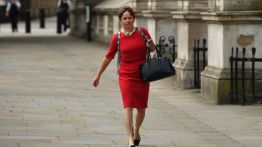
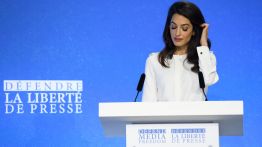
This afternoon, leading human-rights lawyer Amal Clooney (and wife of George) handed in her resignation to the government. Clooney has been a UK special envoy for media freedom since July last year, when she promised to use her position to stick up for embattled and persecuted journalists around the world. Her relationship with the UK government turned sour this month though, after minister Brandon Lewis stood at the Despatch box and said the government’s Internal Market Bill would break ‘international law’, once passed. This disregard for an international treaty clearly offended the sensibilities of Clooney, and after meeting with the Foreign Secretary, she decided she could no longer countenance working with Her Majesty’s Government. https://twitter.

A guide to Westminster pubs in the age of coronavirus

Life is slowly returning to Westminster. While the Commons chamber is only partially filled, most MPs are back – even if tourists remain in short supply. With a number of difficult issues coming up the track from avoiding a second wave to strained Brexit talks, the demand for a good pub crawl is the same as ever. So in the absence of any 'circuit break' shut down, Coffee House has assembled a list of the best taverns to hit before none of us are allowed to go out after 10pm. With all the bars in parliament closed, a handful of the surrounding establishments have reopened for business:  Open for business: The Red Lion 48 Parliament St, SW1A 2NH Price of a pint: £5.

Boris Johnson’s eco ambitions

Covid and Brexit dominate Boris Johnson’s premiership, and will for at least the rest of this year. But, as I say in the Times today, the speech that Johnson is most excited about giving is not on either of these subjects. Rather, it is on his green agenda. 'The big narrative we’re not getting right is that this has to be a green recovery,' says one of those who has discussed the speech with the Prime Minister. One of the reasons Johnson is so keen on this speech is his enthusiasm for hydrogen. He and others at the top level of government see it as the answer to many problems. They think that hydrogen could be used not only to fuel heavy goods vehicles, trains and ships but also to heat our homes.

A Covid ‘circuit break’ will infuriate Tory MPs

Parliamentary allies of Boris Johnson are deeply concerned about how Tory MPs will react to any kind of ‘circuit break’ set of restrictions designed to slow the spread of coronavirus. The public are in favour of tighter restrictions. Even before the latest infection numbers came out, more than 60 per cent of voters backed a 10pm curfew, according to YouGov. But Tory MPs are in a very different place. As one weary secretary of state put it to me earlier in the week, one of the government’s problems is that ‘the libertarian chunk of the population is disproportionately represented in the Tory party and the press’.

What’s the point of a two-week lockdown?

13 min listen

The government is reportedly considering the short-term reintroduction of nationwide social restrictions to halt the spread of coronavirus. Will a two-week 'circuit break' make a difference, or simply delay the inevitable? Katy Balls speaks to Fraser Nelson and James Forsyth.

With scientists divided, it’s time for politicians to decide

Later today, the ONS coronavirus survey will confirm that Covid-19 is on the march again everywhere, not just in regional pockets — though there are regional variations. And it will also show that infection is rising in all age groups, though the incidence of the illness is highest by a margin among those aged 17 to 29.  Which is why, as I reported earlier in the week, the government is looking at introducing additional social-distancing measures on a national basis — such as forcing pubs, clubs and restaurants to turf out customers at 10 p.m., or reverting to closing them altogether, for a couple of weeks or so.

Why isn’t Matt Hancock taking Covid false positives seriously?

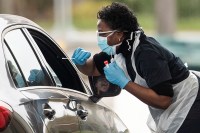
As Matt Hancock was doing his media round this morning, it was refreshing to hear him finally being questioned about the challenge of false positives. But his response made me worry whether the Health Secretary really knows what a false positive is – or the potential extent of the problem when it comes to detecting coronavirus and the impact of that on decision making. False positives happen when someone is incorrectly given a positive result for something which in fact they do not have. As I wrote in May, no matter how carefully designed, created or performed, no test is perfect.

The impossibility of Moonshot without fixing test and trace

16 min listen

The government has promised to deliver a nationwide mass testing programme by the beginning of next year, claiming it could offer a route out of continued restrictions. But with mounting reports about the failing test and trace system, is Operation Moonshot impossible? Cindy Yu speaks to James Forsyth and Katy Balls.

Where’s Boris? A government at sea

37 min listen

From Covid to Brexit to even the culture wars, Boris's performance seems to have been lacklustre. Where is the effervescent leader he was promised to be? (00:45) Sweden's violent crime is spiking - and are politicians afraid to say why? (16:45) And on the other side of the world, why are the Japanese so much happier to wear masks? (27:55)With Spectator Editor Fraser Nelson; Director of Political Insight Stewart Jackson; journalist Paulina Neuding; the FT's Nordic Bureau Chief Richard Milne; Professor Jordan Sand; and Spectator Assistant Editor Lara Prendergast.Presented by Cindy Yu.

Faith in the government is wearing thin

As the government tightens coronavirus restrictions across swathes of the north east, Boris Johnson is facing his worst polling on the issue since the crisis began. According to a YouGov poll, approval of government handling of coronavirus is at its lowest: -33, compared to -18 last week. Coffee House understands this broadly tallies with internal government polling. Those privy to the findings of recent focus group polling say that a common complaint is the lack of a long-term plan for Covid.  Ministers expect the polling to get worse before it gets better. The fact the government's coronavirus testing system is already buckling is a sign of trouble ahead.

Why didn’t the government learn from Scotland’s test shortage?

This country is better prepared for any ‘second wave’ of Covid than it was for the first. But as I say in the magazine this week, a second wave will be far more difficult for the government politically than the first one was. There’ll be no rally round the flag effect this time. The public expect the government to be prepared. The growing anger over testing is an example of this change. This country has the ability to test far more people than it did back in March. But there is mounting irritation about how many people in coronavirus hotspots are being told either that there are no tests available or are being sent long distances for their swab.

Why is my Northumberland being locked down?

I am from Northumberland. You might have heard of the place, or even been there: the glorious coastline is increasingly popular for holidays, though the Cheviot Hills (even more deserving of attention) are less well-known. Often, the county is lumped into a bigger mass known as ‘the north-east’. Which I suppose makes a certain sense, given the basic geography and accents that – at least to outsiders – sound broadly similar. (I might return to this another day, but the idea that the accent of the Upper Coquet Valley sounds anything like, say, that of Sunderland is actually comical.) Northumberland is a curious construction as a local authority area. It’s big by English standards and largely empty.

Failing Grayling finally gets a break

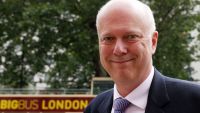
Chris Grayling recently went down in history as the one of the only men able to lose a rigged election. The former Transport Secretary had been lined up by No. 10 to chair the intelligence and security committee, but ended up being rejected by his fellow committee members when his Tory colleague, Julian Lewis, decided to vote for himself instead. But now things are looking up for failing Grayling. Grayling has got himself a new job advising a ports company for the hefty sum of £100,000 a year. Before critics get too outraged, it’s important to take into account that this is for an exhausting seven hours of work per week.

How the EU is breaking its own Lisbon Treaty

That the European Union takes to the moral high ground on international law when it suits it is hardly new. Nor is its infringement of international treaties, even when they are its own. For six months now, the European Union has been in breach of its fundamental international treaty: the 2007 Lisbon Treaty.  Brussels has fallen foul of Article 341 and Protocol 6 – or what might be called the ‘Alsace-Lorraine protocol’ – of what is officially known as the Treaty on the Functioning of the European Union (TFEU). This section of the treaty permanently situates the European Parliament’s plenary seat in the Alsatian capital of Strasbourg.

Where’s Boris?

At the end of last week, the Prime Minister invited Tory MPs to a massive conference call, a kind of digital fireside chat to lift their spirits. It was a disaster. First the MPs were astonished to learn that he wasn’t taking questions; then his connection failed halfway through — at which point the callers, who had been ‘muted’, became ‘unmuted’ and started talking loudly and all at once. One of them, Michael Fabricant, started singing ‘Rule Britannia’. When the call came to an end, the MPs were all left wondering the same thing. What’s happened to Boris? Where is the man we thought we voted for? Physically, Boris Johnson is still around.

Why No. 10 fears the second wave

The government is bracing itself for a second wave of coronavirus. Everyone knew the autumn and winter would be more difficult than July and August. But what is depressing ministers is how new restrictions have had to be imposed before the summer is even out. ‘It is going to be a long, hard autumn,’ warns one minister intimately involved in this effort. In many ways this country is better prepared for a second wave than it was for the first. Policy-makers know more about the virus and how it spreads, doctors are better prepared to treat it, the government is better organised than it was before, has better data and significantly more testing capacity. In Whitehall, they expect these changes to be put to the test very soon.

The Japan trade deal shows how desperate we are for investment

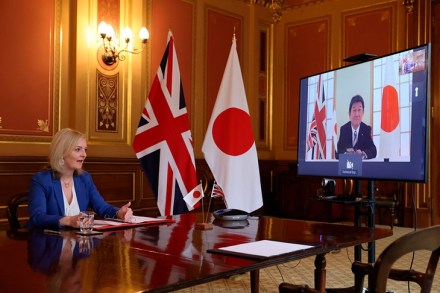
A small cheer for Liz Truss’s treaty with Japan. It is, says the official press release, ‘the UK’s first major trade deal as an independent trading nation’ — and we must hope, the harbinger of much bigger deals to come. Even on the government’s own analysis, this one claims to deliver just £1.5 billion to the UK economy and an increase in UK workers’ wages of ‘£800 million in the long run’, whatever that means. What it highlights, I’m afraid, is the imbalance between the range of goods and services that the post-industrial UK is actually able to offer foreign partners — and how much more we need from them, chiefly in the form of inward investment.