Politics

Read about the latest political news, views and analysis

How do we avoid another coronavirus lockdown?

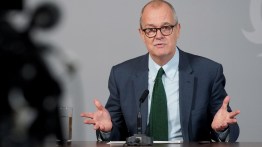
Probably the most interesting new bit of information we received today on Covid-19 was from Sir Patrick Vallance, the chief scientific adviser, who implied that he and the government are now assuming that fewer than one in 200 people who are infected with the virus will die. That still means this form of coronavirus is a terrible scourge. It is not exactly conventional good news. But this Infection Fatality Rate of 0.4 per cent is less than half the circa one per cent he and the chief medical officer Chris Whitty employed as their rule of thumb or heuristic only a few months ago.

Theresa May rejects Boris’s Brexit bill

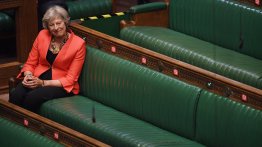
Theresa May was away last week so she didn’t have to take part in the vote on the Internal Market Bill, which contain the controversial Northern Ireland clauses that disapply parts of the Withdrawal Agreement. But in a speech just now, May has made explicit her opposition to the bill, declaring: ‘I can’t support this bill.’ She even went as far as to question how any minister could walk through the division lobby in support of it. May accused the government of acting ‘recklessly and irresponsibly’ and doing ‘untold damage’ to the UK’s international reputation with its willingness to ‘renege’ on the agreement that it has signed. She also added that it was putting the ‘integrity of the UK at risk’.

Five questions for Chris Whitty and Patrick Vallance

The chief medical officer, professor Chris Whitty, and chief scientific adviser, Sir Patrick Vallance, made a statement this morning on the latest data surrounding Covid-19, laying the groundwork for new restrictions that the government is expected to announce tomorrow. It wasn’t a press conference with questions, so they could not be challenged on what they presented — but there were plenty of questions to ask. Here are five: 1. Why present only one Covid 'scenario' - with extreme assumptions? Sir Patrick presented a graph showing a frightening exponential rise in cases to 49,000 a day by mid-October — if cases continued to double every seven days. He emphasised that it wasn’t a prediction, yet only presented one scenario.

Labour’s four economic pillars

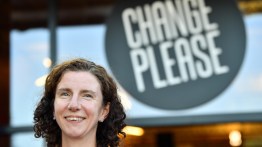
The first big speech by Labour shadow chancellor Anneliese Dodds was highly significant for what it did not do — in that it was all about competence rather than ideology. Her speech had four main elements:  a need for government to subsidise those hundreds of thousands of people forced into part-time working by the virus;a need to mount a massive national retraining programme for those whose industries are in irreversible decline;the imperative of avoiding debt delinquency and a default cliff edge for companies next March when their emergency Covid-19 loans from the Treasury become repayable;and an urgent need to avoid waste in contracts awarded by the government.  Many Tory MPs would say this is eminently sensible.

Why won’t Vallance and Whitty answer any questions?

11 min listen

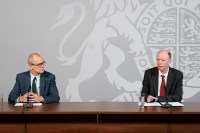
In a Downing Street statement this morning, Chris Whitty and Patrick Vallance presented their take on the latest coronavirus data. Speaking without a government representative, the pair said that Brits needed to 'break unnecessary links between households' and warned that the UK could see 50,000 new coronavirus infections a day by mid-October. But why didn't Vallance and Whitty answer questions from journalists? Cindy Yu speaks to James Forsyth and Katy Balls.

Has Alan Cumming forgotten what he said about ‘stupid’ Brexit voters?

Actor Alan Cumming used an interview over the weekend to talk about the difficulty of being a Scot in London. Cumming, who is best known for appearing in TV show The Good Wife, said Scots like himself faced an 'insidious and subliminal racism' in the capital. He said: 'I feel...assumptions are made about your intelligence, your background, your education, in London, because of how you sound as a Scottish person.' Mr S would not condone anyone making assumptions about a person's intelligence. But he also couldn't help but remember what Cumming himself had to say about English people in the wake of the EU referendum. Condemning the vote to leave, Cumming – who now lives in New York – said:  'I was appalled when I heard the result.

Vallance and Whitty lay the groundwork for new restrictions

A taste of what to expect over the next six months came in today's press conference with Chief Medical Officer Chris Whitty and Chief Scientific Adviser Patrick Vallance. Following reports of plans in government for new national restrictions and a potential lockdown, the pair used their public address to provide an update of the latest coronavirus statistics. It did not make for pretty viewing. Vallance said that if the rate of infection continues on its current trajectory without further restrictions the UK could see 50,000 new coronavirus cases a day by mid-October. This he argued 'would be expected to lead to about 200 deaths per day' a month after that.  Whitty didn't have much in the way of more positive news.

Full text: Chris Whitty on the second wave

What we've seen is a progression where — after the remarkable efforts which got the rates right down across the country — we first saw very small outbreaks, then we've seen more localised outbreaks which have got larger over time, particularly in the cities. Now what we're seeing is a rate of increase across the great majority of the country.  It's going at different rates, but it is now increasing. And what we found is anywhere that was falling is now beginning to rise and then the rate of that rise continues in an upward direction.  This is not someone else's problem, this is all of our a problem.  This graph is a simple one. It simply shows the number of inpatient cases in England over the period from 1 August.

Boris must urgently rethink his Covid strategy

Dear Prime Minister, Chancellor, CMOs and Chief Scientific Adviser We are writing with the intention of providing constructive input into the choices with respect to the Covid-19 policy response. We also have several concerns regarding aspects of the existing policy choices that we wish to draw attention to. In summary, our view is that the existing policy path is inconsistent with the known risk-profile of Covid-19 and should be reconsidered. The unstated objective currently appears to be one of suppression of the virus, until such a time that a vaccine can be deployed. This objective is increasingly unfeasible (notwithstanding our more specific concerns regarding existing policies) and is leading to significant harm across all age groups, which likely offsets any benefits.

The Tories have missed Starmer’s Achilles heel

The main Tory attack on Starmer since he became leader of the Labour party is that he is 'too much of a lawyer'; dull and metropolitan. The problem with this line is that it complements the narrative Starmer is trying to build himself, namely that he is competent while Boris is not. As such, it is worse than ineffective as a strategy — it is actually counterproductive. What is strangest about the continued use of the lawyer strategy is that there is an alternative attack on Starmer staring the Tories in the face, one they have not yet touched. When Sir Keir ran to be Jeremy Corbyn’s successor, he rolled out ten pledges that at the time he said would define his leadership of the Labour party.

Brace yourselves for more Covid lockdown restrictions

I've been bombarded with emails and messages from data scientists who firmly believe that the trend to Covid-19 infections, based on when a specimen was taken, is flattening or even falling. On the basis of that analysis, they are convinced the government is overreacting by threatening to impose new social distancing measures. And if you look at the government's Covid-19 dashboard, you will be struck that the seven-day average for positive results is sharply on the rise, whereas there is a modest fall in the seven-day average of results by the date the specimen was taken.

Boris’s ‘whack-a-mole’ Covid strategy is failing

Will the current cycle – lockdown; open up; eat out; restrictions; lockdown – go on forever? In their handling of coronavirus, Boris Johnson and his colleagues have become increasingly media-responsive, fear-bound, model-sensitive, sound-byte producing, u-turn prone and, quite frankly, embarrassing to all who believed the UK to be a beacon of rational thought. Has the Government lost the plot? We are not sure if it ever had one. This week at its annual meeting, the British Medical Association lamented the Government's lack of grip on the public health during the current pandemic and proposed a ‘near-elimination’ strategy.

Could Boris quit?

Could Boris do a Harold Wilson? Over the years there has been much speculation about the sudden resignation of Wilson as prime minister less than a year after he had settled, apparently for good, the momentous question of Britain’s future in Europe via the 1975 referendum. Was he forced out by MI5? Had he already got wind of his early-onset Alzheimer’s? Was there some other hidden personal scandal that would have emerged had he not stood down? The truth was rather more bland: it seems more likely that Wilson had just lost his appetite for the grind of the job. In a resignation minute circulated to all cabinet ministers he observed: ‘It is a full-time calling.

Peerless: what it’s like to become a Lord

As from this Thursday, I am a peer, although I must wait until next month before I can take my seat in the House of Lords. My letters patent confirm that I am Lord Moore of Etchingham. As do all new boys and girls, I went to see the Garter King of Arms, and he gave helpful advice. Very occasionally, new life peers jettison their surname when taking a title, thus assuming a new identity. The former John Selwyn Gummer, for instance, took the name of his local river and became Lord Deben. This is understandable in his case, because the Green Gummer is almost single-handedly saving the planet. It is also understandable that Michael Lord became Lord Framlingham, to avoid being Lord Lord.

What does Europe teach the UK about a Covid second wave?

21 min listen

As the UK seems to enter a second wave of coronavirus infections, Europe is again the guide on the trajectory of the virus and the best strategy to tackle it. But from Sweden to Belgium, which European country should we follow, and is anyone in government listening? Kate Andrews talks to Fraser Nelson and Swedish economist Fredrik Erixon.

Boris Johnson: the second wave is coming in

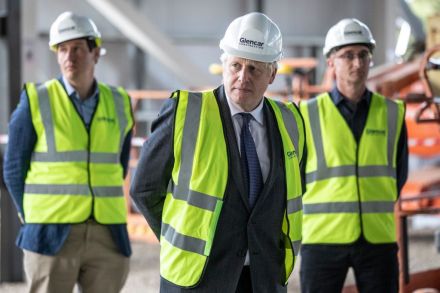
There has been growing speculation this week that Britain is heading back towards a second lockdown. Today, it was reported the government is considering closing hospitality venues as part of a ‘circuit break’ to reduce the spread of the virus; local lockdowns now cover more than 10 million people nationwide; and ministers such as Matt Hancock have refused to rule out tightening restrictions as the number of coronavirus cases continues to rise. This afternoon, Boris Johnson himself weighed in to suggest that the second coronavirus wave had begun in the UK and more restrictions may now follow. Speaking to broadcasters at a construction site of a vaccine manufacturing centre in Oxfordshire, the Prime Minister said that we ‘are now seeing a second wave coming in.

Why Boris Johnson needs to speak to Anders Tegnell

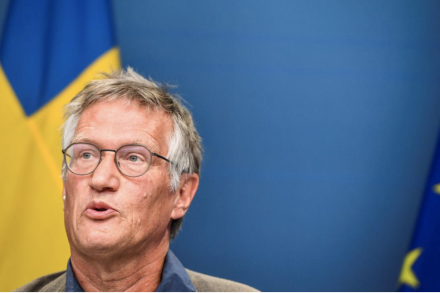
It’s not hard to understand Boris Johnson’s dilemma. He will hate the idea of a second lockdown, but his scientific advisers tell him it's the best way to fight a second wave. He’s not sure if their fears are exaggerated, but how is he to know? There are not very many expert voices around No10 to challenge the SAGE committee’s assumptions. One idea could be reaching out to Anders Tegnell, Sweden’s chief epidemiologist, who has just been interviewed by Andrew Neil for our new Spectator TV. The Swedes were able to identify the exaggerations in the Imperial College London assumptions first time around - and might be able to check the assumptions No10 is being given this time.