Politics

Read about the latest political news, views and analysis

Rishi Sunak slowly turns the taps off

13 min listen

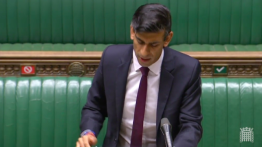
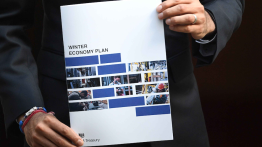
After new restrictions were announced this week by the prime minister, Rishi Sunak today unveiled his Winter Economy Plan. Telling the Commons that he 'cannot save every business', the chancellor said that the government would pay up to 22 per cent of workers' wages. The package may be generous, but is it a sign that the government is winding down the scale of its economic interventions? Cindy Yu speaks to Katy Balls and Kate Andrews.
Rishi Sunak prepares UK economy for ‘permanent adjustment’

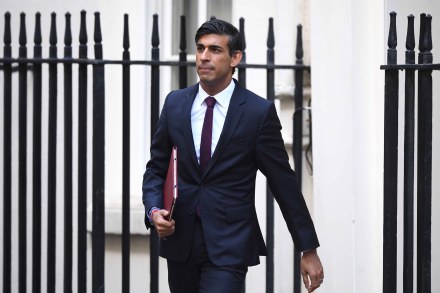
The UK economy is no longer hibernating; it is 'adjusting'. Today's measures announced by Chancellor Rishi Sunak are designed to help an economy expected to limp through the coming months, quite painfully in certain areas, hopefully on its way to recovery. But are they enough? The role of the government and the employer has switched: the six month jobs support scheme will see the state contribute to workers' wages if needed, but now the employer will be paying over 50 per cent of the costs, with the government paying 22 per cent.

Belgium shows the problem with Boris’s Covid strategy

If there is one country which has influenced the government’s toughening of Covid restrictions over the past fortnight it is Belgium. It was Sophie Wilmes’ government which, faced with a resurgence of Covid cases in late July, came up with the idea of placing a limit on the size of social gatherings – five rather than the six which Boris Johnson went on to impose in England six weeks later. It was the Belgian government, too, which came up with the idea of setting a curfew for pubs – 11pm rather than the 10pm which will come into effect in England, Scotland and Wales today. At the same time, Belgium extended the compulsion to wear a mask to most public places. So did those measures do the trick in Belgium? Not quite.

Rishi Sunak slowly turns the taps off

When Boris Johnson announced further lockdown restrictions this week, it was inevitable that Rishi Sunak would again splash taxpayers’ cash. The Chancellor duly delivered this afternoon. But one thing is clear: slowly but surely Sunak is turning the taps off. The Job Support Scheme, which replaces the furlough scheme, means the government will pay up to 22 per cent of workers’ wages. VAT cuts in hospitality and tourism – two sectors which will inevitably be hit hard by the new rules – were also extended. And firms that took government loans will have more time to pay them back. There is some help, too, for the self employed: a government grant will give those who are earning less than usual up to 20 per cent of their trading profits.

Ann Widdecombe parts ways with the National Trust

The National Trust has been making headlines of late over its decision to dip a toe into woke waters. As well as a previous drive for rainbow lanyards and trading antique furniture for beanbags, they recently came up with a dossier listing the country pads of Winston Churchill, Rudyard Kipling and William Wordsworth as properties with connections to ‘colonialism and slavery’ – the latter because his brother captained an East India Company ship. In this week's issue of the Spectator, Charles Moore describes the manifesto as shameful.  Now its costing them visitors.

Britain is the weak link in Europe’s counter-extremism network

Europeans see the UK as an outstanding centre of counter-terrorism — but one that is wholly incapable of counter-extremism. Britain has a world-class security and counter-terrorism apparatus. MI5, MI6, the police, military and GCHQ together have unrivalled capabilities when it comes to disrupting domestic and international terror plots (at least 25 in the last three years alone). The country is seen as a cornerstone of shared European security, working harmoniously with allies to combat the evolving terror threat, share new tactics, intelligence and technologies. Yet until the United Kingdom is able to take decisive action against extremist ideology, Britain's streets will once again see bloodshed. Counter-terrorism alone cannot stop every threat.

Did Ruth Bader Ginsburg’s talents go to waste?

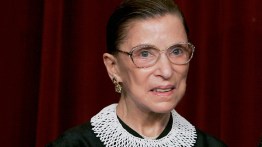
Ruth Bader Ginsburg has passed away. America has lost one of its finest lawyers. An outstanding lawyer is a gift to a nation. But RBG is one America never actually used. The same is equally true of her friend Antonin Scalia. Two brilliant lawyers that most nations would give their right arm for. I think it is fair to highlight how little law either actually did. Both were sadly reduced by the constitution they lived under, to being mere politicians. They both contrast sharply with how we have tried to practice law here. A month ago, I had lunch in a pub with a friend and three children. At the end the bill came. It was incorrect. Not uncommonly for someone who fights over bills for a living, I let my non-lawyer friend take up the issue.

Is this the man who will replace Angela Merkel?

Markus Söder is the one to watch in German politics. The ascent of the Bavarian Minister-President and leader of the Bavarian Christian Social Union is probably the closest modern Germany has come to Macron-style disruption. The situation is less dramatic than France in 2017 — there is no great disaffection with Chancellor Angela Merkel or with politics in general — but there is a sense that the country needs a shift in direction. Bavaria symbolises that new direction. When I grew up in Germany’s deep west in the 1960s and 1970s, we went to Bavaria on holiday and admired its quaint backwardness. We did not take it very seriously until the Munich Olympics in 1972.

The end of the line for the rail franchise fiasco

Good riddance to the passenger rail franchise system which has finally been killed off by Covid, though a majority of the travelling public might say it should long ago have been put out of its — and, more pertinently, their — misery. The complex scheme to privatise British Rail launched by the Major government in 1993 defied those who said it couldn’t be done and was designed by the Treasury to maximise proceeds to itself. In doing so, it fractured the industry into a myriad of separate owners, operators and service providers that rarely worked in harmony or created competition for the benefit of users. The consequences of this structural fiasco were as random as they were unsatisfactory.

All protests are not equal in the eyes of the police

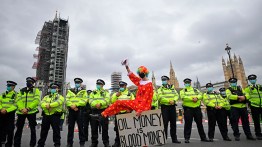
I’ve never been a great fan of public demonstrations. When I was at university, one of the great causes du jour involved a bus company owned by a man accused of not much liking the gays. My generation were short on causes, so intermittently there would be a call for direct action against the bigoted buses. I slipped along once, not sure whether I really wanted to join in. Apart from the sight of a few dozen callow students preventing one of the guilty buses from progressing up the High Street, my main memory is the almost animalistic rage of a number of the bus’s passengers. Unable to be heard above the chants, they looked like flies in a bottle, getting ever more furious about being made to be late for their next appointments.

Who rules supreme in America?

Within hours of Supreme Court Justice Ruth Bader Ginsburg’s death, Democrats and Republicans began fighting over how to fill her seat — and when. The stakes are high because the Supreme Court is so important. It can invalidate any federal, state or local law by ruling that it violates the US Constitution. And its decisions set precedents that lower courts must follow. Its rulings are final, made by judges with lifetime appointments. Donald Trump intends to fill Ginsburg’s seat as quickly as possible. He will announce his nominee by the end of the week. That nominee will then face hearings before the Senate Judiciary Committee, chaired by the Republican Lindsey Graham. Once a nominee gets through the committee, the full Senate debates his or her case.

Closing time: the Tory brawl over Covid rules

‘The mood of the parliamentary party has noticeably worsened in the past five days,’ one senior Conservative backbencher says. He’s not talking about Brexit — these days, the majority of Tory MPs continue to back Boris Johnson’s hardball approach — but about Covid. No. 10 favours a pre-emption strategy when it comes to the pandemic. They want to clamp down on the virus long before it has a chance to get out of control. ‘Go tight, go early,’ as one Johnson ally puts it. But that approach is triggering considerable resistance among Tory MPs. Broadly, they believe that the government should stick to its previous policy of trying to keep the virus within the capacity of the health service to deal with it.

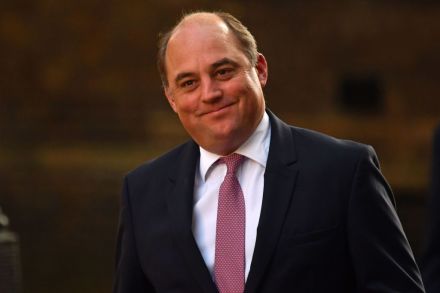
Ben Wallace should resign – but he won’t

There are two kinds of people in this life: people who say Gavin Williamson is the least capable member of the Cabinet and people who have heard of Ben Wallace. The Secretary of State for Defence, in an intemperate answer in the Commons, claimed the UK waged ‘illegal wars’ under Labour.  Wallace was speaking during the second reading of the overseas operations (service personnel and veterans) bill, which is intended to protect British soldiers from lawfare. It was rather unfortunate, then, that in the middle of trying to pass such a piece of legislation, the Defence Secretary would make a jibe about ‘illegal wars’ to the Labour benches.

Defence Secretary says UK waged ‘illegal wars’

Gasps abounded in the Commons this afternoon after a testy exchange between Defence Secretary Ben Wallace and his Labour opposite number. A clearly riled Wallace decided that he had had enough of John Healey's interventions during the second reading of his bill to limit prosecutions of servicemen and women. The cabinet minister told the House:  Much of the mess we are having to come and clean up today is because of your illegal wars, your events in the past and the way you have run this, the, the, the... the safety for our forces. Readers don't need to be told that neither the invasion of Iraq nor the war in Afghanistan have been found to be illegal. So it is intriguing to see the minister responsible for HM Forces stand up in the Commons and say otherwise.

Starmer’s brain is Boris’s secret weapon at PMQs

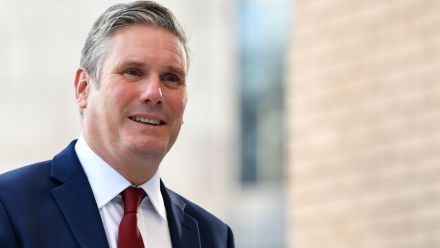
Martial law was declared yesterday. And today Boris was expected to arrive at PMQs dressed in jackboots, an olive tunic and wraparound shades, with a Glock 18 machine-pistol tucked into his holster. Instead he wore a plain business suit. Perhaps he wanted to give his people a friendlier impression of their overlord. He seemed unusually jovial and upbeat at the despatch box, despite all the barmy rumours swirling around the internet. He was as bouncy as a spaniel on a trampoline. And he was helped by his secret weapon, Sir Keir Starmer’s over-active legal brain. The Labour leader had spotted a discrepancy between two prime ministerial utterances.

Should the government admit its mistakes?

12 min listen

In a televised address to the nation last night, Boris Johnson hailed Britain as a 'freedom loving country', but said that a lack of adherence to existing coronavirus restrictions meant new measures are needed. Is the government right to blame the public for a rise in Covid cases, or should they adopt a more contrite tone and admit to mistakes in areas like testing? Cindy Yu speaks to James Forsyth and Katy Balls.

Will furlough be extended?

When Chancellor Rishi Sunak extended the furlough scheme back in May, he committed more support than anyone expected. In June and July, the government continued to pay 80 per cent of employee wages (with a cap of £2,500 per month) and has also picked up the majority of the tab in August and September.  But as the scheme comes to an end after 31 October, calls have grown louder for it to be extended again. So far Sunak has been adamant that it won’t be, telling the House of Commons in July that it could not continue forever. But, as with many Covid-19 policies over the past six months, it appears this may be about to change.The Treasury is working on proposals to extend subsidies for workers’ wages, according to reports in the Financial Times.

Sweden’s virus expert briefs No. 10

One of the questions regularly asked by Tory MPs on the libertarian wing of the party: why isn't the UK taking the Swedish approach on coronavirus? After the Prime Minister announced this week that the public ought to expect at least six more months of restrictions, Johnson has faced a backlash both within his own party and among certain sections of the scientific community over his strategy of nationwide measures to suppress the virus.  Tegnell was key to Sweden's decision to avoid a full lockdown The chair of the 1922 Committee Graham Brady is attempting to amend the government's emergency powers so MPs have more of a say over coronavirus measures.