Politics

Read about the latest political news, views and analysis

Starmer fails the Gogglebox test

There will be cheers in Labour HQ today as an Opinium poll has given Labour its first poll lead since Boris Johnson became Prime Minister. In some quarters this has been heralded as a party conference boost – even if the whole event was online this year. Starmer used that conference speech to claim Labour is becoming a 'competent, credible opposition'. Yet while there are some signs the message is landing, not everyone is convinced by Sir Keir. Starmer failed the Friday night Gogglebox test - being given the thumbs down by the Channel 4 show's cast for offering no little alternative to the government's Covid policies, and then criticising after the storm: https://twitter.com/BenJolly9/status/1309766414006398979?

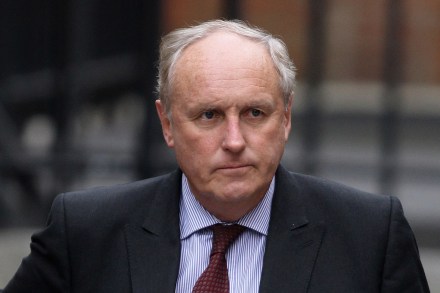
Paul Dacre and Boris Johnson: ‘the Boston strangler’ and the ‘alley cat’

Paul Dacre, the former editor of the Daily Mail, has reportedly been asked by the Prime Minister to chair the broadcasting regulator Ofcom. This is the same Paul Dacre who, when put in charge of the Press Complaints Commission, Boris Johnson compared to ‘putting the Boston Strangler in charge of the code of practice for door-to-door salesmen’. The same Paul Dacre who, when Boris Johnson was elected Tory leader, said that ‘the party of family values has chosen as leader a man of whom to say he has the morals of an alley cat would be to libel the feline species’. To Mr Steerpike, this doesn't seem like the best start to a working relationship.

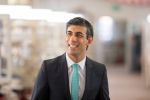
Is Rishi Sunak on the path to No. 10?

14 min listen

In her Telegraph column this week, Katy Balls writes about the Chancellor who everybody loves. But the road to No. 10 is not easy - what are the pitfalls Rishi Sunak could face in the months ahead? Cindy Yu talks to Katy and James Johnson, former pollster at No 10 and co-founder of J.L. Partners.

Tories should be terrified of Starmer’s ruthless streak

How does a Labour leader going into an election with only around 200 MPs to his name become prime minister? Well, the conventional answer is that he doesn’t, as Neil Kinnock demonstrated in 1987. Kinnock stuck around for a second go in 1992, but still couldn’t get over the line. We can tell from Sir Keir Starmer’s utterances this week that he is not really a sticking around type of bloke. We can also tell that he has identified a path to Downing Street that, while rocky and full of potential pitfalls, might just be navigable. In his audacious conference speech on Tuesday, Starmer explicitly set himself a punishing goal – to take Labour into power at the next election, removing its frontbench team from 'the shadows' and catapulting it into government.

Lib Dems are foolish to ditch their pro-EU commitment

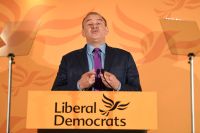
The Liberal Democrats are putting a motion to their virtual conference this weekend to end the party’s commitment to trying to rejoin the EU. This will annoy many of their activists. It will convince some pro-Europeans that the time to rip up their membership cards is now (and, for many others, to feel smug about having always doubted the party). So what's the upside? There isn't one. Instead, this is another in a long line of useless moves by the party, built on trying to get people who will never like the Lib Dems to change their minds. To make matters worse, the motion is predictably wishy washy in what it sets out. It commits the party to 'keep all options open' in regard to Britain’s relationship with the EU.

Andrew Neil to chair a new British television news network

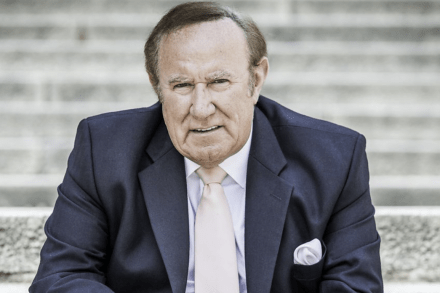
For some time now, there has been talk about a challenger television to rival Sky and the BBC. Now it’s official: GB News will launch early next year – under the chairmanship of Andrew Neil, who will be its flagship presenter. He is leaving the BBC and will join a new team of about a hundred journalists, in what is the most important television launch in Britain for a generation. GB News is raising between $55 million and $65 million  - and the lead investor is Discovery Inc, which is behind Discovery Channel and Science Channel. It's stumping up about a quarter of the cash. It looks as the fundraising will be oversubscribed, building a pretty big warchest to be spent on journalists.

A Brexit breakthrough could be on the cards

Earlier this month, the prospects for a Brexit deal did not look good. The talks weren’t making progress. But there is now cautious but growing optimism in Whitehall that there will be a deal, I say in the Times this morning. The British side now view the remaining problems as being more about process than substance. One source close to the negotiations tells me:  'There’s no doubt that the tone has improved but we really need to begin the intensive talks to resolve the final tricky issues. We’re keen to begin now, but at the moment the EU keeps blocking these talks and demanding more process. The real risk now isn’t that the talks fail over substance, it’s that they will be timed out.

Why even moderate Tories are voting against No. 10

15 min listen

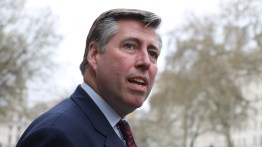
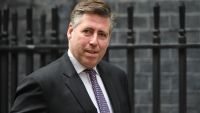
Sir Graham Brady, chairman of the 1922 Committee, has tabled an amendment to the government's Coronavirus Act to force a vote in Parliament on any new restrictions. A cross-party group of 40 MPs have signed the amendment, including moderate Tories like Damian Green and Iain Duncan Smith. But why have they chosen to move against No. 10? Cindy Yu speaks to James Forsyth and Katy Balls.

Why the rise in Covid cases could soon flatten off

The tighter Covid restrictions introduced this week, along with larger fines for people who gather in groups of more than six or fail to self-isolate, followed a press presentation in which Sir Patrick Vallance and Professor Chris Whitty produced a graph showing new infections doubling every seven days until mid-October, when there would be 50,000 cases a day. Though Sir Patrick said it was 'not a prediction', it was widely treated as such. But are cases really doubling every seven days? The daily figures for new confirmed cases are not the best guide to this, as they do not even nearly capture all infections. Moreover, they are partly a function of how many tests are being performed and where they are being performed.

Chair of 1922 Committee says he has the numbers to defeat government

During the first Covid wave, the government secured emergency powers that allowed it to put in place new restrictions without parliamentary scrutiny. Those powers are up for renewal next week, but as James Forsyth writes in this week's cover piece, a number of Tory MPs are unhappy about this. They are trying to force the government to put a parliamentary lock on any future restrictions. Sir Graham Brady, chair of the 1922 Committee of Conservative backbench MPs, is leading the effort. Last night, he told Andrew Neil on Spectator TV that he believes he has enough to defeat the government if it come to a vote: 'I think we have got the numbers. We tabled the amendment this afternoon for the rise of the House.

Rishi Sunak has bridged the economic gap. But what comes next?

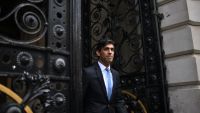
Yesterday’s measures from the Chancellor were necessary. His timely assistance focused on a new targeted and temporary job support scheme to replace the expiring furlough, easing loan repayment terms for firms and a wider, more flexible VAT regime. One needs to examine the details of these to ensure that they are as comprehensive as they should be. Lest we forget, the Treasury Select Committee highlighted large groups were excluded from help previously. But there was a boldness to the announcements that goes some way to answer those who wanted the Furlough Scheme extended. The Chancellor addressed the immediate need to bridge the gap between the ending of existing support and the hoped for return to normal of the economy next spring.

The coronavirus crackdown sets a dangerous precedent

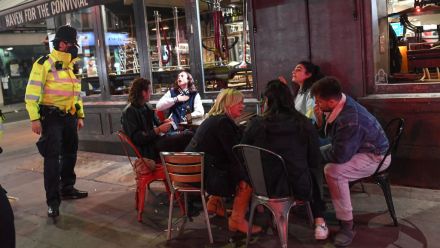
Has the coronavirus crackdown gone too far? Some of Boris Johnson's own MPs certainly think so. This week, Tory MP Edward Leigh accused the government of 'authoritarianism' over the decision to impose greater restrictions during this second wave of coronavirus infections. Leigh is right to be concerned: we have seen the rights and privileges that had taken centuries or millennia to achieve indifferently cast aside in the space of six months by public health measures outlined in the Coronavirus Act. We were told in the early days of the pandemic that the measures were necessary to 'protect the NHS' and 'flatten the curve'. But while those aims were achieved, I'm not convinced we can credit the strict rules which were introduced.

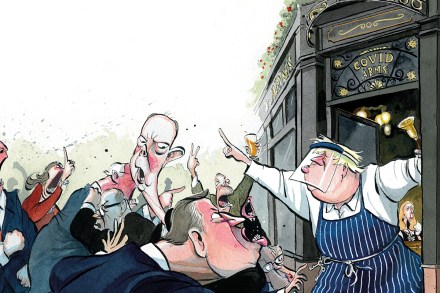
Closing time: the coming Tory brawl over Covid rules

39 min listen

Another Conservative civil war threatens to bubble over, so will the government start taking its backbenchers seriously? (00:55) Plus, the contentious fight over the next Supreme Court nominee (15:25) and what is it like to be in Madagascar during the pandemic? (29:05)With Political Editor James Forsyth; Chair of the 1922 Committee of Tory backbenchers Sir Graham Brady; Professor Charles Lipson from the University of Chicago; USA Editor Freddy Gray; and writer Jo Deacon.Presented by Cindy Yu.Produced by Cindy Yu and Max Jeffery.

Will Rishi Sunak’s Job Support Scheme work?

Rishi Sunak's Job Support Scheme may represent the most ambitious programme to socialise or nationalise work in British history – because at a time when so many companies face bleak demand for their goods and services, it subsidises employers to put their staff on short hours, or turn them into part-time workers, as an alternative to sacking them. The Treasury is not publishing estimates of how many employees will be on the scheme over the six months of its existence. But its designers 'guess' that there may up to four million people on it – which would cost the Exchequer around £1.2 billion a month or £7.2 billion in total. On the basis of my research for a film about the looming unemployment crisis – which airs this evening on ITV at 7.

Keir Starmer and the Scottish independence conundrum

In January, Sir Keir Starmer told Border Television’s Peter MacMahon that, look, of course an SNP victory in next year’s Holyrood elections would plausibly constitute a mandate for a second independence referendum. It might, indeed, be argued that the SNP have such a mandate already, there being a pro-independence majority in the current Scottish parliament, to say nothing of the next one. Yesterday, in a series of interviews including one with Sky News’s Beth Rigby, Starmer reiterated this obvious point. There comes a moment when election results must have consequences and an SNP majority or an SNP-Green majority, next May seems an obvious time for such a moment to arise. This was not a controversial view until recently.

Rishi Sunak’s reality check

The Chancellor's statement unveiling his winter economy plan offered a reality check on living with coronavirus. Despite pressure from the opposition and a handful of Tory MPs to extend the furlough scheme, Rishi Sunak confirmed that it would come to an end in October. In its place, he announced a new jobs support scheme – whereby the government and firms will top up the wages of workers who are unable to return to full time work but are working at least a third of their hours. This is aimed at making sure businesses with reduced demand keep on their employees. But it's also an acceptance that jobs in some industries cannot be saved. Those businesses which are unable to operate at all will have little use for the scheme.