Politics

Read about the latest political news, views and analysis

Will Britain lose its vaccine advantage?

Much has been made of the speed at which UK regulators have approved the Pfizer-BioNTech vaccine for use in Britain. But will being first to approve the drug make much difference anyway, given the news this morning that Pfizer is having some difficulty rolling out the vaccine?  This morning the business secretary Alok Sharma confirmed that the NHS expects to receive 800,000 doses and is ready to begin the mass vaccination programme on Tuesday. The first batch was apparently imported from a Belgian plant through the Channel Tunnel yesterday. That is enough to vaccinate 400,000 people, with two doses, 21 days apart. To put this into context there are 1.1 million people in the highest priority group — care home residents and staff.

Will the French really veto a Brexit deal?

15 min listen

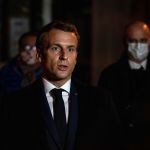
In the last days of the negotiations, the pressure is ramping up as reports began to surface on Thursday evening that the talks were not going as well as hoped. This morning, allies of Emmanuel Macron have warned that France could unilaterally veto a Brexit deal. What will the next days bring and could Macron really pull the plug? Cindy Yu talks to James Forsyth and Katy Balls.

It’s time for Boris to walk away from Brexit talks

Lorries will be backed up across Kent. The shops will run short of essential goods. Travel plans will be disrupted, and factories will start to close as British goods are shut out of their main export markets. As the UK comes to the end of its transitional deal with the EU, and as talks on a trade agreement appear to have reached an impasse, there will be plenty of high-stakes brinkmanship, and pressure on the government to give some ground on fishing and regulation to avoid the potential chaos of no deal. And yet in truth, if Boris Johnson caves into the EU’s demands at the last moment, the voters will punish him — and they will be right to do so. Right now, it is anyone’s guess whether a trade deal can be done at the last moment between the EU and the UK.

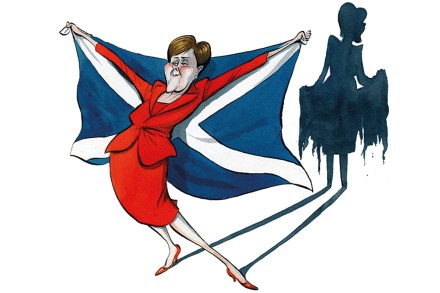
The Sturgeon paradox: how is she so popular?

37 min listen

Despite her government’s underperformance on education, health and Covid-19, Nicola Sturgeon’s popularity continues to climb – why? (01:10) Does spending more on overseas aid mean we care more? (14:05) And finally, are we all followers of the cult of casualness? (26:25)With The Spectator’s Scotland editor Alex Massie, former SNP finance spokesperson Andrew Wilson, development adviser Gilbert Greenall, former international development secretary Andrew Mitchell, journalist Melanie McDonagh and editor of The Oldie, Harry Mount. Presented by Lara Prendergast.Produced by Max Jeffery, Cindy Yu and Matt Taylor.

Is a Brexit deal imminent?

10 min listen

The promising sign of late night negotiation pizza has caused some optimism in Westminster that a Brexit deal may be just around the corner. On the podcast, James Forsyth and Katy Balls discuss what to look out for in the coming days.

Boris will be worried by the growing Tory rebellions

The beginning of the end for Theresa May was when she tried to see if she could pass her Brexit deal with Labour votes. So Boris Johnson will have shifted uncomfortably in his seat on Tuesday night when it became clear that the House of Commons had approved his tier system only because the opposition had abstained, I say in the magazine this week. The worry for Johnson is that the Tory rebellions against his Covid measures keep getting bigger. The original coronavirus act back in March passed without a vote. In September, seven Tories voted against the renewal of those emergency powers; 42 opposed the 10 p.m. curfew in October; and 53 were against the tier system this week.

Why is Labour sticking up for foreign criminals?

That the left-wing Labour MP Clive Lewis should have organised a letter to Home Secretary Priti Patel opposing the deportation of Jamaican criminals hardly comes as a surprise. Being against the removal of foreign nationals, almost irrespective of what they have done to deserve it, is pretty standard fare for a member of the Socialist Campaign Group of Labour MPs – the leftist caucus associated with the likes of Jeremy Corbyn and Diane Abbott. That Lewis’s letter was signed by around 60 Labour MPs – easily more than a third of Labour backbenchers and twice the total membership of the Campaign Group – was more surprising.

The government is sending the high street to an early grave

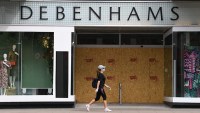
Does it matter that Debenhams and the Arcadia group have gone under this week, taking 25,000 jobs with them and leaving large gaps in the high street? In normal times we would be minded to say no. The failure of businesses — large ones, included — is part of a healthy market economy. It is a routine aspect of the renewal process, whereby good upstart businesses drive out tired and stagnant retailers, to the benefit of consumers and employees alike. If unemployment were as low as it was at the beginning of this year, the redundant staff would not have had to wait long, or search far, for alternative employment.

Philip Green will be remembered as a nasty stain on capitalism

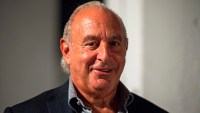
There really isn’t much left to be said about Sir Philip Green as his Arcadia fashion empire collapses into administration, taking the Debenhams chain down with it, unless a new rescuer steps in. An aggressive rag-trade wheeler-dealer since he started selling cheap jeans in the 1970s, Green was also once regarded as a brilliant merchandiser — until, it seems, he got too rich to bother keeping up with online competitors such as Asos, rising brands such as Zara and price-slashers such as Primark. So he won’t be remembered for his fashion sense — as the era’s other trouble-prone ‘King of the High Street’, George Davies of Next and Per Una, might be.

Can Boris win round his rebel MPs?

The beginning of the end for Theresa May was when she tried to see if she could pass her Brexit deal with Labour votes. So Boris Johnson will have shifted uncomfortably in his seat on Tuesday night when it became clear that the House of Commons had approved his tier system only because the opposition had abstained. If they had opposed the measure then it would have failed, such was the size of the Conservative revolt — 53 Tories voted against it, the biggest rebellion of his premiership by far. The worry for the Prime Minister is that this is not the last time he will need to rely on Keir Starmer’s passivity to get his regulations through.

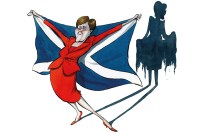
The Sturgeon paradox: the worse she does, the more popular she becomes

Before Covid-19, if you can remember such a time, this was supposed to be a difficult year for Nicola Sturgeon. Her party had been in power in Edinburgh since 2007 and, like all ministries of such antiquity, was beginning to look jaded. There was never any doubt that she would remain First Minister following next year’s Holyrood elections, but the prospect of her winning a majority seemed to be receding. Opposition parties believed that a relentless focus on the SNP’s record in office would be enough to clip Sturgeon’s wings. After 13 years, it was hard to point to many stunning successes: on the contrary, failures and scandals were accumulating. Time ruins all governments and hers did not seem to be an exception.

Boris hasn’t seen the last of the Tory lockdown rebels

Boris Johnson is wrong if he thinks this week's Tory rebellion on the tiered system marks the end of his party management problems. In fact, Tuesday night's rebels tell me that the main purpose of the vote was to increase the likelihood that a good number of areas will be moved down a tier when the current allocations are reviewed on 16 December.  'If there had just been 20 or 30 of us, the likelihood of getting lots of places moved would have been pretty small,' explains one senior rebel. 'But the fact that we surprised them with the strength of support makes it more likely, so those of us who rebelled have done our colleagues a favour.

Boris’s clash over masks

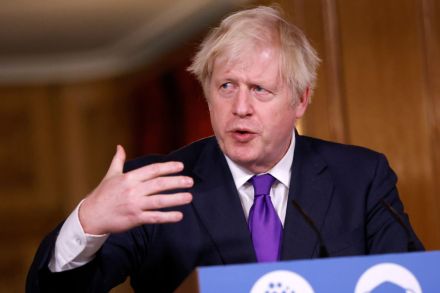
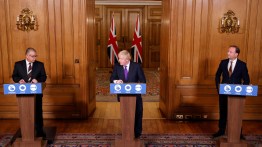
‘Nothing is so permanent as a temporary government programme,’ the free market economist Milton Friedman famously noted. So just how permanent will social distancing measures be? As more positive news about vaccines and their distribution rolls in, it will be a question that grows louder: how much longer will we be asked to live with Covid rules, and might anyone make the case for keeping them in place after the virus is under control? We caught a glimpse of the different opinions circling Whitehall tonight, when the Prime Minister and Deputy Chief Medical Officer Jonathan Van-Tam clashed over the future of mask-wearing.

Did Brexit lead to the UK’s vaccine success?

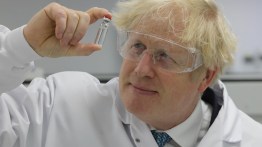
Today the United Kingdom became the first country in the West to clinically authorise a vaccine protecting against Covid-19, after the medicines regulator, the MHRA, said the Pfizer/BioNTech vaccine was safe to use. The announcement puts Britain ahead of Europe when it comes to rolling out the vaccine, as the EU’s own regulator, the European Medicines Agency (EMA), has not yet approved the vaccine. While Britain will begin administering Pfizer’s vaccine next week, countries like Belgium have announced that they will start their vaccination campaigns in January, subject to EMA approval. When it comes to vaccines, a few weeks of delay can make a big difference, given the economic and health costs of the pandemic.

Rishi Sunak’s sickly sweet snaps

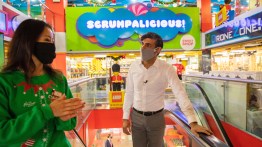
Vanity photographers are a relatively recent addition to Westminster life, one that Mr S doesn't wholly welcome. The growth of the in-house snapper has meant that politicians are able to control their image in a way that previous generations of ministers would have found impossible. David Cameron famously had his advisers cover any nearby exit signs to stop pesky snappers from taking unflattering photos (sadly for Ed Balls, his advisers were unable to stop this unfortunate pic). Rishi Sunak's photographer seems to have taken such lessons a step further during a photo-op at Hamleys toy shop. Not content with steering his boss away from adverse signage, he has apparently embraced the 'dishy Rishi' narrative by snapping the Chancellor in front of a sign reading 'scrumpalicious!

Boris Johnson’s email faux pas

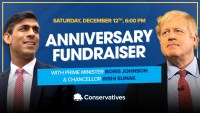
When it comes to Boris Johnson's skills as a politician, his particular communication style is regularly cited as a talent that makes him stand out as a leader. He was, after all, an accomplished journalist before stepping into the world of politics. So Mr S was a little surprised by the email that landed in his inbox this morning purporting to be from the Prime Minister. In it, recipients were invited to join the Prime Minister and Chancellor for an online chat — and encouraged to donate large sums in return for hearing 'never before shared stories from that campaign as well as the unprecedented year that followed, from getting Brexit done to tackling the coronavirus'.

PMQs: Starmer lays traps with an eye to vaccine troubles

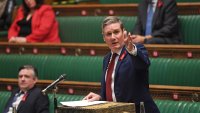
Prime Minister's Questions didn't feel particularly high wattage today. Sir Keir Starmer seemed to be using his questions to lay the groundwork for a future showdown with Boris Johnson. He used his first three questions to ask whether the government had done the necessary logistical planning to ensure the smooth roll-out of the coronavirus vaccine, particularly in care homes. He wanted to know who the Prime Minister expected to receive the vaccine next week, when those people in the top priority groups could expect to be vaccinated, and whether the Prime Minister had put plans in place to ensure that the vaccine really can get to care homes, given the practical problems with transporting it at such a low temperature.

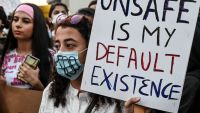
Imran Khan’s rape crackdown won’t make Pakistan safer for women

Rapists in Pakistan will soon face a stark choice. Under a law backed by the country's prime minister, Imran Khan, those convicted of rape can either be chemically castrated, face life imprisonment or even a death sentence. But while the new law sounds radical, it's unlikely it will be enough to curb the wave of sex attacks against women in Pakistan. The tough measures have been painted as something of a compromise by Khan, who has said those found guilty of sex attacks should be hanged in public. Dismissing this as an option, Khan said introducing such a punishment would 'not be internationally acceptable'. 'The trade status given to us by the European Union will be affected,' he added.