Politics

Read about the latest political news, views and analysis

Inside Boris Johnson’s Zoom Q&A with Tory MPs

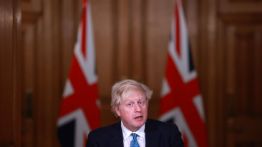
After Boris Johnson used a statement to the nation on Monday evening to announce a third national lockdown, ministers made plans to recall parliament for a Wednesday sitting to debate the measures. But before Johnson faces the music in the Chamber, the Prime Minister addressed his own MPs in a 45-minute meeting of the 1922 committee via Zoom.  In his opening statement, Johnson tried to explain to his party why he felt he had no choice but to resort to a national lockdown – stating that 2 per cent of the population now have Covid. He said the aim of the vaccination programme was to create 'a force field of immunity'. He went on, however, to attempt to paint a more optimistic picture at least in the medium term.
Britain’s vaccination programme is running out of time

Was the latest release from the Office of National Statistics the shocking piece of evidence that led the Prime Minister to change his mind on children going back to school, and to introduce a full lockdown in England?  The ONS does not usually publish its infection survey on Tuesdays – it usually comes out on Fridays – yet today we seem to have a special release. It shows that the sharply rising numbers of new infections as picked up through the NHS Test and Trace system, and which have shown 60,000 new infections today, are not the result of distortions caused by Christmas. The ONS survey is based on testing a random sample of the population for prevalence of the disease and from that estimating a nationwide figure.

Boris Johnson’s justifications for lockdown

Boris Johnson this evening tried to give a little more background to why he had called England’s latest lockdown – and why he had confidence that this really was the darkness before the dawn. The Prime Minister told the Downing Street coronavirus briefing (yes, we are back in that sort of lockdown) that more than 1 million people in England are now infected with Covid – around 2 per cent of the population, according to the ONS – but that as of today, the same number of people in England, and a total of 1.3 million people across the UK, have received the vaccine. He had to explain why he had changed his tune on schools so rapidly, going from insisting that most schools should return to cancelling face-to-face teaching within 36 hours.

Boris Johnson isn’t the only one to blame for Britain’s Covid crisis

Britain has suffered one of the world’s highest Covid death tolls and worst Covid recessions. It has managed this abysmal feat despite spending nearly £300bn on countering the virus, a sum far greater than almost any other comparable country. We have achieved the triple crown of medical, economic and fiscal failure because of a reason that is under-discussed: the lethal divisions on the right. They have paralysed the government, and condemned thousands to premature deaths and needless suffering. Yet we do not see them with the clarity we should because of our skewed culture. Conservative titles dominate the written media, and for reasons I will get to, opposition to public health is far more likely to be found on the right than the left.

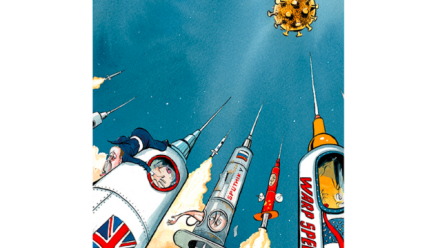
Can Boris hit his vaccine target?

The government has failed to meet so many Covid-related targets so far that many will be extremely sceptical of the Prime Minister’s pledge on Monday evening to get the over-70s, front-line care workers and vulnerable people of all ages vaccinated by the middle of February. That is around 13 million first doses which will have to be delivered over the next six weeks – compared with just over a million which have been administered since the Pfizer vaccination programme began four weeks ago. We now have the AstraZeneca vaccine as well as the Pfizer one, but can the NHS really increase the rate of vaccination tenfold, as would be necessary to meet the PM’s target? There ought not to be a problem with the vaccination process itself.

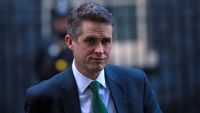
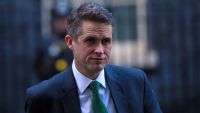
Gavin Williamson is the least convincing education secretary ever

It was Michael Gove who declared today that the Government was closing schools with the 'heaviest of hearts' and confirmed that A levels and GCSEs were off. Where, you wondered, was Gavin Williamson, the actual Education Secretary? Busy, no doubt, preparing for his own announcement on Wednesday, which, on the basis of his previous record, will reassure no one. Personally, I think the decision to cancel exams is really bad. I can’t remember whether it was Einstein we credit with that quote about repeating the same thing and expecting a different outcome being the quintessence of stupidity, but it pretty well sums up the situation here.

We need to cut vaccine red tape

As I mentioned on Monday, in a fortnight AstraZeneca will be putting 2 million doses of its coronavirus vaccine into vials every week. At that point the limiting factor on how many people can be vaccinated will switch from manufacturing to distribution – and in particular how long it takes to ‘process’ each person who turns up to be vaccinated. It allegedly takes three times longer in the UK than in Israel to do the on-site paperwork for each vaccinated person. Which, if true, means the UK would be processing a smaller number of people than it could be vaccinating every day. And in the current raging epidemic that would not just be an academic underperformance, but would have a big and huge cost in lives.

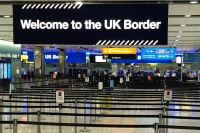
Why haven’t we shut the UK border already?

‘This country has not only left the European Union but on January 1 we will take back full control of our money, our borders and our laws,’ said Boris Johnson in October last year. The transition period is now over; we are out of the single market and customs union, which means freedom of movement of people is at an end. The UK has total control over its borders (other than the one on the island of Ireland, but let’s not go there today). So it is worth asking why the government is choosing not to exercise this right in anything approaching an appropriate manner at present, particularly when such a power is obviously of use given the harrowing Covid situation.

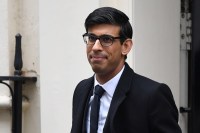
Sunak unveils lockdown bail-out for businesses

Rishi Sunak’s latest giveaway totals £4.6 billion in grants for the retail, hospitality and leisure sectors, amounting to up to £9,000 per outlet. Alongside this comes an additional £1.1 billion for local authorities and a £600 million discretionary fund for businesses that might not qualify for the main grant. This money is meant to help businesses with their fixed costs problem: having to pay rent, utilities and upkeep despite bringing in far less income (in some cases, no income at all). The largest cost for most business owners — payroll — was addressed in December when the Chancellor extended the furlough scheme to the end of April.

Vocational students are being treated with contempt – again

England’s third national lockdown is an avalanche of news, affecting just about every bit of our lives. It’s a lot for anyone to grasp, but that’s still not an excuse for the fact that, once again, young people studying for technical qualifications such as BTECs have been ignored and let down. According to the Association of Colleges, around 135,000 students are due to take assessments or sit exams in colleges this week: some exams are due today. And while the Prime Minister in his televised address last night talked about school and the need to cancel summer exams such as GCSEs and A-levels, the Government currently considers that BTEC tests should still go ahead this week. Not that the kids taking those tests would have learned that from the PM.

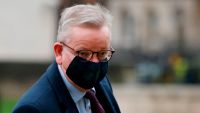
Michael Gove suggests lockdown could continue until March

When Boris Johnson addressed the nation on Monday evening, he was keen to offer a glimmer of hope as he announced a seven-week lockdown. The Prime Minister said that the lockdown would be reviewed in the week commencing 15 February – with a hope of sending pupils back to school after the February half term. This is the date by which Johnson aims to have vaccinated 13.2 million people, making up the most vulnerable and elderly. However, anyone thinking about making firm plans for the following week may need to think again. As has become a trend in this pandemic, Michael Gove has embarked on a morning round in which he has painted a more pessimistic picture.

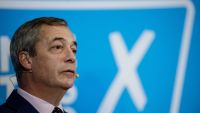
Nigel Farage’s China curveball should worry the Tory party

I have lost count of the number of times the Conservative Party has thought it has shot Nigel Farage’s fox. They stretch all the way back to David Cameron’s January 2013 pledge to hold an In/Out EU referendum, and include the party’s as yet unfulfilled summer promise to stop the illegal Channel crossings and its delivery of a trade deal with the EU that honours the fundamentals of Brexit. Given that the Covid vaccines have also taken some of the sting out of the lockdown debate, which the former Ukip leader was poised to exploit, many Tories will have felt able to relax a bit about the challenge on their right-flank.

Lockdown returns: what the new rules mean

11 min listen

This evening the Prime Minister announced a return to the lockdown system for England, coming after Nicola Sturgeon announced similar measures earlier in the day. Katy Balls talks to James Forsyth and Isabel Hardman about what the measures mean for students, vulnerable groups and more.

Boris Johnson announces a third national lockdown

Boris Johnson has announced that England is going into a third national lockdown – but a much stricter one than we saw in the autumn. The government has also been forced to accept that A-levels and GCSEs will not be going ahead this year because all schools will close from tomorrow, save for vulnerable children and the children of key workers. In a televised address to the nation, the Prime Minister asked people to stay at home from Monday, with a legal requirement to do so being introduced in regulations this week. The lockdown will run until the middle of February. He explained that scientists had concluded the new variant was 50-70 per cent more transmissible and that hospitals are under the worst pressure of the entire pandemic.

Keir Starmer’s shifting schools policy

It shouldn’t have been a difficult task to hold the government to account today on schools and lockdown, as the Prime Minister currently weighs up shuttering the school gates till Covid cases decline. Labour leader Keir Starmer though seems to have managed to develop an even more confused policy today. This morning, Labour suggested that schools should remain open even if the country went into lockdown. This was followed by a hasty U-Turn this afternoon, with the party then calling for schools to be closed. After such a big change, Mr S had presumed that Labour would at least have a basic grasp of their new policy.

Nicola Sturgeon orders another lockdown in Scotland

Nicola Sturgeon called it ‘not the New Year statement I wanted to give’. The SNP leader addressed the Scottish parliament earlier this afternoon to confirm reports of a new, March-style lockdown across mainland Scotland. It came as 1,905 positive cases were recorded yesterday, though this is likely to be a significant under-calculation as most registry services are closed on Sunday. The positivity rate now stands at 15 per cent, up from 10.1 per cent on New Year’s Eve, and since Christmas there have been 289 deaths recorded in relation to Covid. Against this backdrop, Sturgeon’s government is taking Scotland into the most severe lockdown since the outset of the pandemic.

Prime Minister to address nation over new restrictions

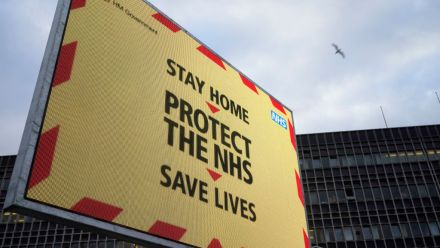
Boris Johnson will address the nation this evening in an 8 p.m. address over rising coronavirus rates. Ahead of the statement, a No. 10 spokesperson said the Prime Minister is 'clear that further steps must now be taken to arrest this rise and to protect the NHS and save lives'. It's also been announced that parliament will be recalled on Wednesday to debate new measures. First Minister Nicola Sturgeon announced a lockdown in Scotland earlier today while Keir Starmer and Jeremy Hunt called for further measures in England. The expectation among MPs now is that the PM will likely announce some form of national lockdown – whether by name or placing the whole of England under Tier 4 along with potential school closures.