Politics

Read about the latest political news, views and analysis

The unending confusion at the Department for Education

It used to be the case that the only things that were certain in life were death and taxes. To that list we can now add unending turmoil and confusion at the Department for Education. Today Gavin Williamson U-turned on the government’s previous pledge to keep schools open, announcing that a number of schools in Covid ‘hotspots’ would not be going back as planned next week. Primaries in some areas – including a slightly random patchwork of London boroughs – will not reopen next week. Those in lower tiers and some Tier 4 areas will start term as planned. The following week, years 11 and 13 will return to secondary schools, and from the week beginning 18 January, all year groups will return.

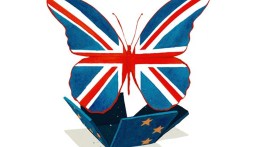
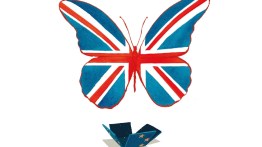
With Brexit done, what are the government’s next challenges?

18 min listen

After four and a half years, Brexit has finally happened with a free trade deal passed. But with Scottish independence hotting up and the pandemic not yet finished, the government faces more challenges in the very short term. Cindy Yu talks to Katy Balls and James Forsyth about what's coming next.

Would speeding up the vaccine programme placate Tory MPs?

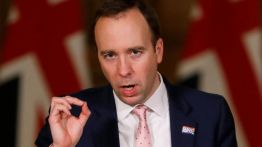
More than 75 per cent of England will be in the top tier of coronavirus restrictions from midnight after Health Secretary Matt Hancock announced a large number of areas would move up into Tier 4. This is part of an attempt to contain the spread of the new variant of Covid-19, as hospitals come under what Hancock described as ‘significant pressure’ to treat surging numbers of patients with the virus. Hancock was speaking on what he described as a day of ‘mixed emotions’, and he was naturally keen to emphasise the difference that the approval of the Oxford/AstraZeneca vaccine would make to the length of time people will be subject to these restrictions.

Johnson’s Brexit deal sails through the Commons

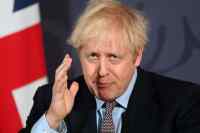
Boris Johnson's Brexit deal has passed the Commons with a majority of 448 at its third reading – with MPs voting 521 in favour to 73 against. The bill will now go to the House of Lords where it is expected to pass all its stages before the end of the day, ahead of the UK exiting the transition period at midnight. In terms of rebellions, the number of Tory MPs not voting for the deal is approaching minuscule. While Owen Paterson said he would not be able to back it on the grounds of the arrangement for Northern Ireland, the general mood in the Tory party is buoyant with the deal serving to unite MPs from the various factions. As for the Labour rebellion, it was not as large as some had expected.

Keir Starmer’s Brexit wish

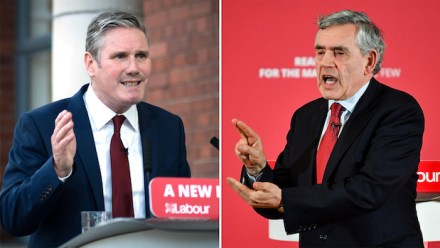
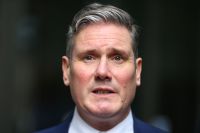
As Boris Johnson celebrates his Brexit deal in the Commons chamber, it's Sir Keir Starmer who has had the more difficult task today in responding to the Prime Minister. As Tory Brexiteers line up to praise Johnson's work – with Bill Cash comparing him to Pericles and Alexander the Great – the Labour leader had to use his turn at the despatch box to explain why his party was (a) backing the deal (b) critical of the deal regardless. Giving his reasons for instructing his party to back the deal, Starmer said it was the responsible thing to do – arguing that 'those voting no today, want yes: they want others to save them from their own vote'.

Theresa May gives Starmer a lesson in Brexit hindsight

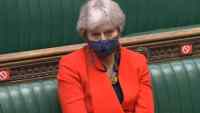
During the debate over Boris Johnson's Brexit agreement in the House of Commons today, Theresa May chastised the Labour leader over his criticism of both her deal and the current deal.  Appearing to be the only MP in the chamber wearing a mask while waiting to speak, the former Prime Minister heard Starmer wish for a better Brexit agreement, while accepting that he will whip his MPs to vote for Boris’s ‘thin deal’. These words stirred something within May as she thought back to the numerous painful meaningful Brexit votes under her watch. Back then, Starmer was shadow Brexit secretary and played a key role in moving the official Labour position to backing a second referendum rather than May's deal.

Why Boris would like Brexit to continue

After all the parliamentary drama of the past four and a half years, the final Commons phase of Brexit is passing with remarkably little drama. Boris Johnson knows his agreement will be voted through this afternoon and, following the European Research Group decision, with nearly universal Tory support. Johnson’s speech was upbeat, as he sought to declare the deal a triumph. He pointed to the exclusion of any role for the European Court of Justice, the speed with which the deal had been done and the fact it was zero tariff, zero quota. In a sign of the fight to come, Johnson had to fend off multiple points of order from Ian Blackford, the leader of the Scottish National Party, who sought to critique the compromise on fishing.

Starmer is about to make a big mistake in backing Boris’s deal

Keir Starmer has announced he is whipping his Labour MPs to vote for Boris’s Brexit deal in the House of Commons today. There are two likely reasons behind this decision: firstly, to make himself seem like a Labour leader who is a grown up, after Corbyn’s teenaged politics; secondly, to demonstrate that Labour accepts Brexit in order that it may win back Leave voters in red wall seats at the next general election. But there is a big problem with this calculation. While all of Starmer’s Brexit options are difficult ones, he may be about to enact the worst of the lot. A no-deal situation would have allowed Keir Starmer to claim that as prime minister he would be able to get the Brexit deal from the EU that Boris evidently could not.

What does the Oxford vaccine approval mean for the UK?

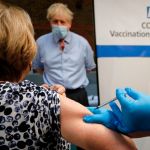
This morning the Oxford/AstraZeneca vaccine has been approved by the UK medicines regulator, the MHRA. This is almost more of a game changer than the approval of the first Pfizer vaccine, because the UK government has ordered 100 million doses of it – and it is also much easier to distribute, as it does not need to be stored at the same very low temperatures as the Pfizer jab. It means that there really is a chance of life returning to normal in the not-too distant future. Ministers had been very clear in private that if this immunisation didn’t pass, it would mean society would have to work out how to live with Covid-19 over a much longer term – and that this would be very difficult politically.

Do we finally have an answer on Covid immunity?

How likely are you to be reinfected with the SARS-CoV-2 virus for a second time? It is a pertinent question because, at present, all government policy is predicated on the assumption that developing Covid-19 cannot be relied upon to offer you any immunity from reinfection whatsoever. Remember the Prime Minister telling us from his Number 10 flat, where he was incarcerated for 10 days after being ‘pinged’ by NHS Test and Trace, that it didn’t matter that he had already had the disease and must be ‘bursting with antibodies’ – he had to do his duty and self-isolate nonetheless?

Farewell, Donald

Madeleine Kearns To Trump or not to Trump? Whether ’tis nobler on the page to be a morbid cynic or a self-righteous arse? That is the question those of us working in American right-wing media have been staring in the face for four years. Looking back, the Trump years feel like one of those awful ‘would you rather?’ games that teenagers play. ‘Would you rather be half-fish from the waist up or from the waist down?’ ‘Would you rather have pubes for teeth or teeth for pubes?’ You know the sort. Of course, you can make the case for either option if you really want to (and some people do), but the most sensible answer remains, ‘This game is rubbish. I’m not playing.’ Biden is also rubbish, as it happens. And Harris is terrifying.

Labour MP beats the vaccine queue

When a Tory MP recently suggested on the party's WhatsApp group that MPs ought to be one of the priority groups to receive the vaccine early on, they were met with derision from their colleagues – with several suggesting it would be a bad look. However, that message does not appear to hold much sway with Labour. With limited does of the Pfizer vaccine in the country, they are currently eligible to those at the top of the priority list – care home residents, care workers, health workers and the over-80s. However, the Birmingham Mail reports that local MP Khalid Mahmood has managed to get the Coronavirus vaccine ahead of schedule.

The shrewd calculation behind Sturgeon’s Brexit u-turn

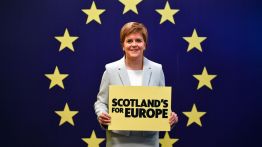
As political journeys go, it’s akin to Jeremy Corbyn quitting his allotment to grow marrows on an Israeli settlement. Nicola Sturgeon, a lifelong pro-European since June 24, 2016, has decreed that the SNP will vote against the free trade pact agreed by the UK and the EU. This is quite the turnaround. Sturgeon has previously said ‘a no-deal Brexit is a catastrophic idea’, warned of ‘the dire economic consequences of a no-deal Brexit’, described ‘the nightmare scenario of a no-deal Brexit’ and urged the UK Government ‘not to countenance in any way a no-deal Brexit’.

Tory Brexiteers approve Boris Johnson’s deal

When Boris Johnson's Brexit deal comes to a vote in the Commons on Wednesday, expect a bigger rebellion on the Labour benches than among Tory MPs. This afternoon, the  European Research Group of Conservative eurosceptics have given their approval to the Brexit deal. After studying the agreement, the ERG 'star chamber' – led by Bill Cash – concluded that the deal is 'consistent with the restoration of UK sovereignty'.  In terms of the pros and cons of what has been agreed, the group say 'the "level playing field" clauses go further than in comparable trade agreements' they have concluded that their impact 'on the practical exercise of sovereignty is likely to be limited if addressed by a robust government'.

Jacob Rees Mogg’s Brexit deal dilemma

Boris Johnson's Brexit deal continues to cause a stir ahead of tomorrow's parliamentary vote. Nowhere is this more true than with the Conservative party's most famous Brexiteer Jacob Rees Mogg who faces a somewhat unexpected quandary when it comes to deciding which lobby to walk through. Mr Rees Mogg said in March 2019 that he would not vote for a deal ‘under any circumstances' if it wasn’t backed by the DUP, stating that 'ultimately the United Kingdom is more important to me than the European Union'. However, Rees Mogg now finds himself caught between two conflicting camps. The DUP have said they will not vote for Boris’s new deal but the European Research Group - Parliament's largest group of Eurosceptic MPs - have offered their support.

Starmer’s Brexit slip-up could cost him the election

Amid all the euphoria about Boris Johnson sealing a final Brexit deal and the breaking-off of politics for pared down Christmas celebrations, perhaps you didn’t notice Keir Starmer losing the next election. Well, I did. And while I cannot be quite certain that Sir Keir has blown it absolutely for 2024 – events dear boy, events and all that – the evidence that he has done so would definitely pass a “balance of probabilities” test. Starmer’s momentum horribilis came during his Christmas Eve press conference responding to the news of Johnson’s deal. Asked what a future Labour administration would do about a deal that he clearly considered sadly lacking in many respects, the Labour leader’s true disposition just slipped out.

Why the EU’s vaccine strategy is failing

What a joy it would be still to be in the EU. We could, for example, be part of the bloc’s Covid vaccine-buying programme. Or maybe not, to judge by the German experience. There has been a lot of comment in Britain regarding the relative slowness of the European Medicines Agency (EMA) in approving the Pfizer vaccine – which led to the EU’s vaccine programme beginning two weeks after Britain’s. But that is a fairly minor issue. Far more concerning is the failure of the EU to buy enough vaccines to ensure that an effective inoculation programme can be completed before next winter. The reasons behind this failure are an object lesson in how the EU operates, and why we should be pleased to be organising our own vaccination strategy.

Is the new variant of Covid really more transmissible?

When the story of the new Covid-19 variant broke, my initial reaction was scepticism. I thought this new strain could just be a random genetic marker that coincided with an outbreak of cases that was caused by behaviour (or even “chance”) rather than by any important biological differences. We have more sophisticated measurement capability for biological data than for social data, and I worry that not enough has been done to rule out social explanations. For example, despite Covid-19 cases rising dramatically since September mobility indices have remained above the levels they saw in June, which were significantly higher than their April lows. So the UK’s November lockdown only temporarily slowed large scale community spread and did not get it under control.