Politics

Read about the latest political news, views and analysis

The healthcare backlog will be Boris Johnson’s next challenge

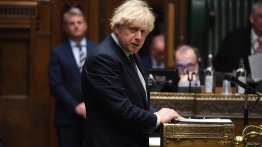
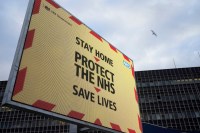
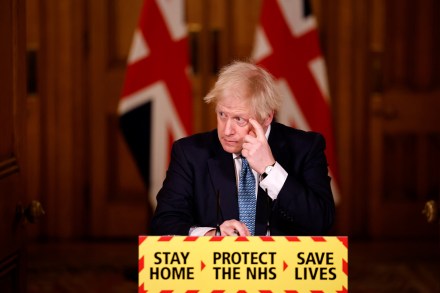
Boris Johnson’s coronavirus press briefing this evening was largely an upbeat discussion of how the vaccination programme is being rolled out, including a look at the logistical side of things with Brigadier Phil Prosser. So far, nearly 1.5 million people have been given the vaccine across the UK, and the Prime Minister said there was sufficient supply for all the top four priority groups to have been immunised by 15 February. This is all very well, but the reason we are in the current lockdown is that ministers want to protect the NHS from being overwhelmed before the vaccines have been rolled out.
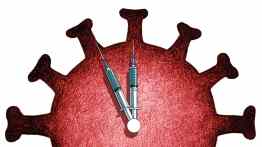
A race against time: can the vaccine outpace the virus?

34 min listen

Coronavirus vaccines are now being distributed across the world, but what are the challenges posed by its delivery? (01:30) Is Boris Johnson the SNP's greatest weapon? (13:55) And is Prince Harry becoming more and more like his mother? (23:35)With financial columnist Matthew Lynn; former director at the McKinsey Global Institute Richard Dobbs; the UK's former director of immunisation David Salisbury; The Spectator's deputy political editor Katy Balls; The Spectator's Scotland editor Alex Massie; journalist Melanie McDonagh; and royal biographer Angela Levin.Presented by Lara Prendergast.Produced by Max Jeffery, Alexa Rendell, Sam Russell and Matt Taylor.

Could leasehold reform cause a new Tory split?

Now that the Conservative party no longer has the issue of the EU over which to tear itself apart, is there something else that could replace it? Although perhaps not on the same scale as Europe, there is an issue which splits two of the party’s client groups: leasehold reform. On the one hand are the aspirant homeowners, the voters who turned to Mrs Thatcher thanks in part to the right to buy and the wider promotion of home-ownership. On the other hand is the landed interest, an amalgam of new and old money which owns the freeholds to many of the country’s blocks of flats and leasehold houses. Today’s announcement of reforms, giving stronger rights to leaseholders would appear, on the face of it, to be a victory for the former group.

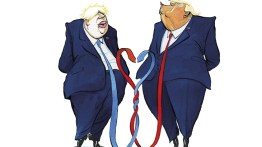
How should the government handle Trump?

13 min listen

Last night's events in Washington DC has sent shockwaves around the world. Trump's obvious disregard for democracy was on show, leading to a normally diplomatic British government to condemn the President in strong language. Cindy Yu talks to Katy Balls and James Forsyth about how the government sees its past and future relationship with Trump and Trumpism.

Lockdown was Boris Johnson’s only option

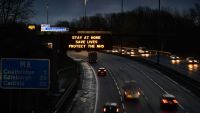
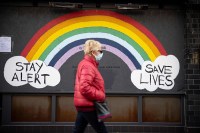
Lockdown is brutal. I don’t want it, you don’t want it, nobody ‘wants’ it. We are, however, at an intensely difficult moment in our fight against Covid-19. The latest wave of the virus is out of control, with the new variant significantly contributing to the huge hike in coronavirus cases. Our healthcare system is reaching the point of no return. This means that there is little choice than for us to face up to the reality that we are in the midst of a crisis – and that Boris Johnson had little choice but to tell us all to 'stay at home' once again. 1,041 deaths from Covid-19 were recorded yesterday, and the high number of those dying from this disease looks set to continue.

Cancelling exams shows Boris has failed to learn his lesson

'Don’t worry, they won’t cancel exams again,' I confidently assured my fifteen-year-old middle son shortly before Christmas. He was sitting his mock GCSEs, and fretting over how much they might matter, admitting: 'I haven’t done enough work.' Only a month ago, education secretary Gavin Williamson gave a 'cast-iron guarantee' exams would 'absolutely' go ahead in England. It seemed clear he and Boris Johnson had learnt their lesson. They’d not be so foolish as to do the same thing over again: pull exams without a proper plan of what to do instead. More fool me. For my family – and for plenty of others in a similar position – it’s once bitten, twice shy.

The FTSE is defying the Brexit doom mongers

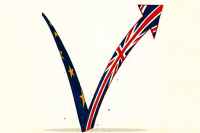
The banks would all flee. International investors would take fright. And the pound would turn into the Great British peso. We heard a lot over the last four years about how leaving the European Union would be catastrophic for the UK economy. But here is something odd. With the transitional arrangement coming to an end with the close of the old year, and with the UK now out of the Single Market and the Customs Union, and with just a loose trade arrangement with the rest of the continent that doesn’t even cover financial services, so far the FTSE is loving Brexit. True, it is only the first week of trading, and even that is not over yet, but so far the benchmark FTSE-100 index has risen from 6,500 on Monday to 6,850 on Thursday.

What have we learnt from this pandemic?

So great have been the government’s failures over Covid that it would be easy to forget to give credit where it is due. The fact that Britain was the first country to begin a public vaccination programme — and this week became the first to have two vaccines in use — did not come about by chance. It happened because the government had the foresight to pre-order large quantities of promising vaccines and because Britain’s medicines regulator, the MHRA, worked fast and effectively to assess the data from the trials of those vaccines. The vaccines from Pfizer and AstraZeneca underline the lifesaving role played by an often-maligned pharmaceutical industry. But Britain’s head start will count for little if the momentum cannot be sustained.

Boris Johnson’s Scotland problem

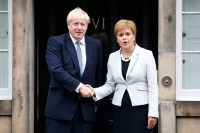
A few months ago, Tory aides spotted a suspicious pattern. If they agreed on a new Covid policy to be announced in a week, Keir Starmer would get wind of it and demand it was implemented immediately. In No. 10, two conclusions were drawn: that they had a mole (perhaps on Sage) and that the Labour party’s policy was to try to look prescient. The conclusion? Ignore it. In such times, they reasoned, no one cares about Westminster games. But it’s a different matter when it comes to being upstaged by Nicola Sturgeon. To many Tories, she is the real opposition leader these days. If Boris Johnson’s premiership collapses — despite delivering Brexit and even if he sees off Covid — it will likely be due to her.

‘We’re going to have a great summer’: an interview with Matt Hancock

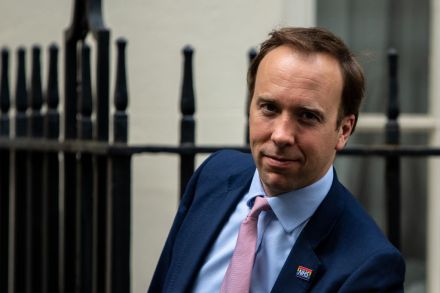
Hospitals are filling up at a terrifying pace, with more Covid-19 cases now than ever. A new variant is sweeping through the capital and the country, with more than a million of us currently infected. Nicola Sturgeon, the Scottish First Minister, says she is more worried now than she has been at any point in the pandemic. Matt Hancock, the Health Secretary, puts it differently. ‘I am optimistic,’ he says. ‘We’ve got the light at the end of the tunnel and it’s getting brighter. Of course, we’ve got a difficult time between now and then but the vaccine is going to get us out of it.’ We are, he says, ‘going to have a great summer’.

An attack on the principles that define America

The scenes in Capitol Hill tonight are the sort that many Americans thought they would never live to see.  A violent mob of Trump supporters stormed the Capitol building, overwhelming law enforcement and firing their weapons into the Senate chamber. Four people have died - one woman shot and killed - and there are reports of police injuries. The Senate was debating (and set to certify) the results of the presidential election. Senators were evacuated just after 2pm – as was Vice President Mike Pence, who is thought to be a major target of the protestors after he announced he would not be swayed by Donald Trump's call to try to overturn the election result. Condemnation has been swift, unequivocal and from across the political spectrum.

MPs overwhelmingly back third Covid lockdown

Boris Johnson's decision to impose a third national lockdown in England has won approval in the Commons by an overwhelming majority – with 524 MPs voting for the measures to just 16 against. It comes after only a handful of Tory MPs suggested they would oppose the lockdown measures in the debate on the issue today. This means that the new national lockdown will be in place for at least seven weeks – with many MPs expecting it to roll on longer. However, while the legislation allows for the lockdown to remain in place until the end of March, Johnson has signalled to MPs that he will return to the Commons for a vote if that is deemed necessary by the government.

Can Gavin Williamson limit the impact of school closures?

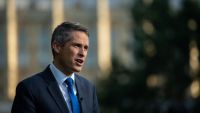
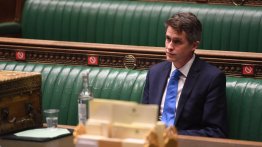
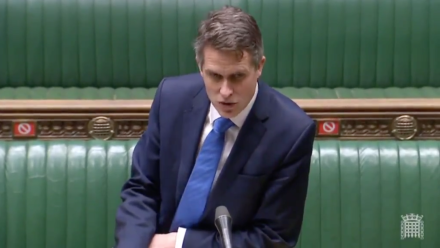
It is much harder being an embattled minister in the socially distanced Commons than in normal times. There is no group of supportive MPs to arrange behind you, no ability to organise sympathetic noises from the backbenches as you give your statement explaining why you've taken a last-minute decision to close all schools when you said you wouldn't and had been threatening councils who were trying to do so just before Christmas with legal action, and why you've spent the past few weeks insisting that exams would go ahead in the summer, only to cancel them this week too. On this charge sheet, Gavin Williamson would have struggled in any Commons setting when he explained why the government had changed its mind at the last minute.

How many vaccinations are needed to end lockdown?

12 min listen

The government has announced that 23 per cent of over 80s in England have now received their first dose of the Covid vaccine. With Boris Johnson and Matt Hancock aiming to give 13.5 million people the jab before the middle of February, will that be enough to end lockdown restrictions? Cindy Yu speaks to Katy Balls and James Forsyth.

Can the PM sustain his vague lockdown timetable?

Boris Johnson doesn't have as angry a Conservative party to deal with as he might have expected after announcing his third national lockdown. The Covid Recovery Group of MPs has largely moved on from opposing further restrictions to putting pressure on the government over its vaccine timetable, meaning any revolt on tonight's vote will be much smaller than the 55 who rebelled against the tiered system in December. But that's not to say that the Prime Minister can afford to be careless with the way he communicates with MPs, and his statement in the Commons today showed that.

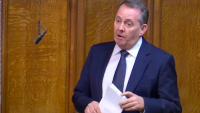
Watch: Liam Fox’s jab at vaccine red tape

Liam Fox is a qualified GP, albeit one who isn't practising at the moment. So why is it that he — and no doubt thousands like him — are subjected to 'diversity' paperwork before he's allowed to help with the Covid vaccine rollout? Fox asked the PM: 'As a qualified, non-practising doctor, I volunteered. But can I ask the Prime Minister why I have been required to complete courses on conflict resolution, equality, diversity and human rights, moving and handling loads and preventing radicalisation in order to give a simple Covid jab?' The PM promised on Sunday that he would remove these barriers, which include guidance on 'deradicalisation' and 'conflict resolution'.

Closing schools was inevitable. But cancelling exams is a mistake

On Sunday morning, Boris Johnson told us that schools were safe but, tellingly, did not rule out further closures. By Monday evening he had shut every school in England to most pupils. By then, of course, many primary schools had opened for just one day. Children mingled – as they do – and went home not to return. But after those bubbles were mixed, fewer grandparents may be willing to look after them. When will they return? Johnson said not until half term, at least. But when policy can reverse so quickly in less than 36 hours, just about the only certainty is that it is far easier to close schools than it is it reopen them again.

Lockdown sceptics should support this lockdown

Scepticism is supposed to be the bedrock of science. But where scepticism shades into cynicism it can be as blind to changing events as the unexamined credence it claims to displace. Scientific belief should be based on informed supposition which is then rigorously tested against the evidence — that is the basis of the scientific method. There should be no shame in changing opinions and assumptions when facts change. We start with assumptions, test them against the evidence (which itself changes) and then use that conclusion to repeat the process, ad infinitum. So if conclusions don’t change when facts change, something might have gone awry. As an example: your view on the merits of the current winter lockdown versus the Halloween lockdown.