Politics

Read about the latest political news, views and analysis

Who regulates the regulators?

This isn’t about David Cameron and Greensillgate; it isn’t about Boris Johnson and wallpapergate or Jennifer-Arcurigate. It isn’t about Westferrygate and the illegal planning approval (later reversed) given to a big Tory donor by the responsible minister (Robert Jenrick) for that grotesque development. Nor about Mr Jenrick’s department’s awards under the Towns Fund, which the public accounts select committee found had ‘every appearance of being politically motivated’. Nor is it about (Lord) Edward Lister and the late Sir Jeremy Heywood and twohatsgate, nor about Len McCluskey, Joe Anderson, Paul Flanagan and Flanagangate in Liverpool. Some of these men (the last two) have been the subject of police inquiries and one is on bail.

Data, not dates: there is no reason to delay a return to normal life

A slogan can come back to haunt you. For Boris Johnson, the words ‘data not dates’ sounded powerful at a time when Covid cases were high and hospitals full. The idea was that the government would be guided by scientific reason, would respond to the figures and would not let rigid targets dictate policy. Since the Prime Minister announced his roadmap at the end of February, however, ‘dates’ seem to have become far more important than ‘data’. How can he claim to be following the data when he will not budge from a timeline which now looks like it was designed for a different phase of the pandemic? Why were people braving the cold and rain outside restaurants on a bank holiday when there is every chance it’s safe to go inside?

In Hartlepool, I’m aiming for a noble defeat

By the time you read this you may know if the Tories triumphed in the Hartlepool by-election — or if, in the end, the party was too badly wounded by all that business about who paid for whose wallpaper. Boris Johnson visited the town more times than he visited Scotland in the campaign, so he certainly sensed victory. But who can predict elections nowadays? One thing, alas, is all but certain: I will have lost. I decided to stand as an independent candidate at the last minute, motivated by how much I loathe the apparatchiks at both main parties’ London HQs — disconnected, mediocre and disdainful. Just look at their candidates. Labour chose slick Paul Williams, booted out by his constituents in Stockton South for flouting their wishes in the Brexit referendum.

Why the Hartlepool election result doesn’t really matter

Ah, Hartlepool. The by-election there brings back memories: I am old enough to have reported on the last one, back in 2004, when Peter Mandelson went off to Brussels and left behind what was then a fairly safe Labour seat. My slightly faded memory of that 2004 vote informs my view of what is apparently the most important question in British politics today: who will win the latest Hartlepool by-election? And my view is this: it doesn’t really matter.

How serious would Labour losing Hartlepool be?

12 min listen

A poll last night gave the Tories a 17-point lead in Hartlepool. Tomorrow's by-election in the red wall seat is to be one of the first barometers of Keir Starmer's leadership so far. How serious would a Labour loss be? Isabel Hardman speaks to Fraser Nelson and James Forsyth.

How Labour will spin defeat in Hartlepool

Campaigning in the Hartlepool by-election is reaching its feverish final hours as the Labour party tries to hold onto the seat. There has been sufficient talk of the party losing the constituency for such a result not to come as a shock if it does happen. Indeed, many in the party are already talking as though they have lost, openly discussing what might happen next. It is clear that while the Left of the party will use this as evidence that Starmer's plan to rescue the party isn't cutting through, there won't – or can't – be a serious challenge to his leadership from this faction. What we are more likely to hear are calls for a change of message and a higher volume way of communicating it.

David Cameron’s golf diplomacy

It has been a tough few weeks for David Cameron. The former Prime Minister’s brief lobbying career appears to have come to an end with the collapse of Greensill capital while his long-awaited UK-China investment fund is still ‘yet to be established’ four years after being announced. Still, at least he can always relax with a good game of golf. Cameron is known for his love of the game, having enjoyed complimentary membership to the Ellesborough golf club near Chequers when in office. Now though he enjoys practicing his swing in the coastal surroundings of St Enodoc in North Cornwall, near his £2 million holiday home.

The new care home scandal

Care homes have been at the centre of controversy and mishandling throughout the Covid-19 crisis. Decisions taken last spring to move patients out of hospital, without so much as a Covid-19 test, contributed to a surge of cases in facilities designed to look after Britain's most vulnerable. Failure to tackle early on the problem of asymptomatic transmission meant that workers weren’t isolated. They unknowingly brought the virus in, sometimes to multiple homes. Zero detection – until it was too late – resulted in tragedy. It's estimated that over 29,000 excess deaths have occurred in care homes since last March. Now there is another care home scandal brewing, the details of which are just coming to light.

Unesco and a revealing tale of two journalists

Bank Holiday Monday, in case you didn’t know, was also World Press Freedom Day. Unesco understandably marked the occasion. But more interesting than its official communiqué – and a great deal more informative about the way that organisation thinks – was a recent report it sponsored in support of two journalists said to be the subject of attacks on press freedom: Maria Ressa in the Philippines, and, at home, Carole Cadwalladr. The views expressed in that document are worth a closer look. Maria Ressa is a long-standing and courageous thorn in the side of the Philippines’ strongman president Rodrigo Duterte.

CofE bishop demands MPs withdraw ‘very divisive’ Sewell report

The Church of England has spent much of 2021 grappling with how it handles race relations. In the wake of one Anglican ordinand claiming in February that 'The cult of Captain Tom is a cult of White British Nationalism' the Church has had to contend with revelations about the use of Non Disclosure Agreements in silencing allegations of racism and the fall out from its report From Lament to Action which called for non-white clergy quotas.  Now though, one Anglican bishop has taken things a step further by writing to MPs to attack the recent findings of the government's commission on race and ethnic disparity, which criticised the misuse of the term 'institutional racism' and found little evidence that it existed in Britain.

Your guide to the 2021 election results

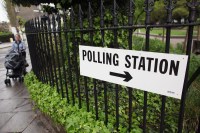
This week will see the biggest set of polls in UK history outside of a general election. Contests are under way in Wales, Scotland, London and in the various mayoral, local and PCC elections across Britain as part of a so-called ‘Super Thursday.’ But while past election nights have been met with the chimes of the BBC’s Arthur theme and a Dimbleby fronting hours of programmes, Covid means there will be no all-night television special. Whereas normally all results are in by midday Friday, this year it will take longer to verify and count the votes than it has done in previous elections. This is due to both reduced staff numbers to allow for social distancing and the high number of polls taking place in some areas.

Las Vegas resident urges Scots to vote SNP

Sunday's anti-climactic finale looked set to be the biggest Line of Duty let-down for fans of the hit BBC series. But now one of the drama’s stars Martin Compston has waded into the Scottish independence debate and urged his fellow Scots to vote SNP this Thursday. He says that the ‘Tory government in Westminster’ some 325 miles from the Scottish border, ‘do not care about Scotland’ adding: ‘The big decisions, whether it be Scotland’s future relationship with Europe, whether it be nuclear weapons on the Clyde are best taken by the people who live here.’  There’s just one problem – Compston’s main residence is in Las Vegas a mere 4,872 miles away.

Hartlepool and the theft of the Labour party

When the unthinkable happened in 1882 and England lost a test match on home soil to Australia there followed a mock obituary in the Sporting Times. ‘In Affectionate Remembrance of English Cricket, which died at the Oval on 29 August 1882, deeply lamented by a large circle of sorrowing friends and acquaintances,’ it read, adding that: ‘The body will be cremated and the ashes taken to Australia.’ It will be tempting to compose something similar on behalf of the Labour party should it be defeated by the Conservatives in the Hartlepool parliamentary by-election later this week. The most appropriate destination for the ashes would surely be the chichi London neighbourhood of party leader Sir Keir Starmer.

Why we should worry about the post-Covid exodus of older workers

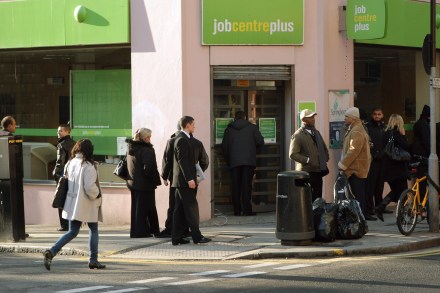
Concerns around unemployment during the pandemic have, understandably, been focused on younger people. Last year it was under-24 year olds most likely to be furloughed and then subsequently made unemployed when coming off the government’s scheme. For millions, the fate of their jobs remains on the line, as unemployment is expected to rise over the course of the year (albeit far less than originally predicted), even as the economy rebounds when lockdown restrictions lift. But today the Office for National Statistics flags another concern; one that could potentially have a bigger impact on the labour market’s recovery post-pandemic. While the youngest have experienced a substantial economic hit from the virus, so have those at the other end of the working-age spectrum.

Galacticos descend on Westminster

Westminster is something of a ghost town this week as MPs, staffers and wonks all fan out across the country to pound the doorsteps ahead of polling day. With Parliament prorogued and the airwaves dominated by talk of the Red Wall, there is precious little to amuse those poor souls still remaining in SW1 ahead of the release of the first exit polls at 10 o'clock on Thursday. That is until today when a cavalcade of coaches came to town and parked up opposite St James's Park tube station. For Mr S understands that on board was none other than the highly paid stars of Real Madrid. Los Blancos have arrived ahead of their Champions League semi-final fixture tomorrow night with Chelsea FC which kicks off at 8 o'clock.

Prisoners dilemma: should we pay kidnappers?

British-Mexican national Claudia Uruchurtu Cruz disappeared on the night of Friday 26 March in the town of Nochixtlan, Oaxaca State, Mexico. Claudia had been seen attending a rally protesting the beating of a local labourer, allegedly by security elements linked to the local municipal president. Unconfirmed witness statements claim she was grabbed and pushed into a red car. Claudia never arrived home and her family and friends have not heard from her since.  What is the right response for the British government? The most debated issue is whether to pay ransoms. Some governments refuse, others pay, or at least turn a blind eye to families that do. In Mali, where British troops are now operating, France has paid millions of dollars to Al-Qaeda in the Islamic Maghreb.