Politics

Read about the latest political news, views and analysis

Meet the most popular politician in the country: Ben Houchen

As local election results pour in across the country, it's the Tees Valley count that is making waves. Ben Houchen has been re-elected as Tees Valley mayor with 73 per cent of the vote. To put things into perspective, Houchen won 39.5 per cent of the vote in 2017. His re-election had been priced in after the Tories' success in the Hartlepool by-election. However, the size of his mandate has taken even Houchen's supporters by surprise. So what's gone right? When the Tees Valley mayoralty was created, the general consensus was that Labour would win it. When Houchen won, it came as a surprise and was seen by some as a result of Theresa May's popularity. However, Houchen's popularity has endured where May's has waned.

Education, not class, is Britain’s real political divide

Social class is dead. Education is the political dividing line that matters. This has been apparent since (at least) the 2016 EU referendum, although it has not been recognised by enough people who do and write about politics. The results of this week’s elections should drive the point home. According to early analysis of polling by elections demigod Sir John Curtice, there are some parts of England where the Labour party actually made some modest gains in yesterday’s elections. In places – mostly urban – where a high proportion of the population has a university degree, Labour got a small positive swing.

Merkel is right to reject Biden’s vaccine patent plan

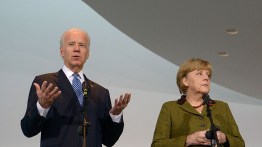
She handed the vaccine procurement process over to the European Union. She didn’t invest much in new production. And she allowed an American multinational to take control of a brilliant discovery by a small German biotech company. Angela Merkel, the out-going German Chancellor, has not had much success battling the Covid-19 crisis, and her handling of vaccines has been a catastrophe from start to finish. But she has finally got one thing right: she is defending the patents that protect the pharmaceutical industry. In the last week, president Biden has signalled that the United States is ready to back suspending patents on Covid vaccines.

Hartlepool meltdown: best of the left round-up

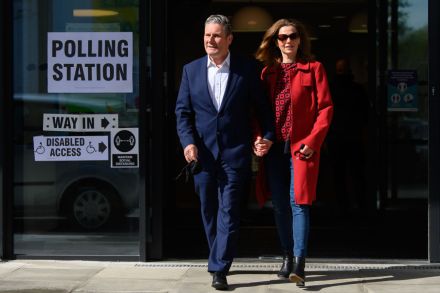
Oh dear. Labour's loss of Hartlepool on a 16 point swing to the Tories has not gone down well with Keir Starmer's most vocal critics. Lloyd Russell-Moyle was first out of the blocks this morning, tweeting shortly after midnight that 'Good to see valueless flag waving and suit wearing working so well... or not?' Fellow members of the Socialist Campaign Group have piled in too, with Corbyn-era frontbenchers quick to offer their expert analysis as to why Labour lost a seat they had held since its creation.  Onetime shadow Lord Chancellor Richard Burgon declared 'We are going backwards in areas we need to be winning.

What the Hartlepool loss means for Starmer

14 min listen

The local election results are coming in over the weekend, but the bombshell came early with Hartlepool going to the tories in a massive 16-point swing. Isabel Hardman speaks to James Forsyth and Katy Balls about how much the red wall has left to give.

Boris shouldn’t take the red wall vote for granted

There are two popular reactions to the Hartlepool by-election, which one you favour depending largely on your political tribe. The first holds that the white working class has reacted against a woke, metropolitan Labour party and its knee-taking leader, Keir Starmer. The second holds that the town’s racist and xenophobic population are still fearful that their beloved Brexit might yet be undone, and were desperate to vote against a Labour candidate who had backed Remain. Both of these narratives in fact boil down to pretty much the same thing: that the people of Hartlepool are a sad and angry bunch who tend to vote against things rather than vote for them.

Labour is doomed whether Starmer stays or goes

So the Conservatives have won the ‘pools, as we used to say of jackpot winners before the advent of the National Lottery. The Hartlepool constituency, known before 1974 as 'the Hartlepools' in recognition of the distinct settlements of old Hartlepool and West Hartlepool, has just secured its place in British political folk lore. It isn’t just the fact of a red wall brick turning blue at a by-election some 11 years into Tory-led governments that is remarkable, but also the crushing extent of the Conservative victory. While by-elections are often remembered as flashes in the pan – with shock results reversed at subsequent general elections – that is because they are normally won by opposition parties when governments are going through unpopular phases.

Can Starmer reverse the horror of Hartlepool?

The Tory victory in Hartlepool, with a swing of 16 per cent and the biggest increase in a governing party's vote in any by-election since 1945, is a terrible blow to Labour hopes that the choice of Sir Keir Starmer would soon stem their rot. What happened in what was a safe Labour seat — it was Peter Mandelson's in New Labour's heyday — is that voters who backed the Brexit party in 2019 switched to the Tories. According to the election analyst Matt Singh, if that sort of shift were repeated in other seats where the Brexit party made an impact then more than 20 Labour MPs would lose their seats — including leading figures like Yvette Cooper, Ed Miliband and Jon Cruddas.

How much trouble is Starmer in?

Keir Starmer is facing a rocky few days as the party's results from the local elections start to come in. Labour has lost Hartlepool with the Tories taking the seat with a majority of 6,940. While many Labour campaigners were braced for defeat, the margin by which the Conservatives have won has taken both pollsters and those on the ground by surprise. The problem for Starmer is that although it will be a few days before we have the whole picture, it appears to be a sign of things to come.  The party is losing votes on both sides. As well as Tory gains from Labour in Northumberland, Labour has also been losing votes to the Greens and Lib Dems. Corbynites have been quick to go on the offensive and a blame game is underway before most of the results are yet to come in.

Corbynite MP lashes out at Starmer

This morning Labour are in damage limitation mode after the party's candidate in the Hartlepool by election conceded defeat. However, not everyone has got the memo. Step forward Lloyd Russell-Moyle, the onetime shadow minister for natural environment and air quality who quit Starmer's frontbench in July last year. The Brighton left-winger did not even wait for the official result to be announced, tweeting shortly after midnight: 'Good to see valueless flag waving and suit wearing work so well... or not?' in a dig at Starmer's efforts to detoxify Labour's brand and pitch to patriotic voters. https://twitter.com/lloyd_rm/status/1390445981691432960?

Tories win Hartlepool, throwing Starmer’s leadership into crisis

The Tories have taken Hartlepool on a remarkable 16 per cent swing from Labour. The Tories saw the biggest increase — 23 per cent — in a governing party’s share of the vote in a by-election in the post-war era. Labour has been trounced in a seat that has been theirs since its creation in 1974. Labour’s defeat shows that Keir Starmer is nowhere near stopping the party’s bleeding in the red wall. It suggests that the 2019 election was not a freak result driven by voters' desire to get Brexit done and their fear of Jeremy Corbyn but rather part of a realignment of English politics — and that things might get even worse for Labour in these areas. Any hopes that voters would simply snap back to Labour with Brexit done and Corbyn gone have been dashed.

Labour is bracing itself for a set of bad results

Labour has started bracing itself for a very unpleasant few days of results in elections across the country. As polls close in local, mayoral, devolved assembly and police and crime commissioner elections, as well as the Hartlepool by-election, a party source has said: These were always going to be tough elections for Labour. Keir has always been honest about the mountain we must climb to rebuild trust to win the next general election. Labour is listening and we will continue to change in order to win back the trust of working people in Britain and their communities. Meanwhile, on the BBC’s Question Time, the party’s shadow housing secretary Thangam Debbonaire accepted that Labour’s message wasn’t getting through to voters.

The China model: why is the West imitating Beijing?

26 min listen

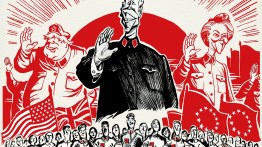
In this week’s podcast, we talk to the author of our cover story, eminent author, historian and broadcaster Niall Ferguson, who advances the theory that the West and China are in the throes of a new cold war which the Unites States is on course to lose, should the Biden administration continue to following Beijing’s lead on apparently everything from lockdown to digital currencies. Joining the debate is Dr Leslie Vinjamuri, from Chatham House. (01:05) ‘All of the features of Cold War I are here today which is why I have been speaking for a couple of years about Cold War II’ - Niall Ferguson. Next up, Laura Freeman writes in the magazine this week about the fake facades she has been increasingly noticing while out and about in London.

Will Britain’s economic recovery break records?

It’s been a good week for seeing the vaccine factor at work. We’ve had multiple real-world updates on the Pfizer vaccine’s effectiveness against new variants of Covid-19 (this bodes well for the UK, which was the first country in the world to use the vaccine to protect its most vulnerable residents). And today we’ve had a revised economic forecast from the Bank of England, suggesting the UK’s impressive vaccine rollout could translate into the strongest growth since records began in 1949. The Bank of England now predicts that the economy will expand by more than 7 per cent in 2021, up from its forecast of 5 per cent in February.

Michel Barnier’s Brexit blockbuster

Last month Steerpike revealed which politicians are set to release books after putting their respective lockdowns to good use. But it appeared Mr S missed one looming literary attraction – the release of Michel Barnier's forthcoming memoirs about the Brexit talks. Barnier, who held the role of the European Union's chief Brexit negotiator between 2016 and 2021, is releasing his 'secret journal' tomorrow in which he focuses on the role of Conservative infighting shaped Britain's departure from the EU. Thus far, the main revelations trailed in today's newspapers include the bombshells that (shock) the Frenchman was repelled by Johnson's 'baroque personality' and that the former mayor of London was 'not serious' in Barnier's eyes.

Why are the Lib Dems siding with France in the Jersey crisis?

The situation in Jersey is rapidly spiralling out of control and dominating the headlines. But once again, the Lib Dems have surpassed themselves in responding terribly to a crisis that offered them a chance to win over voters. After a predictable post-Brexit mix-up on fishing rights in the Channel, France's maritime minister Annick Girardin hit back. Girardin threatened to pull the plug on Jersey’s energy supply – a worrying threat given the island gets 95 per cent of its power from the continent. This was a ridiculous, over-the-top response to what has been happening as the new fishing regime takes effect. Brexit was a situation that was always going to require a measure of diplomacy on all sides.

Why Boris could benefit from the Jersey fishing dispute

It's polling day for the local elections but the focus of the government is on Jersey, where a row has broken out over post-Brexit fishing rights. After 80 French boats gathered at St Helier in protest over new licences required for fishing there, the UK hit back by sending two British naval patrol vessels as a precautionary measure. Now the French government has sent naval ships of its own and a war of words is underway between the two sides. The European Commission has called for calm but the situation remains unstable to say the least France's Sea Minister Annick Girardin was the first to up the ante – suggesting the fishing restrictions could lead to France turning Jersey’s electricity off.

Britain’s golden diplomatic opportunity

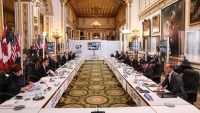
‘The world’s changed quite a bit,’ was Domic Raab’s fitting, if somewhat understated, opening remark at the G7 meeting of foreign secretaries this week. The first in-person meeting of the alliance in two years saw masked dignitaries, elbow bumps and distanced discussions behind plexiglass screens. But two members of the Indian delegation still ended up testing positive for Covid. Beyond the immediate challenges of the current crisis, Raab’s words seemed prescient. Quite a bit has changed since the G7 last met in France in 2019. Britain has left the EU and is no longer paralysed by parliamentary deadlock. President Biden has replaced Donald Trump in the White House.