Politics

Read about the latest political news, views and analysis

When will the economy recover to pre-pandemic levels?

New growth figures were released this morning show that the economy contracted 1.5 per cent in Q1 this year and remains 8.7 per cent smaller than it was in Q4 2019 (the last quarter not to be impacted by the pandemic). Alongside this update, the Office for National Statistics also released its latest set of monthly figures, which saw GDP rise by 2.1 per cent in March — the biggest boost since August last year — taking the economy to 5.9 per cent below pre-pandemic levels. That GDP fell by just 1.5 per cent overall once again illustrates the extent to which businesses have developed a resilience to lockdowns. The first quarter of this year saw much economic activity either wildly distorted or banned outright.
A Tory rebellion is brewing against planning reforms

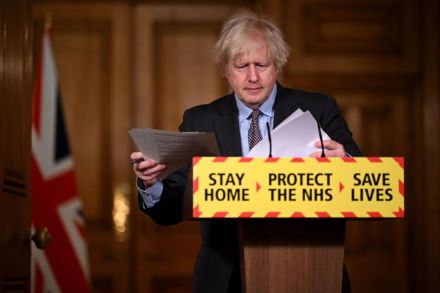
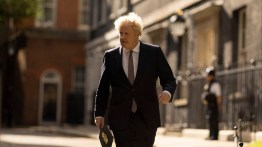
Boris Johnson used the Queen's Speech on Tuesday to set out the policy reform he plans to do now that the pandemic is easing. This was largely centred on attempting to flesh out the ‘level up’ agenda through a focus on skills, industry and planning reform. It's the latter bill that poses the greatest risk. Already Tory MPs have come out in opposition to what ministers say will be the biggest shake-up of the planning system in over 70 years. The government hopes the relaxation of the rules will pave the way for a home-building boom that will help it hit its goal of 300,000 new homes per year, ease the current housing crisis and get more young people onto the property ladder.

David Cameron’s cringeworthy texts revealed

Oh dear. Amid a smorgasbord of investigations into the collapse of Greensill capital and its lobbying operation, onetime adviser David Cameron has been forced to release all his messages to politicians and civil servants. Cameron and his personal employees bombarded senior ministers and officials with at least 50 emails, texts and WhatsApp messages about Greensill between 5 March and 26 June last year.  They manage the dual feat of being both damning and deeply cringeworthy, with Cameron regularly signing off messages to Tom Scholar, the 52-year-old Permanent Secretary of the Treasury as ‘Love, Dc.’ One text reads like an opening line on a dating app: ‘Is Sir John C still at the bank? Do you have a number? Can I give you lunch once the budget is done?

The UK’s very American political realignment

The speed and scale with which voters, mainly but not exclusively in the north of England, have switched their allegiance from traditional Labour to Conservative has been described as unprecedented. Professor Tony Travers of the LSE called it ‘amazing’ and spoke of ‘a massive shift of tectonic plates’. Nor can the results of last week’s elections be dismissed as a one-off. The breaches in the so-called ‘Red Wall’ began well before the Conservative landslide in the 2019 General Election and what happened last Thursday is unlikely to be the end.

Keir Starmer and the ‘Pasokification’ of Labour

As the Greek debt crisis took hold in the wake of the financial crash, there was one big political casualty. The main centre-left party PASOK — which had dominated Greek politics since the early eighties — collapsed, going from a comfortable 43.9 per cent of the vote to 13.2 per cent in 2012. A decade on, the party has failed to recover – and the grim news for Keir Starmer's Labour party is that it faces its own version of Pasokification, one where the fall is slow rather than spectacular, and in which the left could find itself trapped. It might be hard to imagine British politics without the Labour party, but then again take a look at what has unfolded across Europe in recent years: the story of PASOK's implosion has replicated itself across the continent.

Beware Welsh Labour’s Trojan dragon

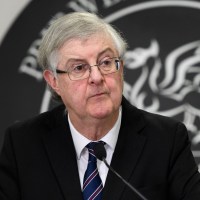
After polls that suggested a radical shake-up at Cardiff Bay, in the end it turned out to be a strong result for the status quo in Wales. The Labour First Minister Mark Drakeford enjoyed a vaccine bounce — thanks to procurement decisions in Whitehall — and can now govern on his own should he wish to. But the fact that Labour won’t need a formal arrangement with Plaid Cymru to govern (as it did between 2007 and 2011) should not blind people to the fact that the Welsh leader already leads an increasingly nationalist party. Welsh Labour actually ran pro-independence candidates in these elections Drakeford himself has said that the UK ‘is over’.

Why a Covid public inquiry could prove useful for Boris

The Prime Minister said today there would be a 'full proper public inquiry' into the government's handling of the Covid-19 crisis. This is highly significant, because a 'full, proper public inquiry' means one led by a judge and with witnesses represented by lawyers. I am also told – though Downing Street is refusing to comment on this – that the Cabinet will be asked by the Prime Minister to approve the terms of the inquiry on Wednesday morning, and there could be an announcement shortly afterwards. Such a public inquiry – like Leveson's into hacking and Chilcot's into the decision to go to war in Iraq – would take many years and might not report until after the next election.

Has Angela Rayner got the upper hand?

17 min listen

Carolyn Harris, a key Starmer aide, has resigned her post as his parliamentary private secretary over allegations that she was behind some of the negative briefing against Angela Rayner. On the podcast, Katy Balls talks to James Forsyth and Isabel Hardman about whether Angela Rayner has come out of Labour's scrap, on top.

How Boris’s planning revolution can keep Nimbys on side

There is a basic political idea behind the Planning Bill announced in the Queen’s Speech. When you build a house, someone buys it – and when they do, they tend to start voting Conservative. The Bill’s aim is to get more houses built, 300,000 a year by the mid 2020s, helping to create millions more homeowners over the next decade and bringing long-term dividends to the Conservative party. The data supports this idea: House of Commons Library research shows that at the 2019 general election, 57 per cent of voters who owned their home outright voted Conservative, as did 43 per cent of people with mortgages. Renters, both private and social, went in the opposite direction.

Respect for Rayner is growing after Starmer’s failed sacking

The resignation of Carolyn Harris as Sir Keir Starmer's parliamentary private secretary (more here from Steerpike) shows that the peace between Angela Rayner and the Labour leader is very much on Rayner's terms. Harris is reported to have left the job after being accused of spreading baseless rumours about the deputy leader's private life. There have been furious briefings from both sides over the past few days but Rayner has not had to sack anyone from her side, showing she has ended up with more power than Starmer. A number of her frontbench colleagues are also seriously impressed by the way in which she negotiated her new lengthy job title over the weekend, saying it showed how in control of things she was compared to Starmer.

Manchester mayor gets a London paper column

Under first George Osborne and now under new editor Emily Sheffield, the Evening Standard has become something of a safe exile for onetime players in the Cameroon government. But now it seems the winds of cross-party change are blowing through Northcliffe House as Sheffield took to Twitter to announce the newest signing for the self-proclaimed 'Voice of London': newly re-elected mayor of Manchester Andy Burnham. Burnham's first outing for his new editorial home was speaking today at the Standard's London Rising event at which he told the people of London that they do not need to be 'levelled down' for the North, adding 'Don’t believe what people say — I love London.

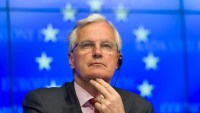
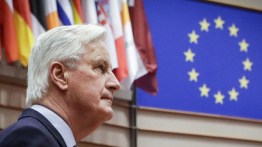
Boring Barnier won’t be the next French president

Let me go out on a limb here and predict that Michel Barnier, who is trying to rekindle his modest and largely forgotten political career on the back of his notoriety as the EU’s chief Brexit negotiator, is not going to be the next president of France. Barnier is currently famous (but only, I suspect, for 15 minutes) for demanding a three to five year suspension of immigration into France. Bad news for Swedes seeking a retirement chateaux in the Dordogne. But seriously, this is all he’s got? The nightly riots and attacks on police in France, provoking excited talk of civil war, seem to originate with people who are already here. And how does he propose to keep the immigrants out?

Can the DUP survive?

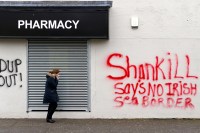
A 36-person strong electorate will meet in Belfast this Friday to elect Arlene Foster’s replacement as leader of the Democratic Unionist party.  The choice facing the assembled ranks of the party’s MPs and members of the legislative assembly (MLAs) is, amusingly, between two men who share the same office in Lisburn: the Lagan Valley MP Sir Jeffrey Donaldson and Edwin Poots, the Stormont agriculture minister. Such is the DUP way, the two candidates are under orders not to speak to the media or undertake any form of public-facing promotional activity for the duration of the contest. However, a document sent by Poots to his colleagues setting out his vision for the future was leaked to the Northern Irish media.

Starmer’s aide resigns amid claims she spread Rayner rumours

The Labour soap opera rumbles on. Just as Keir Starmer appeared to be moving past the turmoil of his botched reshuffle with a very public Commons walkabout with Angela Rayner, relations in the party have kicked off once again. Starmer's parliamentary private secretary Carolyn Harris MP has resigned over allegations that she spread baseless rumours about Angela Rayner’s private life. One shadow minister told the Times which broke the story that 'She was briefing salacious rumours about Angela over the weekend and got caught. She’s a total wrecking ball and has done him a lot of harm in PLP [parliamentary party].' When asked about the allegations she had been spreading rumours about Rayner, Harris immediately blocked the poor Times reporter on WhatsApp.

A ‘cautious cuddle’? No thanks, Boris

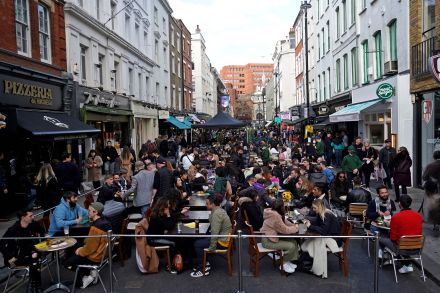
There have been some truly dystopian spectacles during the past year-or-so of lockdowns. Cops using drones to spy on dog-walkers. Park benches sealed off with yellow tape. Curtain-twitchers dialling 999 after seeing the bloke next door go for a cheeky second jog. But this headline surely tops all of that: ‘Hugs will finally be legal again from next Monday.’ Read that again. We live in a country in which the government has accrued so much power that it now gets to tell us when we may hug each other. This should send a chill down the spines of all who care for liberty. To be honest, I wasn’t even aware hugging had been outlawed. I’ve been hugging people for months.

We don’t need a new law against ‘conversion therapy’

The Queen's Speech laying out the government's legislative agenda included a commitment to banning conversion therapy. Douglas Murray argued against the need for new legislation in The Spectator's 27 March edition of the magazine.  Earlier this month, with the citizenry still confined to their houses, borrowing at record highs and GDP in a record slump, there was a debate in Westminster Hall about ‘conversion therapy’. An internet petition has called on the government to ‘Make LGBT conversion therapy illegal in the UK’. And so for a couple of hours MPs from across the major parties competed with each other to express their horror at gay and trans people being subjected to this practice. Feelings ran high. Nobody spoke against.

Does No. 10 really have a plan for social care?

Is the government ever going to reform social care? After a lengthy row between No. 10 and the Treasury, the Queen’s speech does include a promise that ‘proposals on social care reform will be brought forward.’ The stand-off wasn't just over how much those proposals will cost, but the design itself. Perhaps this is why the briefing accompanying the speech is so very light on what the government plans to do. All we know is that the Health and Care Bill ‘will include provisions to improve the oversight of how social care is commissioned and delivered, and facilitate greater integration between health and care services by placing Integrated Care Systems on a statutory footing across the UK, putting more power and autonomy in the hands of local systems.

Build Le Wall: Barnier backs a French migration ban

Since the conclusion of Brexit, former EU negotiator Michel Barnier has been keeping himself busy, releasing his own 'secret journal' of the talks and wading into the Jersey fishing row to claim 'the British are behaving like buccaneers.'  For years the former French foreign minister was the toast of Britain's Remainers, meeting Anna Soubry, Dominic Grieve and Chuka Umunna in the middle of negotiations with Theresa May to discuss 'ideas and solutions'. European leaders including German Chancellor Angela Merkel and Spanish Prime Minister Pedro Sánchez lavished praise on him with Jean-Caude Juncker particularly applauding his efforts to maintain the unity of the 27 member states against the UK. https://twitter.com/Anna_Soubry/status/952975291202326529?