Politics

Read about the latest political news, views and analysis

The shamelessness of David Cameron

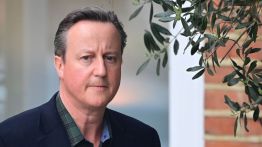
I’m almost starting to admire David Cameron. Almost. There is something that borders on the impressive about the former prime minister’s dedication to the destruction of his own reputation. He may have been a casually idle premier, but he’s really rolled up his sleeves and got stuck into the job of trashing his own name. How many times did he use the private jets of his collapsed finance firm to travel between his houses? Can’t remember. How much did said collapsed financial contraption pay him for services including pestering senior civil servants with texts signed ‘Love, DC’? Not saying, but it was much more than the mere £150k he got for being PM. https://www.youtube.com/watch?

The problem with ‘Devo-max’

A common failing of pro-Union politicians down the years has been the stubborn belief that there exists somewhere a tidy ‘solution’ to the problem of separatist nationalism. With new polling showing that ‘devo-max’ would comfortably win a three-way referendum, it appears to be silly season once again. The history of unionism’s efforts to engineer decisive solutions to the challenges of separatism is an unhappy one. Devolution was meant to be it, after all. As Labour’s manifesto said in 1997:  'A sovereign Westminster Parliament will devolve power to Scotland and Wales. The Union will be strengthened and the threat of separatism removed.' Talk about ‘not understanding how the United Kingdom works’.

The Katy Searle Edition

30 min listen

Katy Searle is the Executive Editor of Politics at BBC News. She is known for overseeing numerous blockbuster political moments, including the infamous kitchen interviews with Ed Miliband and David Cameron, where the Labour leader showed off his two kitchens. On the podcast, she talks to Katy Balls about leaving school at 16, working with Rod Liddle on the Today programme and what it's like to produce interviews with prime ministers.

The great pretender: Nicola Sturgeon’s independence bluff

31 min listen

In this week’s podcast, we talk to The Spectator's editor Fraser Nelson and associate editor Douglas Murray about the challenges facing a freshly re-elected SNP. What next for Nicola Sturgeon - full steam ahead for IndyRef2? Or have neither Scotland or Number 10 the bottle for an all-out battle for independence? [01:02] ‘When you look at the practicalities, the case for independence really does fall. Nicola Sturgeon is selling it in the abstract: “Do you feel Scottish”?’ - Fraser Nelson Meanwhile in matters of social etiquette, the new post-pandemic era looms, complete with new modes of social interactions and conversational topics.

Can Labour survive the next election?

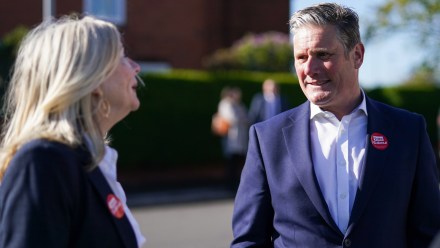
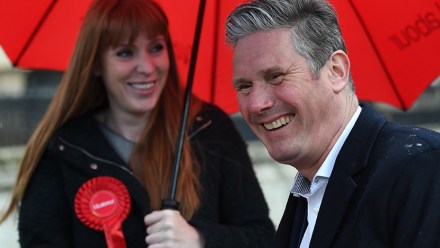
Keir Starmer is having a torrid time. Today brings another poll showing his personal approval rating falling. The Labour leader is now down to a net score of minus 22. But Starmer's leadership, or lack of it, is far from being Labour’s biggest problem.  The party’s fundamental issue is that its old electoral coalition has fallen apart in recent years; the 2014 Scottish referendum and the 2016 Brexit referendum detached large sections of the party’s traditional base from it. Starmer’s problem is that the constituent parts of the traditional Labour coalition are moving ever further apart. Many of his metropolitan voters regard Brexity provincials with disdain.

What’s the problem, ladies and gentlemen?

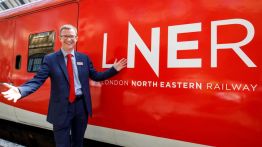
Picture the scene. You're on a train when the following message comes over the tannoy: 'Good afternoon, ladies and gentlemen, boys and girls.' Are you offended? One passenger travelling on a London North Eastern Railway (LNER) train was. 'So as a non-binary person this announcement doesn't actually apply to me so I won't listen,' the commuter wrote. Remarkably, LNER didn't simply ignore or dismiss this complaint. It apologised: How scared of the trans mob must LNER be to act so swiftly? 'I’m really sorry to see this, Laurence, our Train Managers should not be using language like this, and I thank you for bringing it to my attention. Please could you let me know which service you are on and I will ensure they remain as inclusive as we strive to be at LNER.

Boris faces a painful choice over social care

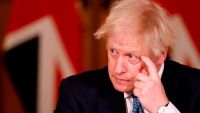
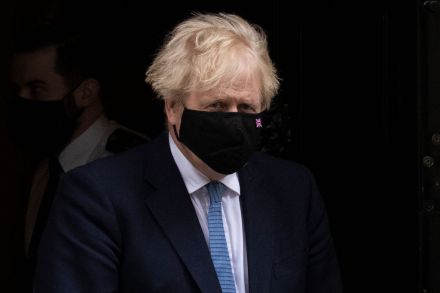
If social care reform were any deeper in the long grass of political priorities, it’d probably get mistaken for a hedgerow. It got a one-line reference in the Queen’s Speech this week, which does not even guarantee that the 'clear plan' promised by the PM in his first speech in the job will be published this year. Announcing ‘a long-term plan for social care reform this year’ has been a quaint annual government ritual since 2017. The Queen’s Speech also mentioned the need to clear the NHS backlog. Delays for treatment, already widespread before Covid-19 due to a decade of NHS funding increases lagging behind demand, are now the worst since reliable record-keeping began in 2007. And house prices are playing in to both of these problems.

‘This is just absolutely pathetic’: Douglas Ross vs Pete Wishart

This morning's Scottish Affairs select committee session got off to a rocky start when Tory leader Douglas Ross clashed with SNP chairman Pete Wishart. A buoyant Ross, who led his party to its best Holyrood results last week, kicked off by welcoming Scotland secretary Alister Jack and his mandarin Laurence Rockey to the committee but could not resist a swipe at the 'frankly inept and poor' Wishart who responded with similar gusto.

Boris’s animal rights laws could come back to bite him

Boris Johnson wants to beef up animal rights. The new rules will include a ban on importing stuffed heads as hunting trophies, and possibly on fur as well; a mandatory microchip for every cat in the kingdom; no more exports of live animals for slaughter; a ban on keeping primates as pets; and, most bizarre of all, a law requiring government to accept that animals are sentient and feel pain and angst like the rest of us. This looks odd. There was no extensive pressure except from a small fringe for any of these measures. To most traditional conservatives, animal rights conjure up unattractive visions of young men in dirty anoraks smashing laboratory windows to rescue supposed vivisection victims.

Inflation fears grow

Two months ago The Spectator reported on what was keeping Rishi Sunak awake at night ahead of the Budget: an inflation resurgence that could damage Britain’s economic recovery as it comes out of the pandemic. He deliberately designed his March Budget with inflation in mind, trying to make the UK’s finances ‘Biden-proof’ if inflation or interest rates started to move, and the cost of servicing the country’s debt became remarkably more expensive.At the time, Sunak was a lone voice on the matter. His inflation fears put the decision to raise tax into perspective, but many remained critical of his rather cautious approach. Inflation seemed a strange focus as the conditions for major change appeared glaringly absent.

Why I spoilt my ballot paper

The headline ‘Government to allow people to hug’ one might have expected to hear on early evening news bulletins in January 1661, shortly after Oliver Cromwell was posthumously executed and puritanism began its slow and welcome withdrawal from England. It sounds a little odd in 2021. Below the headline came the inevitable caveats from the medical clerisy. While hugging you should turn your face aside so as to minimise the risk of infecting the person you are embracing. I think people are also enjoined to keep their hands well above the waist — during amorous encounters with people in your ‘bubble’ you are allowed only to ‘get your tops’, as we schoolboys used to put it. No kissing, and certainly not with tongues.

What Europe could learn from Britain’s new migration system

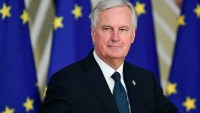
While the EU’s former chief Brexit negotiator Michel Barnier has no formal role in devising the bloc’s immigration policy, his words this week have turned much of the Brexit debate on its head. In an interview on French television, he said that France should suspend non-EU immigration for three to five years — with the exception of students and refugees — and that the EU needed to toughen external borders that have become a ‘sieve’. Had those words come from the mouth of Nigel Farage, he would have been excoriated, not least by Barnier himself. How can any country (let alone a continent) manage in the modern world while shutting itself off to people from, say, India, Australia and America?

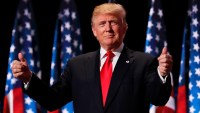
The Trump nightmare isn’t over

What would happen to the Republicans after Donald Trump? That has been one of the pundits’ favourite themes in the past few months. Maybe the GOP could run against Joe Biden’s massive spending and borrowing splurge, some pondered; or go after some low-hanging woke excesses on the left; or exploit the huge influx of illegal immigrants at the southern border that Biden is bringing about so swiftly; or warn of inflation, or the generosity of pandemic relief holding back the recovery; or find some new young faces to appeal to minorities who moved ever so slightly to the right in the last election. And some Republicans have indeed made gestures in that direction. But gestures are all they have tried, because of one overriding fact.

Americans baffled by monarch’s role in Queen’s Speech

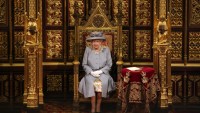
It appears the Queen has become the latest figure to be dragged into America's culture wars after attending the State Opening of Parliament on Tuesday.  Her speech, which set out the government's policies for the new parliamentary session, mentioned a bill to introduce mandatory Voter ID in British elections – something that has caused the monarch to become lionised by some Republicans who now view her as a champion against electoral fraud.  The Republican State Leadership Committee has done its best to herald Her Majesty as a fearless fighter in the war on woke, declaring: 'The woke cancel culture mob continues to call voter ID racist. Now that the Queen of England will require an ID to vote, will Dems cancel her too?

What could surface from a Covid inquiry?

13 min listen

Boris Johnson has announced that an inquiry into the government's Covid response will be launched next year. Katy Balls talks to James Forsyth and Fraser Nelson about what could surface and whether it will shed any light.

The problem with a Covid inquiry

Will the government learn the lessons of the public inquiry into its handling of the Covid-19 pandemic? Boris Johnson this afternoon confirmed he was indeed setting one up, to begin in Spring 2022. True to form, Sir Keir Starmer complained that the inquiry should start sooner; a point he makes with almost every announcement from the government. Johnson was, also true to form, thinking partly of the political landscape over the coming weeks: announcing an inquiry now means he can appear to be on the front foot with learning lessons when Dominic Cummings gives his long-awaited select committee evidence later this month.

Dua Lipa’s NHS hypocrisy

Last night the great and the not-so-good of Westminster piled into London's O2 Arena to attend the Brit Awards, the UK's first major in-person ceremony of the Covid era. Special advisers, Cabinet ministers and ordinary backbenchers were among the 4,000 in attendance to trial how live events might work after the pandemic, with no social distancing or face masks for attendees including Liz Truss, Thérèse Coffey and James Cleverly.