Politics

Read about the latest political news, views and analysis

Why Rishi Sunak should keep the Universal Credit uplift

Chancellor Rishi Sunak agreed to sit down with Andrew Neil on GB News last night for what turned out to be a fairly brutal grilling. The Chancellor floundered under interrogation on the pensions triple-lock, the cost of climate-friendly policies and the Tories’ big-government instincts. However, one of the more uncomfortable moments came when Neil pressed him on the future of the £20 weekly Universal Credit uplift. The benefit supplement, which also applies to the basic element in Working Tax Credit, was introduced at the start of the pandemic because the government acknowledged that the coming recession would inflict particular hardship on those already on the lowest incomes.

The UK-Australia free trade agreement is a triumph

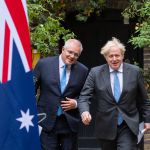
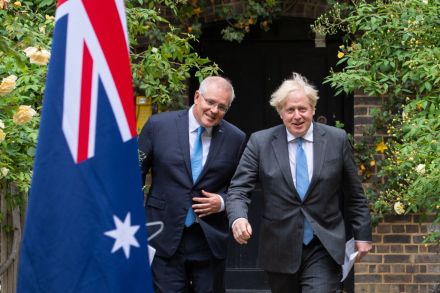
How significant is the UK-Australia trade deal announced this week during Prime Minister Scott Morrison’s visit to Britain? Well, Australia already has 17 genuine free trade agreements, including with the United States, Japan and China. But the free trade agreement with the UK is undoubtedly one of the highest quality agreements Australia has ever reached. In terms of the liberalisation of markets, it is only exceeded by the free trade agreement Australia has with New Zealand. This demonstrates something very important: that the UK, having left the European Union, is going to be a genuine champion of global trade liberalisation.

Rishi Sunak: I’m a fiscal Conservative (unlike Boris)

When Rishi Sunak told Andrew Neil this evening that he had his eyes on the future, he was ostensibly talking about the nation's finances. But it was difficult not to conclude from his interview on GB News that he wasn't also keeping at least one eye on his own future, too. A particularly striking exchange came when Neil asked him what kind of Conservative he is: Andrew Neil: 'Beyond the pandemic are you a One Nation conservative, are you a big Government Conservative like the Prime Minister or are you a small government, fiscal Conservative?

Is Matt Hancock hopeless?

13 min listen

Another day, another Dom bomb. In Cummings's latest release, a number of WhatsApp messages reveal communications between himself and the Prime Minister, with the latter describing the health secretary Matt Hancock's performance as effing 'hopeless'.  Is this damaging to Hancock? Or is this the sentiment that you can expect from senior people who work at close quarters with each other during a crisis? To discuss the new revelations and its potential fallout Katy Balls is joined by James Forsyth, Isabel Hardman with a surprise appearance by Fraser Nelson.

Why the Biden-Putin summit wasn’t a waste of time

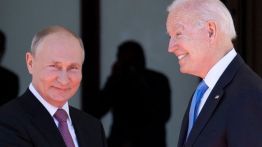
The meeting between U.S. president Joe Biden and Russian president Vladimir Putin in Geneva started cordially enough. A quick handshake, toothy smiles for the cameras, and some standard words of diplomacy. 'I would like to thank you for the initiative to meet today,' a slouching Putin told an attentive Biden. 'Still, U.S.-Russian relations have accumulated a lot of issues that require a meeting at the highest level, and I hope that our meeting will be productive.' Putin's words were something of an understatement. U.S.-Russia relations are scraping the bottom of the barrel and may very well be at their lowest point since the early 1980s, when Washington and Moscow were turning Europe into a parking lot for intermediate-range missiles.

What does the latest ‘Dom bomb’ mean for Matt Hancock?

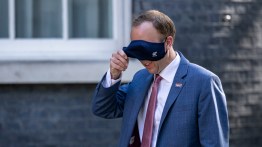
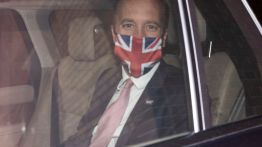
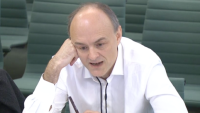
When Dominic Cummings gave seven hours of evidence to a Commons inquiry into the government's Covid response, it was Matt Hancock who received the most criticism. The former No. 10 senior aide's accusation that the Health Secretary was negligent – the most serious charge being that Hancock had misled the government over testing and care homes – led to questions over Hancock's position. But it quickly became clear No. 10 had no plans to fire Hancock. The Prime Minister opted to rally round his minister rather than cast him out. So, does the publication of WhatsApp messages allegedly showing the Prime Minister heavily criticising Hancock change things?

Dominic Cummings still needs to back up his allegations

When Dominic Cummings, the Prime Minister’s former chief advisor, gave evidence to the Covid-19 ‘lessons learned’ joint select committee last month (over the course of seven hours) his revelations seemed explosive. Specifically, Cummings alleged that the health secretary Matt Hancock was guilty of incompetence, interference and repeated lying. He told the committee: ‘The Secretary of State should have been fired for at least 15 to 20 things, including lying to everybody on multiple occasions in meeting after meeting in the Cabinet room and publicly.’ ‘In the summer, he [Matt Hancock] said that everyone who needed treatment got the treatment that they required.

Where is the evidence for Cummings’s care home claim?

What has Dominic Cummings revealed about Matt Hancock that we didn't already know? The most eye-catching stuff, of course, is the Prime Minister calling the health secretary 'totally fucking hopeless'. But on the specific charges that created this impression, much of his lengthy blog on evidence reiterates what he told the select committee session last month, rather than providing the documentation backing it up. Cummings rebuts Hancock's claim that he threw 'a protective ring around care homes', writing: 'The reality: Covid patients were sent untested from hospital to care homes and Hancock neglected care homes and testing throughout April partly because Hancock was trying to focus effort on his press conference at the end of April claiming success for his announcement on 2/4.

Brexit, lockdown and the fracturing of British politics

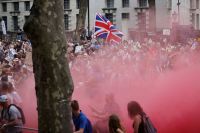
Is our society becoming less tolerant and more viscerally tribal? Or is our politics provoking people into committing more angry and desperate acts? The harassment of BBC Newsnight political editor Nick Watt in Whitehall this week by a group of anti-lockdown protestors recalled the ugly mood that descended on the environs of the Palace of Westminster during the Brexit stalemate of 2016-20. Back then, it was Remainer MP Anna Soubry who suffered the worst incident of intimidation, while the Leaver Jacob Rees-Mogg was also horribly abused by a pro-EU crowd as he walked home from a key vote with one of his children. Many of us might have hoped that such a level of polarisation was a peculiarity of how Brexit played out and would by now be securely in the political rear view mirror.

The top four ‘Dom bombs’ from Cummings’s Substack

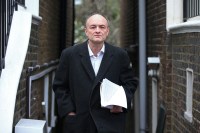
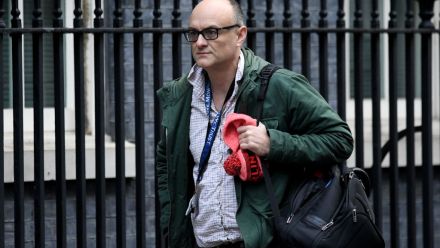
Just minutes before Prime Ministers’ Questions, Dominic Cummings did what he does best: fire off another salvo in one of his long-running feuds. The former chief special adviser took to Substack to hurl another 7,249 word grenade at his onetime Tory colleagues and while it’s the screenshots of Boris Johnson calling the testing situation 'totally fucking hopeless' that will get the most attention, there are a number of incendiary claims worth following up too. Below are the top four ‘Dom bombs’ identified by Mr Steerpike…  Hancock responsible for care homes debacle Last week Matt Hancock told MPs he had seen no evidence to suggest any medical staff had died because of a lack of PPE and that 'everybody got the treatment they needed.

Keir Starmer fails to use the ‘Dom bombs’ at PMQs

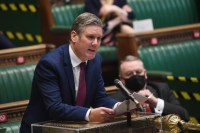
Keir Starmer was back on his home turf at Prime Minister's Questions today, attacking Boris Johnson for what he said was a lack of competence in containing the spread of the Delta variant. The Labour leader focused on the delay in putting India on the red list, turning one of the Prime Minister's stock phrases against him, saying: 'While the NHS was vaccinating, he was vacillating.' Starmer said that if Johnson had acted quickly enough to put India on the list, 'we wouldn't have had the Delta variant here', later adding: 'The British people don't expect miracles but they do expect basic competence and honesty.' He asked why anyone should believe Boris Johnson given the number of times he had given assurances about getting on top of the pandemic which were soon proven terribly wrong.

Does this SNP politician think buses are racist?

One of the benefits of devolution has been giving Scots their own parliament in which the great issues of the day can be discussed. Issues that might not otherwise make it onto the political agenda. Now the Scottish parliament has posed a question that can be avoided no longer: are buses racist? James Dornan is the SNP MSP for Glasgow Cathcart and the man who has brought these matters to light. Speaking in a debate at Holyrood last week, Dornan raised the enduring blight of ‘institutional prejudice’ against Irish Catholics in Scotland. He could have cited many examples in evidence but admirably chose to make a more original case: ‘To my knowledge, no one has questioned the decision by Lothian Buses to cancel the evening buses on 17 March.

Cummings: Boris said Hancock has been ‘hopeless’

Since his eight hour long testimony to a joint select committee last month Dominic Cummings has been unusually quiet. The Vote Leave maestro has declined interview requests after levelling a litany of accusations at Boris Johnson and his government, leaving Matt Hancock and others to defend their record in various studios and parliamentary appearances. Now though he has returned to the fray in a 7,250 word Substack post to his £100 a year subscribers. Steerpike is still working his way manfully through reams of Cummings prose but once again Matt Hancock does not come out well.

The protocol may be Boris’s greatest masterstroke

The jibes thrown at Boris Johnson over his unhappiness with the Northern Ireland protocol — based on the obvious observation that he was the one who signed it — have been based on the assumption that he is either a liar or a fool. A liar because he knew full well what he was signing up to, or a fool for not knowing what he was agreeing to. Does anyone think that officials told him that the protocol would prevent Northern Ireland having access to some cancer drugs? Or guide dogs being unable to move between GB and NI? Keir Starmer has repeated the jibe about Johnson. A further version is that Johnson did not care if Northern Ireland paid the price so long as the UK left the EU.

Supreme Court justice’s £104 bill for 1.4 mile taxi

Members of the Supreme Court have had something of a wary relationship with ministers in recent years. Since the landmark Gina Miller verdict in January 2017 and then the unanimous prorogation case in September 2019, there have been various Tory rumblings in Westminster about moves to abolish, reform or simply rename the highest court in the land.  Amid fears of an increasingly 'activist' court and accusations of bias, senior judges have been understandably jumpy about their future with current Supreme Court president Lord Reed claiming in March that any renaming would be ‘idiotic’ and 'an act of national self-harm.

The strange boycott of GB News

GB News, the UK’s first new news channel in decades, launched on Sunday night with a monologue from the estimable Andrew Neil, setting out the channel’s philosophy.  ‘We will puncture the pomposity of our elites and politics, business, media and academia and expose their growing promotion of cancel culture for the threat to free speech and democracy that it is’, he said. Just 48 hours later and GB News’s detractors have already proven him right.

How NHS boss Simon Stevens could soon cause trouble for Boris

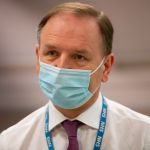
NHS England boss Sir Simon Stevens's final speech today was watched online by hundreds of health service bigwigs. But its main audience was much smaller. It was aimed squarely at just two people: Boris Johnson and Rishi Sunak. Stevens’s main message was about funding. The government, and, in particular, the Treasury, may not be thrilled once they wrap their heads around his statement on the five-million-strong (and Covid-predating) NHS backlog that 'when the health service is given the backing and the tools we need, we can deliver what's required'. Translated into plainer language, Stevens was saying: ‘Get your wallets out: this is going to hurt’.

Will the Australia trade deal really make a difference?

17 min listen

The government has agreed its first post-Brexit bespoke trade deal. But the agreement with Australia has already caused consternation among Conservative MPs about the potential competition from Australian farmers. Are these fears overstated? James Forsyth argues yes: 'Both its proponents and its critics exaggerate its importance. Meat prices in Asia are roughly twice what they are in the UK. I think that is where Australian farmers are going to continue to focus their export energy.' And the team discuss the fallout from the extension to July 19 of the lockdown easing day. Fraser Nelson points out that not only has freedom been delayed, but that even the thresholds for freedom are not clearly set out: 'It seems to be a complete mess of communications though.