Politics

Read about the latest political news, views and analysis

Edwin Poots’s resignation could cause a crisis in Northern Ireland

The end of Edwin Poots’s 21-day spell as leader of the DUP sums up the ordeal of being a unionist leader. Elected as a hard-line replacement for Arlene Foster, he has departed now after being seen to have given too much away to Sinn Fein over the Irish language. Who will replace him? The early candidate appears to be Sir Jeffrey Donaldson, the party’s Westminster leader who was defeated by Poots in last month’s contest. His supporters are championing him as a stabilising influence in a party which has ripped itself apart, with others suggesting that he should be elected without a contest. Poots’s election was a last roll of the dice for his wing of the party, the fundamentalists who didn’t really get over the departure of Ian Paisley in 2008.

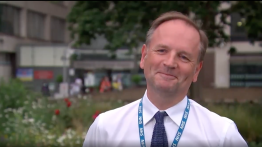
Watch: NHS chief refuses to say if Matt Hancock is ‘hopeless’

They say you should keep your friends close and your enemies even closer. If that’s the case, there must be an awful lot of people who are close to the health secretary, Matt Hancock. Hancock has not had the best of weeks. On Wednesday, Dominic Cummings released a series of WhatsApps which appeared to show the Prime Minister calling the health secretary ‘hopeless’ in the midst of the coronavirus crisis. Asked about the texts later, Hancock meekly replied that he ‘didn’t think’ he was that useless. Now it turns out that he isn’t exactly well-regarded by senior NHS officials either. In an interview yesterday, the outgoing chief of the NHS, Sir Simon Stevens, was asked whether he thought Matt Hancock was hopeless too.

Can the Tory electoral coalition hold after Chesham and Amersham?

Tory MPs in prosperous southern seats will be feeling rather nervous this morning. The Lib Dem victory in Chesham and Amersham, see Katy’s blog here, is another illustration of how the decline in tribal voting means there are far fewer safe seats than before. One immediate consequence of this result is that it will harden backbench Tory opposition to planning reform One immediate consequence of this result is that it will harden backbench Tory opposition to planning reform. In this campaign, the Lib Dems repeatedly attacked the Tories for wanting to take away local communities’ ability to block developments. This struck a particular chord in a constituency that has HS2 running through it.

Major Tory upset as Lib Dems win Chesham and Amersham by-election

Boris Johnson wakes to a shock Tory defeat in the Chesham and Amersham by-election. Overnight, the Liberal Democrats have turned the seat yellow for the first time in its history. The Lib Dem candidate Sarah Green managed to overturn a majority of 16,000 in the Buckinghamshire seat that has only ever been Tory — after the by-election was called following the death of Conservative MP Dame Cheryl Gillan. Green won a majority of 8,028 — with 21,517 votes to the Conservative candidate's 13,489. The 25 point swing to the party will certainly come as a nasty surprise for Tory MPs Announcing the news, Lib Dem leader Ed Davey heralded it proof that 'the Tory blue wall is beginning to crumble'.

Edwin Poots’s departure is a sign of the chaos engulfing the DUP

Only 20 days after winning the party leadership by one vote, Edwin Poots has resigned as DUP leader. The immediate trigger for his departure is him nominating a First Minister today in spite of the opposition of a majority of both DUP MLAs and MPs. (They were unhappy about the late night Irish Language Act compromise). But him being forced out can only really be understood in the context of bad blood created by his brutal ouster of Arlene Foster and his decision to sack all her ministers bar one, himself, in a reshuffle last week. Poots’s departure is a sign of the chaos engulfing the DUP. It is being squeezed on two sides.

The new leviathan: the big state is back

48 min listen

It seems we are in a new President/Prime Minister alliance of big government spending, should we be excited or concerned? (00:44) Also on the podcast: Are the UK tabloids going woke? (15:00)? And in the wake of the pandemic are we ready to have a grown up conversation about death?(31:11)With Spectator Political Editor James Forsyth, Spectator Economics Editor Kate Andrews, former Editor of the Sun Kelvin MacKenzie, former Editor of the Observer Roger Alton, writer A.N. Wilson, science journalist Laura Spinney and Palliative Care Physician Kathryn Mannix and author of a With The End In Mind. Presented by William Moore.Produced by Cindy Yu, Natasha Feroze and Sam Russell.

Rishi Sunak and the coming Tory battle over climate change

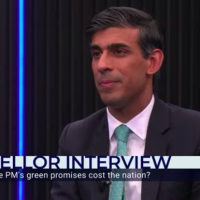
The Chancellor, Rishi Sunak, isn’t normally given to waffle, which makes his maiden appearance on GB News all the more remarkable. Asked by Andrew Neil who – government or homeowner – would have to pay the estimated £10,000 per household cost of replacing domestic gas boilers with heat pumps to help reach the target of net zero emissions by 2050 Sunak replied:  'So when you say the alternative is the household or the government, the government’s money is the people’s money. And that’s my point when I say ultimately we all pay. The government does have any separate money of its own' As a general point of political philosophy, it was a fair enough statement.

How much trouble is the DUP in?

13 min listen

New DUP leader Edwin Poots faces his first challenge today as he tries to push through a controversial candidate for First Minister. There are now rumours that the party may launch a vote of no-confidence in him, only a month after he became leader. How much trouble is the party in? Katy Balls points out that the removal of Poots perhaps would not solve the DUP's problems, given more moderate candidates like Jeffrey Donaldson lost out to him: 'If we end up in a situation where there's a vote of no confidence in Poots... it's not clear that the party is unified in what should follow next.

Cambridge deserves better than Stephen Toope

Regular readers may be aware that in recent months I have been having a running-spat with a Canadian lawyer called Stephen Toope. I am rarely exercised by Canadian lawyers, but this particular one is the current Vice-Chancellor of Cambridge University, and he seems intent on running that crown jewel of an institution into the ground.  Since taking over as Vice-Chancellor, Mr Toope has been responsible for a wide array of anti-free speech initiatives through which, as I recently remarked in the Daily Telegraph, he appears to want to transform Cambridge University into something like the Canadian bar association, but without the thrills, or the pay. Anyhow – our spat came to a head after Cambridge last month published its new guidance for informers.

Is the EU breaching its UK treaty by failing to protect LGBT rights?

Has the EU Commission lost any sense of moral value? This week, Hungary, an EU member state, voted to impose bigoted and oppressive laws on its LGBT citizens. This amounted to a clear breach of many of our domestic laws – and it is a breach of the shared Human Rights laws. Yet the EU's response has been dismal. Is it time for Britain to show solidarity with LGBT Hungarians – and walk away from its treaty with the EU? The EU Commission said it is aware of what is unfolding in Hungary and that:  'When protecting children from harmful content it is important for member states to find the right balance of relevant fundamental rights, such as the freedom of expression and non-discrimination' But this falls far short of what it needed to say.

Lords skewer the Animal Sentience Bill

Last month's Queen Speech was noteworthy for how little it contained, with the only rabbit out of the legislative hat being (appropriately enough) the Animal Sentience Bill.  But now the proposed legislation, which would give vertebrates a legal right to feel happiness and suffering, has started to attract serious scrutiny as it enters the committee stage of the House of Lords. On Sunday Mr S noted that Lord Goldsmith's response to a parliamentary question hinted that crabs, lobsters and other invertebrates could be included in the scope of the proposed protections. Now it appears parliamentarians have begun to take note, judging by yesterday's debate in the Upper House.

The DUP is tearing itself apart

Late last night, the UK government and Sinn Fein went over the heads of the DUP and agreed on a solution to the thorny issue of Irish language legislation. The Northern Ireland Secretary Brandon Lewis promised to step in and pass the legislation if Stormont fails to do so. An ultimatum has now been given to make good on the January 2020 New Decade, New Approach deal — the agreement that promised the language laws in the first place and which was central to the return of power-sharing. In theory, this rouse would have allowed the DUP to formally nominate Paul Givan as Arlene Foster’s replacement as First Minister with republican approval, avoiding the collapse of the institutions and a snap election. In reality, however, this has caused a profound crisis.

Delay, data and the need for transparency

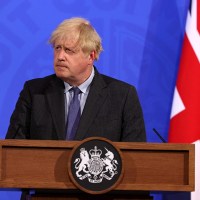
Boris Johnson delayed 21 June, he said, because the data did not merit a full reopening. The specific data government is tracking to make these decisions remains unknown, so we are left to guess. But it’s hard to imagine the decision was disconnected from the rising Covid infection rate across the UK, due to the Indian variant’s increased transmissibility. The UK has gone from having some of the lowest Covid rates in Europe to now having the highest in just a matter of weeks. But is the story that simple? Data from areas hit hardest and fastest by the Indian variant suggest some reasons to be optimistic. In Bolton, the seven-day average for Covid cases leveled off (and started falling) weeks before the government settled on a 21 June delay.

Rishi Sunak’s waffle exposed the flaw in Boris’s green agenda

Who pays? It is one of the most important questions in politics, especially when it comes to the sort of expensive zeitgeisty ideas that governments love to take a reputational ride on. When Margaret Thatcher was Tory leader, she tried to exempt her party from this charge of vulnerability to fashionable notions that come with eye-watering price tags attached, once observing:  'The Labour party scheme their schemes, the Liberal party dream their dreams, but we have work to do.' Nobody who has followed the career of Boris Johnson at all closely would seek to exempt him. Indeed, 'schemes and dreams' appear to be what make him tick.

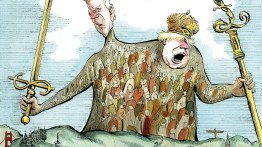
The new leviathan: the big state is back

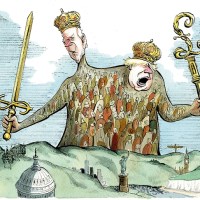
‘In this present crisis, government is not the solution to our problem; government is the problem,’ proclaimed Ronald Reagan in his inaugural speech as American president. Forty years on, the leaders of the G7 have reversed this mantra. In Cornwall last week they declared that the government, and more specifically its $12 trillion of economic support, had not only been the answer during the pandemic but would continue to be the answer during the recovery. They committed ‘to support our economies for as long as is necessary, shifting the focus of our support from crisis response to promoting growth into the future’. It would have been quite possible for leaders to have drawn a very different conclusion: bloated government bureaucracies have failed.

The art of politics: what ministers hang on their walls

On the walls of the Chancellor’s office hangs a print of Eric Ravilious’s lithograph ‘Working Controls while Submerged’ (1941). Two engineers in blue overalls heave the levers of a submarine. A third slumps asleep on a bench. An image, perhaps, of the ship of state, several hundred feet underwater, but by no means sunk yet. We might picture Rishi Sunak in the Treasury control room, changing the gears, working the pumps, keeping the country bumping along even at the bottom of the economic ocean. Or perhaps Sunak looks at his four framed screen-prints by the artist Justine Smith — ‘Pound’, ‘Euro’, ‘Dollar’, ‘Yen’ — and thinks: if only it were so easy just to print money.

The biggest danger to Boris comes from the enemies within

Boris Johnson’s predecessor was destroyed by her inability to meet deadlines. Theresa May extended the Brexit transition period so many times that her party eventually turned against her. Johnson, who was notorious for pushing deadlines when he was a journalist, is now discovering the political problem with missing dates. The Prime Minister may still be flying high in the polls but if he cannot meet the new date for ending restrictions — 19 July — then his own MPs will lose faith in his ability to restore normality. The whole point of the government’s staggeringly long lockdown timetable, announced back in February, was to set an achievable deadline.

Watch: Charles Walker MP calls for elections to Sage

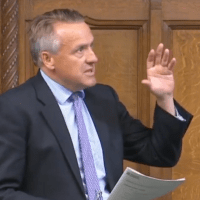
Few MPs in the House of Commons have been as eloquent on either side of the lockdown argument as Charles Walker. The MP for Broxbourne returned to the chamber yesterday afternoon to take aim at the scientists sitting on Sage — the government's Scientific Advisory Group for Emergencies. Walker — who has accused Boris Johnson of treating MPs like dogs and carried around a pint of milk in protest — began his speech by contrasting the status of elected members with that of the unelected 'experts': As you know, Mr Deputy Speaker, Sage has huge power over our lives. It has power over whom we hug and hold. It has power over which businesses open and which businesses close. In essence, it has power over who keeps their job and who loses their job.