Politics

Read about the latest political news, views and analysis

Should Britain brace itself for a major flu outbreak this winter?

Could flu be a bigger problem than Covid this winter? Professor Anthony Harnden, the deputy chair of the Joint Committee on Vaccination and Immunisation, has warned that it might be, suggesting that the low prevalence of flu over recent months could come back to 'bite us' as the weather worsens. There are also fears that reduced levels of flu in recent months could make it much harder to develop a successful jab. In a normal year, the route to a flu vaccine is well trodden. The annual flu vaccination programme first began in England in the 1960s, and since 2000, all over 65s have been offered the jab every year. Healthy children have also been offered a live attenuated influenza vaccine (LAIV) in school, administered as a nasal spray, for the last eight years.


Fact check: how much US kit have the Taliban got?

With the war in Afghanistan having officially ended on Monday, the world’s thoughts have turned to how the Taliban will govern Afghanistan – and what equipment left behind by coalition forces they now have at their disposal. Some $88 billion was spent by the US government alone since 2002 on security reconstruction – primarily equipping the Afghan army and police forces with training and kit. Now, with the messy withdrawal complete, much of that equipment has been left behind in Afghanistan. Caution should be taken with that headline figure however. Much of that $88 billion would have gone to the Afghan army in salaries, for instance, while consumables such as fuel and the maintenance of said weapons also ate up budgets too.

How Germany’s Free Democratic party capitalised on the AfD’s misfortunes

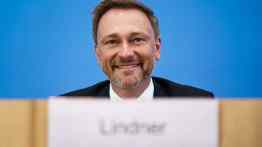
One of the most remarkable stories to come out of Germany in the last year has been the rise of the Free Democratic Party (FDP). Having struggled for relevance in 2020, the party has transformed itself into a political force that could decide the makeup of the next government – and maybe even anoint Angela Merkel's successor as Chancellor. The FDP's success follows an almost eight-year long self-reinvention in which the party has sometimes resembled a cult of personality centred around its charismatic chairman, Christian Lindner. It was Lindner who began the party's revival after a shattering 2013 defeat led to the loss of all its seats in the Bundestag, Germany's highest parliament, and a phase of intense soul-searching and rebranding.

Is the EU trying to hamstring the French military?

Much recent discussion has focussed on the collapse of Afghanistan and the decline of the West. The humiliating American-led Western retreat from Kabul is most poignant for the signal it sends to other ‘protected’ states, present-day and future. The Chinese Communist Party’s mouthpiece, Global Times, mockingly jibed in its editorial at the history of America abandoning its allies and warning how this might be an omen for Taiwan. But the Afghan smokescreen has obscured another aspect of Western decline: a European Court of Justice ruling of 15 July enforcing the same restrictions on ‘work time’ for member states’ military personnel as for any other worker, except on clearly specified military operations.

Who is to blame for Afghanistan exit failures?

12 min listen

The Pentagon says the UK pushed to keep Abbey gate at Kabul airport open, which was later the site of a terrorist attack that killed 13 US soldiers and 170 Afghans. Dominic Raab took on today's broadcast round and defended the work of the Foreign Office during the evacuation process, but said the intelligence community's assessment of the strength of the Afghan government was wrong. Who is to blame for the chaos of the last few weeks? Cindy Yu speaks to Katy Balls and James Forsyth.

The shame of the SNP’s grubby power-sharing deal with the Scottish Greens

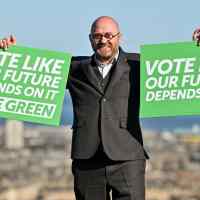
This afternoon Patrick Harvie and Lorna Slater, co-leaders of the Scottish Greens, will become ministers in Nicola Sturgeon’s government. The appointments come after Green members ratified a cooperation agreement over the weekend. The unity pact is a strategic masterstroke by Sturgeon, handing her an overall majority at Holyrood, insulating her from internal SNP criticism and coopting a rival nationalist party. There is one midge in the porridge, however, and it’s this: the Scottish Greens are unhinged. Not merely eccentric or a little outside the mainstream, but full-blown, solar-powered, honest-to-Gaia cranks. For an illustration, consider a motion debated at their autumn 2015 conference in Glasgow.

Can schools return without disruption?

A lot of people won’t want to take much notice of Mary Bousted, joint-general secretary of the National Education Union (NEU), who warns today that schools face significant disruption by the end of September as Covid-prevention measures have to be reintroduced. It was the NEU, after all, which not only opposed the return of schools after the first lockdown, but simultaneously advised its members not to take part in online lessons either. The NEU has often given the impression of being motivated first and foremost by a desire to obstruct the government’s plans.

Rishi Sunak should blame Brexit for ditching the pensions triple lock

Car workers in Sunderland are doing just fine. Construction workers still have jobs. And the food is still getting to the supermarkets, even if there are some occasional disruptions to supply.  Not many of the dire warnings about the consequences of leaving the European Union have actually come to pass. There is, however, one group that looks likely to be hit, even if no one quite predicted it. The pensioners. It looks certain to cost them the ‘triple lock’ on their pensions: although since many of them voted for Brexit, they can hardly complain. The government is tying itself up in knots on how to wriggle out of the ‘triple lock’ The government is tying itself up in knots on how to wriggle out of the ‘triple lock’.

Crumbling Commons gears up for new term

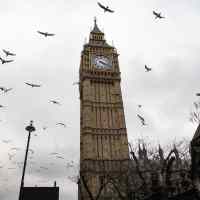
It's less than a week until MPs return to Westminster after a summer full of llama drama and Afghan disaster. But as our elected leaders gear up to debate the great issues of state once more, Steerpike has unearthed figures which suggest Parliament's foundations are not as solid as they would like to think. Whether it's asbestos, falling stonework or the risk of incineration, all too often the Palace of Westminster resembles a house of horrors. Mr S has obtained a copy of the most recent parliamentary 'Asbestos Management Survey' – drawn up between July 2019 and April 2020 –  and it makes for depressing reading.

Covid collapse fails to revive MPs’ bars

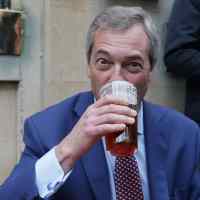
The bars at Parliament have played host to many scenes over the years – plots, arguments, merriment and even fisticuffs – but rarely to an empty house. But for much of Covid, the watering holes of Westminster have been remained closed, in line with government guidance. And now Mr S has found that the restoration of our liberties and the collapse of Covid cases has failed to prompt a surge in sales; sobering news when one considers how some within the estate are itching to close its taverns. A list of the top 100 bar items sold between January to July reveals a dismal return of 2,967 items sold for an estate which employs approximately 3,000 people. Clearly, many are still reluctant to shed virtual working and mix in the fleshpots of SW1.

The battle for Eastern Europe’s energy sector

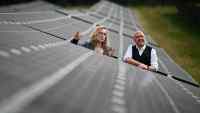
The fight to power eastern Europe is heating up. As Ukrainian president Volodymyr Zelensky prepares to meet Joe Biden at the White House, competition for Ukraine’s energy market is increasingly being framed as a battle between East and West. And as western investments into renewables vie with fossil fuel imports from Russia, the struggle for the nation’s energy supply is assuming a moral dimension reminiscent of the Cold War. Tens of thousands of panels at Ukraine’s huge Nikopol solar farm harvest the sun’s energy for nobody.

Fears for Red Arrows amid takeover trend

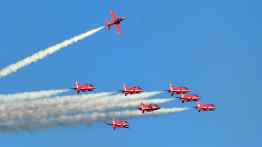
Concerns in Westminster are growing about the impact that a string of recent takeovers will have on Britain's sovereign capability. In recent weeks deals have been agreed by foreign firms to take over two leading UK defence manufacturers – Meggitt and Ultra – despite doubts about the impact such moves will have on the UK's manufacturing ability. There are fears that it could mean that the next generation of aircraft for the iconic Red Arrows will not be built here in Britain. Coventry-based Meggitt supplies wheels and brakes for fighter jets used by the Royal Air Force and is the subject of two bids from American firms Parker Hannifin and TransDigm for £6.3 billion and £7 billion respectively.

The Liberal Democrats have a dangerous vision for the City of London

Liberals have always set great store by laws and declarations. It was joked about Lord Loreburn, the liberal Lord Chancellor in the years before the First World War, that if told the Germans had landed he would immediately have taken steps to obtain an interim injunction from the Chancery Division requiring an immediate withdrawal. These days something similar seems to be happening as regards the Liberal Democrats’ approach to climate change. Last Thursday Ed Davey took aim at the City, which he has decided to add to the party’s growing list of climate change villains.

Why Boris Johnson’s opponents keep failing

Which Boris Johnson should Labour fight? There is little doubt about the personality traits most left-wing activists think they have detected in the Prime Minister and which motivate them to campaign tirelessly for his removal from office. The Johnson they are fighting is a cruel and dastardly right-wing serial liar who wins elections by pulling the wool over the eyes of the voters. A British Trump, in other words. One social media activist is very proud that his video of the PM ‘lying’ to the Commons and elsewhere has 32 million views. But one wonders how many of those views came from people who were not already convinced Boris-haters? In fact, many of the ‘lies’ documented in the video concern mere exaggerations or disputed interpretations.

The NHS blood tube shortage should concern us

One of the great lessons from the early stages of the pandemic was the need to shorten supply chains and make them more robust. This was especially true for medical supplies. Just-in-time supply chains have been developed over the years to increase efficiency, but had never been tested in a global crisis when demand for certain medical products is high and supply is weak. The government ended up paying huge sums for PPE which, in some cases, was not even suitable for use. The shortage raises eyebrows because a plastic tube is, after all, a plastic tube It seems the lesson has not entirely been learned. There is now a shortage of blood tubes – the small plastic tubes which are used for collecting samples of blood.

Watch: Michael Gove’s bizarre dance moves

Downing Street's Union Unit has tried many ideas to keep Scotland in the UK – but even they can't have thought of this. Cabinet Office minister Michael Gove was spotted in the early hours of the morning dancing in a popular nightclub in Aberdeen, the city of his birth. Gove, a veteran of the Whitehall jungle, turned up shortly after 1 a.m. at O'Neills pub – a place 'where you can enjoy the craic' in its own words – before heading on upstairs to nightclub Bohemia. One gob-smacked punter was quoted in the Daily Record as saying:  'Michael Gove walked into O'Neills at around 1.15am, the pub was just about closing. I'm almost sure he was by himself.  I heard people saying, 'he's a Tory MP' others asked 'Who's Michael Gove?' and were Googling him.

Expelled leftists mull new party

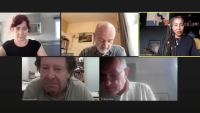
The not-so-great and good of the onetime Labour left were out in force last night, as members of Labour Against the Witchhunt (LAW) held a Zoom meeting to determine whether they should create a new party. A motion put forward by Tony Greenstein – who last month declared himself bankrupt after losing his "notorious antisemite" legal battle – called for 'a socialist movement' to 'keep activists in the Corbyn Project together, with a view to forming a distinct socialist party in the near future.

Scottish Greens chase the green

Few groups better embody Boris Johnson's philosophy of 'cakeism' than the Scottish Greens. The party is both pro-having cake and pro-eating cake; committed to tackling 'fuel poverty' while opposing both fossil and nuclear energy, releasing adverts demanding an end to hardship and penury while disparaging economic growth. Now though the party seems determined to take the biscuit. Having struck a power-sharing agreement with the SNP, the Greens face the luxury of being in both government and opposition at the same time. As former Green MSP Andy Wightman has pointed out, the deal is functionally a coalition, allowing the Greens to have access to the resources of the civil service, via two junior ministerial roles and two dedicated special advisers.