Politics

Read about the latest political news, views and analysis

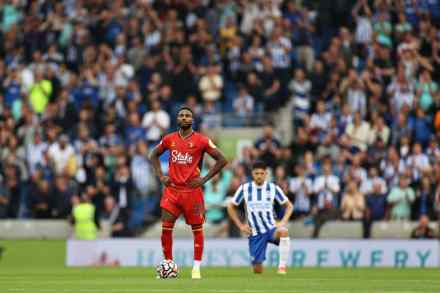
Why football fans are still booing players taking the knee

On the opening day of this year’s season, I went to see Chelsea play Crystal Palace. The match programme featured an article on Paul Canoville, Chelsea’s first black player. I remember watching him in the 1980s when he was racially abused by his own fans. Large sections of the crowd taunted him with monkey chants and racist slurs. Outside on the Fulham Road, bigots sold National Front News and urged fans to ‘Keep Britain White’. This grotesque spectacle wasn’t confined to Chelsea. At every ground, black players faced abuse from supporters. We’ve come a long way since then. A few years ago, Paul Canoville returned to Stamford Bridge and did a lap of honour before the match. The crowd gave him a standing ovation.
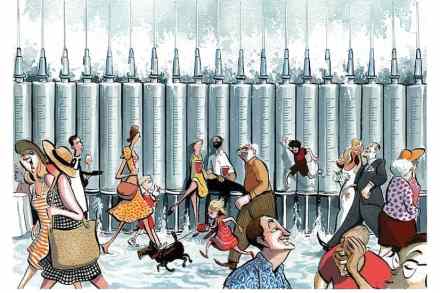
What if vaccines can’t end the pandemic?

14 min listen

New data from Israel shows that the Delta variant is getting through the protection offered by double jabs, even though the vaccines do lessen symptoms.  But the study, of more than 800,000 cases, suggests those who have recovered from Covid have stronger protection than those who have not: jabbed or unjabbed. Will this make it harder to justify "no jab, no job" policies, if those at risk of losing their jobs say they can prove they were diagnosed positive and now have antibodies? Isabel Hardman talks to Fraser Nelson and Kate Andrews.

‘Wokeness’ and the collapse of intellectual freedom in the West

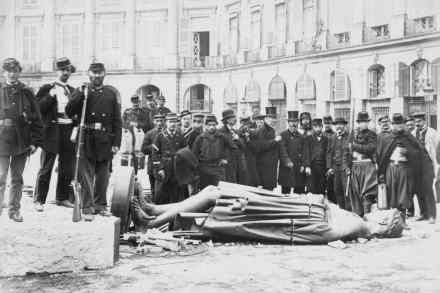
When observing the state of our academic life and public culture, I have an uneasy feeling of déjà vu. When I started life as a historian, going to France to do a PhD in the 1970s, French universities were held in a tight ideological grip. The subject I was working on — the Paris Commune of 1871 — turned out, to my naïve surprise, to be a hot topic. Two older French academics who became my mentors were both convinced (I think with reason) that their careers had been blighted because they had written things that the then mighty French Communist party disapproved of. The Commune was the party’s pride and joy: the first proletarian revolution (it claimed) and hence the forerunner of the Bolshevik revolution of 1917.

The problem with the Met’s morality policing

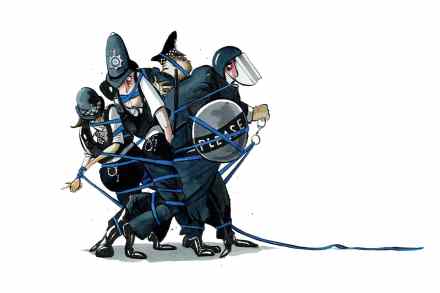
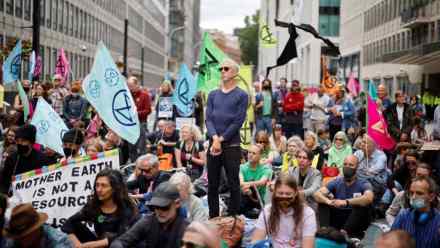
Ah, the last days of summer. Long evenings, sunny weekends, and crusty Extinction Rebellion hippies blocking arterial traffic lanes to the audible grinding of teeth from the police officers tasked with standing by and politely watching their sub-art-school amdram productions, rather than getting on with the business of giving them a much-needed hosing down with Boris’s water cannons. As Charlie Peters has pointed out for the Mail, the impression of police impotence has nothing to do with the willingness of the bobby on the beat to break out a truncheon and apply it liberally to the thorax of middle-class graduates enjoying their day off by making everyone else late for work.

The Supreme Court’s shameful statement on Hong Kong

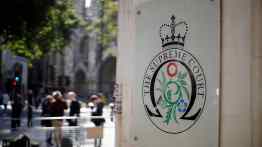
In a statement which will doubtless surprise the scores of lawyers, democratic politicians and human rights activists who are currently in jail awaiting show trials under Hong Kong’s National Security Law, the UK Supreme Court today made an announcement which is the best piece of free PR that Hong Kong’s Chief Executive Carrie Lam has had in years. The President of the Supreme Court, Lord Reed, has issued a statement saying that UK judges will be staying on Hong Kong’s Court of Final Appeal and that ‘the judiciary in Hong Kong continues to act largely independently of government and their decisions continue to be consistent with the rule of law.

New Zealand trade deal likely within weeks

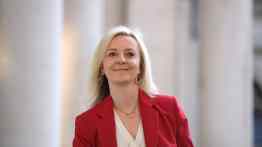
September is shaping up to be a big month for Liz Truss and the Department for International Trade. While the minister herself has been tipped for higher things in the long-awaited reshuffle, she and her officials have been busily working away this recess to seal another trade deal. Wine-lovers across the country will be delighted to hear that a deal with New Zealand is looking likely within weeks, with hopes that it will be agreed by the Tory Party conference at the beginning of October.  As well as improving trade between the two countries – worth some £2.3 billion last year – a deal could expedite Britain's admission to the Comprehensive and Progressive Trans-Pacific Partnership (CPTPP), which it applied to join in January.

What does the Kabul attack mean for Biden?

11 min listen

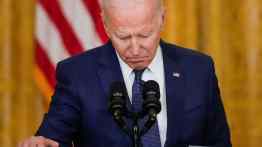
After the attack on Kabul's airport by Isis-K, President Biden addressed the world last night and mourned for the 13 US marines who were killed. But with this grim event already being politicised by the Republicans, what will the lasting damage to the president legacy be?Isobel Hardman in conversation with Kate Andrews and Fraser Nelson.

Joe Biden and the betrayal of religious freedom

26 min listen

Religious freedom is already being mercilessly attacked in Taliban-run Afghanistan: Muslim women in particular face a living hell unless they're happy to submit to their new rulers' psychotic brand of Sharia. The United States is required by its own laws to do everything it can to champion religious liberty around the world. But Afghan's moderate Muslims, China's Uighurs, Myanmar's Rohynga and Christians in dozens of countries would be foolish to trust President Joe Biden, whose administration can't wait to dismantle the First Amendment Rights of conservative Christians back home. My guest is Andrea Picciotti-Bayer of the Washington-based Conscience Project, which speaks up for people of faith who commit the thought crime of not subscribing to liberal gender ideology.

We need to find the muscle memory of western greatness

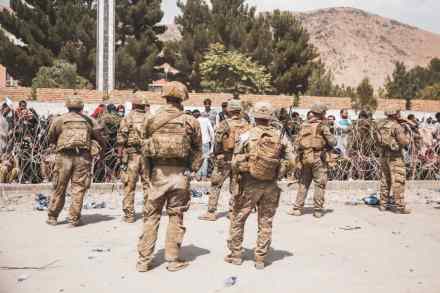
Like millions around the world, I have spent recent days watching – sometimes forcing myself to watch – these images coming out of Afghanistan, as the nation has fallen to the triumphant warriors of the Taliban with their untamed beards and M4 rifles.  They are the kind of images that come along once in a generation, but remain seared in the collective memory for decades. Many have compared these scenes of American defeat to the famous choppers-on-the-US-Embassy images of Saigon on 30 April 1975. And there are obvious, uncanny echoes.

Michel Barnier to run for French President

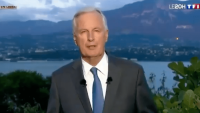
Michel Barnier last night revealed he intends to run in next year's French presidential election. The former EU chief Brexit negotiator told TF1 television last night that he wanted to replace Emmanuel Macron to 'change the country,' citing his long experience in politics as giving him an edge in the race.  Barnier's role in the withdrawal negotiations will be central to his claims on the top job, with the former French foreign minister boasting of his years spent working 'with heads of state and government to preserve the unity of all the European countries. One can only imagine the reaction in No.10 to the prospect of Barnier strolling up Downing Street again to negotiate with Prime Minister Johnson.

The last days of the Kabul airlift

13 min listen

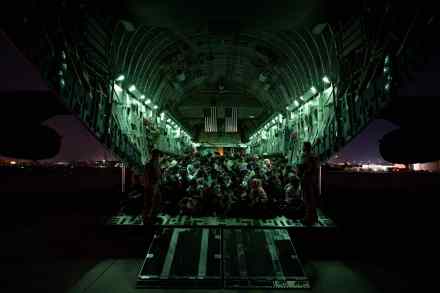
Chaos surrounds the Hamid Karzai airport today as two explosions and a potential knife attack has left at least 13 dead. The attacks are suspected to be suicide bombers from ISIS-K, as the American and British military had feared. What does this mean for the evacuation in its last days? Cindy Yu talks to Isabel Hardman and Lucy Fisher, deputy political editor of the Telegraph.

Seven times Joe Biden claimed ‘America is back’

It's been a sobering fortnight for fans of America's septuagenarian president. Even before he took office, Joe Biden was telling the world 'America is back' – a refrain he repeatedly returned to both in official speeches and on his personal Twitter account. But as the scenes of Afghanistan's rapid collapse have appeared on timelines and televisions across the West, such confident assertions have curiously disappeared from the rhetoric of the supposed 'leader of the free world.' The embattled Democrat has repeatedly refused to extend the timetable of America's withdrawal ahead of the twentieth anniversary of 9/11 despite the failure to evacuate all those Afghan's most at risk of reprisals.

Universal credit could prove toxic for Sunak

Conservative MPs are still worried about the removal of the £20-a-week uplift to Universal Credit this coming October. Two of them — Peter Aldous and John Stevenson — have written to Boris Johnson to urge him not to press ahead with the cut, which will restore the benefit back to its pre-pandemic levels. The pair argue that the extra £20, while expensive, is 'one of our best legacies from the pandemic'. Perhaps some of the MPs like Aldous and Stevenson who were in parliament then remember how difficult it was to defend a policy that didn't make much sense They're not the first within the party to try to stop this cut going ahead. Indeed, a group of former Tory welfare secretaries have tried.

Britain’s problem with illegal Islamic private schools

While some in Britain are understandably anxious about the Taliban’s rapid takeover of Afghanistan and the prospect of the Central Asian country becoming an international jihadist training ground, long-standing domestic problems concerning religious radicalism continue to persist. The issue of unregistered private schools in British Muslim communities is one of them. This has been thrust into the limelight yet again after a headteacher was warned that she faces a prison term after continuing to run an illegal Islamic private school – in defiance of a previous conviction. Nadia Ali, 40, ran the Ambassadors High School in Streatham, South London, for over half a year after being sentenced to community service for operating the unregistered school.

Boris Johnson’s problems are piling up

This time last year, Boris Johnson and his team were making plans to ‘move on’ from the pandemic. He had been elected thanks to Brexit, then had to handle the Covid disaster, but he didn’t want either to define his government. ‘We have an indecent amount of great stuff to get into as soon as this ends,’ he’d tell supporters privately. But this claim had two problems. First, there would be no end to the Covid drama. Second, the ‘great stuff`’ he intended to do was often a mystery even to his own government. For a while, the success of the vaccine procurement kept his poll ratings high. There was a hope that Britain would be the first country to jab its way back to normality.

What will happen to those left in Kabul?

The Afghan evacuation is feared to be entering its final hours, and with it a new desperation is building among people trying to get out of the country and those helping them. On the ground, troops are warning that Kabul airport could be overrun by people who are ineligible to leave but desperate to do so nonetheless. Embassy workers are trying to process visas, ministers are being bombarded with requests to look at cases where vulnerable Afghans have been overlooked or cannot make it to the airport safely.

Vaccine efficacy and the case for living with the virus

How fast does Covid vaccine protection wear off? New data from the Zoe Covid Study, published today, tries to quantify the extent to which the Pfizer and AstraZeneca vaccines wane over time. It’s a comprehensive study that accounts for PCR test data from over a million double-jabbed people. The results? After roughly six months, Pfizer protection against symptomatic illness fell from 88 per cent to 74 per cent. For AstraZeneca, it was a dip from 77 to 67 per cent after around five months. It’s important to note what, specifically, this study is measuring. It is a look at infections, not serious illness.

Has Nicola Sturgeon run out of ideas for Scotland?

On Tuesday, another 4,323 cases of Covid-19 were confirmed in Scotland. A reminder, if it were needed, that the pandemic continues even though 80 per cent of the adult population are now fully vaccinated. The schools are back and the start of the new university year next month suggests more new cases are all but certain. The worst of this iteration of the pandemic may be in the past but it isn’t over. Indeed, it is so far from being over that the First Minister felt it necessary to warn that a fresh round of restrictions may be necessary should case numbers continue to rise. Even if that proves unnecessary and even if you are minded to think Sturgeon’s caution excessive, it is obvious that Covid will be a part of life for the foreseeable future.