Politics

Read about the latest political news, views and analysis

The idiotic myth of the ‘lone wolf’ attack

In the summer of 2020 the French Senate published a report on the ‘Development of Islamist Radicalisation and the means of combatting it.’ It was a wide-ranging review which included contributions from academics, writers, Muslim associations and politicians. Among those interviewed by the commission were the ex-security advisor Alexandre del Valle, Zineb El Rhazoui, a former columnist for Charlie Hebdo and Hugo Micheron, a doctor in political science, and the author of a 2020 book entitled The French Jihadism. The French Jihadism should be required reading for anyone who wants to understand the nature of the threat posed by Islamic extremism – not just in France but across the West. Micheron interviewed 80 jihadists serving time for terror offences in French prisons.

In praise of MPs

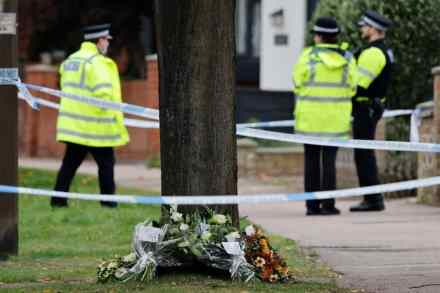
My first full-time job, at the age of 18, was working for an MP. In the following 27 years, almost my entire career has been spent in or near Westminster. I know and have known lots of MPs. To coin a phrase, some of my best friends are members of parliament. This, of course, means I’m biased on the topic of MPs, inclined by reason or familiarity to think well of them as a group. But it also means, I hope, that I have a bit of knowledge — knowledge that might be worth sharing as the Commons remembers Sir David Amess and James Brokenshire. It’s hard to generalise about an inherently diverse group, but MPs as a whole are not, in an important way, like the rest of us. To reach the Commons requires a type of drive and motivation that most people lack.

What have we learnt since Friday’s attack?

12 min listen

Parliament meets today to pay tribute to David Amess MP who was stabbed to death at his constituency surgery last week. But what have we learnt about the suspect currently still in police custody? And going forward what can be done to keep our representatives safe? Katy Balls is joined by Isabel Hardman and James Forsyth to discuss these questions as well as the sharp rise in Covid cases.

Free speech didn’t kill David Amess

Every decent person was horrified by the senseless slaying of David Amess. And everyone will want to know what can be done to prevent similar atrocities from occurring in the future. But I fear that in the haze of anger and concern that has descended on the country following Amess’s death, we are coming to some questionable conclusions about the causes of such violence, and coming up with some iffy ideas for how to ensure that such a horrific attack on a public servant never happens again. Right now, the finger of blame is primarily pointed at the shouty, divisive nature of political discourse in the 21st century. The horror visited upon Amess is what happens, apparently, when political rhetoric is so heated and public life so polarised.

Rishi’s online sales tax won’t save the high street

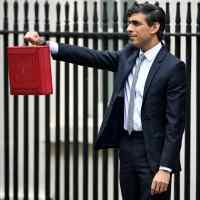
Imagine you run an independent store on the high street. Your business has already been ravaged by repeated lockdowns, which boosted the likes of Amazon at your expense. You are already at a huge disadvantage to online retailers because of your fixed costs. At great risk, you have invested in setting up your own online operation – which obviously costs you a lot more per unit of sales than it costs the online giants. In your shift online you have effectively become shunted up a side street, while Amazon, eBay and the like occupy the prime spots on the high street. How, then, are you going to react to the news that the Chancellor is looking to hit the new side of your business with a two percent online sales tax?

The increasingly expensive claustrophobia of Succession

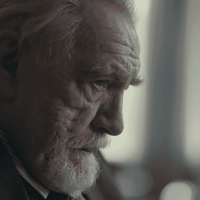
Success is hard to come by in the Season 3 premier of Succession, which aired last night. As the media and the Department of Justice circle the doomed, dysfunctional Roy family, and patriarch Logan (Brian Cox) continues to waffle over his replacement, the Roy progeny are busy preening and plotting against each other, in increasingly expensive, claustrophobic environments. In other words, it’s another season of Succession, only more so. The fear with every new series of a hugely popular show such as this is that the makers will spoilt it. The first episode is a little suffocating, but that’s no bad thing. The board is being set.

Stalking, harassment and abuse: the threats facing MPs and staff

Following the murder of Sir David Amess on Friday, there has been much discussion about the level of security for MPs and their staff. Amess was the second parliamentarian to be murdered in five years while out meeting constituents, following the assassination of Jo Cox in 2016, the attack on Stephen Timms MP in 2010 and the death of Andy Pennington, assistant to Nigel Jones MP, at his constituency office in 2000. Not for nothing did the security budget for MPs spiral from £170,576 in 2015/16 to £3.5 million in 2018/19. And while much of the debate so far has focused on abuse targeted at elected representatives, their staff in Westminster and constituency offices also face numerous threats, trolls and attacks.

David Amess showed why people should go into politics

I often joke that when I became an MP in 2019, after being a charity chief executive, I went from saint to sinner in the mind of the public. When you work for a charity, people assume you’re one of the good guys: honest, principled, in it for the right reasons. Too often politicians are seen as the opposite: dishonest, unprincipled, in it for themselves – and probably fiddling their expenses. Both stereotypes are wrong, yet they persist. I am regularly asked why I made the switch – not least by friends and family members, who know politics matters but wouldn’t touch it with a barge pole. It is a question that I know will be asked more regularly after the senseless killing of Sir David Amess.

Sir David’s death shows the risks for our representatives

The news that Labour and the Liberal Democrats will not contest the by-election caused by David Amess’s murder is not a surprise; the Tories and the Liberal Democrats took the same approach in Batley and Spen in 2016. (It should give us all pause that there is recent precedent for how parties should behave in a by-election when the sitting MP has been killed.)  The principle they are standing up for is that violence should not change the party-political balance of the House of Commons. But the pragmatic reason that the last thing a town in mourning needs is a fiercely contested by-election is just as potent a factor.

Rhodes, Columbus and the next heritage battle

On 12 October this year, Columbus Day, a statue of the Italian in Belgrave Square was vandalised by activists from Extinction Rebellion who described Columbus as ‘father of the slave trade’. Entirely ignorant of his life and ambitions, Columbus’s critics frequently turn to the searing denunciations of Bartolomé de Las Casas who excoriated the Spanish policy towards the native peoples of America. They are unaware that Las Casas was a great admirer of Columbus, and that this friar, who felt such pity for the native Americans, actively recommended the mass importation of black African slaves as an alternative labour source. In the same week as the Extinction Rebellion stunt a new plaque was unveiled at Oriel College, below a statue of Cecil Rhodes.

We must do more to protect our MPs

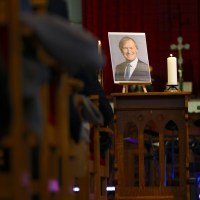
Sir David Amess’s backstory tells you much about his commitment to constituency politics that led to his cruel murder yesterday. He was born and grew up in a terraced house in London’s East End. There was little money. His dad was an electrician, his mother a tea lady and seamstress. In short they were not born into privilege and were exactly the kind of people who might visit an MP’s constituency surgery on a Friday in the hope of having their small catastrophes fixed. Democracy might be crowned with abstractions but it is built on the weekly efforts of our 650 MPs – who hear these struggles face to face and fight for the rights of people who sent them to parliament. On Friday David Amess was martyred to that cause, to which he devoted nearly 40 years of his life.

Do we really need to panic about flooding in Britain?

Why does every government department and agency seem to feel it hasn’t done its job unless it has expressed some hysterical reaction to the threat of climate change? Launching the Environment Agency’s latest report on its plans to prepare for possible changes in England’s climate over the next century, its chair Emma Howard Boyd said: ‘Some 200 people died in this summer’s flooding in Germany. That will happen in this country sooner or later, however high we build our flood defences, unless we also make the places where we live, work and travel resilient to the effects of the more violent weather the climate emergency is bringing. It is adapt or die.

The BBC’s relationship with Stonewall is finally being scrutinised

I have often criticised BBC journalism on the issues of sex and gender because that journalism has often been quite bad. So it’s all the more important to for me to highlight instances when the Corporation does good journalism here. Stephen Nolan of the BBC has done that this week, and more. You might not be aware of the series of outstanding podcasts that Nolan released this week, examining the influence that Stonewall, a charity that lobbies on sex and gender issues, has over public bodies including the BBC itself. One reason you might have missed those podcasts is that the BBC itself has hardly bothered to promote them, even though they represent the very best of its journalism, the sort of inquiry that a public service broadcaster exists to carry out.

It’s no wonder young people don’t understand levelling up

There are two ways Number 10 can look at new polling which shows only 14 per cent of Britons understand the slogan ‘levelling up’. The first: the government has utterly failed to communicate its signature policy. The second: at least they didn’t poll the Cabinet. The findings, which come in research by Redfield & Wilton Strategies for PoliticsHome, are interesting for what they tell us about now much the slogan has cut through (66 per cent have heard of it) versus how much it's been understood (one in three haven’t the foggiest what it refers to).

David Amess was killed doing one of the most crucial parts of an MP’s job

Sir David Amess was killed in the line of duty. He was doing one of the most important – and vulnerable – parts of an MP’s job, and he was killed while doing it. Most of the week, MPs go to work in a palace under armed guard. They live in houses with CCTV, panic alarms and rapid police response mechanisms in case of trouble. These measures have gradually been added to their lives as the perceived threat has increased. But in just over a decade, three serious attacks against MPs have taken place in the one place where they lack such security: their constituency surgeries. Stephen Timms was stabbed at his surgery in 2010. Jo Cox was murdered leaving hers five years ago. Today, Amess was killed at his.

Douglas Murray, Paul Wood, Tanya Gold

19 min listen

On this week's episode, we’ll hear Douglas Murray on how the pandemic has made cynics of us all. (00:50)Paul Wood on why after 10 years he and his family are leaving Lebanon. (08:02)And finally Tanya Gold gives her review of a Batman-themed restaurant.

Tory MP David Amess dies after constituency attack

12 min listen

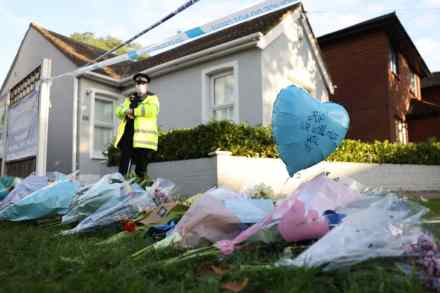
David Amess, the MP for Southend West, has died after being stabbed at his constituency surgery. Essex Police say that a 25-year-old man has been arrested on suspicion of murder. Amess had been an MP since 1983, and represented Southend West since 1997. Fraser Nelson speaks James Forsyth and Isabel Hardman.