Politics

Read about the latest political news, views and analysis

Why is No. 10 snubbing the Commons?

The Speaker was annoyed again today when the government only offered the Commons a Covid update after the Health Secretary's press briefing yesterday. Labour hauled vaccines minister Maggie Throup to the chamber for an urgent question. Before she had a chance to answer, Lindsay Hoyle scolded her superiors. 'This is not acceptable and, as I have warned the government, in those circumstances, I will allow the House the earliest opportunity to hear from a minister: in this case by an urgent question,' he said.
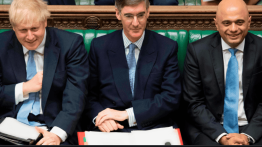
Mogg and The Saj face off on face masks

Tory backbenchers have had an uncomfortable relationship with face masks since they were brought in last year. Spectators in the Commons chamber are greeted by the sight of many more Labour MPs preferring to wear the coverings than their Conservative counterparts, with some of the latter relishing the divide as the fundamental difference between their two parties. But that reluctance for masks gave Sajid Javid an awkward moment at yesterday's No. 10 press conference. After Sebastian Payne of the Financial Times pointed out to the Health Secretary that Tory MPs not wearing mask risked undermining government messaging and risked leaving them open to charges of hypocrisy, a squirming Javid said: I think that's a very fair point.

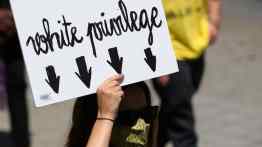
Does ‘white privilege’ exist?

On Wednesday Radio 4 aired a programme called White Mischief, which promised to trace ‘where whiteness came from and how its power has remained elusive.’ It asked whether white privilege existed. Or rather it pretended to ask. It assumed that it does. Instead of directly admitting that it was putting forward one point of view, it was one of those annoying programmes that affects a sort of light-hearted neutrality, and vaguely claims to be moving away from the unhelpfully limited conversations we have been having so far. So instead of soberly setting out the issue, it began with a jokey clip of Grayson Perry hooting with laughter at some wise brave insight he had just had, and then darting off sidewise into some sociology.

Lindsay and Priti beef up MPs’ security

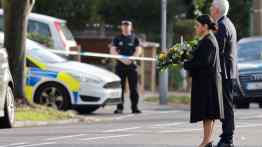
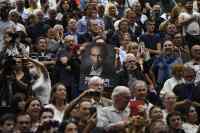
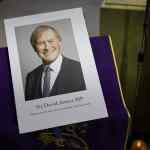
The death of Sir David Amess on Friday has led to an increased focus on MPs' security. In the hours following the attack, some police forces sent officers to constituency surgeries, offering protection at MPs' offices and checking in on both MPs and local councillors to assess their concerns. Now, in a joint statement, the Home Secretary Priti Patel and Commons Speaker Lindsay Hoyle have written to members across the House to set out their steps for keeping honourable members safe when they are undertaking local duties.According to an email seen by Mr S, from this Friday a trained and accredited Security Operative will be available to come to MPs' constituency surgeries to offer security advice.

Banning anonymity creates more problems than it solves

There are growing calls to end internet anonymity in the wake of Sir David Amess’s death. The Tory MP Mark Francois argued in the Commons this week for a ‘David’s law’ to do this, to try and bring back civility into politics. Today, Matt Hancock and the Labour MP Rupa Huq have stated that the Online Harms Bill should tackle ‘anonymous abuse’. But outlawing internet anonymity would be a mistake. Two members of parliament have been killed in the past five years. This, one long-serving MP laments, is the kind of statistic you would expect in a failing state, as I write in the magazine this week.

COP26 hit by yet another strike

It's just ten days to go before COP26, the green gathering described by Ed Miliband as 'the most consequential summit that has ever taken place anywhere in the world.' The eco-equivalent of Tehran, Yalta and Potsdam is set to begin in Glasgow next Sunday, with delegates jetting in from across the globe to hobnob, hector, hum and haw at the UN's climate change conference. So, ahead of His Holiness, Joe Biden, various Western satraps and other panjandrums gracing us with their presence, Mr S thought he'd provide an update on how things are going in the host city. It turns out all is not well in Dear Green Place, where local bosses seem to be intent on re-enacting the Winter of Discontent.

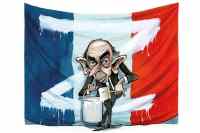
Plan Z: the rise of Éric Zemmour

The fact that Éric Zemmour hasn’t yet declared himself a candidate in next year’s French presidential election is a bit of a joke. A Harris poll last week put him on 17 per cent, ahead of all other rivals to President Emmanuel Macron. And he’s holding rallies across France at which adoring fans in ‘Zemmour 2022’ T-shirts chant: ‘Zemmour! Président!’ He’s still pretending to be a TV personality on a big book promotion tour. But Mr Z is running and everybody knows it. He has a devoted and surprisingly professional campaign behind him, the nucleus of a political party, conceived with a clear mission: to restore la gloire de la France.

My night in Béziers with Zemmour

Béziers is the ancient winemaking capital of the Occitanie region in the deep south of France and a stronghold of the French right. Its popular mayor, Robert Ménard, a former journalist, was elected as an independent, but with a strong endorsement from Marine Le Pen. Her political movement, the Rassemblement National, formerly the National Front, with historical roots in anti-Semitism, has been powerful here for decades. So is it paradoxical, bizarre, or perhaps evidence of a more profound shift of social and political tectonic plates, that last Saturday night thousands of Biterrois turned out at the Zinga Zanga theatre to cheer Éric Zemmour, a Parisian Jewish intellectual, author and television and radio journalist?

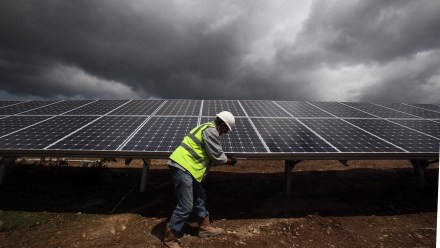
The government’s net zero strategy doesn’t add up

The commitment to reach ‘net zero’ emissions by 2050 is the most expensive government proposal in modern history. Yet it was rushed through parliament with minimal debate or scrutiny, thanks to a last-minute pledge by Theresa May in 2019, weeks before she left office. She had no credible plan, just a lofty ambition without costings. It has taken the government two-and-a-half years to come up with a proposal — and it is not convincing. The Net Zero Strategy document published this week opens with the Prime Minister’s trademark optimism. ‘We can build back greener, without so much as a hair shirt in sight,’ he writes.

Emily Sheffield out as Evening Standard editor

Oh dear. It was less than six months ago that Mr S was remarking on the number of onetime George Osborne acolytes now ensconced at the Evening Standard . But the winds of change now appear to be blowing through the corridors of Northcliffe House as owner Lord Lebedev has today unceremoniously axed the paper's editor Emily Sheffield after just 15 months in the role.An email was sent out to Standard hacks this morning, informing them all that Sheffield was stepping down by 'mutual agreement' along with the obligatory platitudes for her 'role in turning the Evening Standard Digital First.' The former Vogue writer gets a column in the paper as a consolation prize, with publisher Charlotte Ross assuming the role of acting editor.

The problem with ‘David’s law’

Two members of parliament have been killed in the past five and a half years. This, one long-serving MP laments, is the kind of statistic you would expect in a failing state. One of the shocking things about Sir David Amess’s murder is that many MPs weren’t surprised by it. Parliamentarians are acutely aware that when they are away from the Palace of Westminster, with its armed guards and security scanners, they are a soft target. Their job requires them to mix with the public and that involves a certain level of risk. One senior Tory MP points to how during the Troubles in Northern Ireland, MPs who were thought to be in particular danger were offered a firearm for personal protection, and argues that an offer like this should be extended to all MPs today.

Javid says no to restrictions – for now

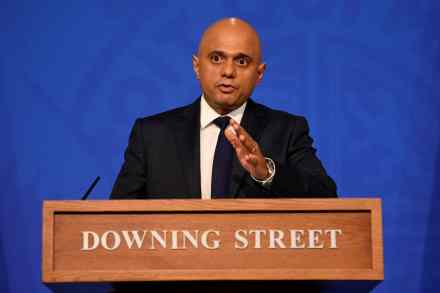
Is the government considering activating its 'plan B' Covid plans? Not yet.  After the Business Secretary played down talk of new restrictions this morning, Sajid Javid used today’s press conference to confirm that he would not be implementing the back-up plan ‘at this point’. However, the Health Secretary suggested that further measures – namely vaccine passports, work-from-home orders and mask mandates – could not be ruled out if the data substantially worsens. The main message from the press conference: get vaccinated There was a marked change in tone from Javid since the days soon after his appointment as Health Secretary when he declared that there was 'no going back'.

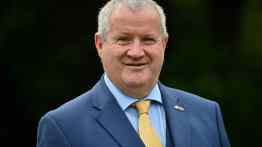
The unstoppable pessimism of Ian Blackford

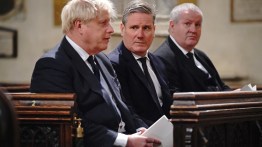
Peace reigned at PMQs today. That was the plan, anyway. Both leaders agreed to sheath their weapons and to blunt their sabres in honour of the late Sir David Amess. But one-upmanship started to break through almost immediately. The issue on which they agreed to agree was internet extremism. Sir Keir Starmer saluted the ‘collaborative spirit’ of the House and cited an instance of violent footage which had ‘stayed online because it didn’t contravene the guidelines.’ Boris promised to strengthen the rules and to make companies accountable for extremist content on their sites. ‘I’m glad he’s taking this new tough line,’ added the PM, hinting that Sir Keir is as squishy as a warm marshmallow on violent crime.

Is inflation slowing?

Whatever happened to the inflation surge? Last month, when the Consumer Prices Index (CPI) surged to 3.2 per cent, the country started fretting about a return to the 1970s. This month’s CPI figure, though, has fallen to a not-very-1970s like 3.1 per cent. Forty five years ago inflation, on a slightly different measure, peaked at over 20 per cent. So are we really heading for an inflationary surge? It turns out that the biggest contribution to this month’s slight fall in CPI is in restaurant prices.

Fact-check: is the NHS at risk of being overwhelmed by Covid?

Is it time for another lockdown? Matthew Taylor, the chief executive of the NHS Confederation, is urging ministers to implement sweeping 'plan B' winter measures, saying that immediate action is required to prevent the NHS 'stumbling into a crisis' arguing that 'we should try to achieve the kind of national mobilisation that we achieved in the first and second waves, where the public went out of their way to support and help the health service.' Similar arguments were made to justify the first lockdown - with apocalyptic SAGE scenarios suggesting hospitals would be overwhelmed with a need for 138,000 ventilators (vs a supply of 6,800 ventilators) with a potential need for 72,000 ventilators by November.

Watch: MPs extend the Coronavirus Act without a vote

Throughout the uncertain days of the pandemic, a few things have remained constant: Devi Sridhar will tweet too much, Sadiq Khan will flip-flop a lot and MPs will, once again, vote to extend the draconian provisions of the Coronavirus Act.  The emergency legislation was rammed through Parliament in March 2020 to give the government emergency powers to limit or suspend public gatherings, detain individuals suspected to be infected by Covid and to intervene or relax regulations across a swathe of sectors to limit transmission of the disease. Not for nothing did Steve Baker warn of a 'dystopian society'. Having been renewed in March this year for a further six months, MPs yesterday voted again for another six month extension.