Politics

Read about the latest political news, views and analysis

The return of inflation

Most economists and central bankers would have us believe that long-term inflation is a technocratic problem that has long been solved. Indeed, today’s millennials and Gen Z have experienced more grade inflation than price inflation, and don’t really understand what all the fuss is about. Markets, which are never terribly good predictors of major turning points in the economy, don’t seem at all worried, either, as measured by the levels of expected inflation implicit in inflation-indexed Treasury bonds. What might everyone be missing? The problem is that controlling long-run inflation is fundamentally a political-economy challenge, not a technocratic one.

There is no Russia-China axis

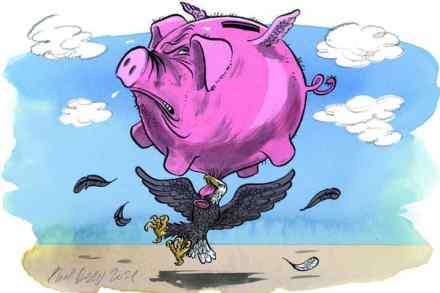
You should be careful what you wish for, because you might just get it, so the old cliché goes. In diplomacy at the moment, it seems you should be careful of the threats you prepare for, because you may end up producing them. There is a growing trend in the West towards treating Russia and China as some single, threatening ‘Dragonbear’ (a reference to the two countries' national animals). This underrates the very real tensions between Moscow and Beijing, but risks pushing them even closer together. The most recent case in point was Nato secretary-general Jens Stoltenberg’s interview in the Financial Times, in which he criticised ‘this whole idea that we either look Russia, or to China… because it goes together.

COP out: jet-setting of top mandarins revealed

The world is gearing up for COP26, the UN's climate change conference in Glasgow, due to be held in less than a fortnight's time. Ahead of the eco-jamboree, ministers and mandarins have been busily telling the rest of us how to live, with the Treasury today unveiling the truth about how much going green will cost: the Net Zero target means by 2030 we can expect to pay £45,000 for a new electric car while the replacement for a gas boiler by 2035 should be between £6,000 to £10,000. Ooft. Still, while the government has suggested saving the planet by not rinsing plates before putting them in a dishwasher or freezing, rather than throwing out, half-used loaves of bread, other Whitehall apparatchiks seem far less keen on such measures.

The death of David Amess has no easy answers

Why has the political debate following Sir David Amess's killing moved so swiftly to focus on civility in politics? It's a reasonable question that a lot of people – including my colleague Sam Leith – have been asking. The police are treating Amess's death as a terrorist attack, and yet other MPs have been talking about the need to stop online abuse and to encourage a more open political culture. The link between people shouting at their MPs about how they voted and the motives of Islamist terrorists is, to put it politely, somewhat unproven. Politicians are always high-value targets for terrorists in any country, regardless of how mean or otherwise the rest of society is to them.

The Education edition

41 min listen

Aftershock is an occasional podcast series by award-winning journalist Isabel Hardman. In every episode she asks how we can fix the damage caused by the pandemic to a different part of British society.In this episode, Isabel looks at how schoolchildren have been affected by 18 months of lockdowns and remote schooling. Some have been hit harder than others: in fact, there are now more children missing from school rolls than at the start of the pandemic. Where have these ‘ghost children’ gone? And does the government’s response come anywhere close to being enough to stop Covid from being a blight on the rest of their lives, rather than an episode most can easily recover from?

The SNP’s ferries disaster

The ship of state continues to run aground in Scotland, judging by the latest transport related fiasco to embroil Nicola Sturgeon's government. Not content with refusing Westminster's cash to fix his roads and admitting he has 'no idea' why rail unions are striking, SNP transport minister Graeme Dey has extended his incompetence beyond the boundaries of land. The under-fire appointee is facing questions about yet another ferries farrago after two more ships were this week declared out of action, further disrupting crucial services. For those unfamiliar with this sorry tale of ocean-going incompetence, Steerpike is only too happy to provide a refresher.

This heat pump scheme is a bung to the rich

Who does the government think will be the 90,000 lucky people who succeed in pocketing £5,000 grants to replace their gas boilers with heat pumps? Just-about-managing homeowners in ‘Red Wall’ seats who strained every sinew to buy a draughty two up, two down – or well-off homeowners with nice period houses, lots of capital and three cars on the drive? Here’s a little clue: even taking into account the £5,000 grant it will still cost upwards of £5,000 to install the heat pump itself, plus another £10,000 for insulation and to install larger radiators – so it is really not an option for the first group. As for the second, they are bound to lap up those grants, just as they have every other environmental handout on offer.

Why does Boris Johnson keep on winning?

For his critics, Boris Johnson offends the notion that the British are a sensible people so deeply we feel we no longer understand much of our country. How, we wonder, can so many voters support an obvious phoney? How does a prime minister who makes it up as he goes along get away with it? The fraudulent promises of rising living standards, the national self-harm of Brexit, the deliberate exacerbation of tensions in Ireland and the treatment of former friends in Europe as enemies have produced an anti-Johnsonian culture. Its brilliant satires and devastating newspaper columns are as ferocious and outraged as the anti-Thatcherism of the 1980s – and just as ineffective. A report released today by Labour Renaissance throws a bucket of cold realism over our fevered rages.

Rob Roberts escapes again

Rob Roberts has had an eventful time since being chosen by the good people of Delyn to represent them in Parliament in 2019. In the past fifteen months he has been the subject of allegations of sexual harassment and sexual misconduct made against him by not one, but two, ex parliamentary staffers. Stripped of his party whip in May, like Banquo at the feast, he continues to embarrass his former Tory colleagues by infrequently emerging in the Commons to lob softball questions from the government benches. But now, with Roberts being forced to deny Steerpike's reports of a staffing crisis, Mr S can at last bring some good news for the onetime financial planner.

Why the early election rumours won’t go away

The Conservative party doesn't have a great track record when it comes to early elections — MPs are still scarred by Theresa May losing the Tory majority after going for a snap poll in 2017. But that hasn't stopped talk of an early election building in recent weeks. This isn't about a vote tomorrow or next month but instead whether Johnson opts to go to the polls in 2023 rather than 2024.  There are compelling reasons that could tempt Johnson to go early The conventional wisdom is that Johnson won't even consider going early — he's already lost too much time to Covid and needs to deliver on levelling up. Meanwhile, few expect the government to win a bigger majority than the one it currently enjoys — so why rush?

We need to talk about the killing of David Amess

In the world I inhabit, the killing of Sir David Amess has been formally declared a terrorist incident, a suspect has been taken into custody, and the police have identified ‘a potential motivation linked to Islamist extremism’. In a second world, constructed of headlines and commentary and tweets, a conversation is taking place that is almost entirely disconnected from this base reality. In this world, the Home Secretary is primarily concerned about the ‘corrosive space’ provided by social media, the Commons asks questions about the ‘toxic’ conduct of politics, and attention is given to the level of aggression and abuse experienced by MPs. These are important issues.

The alarming human rights ruling on freedom of speech

‘You can’t libel the dead’ is burned into the consciousness of any serious journalist or writer. It provides much-needed comfort: however tactful you have to be about the living, once someone has died you can say what you like about them without getting sued. Or can you? Seven years ago the European Court of Human Rights dropped a worrying throwaway remark that this might be unacceptable because allowing untrammelled comment about a deceased person might infringe the human rights of his family. Last week, in a disconcerting decision that seems to have gone entirely unreported in the media (you can read the official report here), that same court built on its earlier suggestion and at a stroke gave publishers a whole new worry.

Colin Powell: A great man – and a failure

My memory of Colin Powell feels personal, even though we were 6,000 miles apart at the time. I was in Baghdad, covering the invasion of Iraq for the BBC. Powell was giving the speech of his life at the UN Security Council, accompanied by Powerpoint, trying to convince the world that Iraq had weapons of mass destruction. I had just come from a press conference with senior Iraqi officials, who denied there were any WMDs in the country. They were shifty, oleaginous, terrified of Saddam. It wasn’t hard to believe they were lying and that dignified, decent Colin Powell, was right. ‘If Powell says so,’ I thought, ‘it’s probably true.

MPs gather to pay tribute to Sir David Amess

Boris Johnson announced this afternoon that Southend will receive city status as a tribute to the campaigning work of Sir David Amess, who was killed. Sir David's best known Commons contributing was Inserting Southend's bid to become a city into any question, no matter how tenuous, and it seemed an inevitable way of the government marking his death. MPs paying their respects to the Southend West MP have all focused on his dedication to his constituency, but also on his kindness. Johnson told the chamber that 'he was... one of the nicest, kindest, and most gentle individuals ever to grace these benches'. Everyone mentioned his smile and his sense of humour.

Did the Johnsons breach lockdown rules?

Did the Johnson clan breach lockdown rules last December? That's the question being asked in Westminster today after a profile in Harper's Magazine of Carrie Johnson reported that her close friend Nimco Ali spent Christmas in 10 Downing Street with the couple, despite pandemic restrictions on holiday gatherings. At the time, London was under Tier 4 Covid rules which meant Christmas bubbles were scrapped at the last minute and individuals advised to limit their social interactions as much as possible. When the claims first emerged, they received a furious slap down from all sides. A No. 10 spokesman announced that the Prime Minister and Mrs.

Watch: MPs observe a minute’s silence for David Amess

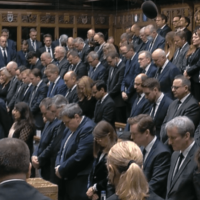
This afternoon MPs are paying tribute to Sir David Amess, the long-serving parliamentarian who was murdered on Friday. It began with a minute's silence, impeccably observed, in a chamber packed with members from across the House. The Speaker of the Commons, Sir Lindsay Hoyle, told MPs that he was 'sorry the House is returning in such tragic circumstances' and said 'we have lost two outstanding friends and colleagues' after Sir David and his colleague James Brokenshire both died last week.  https://www.youtube.com/watch?v=FWnXRGIExqE He added that MPs 'will share my deep sadness at their loss' and will send their 'heartfelt condolences' to their families.

The idiotic myth of the ‘lone wolf’ attack

In the summer of 2020 the French Senate published a report on the ‘Development of Islamist Radicalisation and the means of combatting it.’ It was a wide-ranging review which included contributions from academics, writers, Muslim associations and politicians. Among those interviewed by the commission were the ex-security advisor Alexandre del Valle, Zineb El Rhazoui, a former columnist for Charlie Hebdo and Hugo Micheron, a doctor in political science, and the author of a 2020 book entitled The French Jihadism. The French Jihadism should be required reading for anyone who wants to understand the nature of the threat posed by Islamic extremism – not just in France but across the West. Micheron interviewed 80 jihadists serving time for terror offences in French prisons.

Rishi in, Keir out: 2020’s most popular baby names

Once the popularity of politicians was judged by how many babies they were asked to kiss – now it's by how many kids are named after them. The Office for National Statistics has today revealed the most popular baby names for 2020, with Oliver and Olivia remaining the most popular names for boys and girls in England and Wales for the fifth consecutive year. Mothers aged 35 years and over continued to choose more traditional names, while younger mothers opted for more modern and shortened names. But none of that matters here in Westminster where all eyes were (naturally) combing the ONS figures to see how many new mothers and fathers have chosen to bestow the names of our elected leaders on their darling offspring.