Money

The Bank of England’s inflation rate stunt

He isn’t Canadian. He doesn’t dominate the Davos circuit with platitudes about climate change. And he isn’t constantly warning that the British economy will turn into a cross between Ethiopia and Argentina now that we have left the European Union. In many ways, the current Governor of the Bank of England Andrew Bailey is an upgrade on his high-profile predecessor Mark Carney. And yet, in the most important respect, he is turning out to be very similar. He is constantly threatening to raise interest rates, and then backing off at the last moment.  An increase in interest rate from the ‘emergency’ level of just 0.1 per cent was not quite

Are banking apps luring young people into debt?

Last month, my bicycle got a flat tyre. ‘Both of those tyres are gonna need replacing and you’ve knackered your sprockets,’ huffed the bike man. The bill came to £230. It’s the kind of irritating expense that means I run out of beer money a week before payday. I’ve always assumed I’m a reasonably normal spender. Work pays me, the money gradually disappears over the month, with hopefully a bit left over for my Isa. I’m vaguely aware that something exists called a ‘credit card’, but my parents always made clear to me that if you don’t have the money for something, don’t buy it. Where I differ from older

Where is the climate plan B?

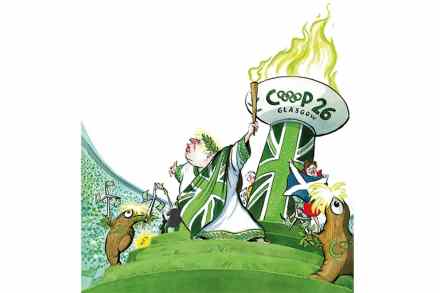
The COP26 summit is unlikely to be an outright flop. There has been no shortage of drama, with speakers seeming to compete with each other to see who could use the most histrionic language. Justin Welby, the Archbishop of Canterbury, went so far as to compare the attending leaders to Nazi appeasers. He later apologised.  Some progress, albeit small, is being made. A hundred countries have been persuaded, some on the promise of sweeteners worth £14 billion, to sign a pledge to end deforestation by 2030. Brazil, the most important of all, is among them. India has agreed, for the first time, to set itself a date for achieving net-zero

The economic case for scrapping daylight saving

Twice a year, every year, the changing of the clocks debate begins. So is it time to finally drop daylight saving and stick to British Summer Time all year round? Boris Johnson thinks so: the future Prime Minister weighed in on the subject back in 2011, claiming BST would ‘expand the economy and cheer everyone up’. Boris is right on both points, not least on the economic case for ditching the old habit of changing the clocks. Dark winter evenings, made longer by daylight saving, make around half of Brits feel more depressed, according to one poll. Other surveys suggesting we’d exercise more were it lighter longer. Perhaps this point should be taken with a

Nicola Sturgeon is flailing in response to the Budget

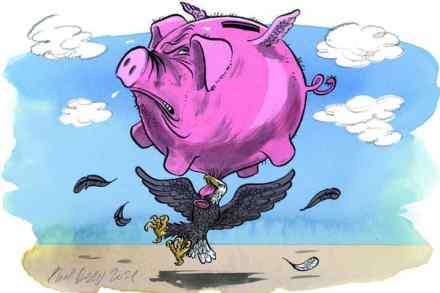
The big tax and spend budget. More Gordon Brown than George Osborne. Sunak’s spending spree. However you wish to describe it, one thing is clear: Rishi Sunak’s budget marks a radical departure from previous Conservative chancellors. And while it might have ruffled the feathers of some Tories, it’s also causing problems for the SNP. In some ways the break from Tory convention is no surprise. Calls by the International Monetary Fund (IMF) in 2020 for rich countries to spend their way out of the pandemic – and then further calls this year to shell out to boost recovery – signalled a new economic orthodoxy that Sunak has tapped into. Austerity is

Would the real Rishi Sunak please stand up?

It was a tale of two chancellors at today’s high-spending Budget. Rishi Sunak began by embracing the big-state profligacy pursued by Cameron and May, and maintained by their successors, Boris and Carrie.  The Chancellor reeled off stacks of figures indicating that the economy is roaring back to life. ‘Growth up! Wages up! Employment up!’ he shouted. And he announced that government spending sprees will also surge by £150 billion. He plans to restore the 0.7 per cent spending target for foreign aid by the end of this parliament. And he has ordered civil servants across Whitehall to find more stuff to buy.  ‘A real-terms rise in spending for every single

Six things we learnt from the Budget

Another big fiscal event for Rishi Sunak today, as he delivered his Budget and the details of a three-year spending review. For the first time, Covid-19 wasn’t in the spotlight. Instead it was framed as a big-spending event, confirming plans briefed before the Budget — £7 billion in capital spending for the NHS, end of the public sector pay freeze — and announcing a series of new plans, including the return of increased foreign aid spending at 0.7 per cent of GDP by 2024-25. But break down the numbers and there are even more surprises in store. Here are the six things we learnt from today’s Budget: The tax take

Who should pay for nuclear?

How much longer is the government going to suppress the cost to households of achieving net zero carbon emissions, or try to imply, as business secretary Kwasi Kwarteng recently seemed to imply on the Today programme, that it won’t cost us at all?  Even as he spoke Kwarteng was working on a new model for the funding of nuclear power stations that was unveiled yesterday in the form of the Nuclear Energy Finance Bill. The proposed legislation will impose levies on energy bills in order to subsidise the construction of new nuclear power stations. The new model of funding — called Regulated Asset Base — will replace the model by which Hinkley

Responsible Rishi's Budget balancing act

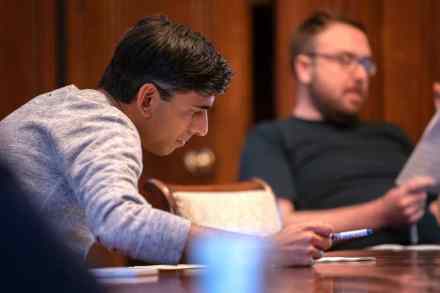
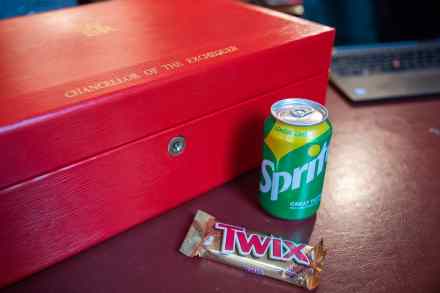
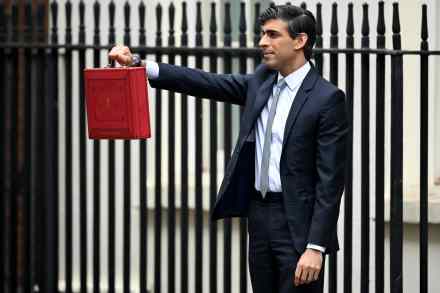
Rishi Sunak has released photos of his Budget prep, as he prepares to stand up in the House of Commons tomorrow to deliver not just the government’s latest fiscal decisions, but the results of its three-year spending review. (Photos include a shot of his pre-Budget Twix and Sprite snack, which Sunak revealed to Katy Balls on Times Radio over the weekend). As I say in the Telegraph today, this Budget is a difficult balancing act for the Chancellor. On the one hand, he has some big-spenders to please, not least the Prime Minister, who is adamant that the Conservative party’s days of austerity have come to an end. On the

Why Sunak's wrong on teachers

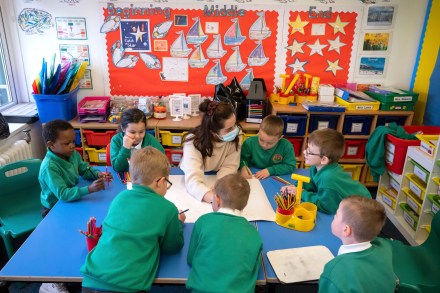
Pupils lost around a third of their face-to-face teaching during the Covid lockdowns. Downing Street has promised an extra £3 billion of catch-up funding, on top of around £100 billion spent on education in a normal year. Fixing a lack of teaching should involve doing a bit more of it — but when asked if he would extend the school day, Rishi Sunak said longer hours wouldn’t provide ‘value for money’. It’s one of few areas where, in tomorrow’s Budget, the spending taps will be turned off. But why, as the Children’s Commissioner recently noted, are British state schools routinely closing their gates at 2.30 p.m.? The length of the

Do we want the nanny state tracking our every step?

The best thing that can be said about the government’s latest anti-obesity scheme is that it’s cheap. For now. The new HeadsUp app, which will track people’s diet and exercise regimes and reward them with cinema tickets, clothes vouchers and the like, has a price tag of £3 million. This is peanuts in public health terms. The NHS burns through £3 million every eight minutes. It amounts to 4p for every man, woman and child in the UK. The bad news is that it is only a pilot scheme. If bribing people with their own money is seen to ‘improve rates of physical activity and inspire healthier eating’, as the Office

Is Rishi ready to splurge?

Is Rishi Sunak losing his battle within the Cabinet to promote fiscal responsibility? We’ll find out this week, when he unveils his Budget and three-year Spending Review on Wednesday, but there were hints this morning that more spending is coming down the track. Speaking to Andrew Marr on BBC One, Sunak laid out the principles that guided his Budget process this time round: ‘Strong investment in public services, driving economic growth by investing in infrastructure, innovation and skills, giving businesses confidence and then supporting working families. Those are the ingredients of what makes a stronger Budget and that’s what we will deliver next week.’ This is not the language of

The car industry’s China crisis

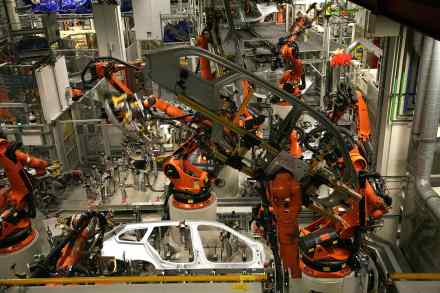
New cars could soon start disappearing from Britain’s forecourts, with the latest supply chain crunch threatening to cripple the global motor industry. It’s a crisis that once again delivers a stark warning about the dangers of over-dependence on China and the costs of succumbing to Beijing’s predatory trade practices. The automotive industry is currently facing a critical shortage of magnesium, which is an essential raw material for the production of aluminium alloys, including gearboxes, steering columns, fuel tank covers and seat frames. Stockpiles are running low, there is no substitute for magnesium in the production of aluminium sheets, and China has a near monopoly on the market. In Germany, Europe’s

Boris Johnson should trust the market to solve climate change

In a 368-page document published this week, the government announced its strategy to cut emissions to net zero by 2050 and confirmed its target for all electricity to come from low carbon sources by 2035.  It’s difficult to imagine worse timing for the release. An energy crisis is exposing the failures of decades of massive state meddling in the market. Insulate Britain have been picnicking on the M4 and M25. And on Wednesday a leak of documents showed Saudi Arabia, Japan and Australia are asking the UN to play down the need to move rapidly away from fossil fuels. None of this has weakened the Prime Minister’s resolve, though that’s

Rishi's Budget wriggle room

Whisper it, but Rishi Sunak looks to be heading into the Budget next week with the public finances in a far better state than once predicted. The Office for National Statistics update on public sector net borrowing showed September’s total — £21.8 billion — coming in several billion pounds below the Office for Budget Responsibility’s official forecast and economists’ consensus. It fits a trend: total borrowing for 2021/22 is over £40 billion lower than expected, giving Sunak far more leeway than he thought he’d have at the start of the year. On the whole, tax receipts have been higher than forecast, as growth (while somewhat lacklustre over the past few

The void at the centre of Britain's net zero strategy

Boris Johnson wants to turn your house green. This week, he published the plan for doing it. In fact, the strategy for delivering net zero carbon emissions is, in essence, to convert the whole economy — including your home — to electric power and then to deliver most of that power using offshore windfarms. We are rapidly approaching a time when wishful thinking collides with reality The fundamental problem with this approach, however, is what we will do when the wind isn’t blowing, or, just as importantly, when it unexpectedly stops blowing. The failure to address this issue upfront means that net zero is likely to fail, expensively. The stubborn refusal

Is inflation slowing?

Whatever happened to the inflation surge? Last month, when the Consumer Prices Index (CPI) surged to 3.2 per cent, the country started fretting about a return to the 1970s. This month’s CPI figure, though, has fallen to a not-very-1970s like 3.1 per cent. Forty five years ago inflation, on a slightly different measure, peaked at over 20 per cent. So are we really heading for an inflationary surge? It turns out that the biggest contribution to this month’s slight fall in CPI is in restaurant prices. This might come as a surprise to people running restaurants — yesterday the Food and Drink Federation complained of a ‘terrifying’ rise in the

The return of inflation

Most economists and central bankers would have us believe that long-term inflation is a technocratic problem that has long been solved. Indeed, today’s millennials and Gen Z have experienced more grade inflation than price inflation, and don’t really understand what all the fuss is about. Markets, which are never terribly good predictors of major turning points in the economy, don’t seem at all worried, either, as measured by the levels of expected inflation implicit in inflation-indexed Treasury bonds. What might everyone be missing? The problem is that controlling long-run inflation is fundamentally a political-economy challenge, not a technocratic one. There is rarely a moment where governments find it convenient to

Rishi's online sales tax won't save the high street

Imagine you run an independent store on the high street. Your business has already been ravaged by repeated lockdowns, which boosted the likes of Amazon at your expense. You are already at a huge disadvantage to online retailers because of your fixed costs. At great risk, you have invested in setting up your own online operation – which obviously costs you a lot more per unit of sales than it costs the online giants. In your shift online you have effectively become shunted up a side street, while Amazon, eBay and the like occupy the prime spots on the high street. How, then, are you going to react to the

Why our MPs deserve a pay rise

Are MPs underpaid? Yes, according to Sir Peter Bottomley, who declared that life on an MP’s salary of £82,000 can be ‘really grim’. In saying so, Bottomley succeeded in uniting his fellow MPs – who would rather not have to deal with a further round of anger at their pay and conditions – and the general public – who resent having to pay for their elected lords and masters in the first place. But the furious backlash doesn’t mean Bottomley isn’t right. In Parliament, as anywhere else, you get what you pay for. If we want a better class of MP, it’s time to splash the cash. Not everyone sees it this way, of