World

The fight for France’s future is underway

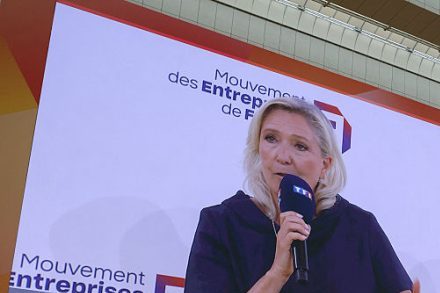
The fight for France is underway. The 2027 presidential campaign began last night as the leading candidates clashed in a live debate on the center court of Roland Garros. Yesterday's confrontation came on the same day a poll confirmed that Marine Le Pen is streets ahead of her rivals in the court of public opinion. The leader of the National Rally boasts an approval rating of 33 percent, more than twice that of the left’s Jean-Luc Melenchon. He is on 16 percent with the centrist former prime minister Edouard Philippe 2 percent behind. Fourth, on 11 percent, is Raphael Glucksmann, the leader of the center-left Place Publique.

How Ireland succumbed to ‘radical chic’

When a law student from Co. Kildare was stopped this summer on suspicion of transporting a bomb across the Irish border for use by dissident republicans, her solicitor said she had not been aware of what was in the bag and that she had been “manipulated.” Yet the 25-year-old’s arrest highlighted an alarming revival in Irish republicanism – and the role being played by a younger, well-educated, middle-class generation. During the Troubles, much of Ireland mercifully avoided the pull of radicalism. There was always a certain degree of quiet sympathy for the IRA in predictable sections of the media and academia, but popular support for Sinn Fein, the Irish Republican party, in the 26-county Republic remained negligible throughout the worst years of terrorism.

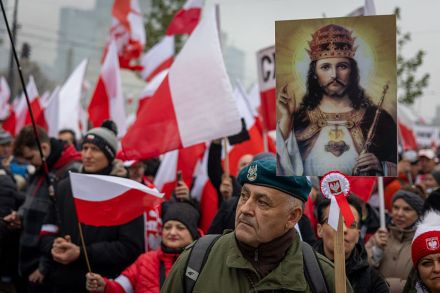
Does Poland have an image problem?

What if the hiring of a PR expert became a PR disaster? That’s precisely what has happened in Poland. On 29 July, when Prime Minister Donald Tusk appointed Barbara Mróz-Gorgoń, a professor of marketing, as the government’s new plenipotentiary for promoting the Polish brand, this was thought to be a shrewd hire that would bolster the country’s image on the world stage. Then someone read one of her reports. Poland has managed to develop from a bankrupt communist state into one of the most successful economies in Europe The Poles’ Self-Portrait, published last year by a think tank chaired by Mróz-Gorgoń, was supposed to give a thumbnail sketch of the Polish national character.

Poland

What was the CIA doing in Moscow?

Central Intelligence Agency Director John Ratcliffe paid an unannounced visit to Moscow yesterday, spending eight hours in the Russian capital before returning to the US. Though he visited the Kremlin, Vladimir Putin’s spokesman Dmitry Peskov denied that they had met – though Ratcliffe certainly spoke to his counterpart Sergei Naryshkin, head of Russia’s SVR external intelligence service, and other top Russian security officials.  The list of topics urgent enough to prompt the first personal visit of a US cabinet-level official to the Kremlin in six months is short.

Mark Carney is running out of excuses

So close, and yet so far. Only last week, Canada and the US were finally on the cusp of reaching a long awaited trade deal. Already Trump had announced the joyous news on Truth Social, already Canadian prime minister Mark Carney had celebrated securing the “best terms” for Canada and called for provinces to lift the ban on US alcohol. Then, somehow, defeat was snatched from the jaws of victory. Late last Friday, Carney told Canadian negotiators to walk away, saying Washington was offering “a bad deal.” Trump promptly reimposed the 50 percent tariffs on goods imported from Canada that had been put on hold pending the signing of the deal. On Tuesday, August 25, Carney announced dollar-for-dollar retaliation, in what some are calling “the dumbest trade war in history.

Mark Carney

Carney’s defiance of Trump could destroy the Canadian economy

Canada and the US were once great friends, allies and trading partners. They had disagreements on various domestic and international matters, wars and military conflicts. They didn’t always see eye-to-eye on trade negotiations related to the auto sector, acid rain, softwood lumber and more. Nevertheless, the two countries always found a way to return to the same page. Yet this historic and economic relationship has now been torn apart. Canada and the US are engulfed in a full-fledged trade war, and there’s no end in sight.  Canada and the US are engulfed in a full-fledged trade war, and there’s no end in sight There have been tensions between the two countries since Donald Trump was elected President.

Can General Bessent win the war? 

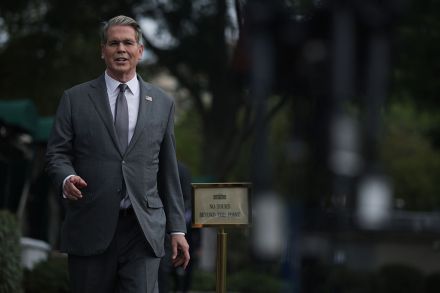
At a much-anticipated press conference Monday, Secretary of the Treasury Scott Bessent minced no words. The United States, he said, is now imposing unprecedented sanctions not only on Iran but on every country, corporation, bank, and shipping company that does business with that regime.   Thanks to these US policies, Bessent said, all Iran’s facilitators must now choose between economic ties with the US and those with the Islamic Republic of Iran. Do business with Iran and you will be severed from the US market and the entire dollar-based trading system, the centerpoint of the world economy.  That policy can be summed up in two words: “economic asphyxiation.

Do Meghan and Harry know what the monarchy means to Britain?

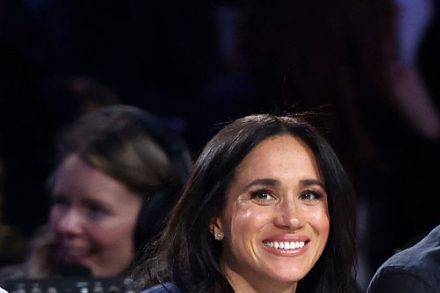
Dear Harry and Meghan, welcome back to Britain. I hope that things go well for you. But let’s be honest: a lot of us are a bit worried about your return. Please allow me to explain why I think this is. We feel that you do not really understand what the monarchy means to us. This might sound strange – you, Harry, were born into it and know it from the inside, so why should you take lectures from a commoner? But maybe an insider can sometimes be blind to what is clear to outsiders. The monarchy is how a certain aspect of the British national psyche is expressed. It’s an old-fashioned part of our national psyche, but it is not dead. It is difficult to talk about, because our culture is very used to ironizing and disparaging it, and is embarrassed about affirming it directly.

The questions Cambridge still has to answer about Jason Arday

If poor Jason Arday killed himself, it will be necessary to work out why. To do so, it will help to know why he resigned his professorship. It seems highly unlikely he resigned if Cambridge University did not want him to. It had defended him in public throughout, after all. Yet if he had been confident of Cambridge’s continuing support, why did he sacrifice the benefit of its protection? If Cambridge suggested to him that its protection would, for whatever reason, shortly cease, what caused its change of mind? What a terrible shock for him if the institution which had raised him so high was now ready to cast him out. Is the institutional attack on the press over this matter a deflection from the truth?

cambridge jason arday
heatwaves

Will the heatwaves make this year’s French wines better?

It has been a punishing summer in France. Heatwaves, drought and forest fires have driven away tourists and made life hell for firefighters. The nation’s winemakers have also had an anxious time of it, but there is now cautious optimism that the exceptional weather may work in their favor. Since late May, France has been swept by a succession of heatwaves as well as a series of destructive wildfires. The worst of these was in the Gironde, west of Bordeaux, which lost 42,000 hectares to flames. Swathes of Provence have also been ravaged by fires in recent weeks. As a result of the fires and the heat, France’s Ministry of Agriculture decided to postpone its annual grape harvest forecast from early August to early September. The announcement was welcomed by the industry.

reform

Revealed: the feuding at the heart of Reform

If Tolstoy had written about British politics, he might have noted: “Happy parties are all alike; every unhappy party is unhappy in its own way.” Reform UK is beginning to resemble a laboratory test for the idea that every party run by Nigel Farage is unhappy in the same way. Just as in UKIP and the Brexit party, a highly dominant leader exists at the center of a court, with extreme tensions between loyalist long-marchers and arrivistes, between insurgency and respectability, between campaigning and preparing for government. A new round of bloodletting erupted on August 17, when the founder of ConservativeHome, Tim Montgomerie, who defected to Reform two years ago, was suspended following public criticism of Farage and the party’s home affairs spokesman Zia Yusuf.

sussexes

The Obamas are to blame for the Sussexes’ failure in the US

You can blame the Obamas for the Duke and Duchess of Sussex's ill-fated adventures in America. There they were, Barack and Michelle, with eight-figure book deals and a lucrative spin on the global keynote circuit after Donald Trump's triumph in 2016. Barely two years later, Mrs. Obama was filling major arenas on a rockstar-styled promo tour for her White House-memoir Becoming. I remember sitting up high at the Barclays Center in New York in 2018, when Sarah Jessica Parker interviewed Mrs. Obama with awkward sycophancy, clearly dazzled by the former First Lady’s sheer presence. Obama’s candor and intellect, no matter how commodified to maximize book sales, stood as a sharp contrast to the icy aloofness of her replacement, Melania Trump.

iran sanctions

How will harsh sanctions on Iran play out?

If you control the world’s largest economy, as the US does, and if your enemy depends on exports to the West, as Iran does, it should hardly be a surprise when the big economy decides to use its commercial and financial leverage.   That is exactly what the US is doing – and this week it announced it would ratchet up the pressure substantially. Some sanctions were already in place, most notably restrictions on Iran’s oil exports, enforced by the US Navy. What’s new is that those sanctions will be supplemented by a full range of additional sanctions on commercial and bank transactions routed through third countries.

America won’t miss Harry and Meghan

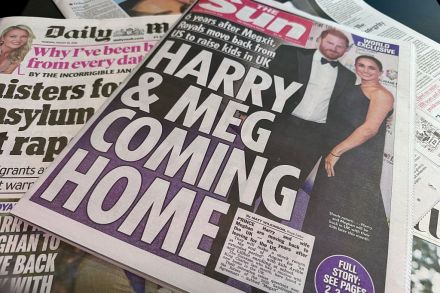
The prospect of Prince Harry and Meghan Markle leaving the United States has been dangled by reports in the British media. Many of us Americans are buoyant. The Daily Telegraph and the Sun reported that their children will begin British schooling in September. The family will occupy a private house outside London, keep their California and Portuguese homes and remain non-working royals. The King learned of the plan only on Sunday. He welcomes private time with his grandchildren, yet the late Queen’s boundary still stands: no half-in, half-out arrangement. How things have changed in the six years since the Sussexes left Britain. Harry’s arrival in America in 2020 was met with considerable curiosity and some excitement, which he has since squandered.

Could China colonize Mars before America?

A 20-year-old Chinese researcher dressed in a red crayfish costume has become a symbol of Beijing’s ambition. At a scientific conference in Paris last fall, he explained that he was working on an important project. His plans would enable his country’s astronauts to prepare spicy crayfish soup, a Chinese favorite, on Mars. “That’s what we’re competing with. The vibe is good in Beijing,” Drew Endy, associate professor of bioengineering at Stanford University, said in evidence to a Senate hearing last month. The hearing examined whether the US is losing its innovation advantage to China. Concerned senators saw the big red crayfish as further evidence of the scale of Chinese ambition when it comes to Mars.

Middle England is finally waking up to the migrant crisis

I don’t know how familiar readers are with the term “accelerationism.” It is generally used to describe a tendency on the left, though is increasingly heard on the right too. The basic idea of accelerationism is that there are certain flaws in the societal structure which if pushed could bring things to their inevitable conclusion more quickly. It is why there are so many people on the left of politics who say that sustainable government spending should be discouraged. It is not just because they are economically illiterate. What they really hope is that a speeded-up financial disaster will expose the “underlying contradictions of capitalism,” and we’ll all realize that Karl Marx was right and promptly vote for Zack Polanski or similar at the next election.

middle england migrants

Who gets to decide when assassination is justified?

When is extrajudicial killing just war by other means, and when does it become a state-sponsored act of terror? “We were not terrorists but fighters for freedom who fought with our eyes open,” Menachem Begin wrote of Irgun, the irregular group of fighters he led during the 1947-48 civil war in Mandatory Palestine, the tactics of whom included bombings and assassinations. But where does the August 1 bombing of the Balzi Rossi restaurant in central Moscow – which killed at least five people and injured more than 20 – stand on the scale? Some would describe the attack as a legitimate military operation. The bomb targeted the lavish birthday celebrations of Colonel-General Aleksandr Chayko, commander-in-chief of Russia’s Aerospace Forces (whose son-in-law died in the blast).

Kim Jong-un has everything to gain from a meeting with Trump

Will Trump and Kim Jong-un meet again? This is the million-dollar question after President Trump lauded his “very good relationship” with Kim and ordered a scaling back of US-South Korean military exercises earlier this week. Hours later, Trump elusively mentioned that the North Korean despot had responded “positively” to his overtures. Another rendezvous between the two leaders cannot be dismissed, especially with Kim Jong-un in a stronger position now than during the first Trump administration. But unlike during the Trump 1.0 years, which saw three meetings between Kim and the President, things are different now. Back then, neither leader had met the other before; kindling a bromance was a novelty. Now, however, it will be a case of déjà vu.

Firing a senior banker won’t save Putin’s faltering war economy

In a sign of the unease about Vladimir Putin’s ongoing war in Ukraine that exists behind closed doors in Moscow, one of Russia’s most senior bankers was fired yesterday after a series of critical comments he made earlier in the year about the fragility of Russia’s economy. Warning that Russia was “falling behind” globally both technologically and economically, Andrey Klepach stated the country would fail to win the economic “war of attrition” against Ukraine. “The Ukrainian economy, despite everything, is surviving,” he said. Klepach, chief economist at Russia’s second-largest, state-owned bank VEB, gave a speech in May, during which he linked the pressure on the country’s economy with Putin’s invasion of Ukraine.