World

The report that lays bare France’s Islamist networks

Bruno Retailleau, France’s former interior minister, has with his Senate group just published the toughest report on Islamism in a generation. They warn that Islamist networks have taken hold of entire swathes of French public life – from schools and sports clubs to student housing, neighbourhoods and councils. In the report, 29 Republican senators set out what they describe as a coordinated effort by Islamist networks to impose parallel norms and bypass republican authority. They argue that only urgent, hard-hitting measures can halt the advance and are calling for banning the hijab for girls under 16, prohibiting fasting for minors, enforcing strict neutrality in sport and local government, cutting foreign

Could Israel bring back the death penalty for terrorists?

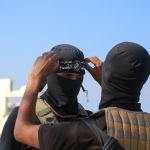
For years, there was a broad consensus in Israel that there was no benefit to reintroducing the death penalty. But now, Prime Minister Benjamin Netanyahu’s government is reportedly considering supporting a bill which would bring back capital punishment for convicted terrorists. The bill, which has passed its first reading in the Knesset, would introduce the death penalty for those who murder Jews – specifically, Palestinian terrorists. It would not apply to Jews who commit acts of terrorism and murder Palestinians. And it would not apply if Israeli Arabs, who are full citizens, are murdered. The bill, which has passed its first reading in the Knesset, would introduce the death penalty for

Elon Musk's Doge was a damp squib

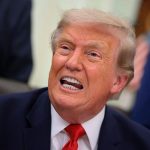
Doge has been Doge’d. Elon Musk’s once fearsome US Department of Government Efficiency (Doge) has been shut down eight months before its contract officially ends in July 2026. What was supposed to be an organisation that exploded traditional ways of running the federal government has turned into a damp squib. Doge was established by President Trump on the first day of his second term in office. Headed by Tesla chief Musk and entrepreneur Vivek Ramaswamy (who resigned early on to run for governor of Ohio), it struck the kind of fear into government bureaucrats that a visit from the Red Guards might instill during Mao’s Cultural Revolution. Musk’s minions rampaged

How a burka brought bedlam to Australia’s parliament

Australia’s parliament is a curious place when it comes to its dress code. Suits without ties: frowned upon. Dresses made from the national flag: absolutely not allowed. Keffiyehs in solidarity with the Palestinian cause: most definitely permitted. On Monday, another piece of clothing caused an uproar in Australia’s Senate, so much so that it had to be suspended for 90 minutes. The leader of the populist One Nation party, 71-year-old Pauline Hanson, grabbed global headlines by striding on the floor of the Senate wearing, a skirt, heels – and a full-length burka, covering her face but flapping loosely like Robert Donat’s tattered academic gown in Goodbye Mr Chips. Hanson was

Russia is willing to keep on fighting in Ukraine

At a time when Western commentators are tying themselves in knots trying to parse the ongoing Ukraine peace discussions, the Russian media is suddenly strikingly united in its coverage. There is a common misperception that, like their Soviet forebears, the Russian press simply reproduces some standard party line, day in, day out. In fact, there is often surprising pluralism, with different newspapers having their own interests and angles. However, the Kremlin does impose its will when it comes to especially important or sensitive matters, with editors receiving tyomniki, informal but authoritative guidance from the presidential administration on lines to take and topics to avoid. When the press is speaking in

A lethal standoff is playing out deep beneath Gaza

In 1929, René Magritte painted a picture that has since become iconic in both art and philosophy. The Treachery of Images depicts a finely detailed tobacco pipe with a caption beneath: Ceci n’est pas une pipe – ‘This is not a pipe’. Magritte’s point is subtle and enduring. It is indeed not a pipe, but an image of one. You cannot fill it with tobacco, light it, or smoke it. It is a representation, not the object itself. Israel manoeuvres within it, cautiously. Hamas exploits it, selectively. Saudi Arabia nods along, calculating Magritte was exploring the gap between signifier and reality, between the name and the thing named. His visual paradox

Isis is stirring once more

Indications that the Islamic State (Isis) has begun to employ artificial intelligence in its efforts to recruit new fighters should come as no surprise. At the height of its power a decade ago, Isis was characterised by its combination of having mastered the latest methods of communication with an ideology and praxis that seemed to have emerged wholesale from the deserts of 7th century Arabia. In 2014 and 2015, Isis recruitment took place on Twitter and Facebook. YouTube was the favoured platform for the dissemination of propaganda. The group’s videoclips of its barbaric prisoner executions, including the beheadings of a series of western journalists and aid workers and the immolation

France’s integration nightmare

France has spent decades telling itself the same comforting story: that the children and grandchildren of Muslim immigrants would become more French than their parents. Secular, republican, integrated. The older generation might cling to conservative religious values, but the young raised on liberté, égalité and fraternité would drift towards the mainstream. That assumption has taken a serious blow. A country that once prided itself on assimilating newcomers has spent the past several decades dismantling the very idea of a dominant national ethos According to a new IFOP poll, 57 per cent of French Muslims aged 15 to 24 place the rules of Islam above the laws of the Republic. This is

Why Venezuela matters to Iran

The aircraft carrier Gerald R. Ford and three warships have been sent to the Caribbean, where they are joining a dozen Navy warships already off the coast of Venezuela, in an unprecedented show of military force. President Trump and his administration are taking aim at the administration of Nicolas Maduro, over his alleged role in the drug trade which presents a national security threat to the United States. It’s clear that if the US succeeds in destabilising and displacing President Maduro’s regime, it would be a blow to the region’s drug traffickers. What is less known is that it would also hit Iran. Venezuela has long served as a launchpad

Will Mahmood's asylum reforms force Ireland's hand?

Labour’s plans to overhaul Britain’s overstretched asylum system have forced the Irish government to do the same. As the Northern Irish border is the only international border across these islands, Shabana Mahmood’s pledge to create ‘by far the most controlled and selective [asylum system] in Europe’ left Dublin with little choice. Ireland’s Minister for Justice, Home Affairs and Migration – Ireland’s equivalent to the Home Secretary – Jim O’Callaghan warned that Ireland must be ready to adjust its own policies to prevent a surge in applicants travelling via Northern Ireland.  Labour’s announcement has heightened fears that Ireland could be seen as a ‘soft option’ compared with its neighbour Labour’s announcement

Was Nathan Gill recruited by the Kremlin?

Was 52-year old Anglesey man Nathan Gill, a member of the European parliament, taking money from the Kremlin, or just from a corrupt Ukrainian oligarch? We may never know. But on Friday Gill was sent down for ten-and-a-half years at the Old Bailey, after he was found guilty of accepting bribes from Ukrainian operatives in exchange for delivering scripted speeches in the European Parliament defending pro-Kremlin TV channels and hosting an event for Viktor Medvedchuk, a close ally of Vladimir Putin. Gill sat in Strasbourg as an MEP for North Wales representing the Brexit party, and was later leader of the Welsh branch of Reform UK. Party leader Nigel Farage, who

'Monster parents' are terrorising Japan

If you want to make a Japanese high school teacher break out in a cold sweat and suffer heart palpitations, just whisper the word ‘monpa’ in their ear. For ‘monpa’ or ‘monster parents’, the bane of a Japanese educator’s life, are serial complainers notorious for their persistence, aggression, unreasonableness and irrationality. They have become such a problem that the city government has decided to take cation. There is nothing uniquely Japanese about overprotective, unrealistically ambitious or just plain pushy parents (‘helicopter parents’ are the US version) but Japanese monpa are in a league of their own. Monpa are characterised by a tendency to demand repeated lengthy meetings with teachers over

Volodymyr Zelensky is facing the ultimate test

Standing outside his presidential office in Kyiv tonight, on the same spot as on the second day of Ukraine’s full-scale war with Russia, Volodymyr Zelensky addressed Ukrainians. He said he hadn’t betrayed the country then and wouldn’t do so now. Ukraine faces ‘one of the most difficult moments in our history’, he said, while the Trump administration presses it into a deal with Russia. The US, once Ukraine’s biggest ally, has issued an ultimatum: either Zelensky signs the framework of the 28-point peace plan drawn up by Washington and the Kremlin by next Thursday, or Trump will cut intelligence-sharing and weapons supplies for Ukraine.  The pressure on Ukraine right now

Ukrainians think Trump is putting the screws on Zelensky

Kyiv, Ukraine The rumour reverberating around Kyiv is that the FBI has been leaning on Ukrainian anti-corruption police to investigate Zelensky’s inner circle in order to force him to swallow the bitter US peace deal. Trump, as they say, has put the screws, or the feds, on Zelensky. Ukraine’s National Anti-Corruption Bureau (Nabu) – which is currently unravelling a $100 million war profiteering scandal that has implicated many of Zelensky’s closest political allies – has denied the accusation point blank, and there’s not a single shred of evidence that it is true. Nevertheless, Mykola Kniazhytskyi, a member of the opposition in the Ukrainian parliament and hardly a friend of Zelensky,

Will no one acknowledge how Mossad helps Britain?

Let’s imagine that an international jihadi network, with cells in London and Europe, had just been busted, with dramatic arrests in Britain, Germany and Austria. Let’s imagine that the group had been planning a string of atrocities, with a weapons cache discovered in Vienna. Let’s imagine that security services had unearthed ‘tens of thousands of Euros in cash, numerous data storage devices and mobile phones, gas pistols, firearms, ammunition, knives, and related literature’. You’d have expected such a story to make the news, right? Wrong. On Monday, the Israeli prime minister’s office announced that this precise scenario had unfolded, with Mossad handing intelligence to MI5 and European agencies that enabled

Violent settlers must be stopped

A crisis of authority now festers at the heart of Israel. A shrill, violent fringe of extremist settlers in the West Bank is not only terrorising Palestinians, but undermining the authority of the Israeli state, its security and diplomatic relations. This week, there have been reported attacks by settlers near Deir Istiya, near Nablus, and in Jaba, southwest of Bethlehem. These settlers’ growing impunity, and the government’s failure to rein them in, is no longer a side issue. Settler violence is emerging as a national security crisis. This is not hyperbole. These hilltop radicals act with a confidence that is backed by far-right politicians and suggests de facto immunity: arson, intimidation, physical violence, price‑tag attacks,

Zelensky cannot agree to the Witkoff peace deal

With Ukrainian president Volodymyr Zelensky’s political authority already under grave assault in the wake of a major corruption scandal, he now faces a new challenge – this time from his erstwhile ally, the United States. A high-level US delegation led by army secretary Daniel Driscoll is meeting Zelensky in Kyiv today to present the latest version of a peace plan aimed at ending the war. The contents of the plan have not been officially revealed and so far it has not been publicly endorsed by Donald Trump. But two things are already clear. One is that there’s nothing new in it. And two, there’s nothing good in it for Zelensky.

The Ukraine peace proposal raises more questions than it answers

Volodymyr Zelensky is meeting US officials today for the first time since the news of a US-Russia peace plan for Ukraine emerged yesterday. The Ukrainian president, fresh from a trip to Turkey, is due to meet with the American army chiefs Dan Driscoll and General Randy George – the most senior Pentagon representatives to visit Ukraine since Donald Trump’s return to the White House – who are in the country on a ‘fact-finding’ mission. The purpose of the meeting is for Trump’s representatives to discuss ‘efforts to end the war’. While the agenda has not been made public, it is highly likely the trio will discuss the new 28-point peace plan,

Why can’t Friedrich Merz just say sorry?

‘We live in one of the most beautiful countries in the world,’ began a seemingly innocuous speech by German Chancellor Friedrich Merz last week. The words that followed earned him the wrath of the largest state in South America. Just back from the Cop climate summit in Belem, Brazil, Merz declared that his delegation had been ‘glad to return from that place’. When he’d asked the accompanying journalists if anyone would like to stay, ‘nobody raised their hand’. Appearing to compare their country unfavourably to Germany, Merz’s remarks offended many of Brazil’s leaders. President Lula hit back by suggesting Merz should have gone out to a bar or dancing in Belem before passing judgment

Spain's post-Franco democracy is on the rocks

‘Fine weather in Malaga’ proclaimed the banner headline of a Spanish newspaper in 1974 – that was the day’s big story. There was nothing about the country’s social and economic problems or the Carnation Revolution bringing democracy to neighbouring Portugal. After almost four decades in charge, the dictator Francisco Franco had effectively depoliticised Spain. ‘A century and a half of parliamentary democracy,’ Franco said, ‘accompanied by the loss of immense territory, three civil wars, and the imminent danger of national  disintegration, add up to a disastrous balance sheet, sufficient to discredit parliamentary systems in the eyes of the Spanish people.’ Yet once Franco died – fifty years today ­– a