World

Is Britain’s Rachel Reeves the new Hillary Clinton?

Britain's Chancellor of the Exchequer Rachel Reeves, the second most powerful politician in the country, shed a few tears from the front row of the government benches in the House of Commons during the weekly Prime Minister's Questions session. Her boss Prime Minister Keir Starmer – to her mounting horror – pointedly refused to confirm whether she'd be staying in her current post. "We’ve got free school meals, breakfast clubs, we’ve got £15 billion invested in transport funds in the North and the Midlands. We’re cutting regulation, planning and infrastructure is pounding forward," Starmer said with affected bolshiness.

Reeves
Melenchon

How the French left made Mamdani

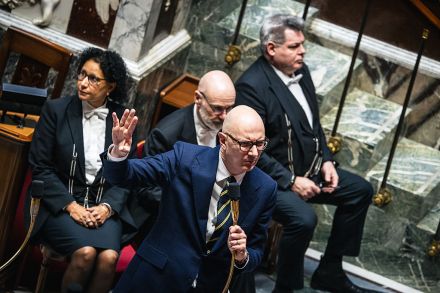
It should come as no surprise that Zohran Mamdani’s surprise victory in last week’s Democratic primary for mayor of New York was celebrated so vociferously by the French far left. Jean-Luc Mélenchon’s La France Insoumise (LFI) regard the 33-year-old Socialist as a chip off the old block. In a post on X Mélenchon delighted in Mamdani’s defeat of Andrew Cuomo, saying: "Opposed to the genocide of the Palestinians, he is obviously already accused of anti-Semitism. He won against a figurehead of the centre-left backed by the local leaders of the cheating Democratic party." As in France, continued Mélenchon, the "traditional" left no longer speaks to the people; it is the radical left.

What do Iranians want?

I was born in Gorgan, Iran, ten years after the Islamic Revolution, and for the first 21 years of my life, I never experienced life outside of it. But my parents and grandparents told me about the prosperous lives they had before Islamism captured the country during a revolution they had initially supported. Their generation had detested the feeble and feckless Shah, and they’d been inspired by Ruhollah Khomeini’s charisma. That was the story of my generation: parents recounted to their children how the revolution they had supported ruined their lives, but they always blamed someone else for it. Instead, my generation has experienced theocracy, poverty and international embarrassment. As we grew up, our parents told us of bars, cabarets and nightclubs back in the Shah’s days.

Call him Daddy

Sitting next to Donald Trump at the end of a short NATO summit, Mark Rutte, head of the organization, looked quite amused as he listened to the President describe the Israel-Iran conflict.  "They've had a big fight, like two kids in a schoolyard," Trump said. "You know, they fight like hell, you can't stop them. Let them fight for about two to three minutes, then it's easy to stop them." Raising a fist, Rutte added: "And then Daddy has to sometimes use strong language to get (them to) stop." Soon after, flanked by two of his Apprentices, Pete Hegseth and Marco Rubio, Daddy Trump gave his own press conference. He talked for 15 minutes before he took a single question. The Netherlands, he said, “has the most beautiful trees. I want to bring some back with me.

Donald Trump

Memories of the 12 DAY WAR

President Trump didn’t start the war. But if we’re to believe the greatest social-media post of all time, he sure finished it, and quickly. Either way, he definitely branded it, and in geopolitics, as in business, branding is everything. If you break the terms of the brand, Israel and Iran have found out, the President is going to whup you, at least verbally. “Upon the 24th Hour,” Trump posted yesterday about a peace of his own making on Truth Social, a website of his own making, “an Official END to THE 12 DAY WAR will be saluted by the World. . . . On the assumption that everything works as it should, which it will, I would like to congratulate both Countries, Israel and Iran, on having the Stamina, Courage, and Intelligence to end, what should be called, ‘The 12 DAY WAR.

We need to hear from Tulsi Gabbard

Where is Tulsi Gabbard? The country’s Director of National Intelligence has been glaringly absent as the biggest national security story in years continues to develop. In both the lead-up to and the aftermath of President Trump’s decision to strike Iran’s nuclear sites, Gabbard has barely been seen, or heard. It’s a strange time for the chief of the US intelligence community to go silent, leading to a growing number of questions that Americans – particularly MAGA Americans – would like answered.It’s Gabbard’s now-infamous testimony to Congress in March – and a video posted to social media earlier this month – that are thought to have sidelined her from the Trump administration in recent weeks.

Trump

On Iran, trust Trump’s instincts

What now? After the daring and what everyone is describing as a “flawlessly executed” attack by the United States on Iran’s hardened nuclear facilities Saturday night, Macbeth’s words must be on the minds of many: “If it were done when ’tis done, then ’twere well / It were done quickly.” Things did not work out so well for the Thane of Cawdor, as Macbeth then was. But even though his attack was not “the be-all and the end-all” he wanted, everyone who wishes for peace must second his opening argument.

Venice was built for Jeff Bezos’s wedding to Lauren Sanchez

Most cities, especially those whose survival depends on tourism, might welcome the multi-squillion-dollar wedding of the world’s third-richest man. Imagine the $500 million superyacht gliding in like a Bond villain’s aqua-lair. Think of two hundred almost-as-rich guests, spilling vintage Trentodoc. Consider the spectacular press coverage, the endless sparkle, and, not least, the 14,000 Aperol spritzes sold per hour. This event means a thousand cameras trained on the city’s finest hotels and restaurants: providing the kind of advertising that folding money cannot buy. There is probably only one city on earth that would disfavour such an opportunity, and it is, of course, the world’s most exquisite: Venice.

Jeff Bezos

Did the Wall Street Journal just prevent a war?

Zero-hour was approaching. A joint US-Israeli attack on the mullahs’ mountain fastness at Fordow seemed imminent. The B-52s were on the tarmac, the USS Nimitz had taken to sea, Ambassador Mike Huckabee was reaching for the smelling salts.  And then? A last-minute pause. “I will make my decision whether or not to go within the next two weeks,” said the President. Delays like these have now become a standard part of Trump’s box of tricks. If a drama – like the ‘Liberation Day’ tariffs of earlier this year – can be kept going for a little longer, then all the more time to extract further concessions from the opposing party. As negotiating tactics go there are certainly worse ones. But was there another reason?

Wall Street Journal
Iran

Whatever happens, Iran will still seek a nuclear weapon

An Iranian politician sits on a sofa giving an interview about Iran’s nuclear ambitions. "Why should Iran not have a nuclear weapon when France, the UK and the US all have nuclear weapons? What is the difference between our nations?" The politician goes on to lay out Iran’s regional intellectual and cultural superiority, citing an illustrious history going back centuries, explicitly linking Iranian exceptionalism with the issue of nuclear power. You’d be forgiven for thinking that this Iranian politician was an official of the Islamic Republic. It was the Shah and the year was 1973.

Trump won’t be dragged into a regime-change war

The handsome pages of The Spectator World’s July issue readers will find an essay of mine arguing that the United States doesn’t win wars anymore because we don’t even understand what a modern war is. From the French Revolution to the Cold War, and in the long, warm afterglow—thankfully, non-nuclear—of Cold War success, Western elites have tended to think about wars in terms of regimes and ideologies. Winning a war is all about changing the opponent’s regime so that it endorses one’s own ideology: turning a “dictatorship” into a “liberal democracy” through the magic of bombs and bullets.

Regime change

WATCH: Trump hints Russia should rejoin G7

As the annual G7 Summit kicks off in Canada, President Trump told reporters that removing President Vladimir Putin from the group was a mistake, and had they not done so, the Kremlin's over two-year war against Ukraine would not have happened. "They threw Russia out, which I claimed was a very big mistake, even though I wasn’t in politics then. I was very loud about it," Trump said. He reasoned, "You spend so much time talking about Russia, and he’s no longer at the table. So it makes it more complicated – but you wouldn’t have had the war." Canadian Prime Minister Mark Carney appeared somewhat disengaged next to Trump and gazed off into the distance when Trump said the war would have never happened.

Trump and Carney G7 (Getty)
america first

Trump: America First, c’est moi

“When I use a word,” Humpty Dumpty told Alice scornfully, “it means just what I choose it to mean – neither more nor less. The question is which is to be master – that’s all.” This is an important angle to understanding that America First is whatever Donald Trump says it is, at the time that he says it. His declaration that he is the master of the term, and defines it according to what he sees as America’s interest on a moveable basis, is in no way inconsistent with the foreign policy of his first term or his second: he makes decisions, sometimes snap decisions, based on what he sees as choices standing to benefit the country.

Will Putin help Trump’s Iran deal?

Spectacular. Stunning. Game-changing. These are just three of the adjectives news reporters have used to describe Ukraine’s attack deep within Russia last weekend. There’s no doubt that the “Spiderweb” operation was technologically ingenious, well-concealed and brilliantly executed. Ukraine claimed its 117 drones destroyed or damaged some 41 strategic Russian bombers and caused $7 billion worth of damage to the Russian armed forces. But can an attack really be game-changing if the game doesn’t change? US officials have suggested the strikes hit only 20 Russian aircraft and, while Spiderweb must have shocked Russia’s leadership, the Kremlin is still more than willing and able to continue bombing Ukraine with relative impunity.

Trump
Erik Prince

The American mercenary is back

Two years after the fiery death of Yevgeny Prigozhin, the warlord behind Russia’s Wagner Group, the global shadow war waged by mercenaries and contractors still rages on. And now one of the most well-known names in the mercenary world is back in the headlines: Erik Prince. The founder of Blackwater and longtime ally of President Donald Trump, is on the ground in Haiti, where he has signed a deal with the government to take on the armed gangs that have brought the capital to the brink of collapse.Prince sold Blackwater in 2010 after its contractors opened fire on civilians in Iraq and it now operates under a different name.

Will the new ‘communist’ leader of South Korea abandon the US for China?

American divisions over politics look positively civil compared to the polarization that has gripped South Korea over the last few years. During the 2022 elections, Yoon Suk-yeol of the conservative People Power party (PPP) narrowly won the presidency over his liberal opponent Lee Jae-myung from the Democratic Party by a razor thin 0.73 percent. But Yoon hastened the demise of his own presidency when on December 3, 2024, he made the poor decision to declare martial law over baseless accusations that the National Assembly’s progressive opposition were collaborating with North Korea. Martial law lasted for only a few hours after both parties unanimously voted to lift the decree.

South Korea

How Giorgia Meloni became Donald Trump’s EU whisperer

Henry Kissinger once complained: “Who do I call when I want to speak to Europe?” Today the answer would be Giorgia Meloni, Italy’s first female Prime Minister, who has emerged as the most important leader in the European Union. No Italian leader has filled this unofficial role before: it is usually reserved for the heads of the bloc’s two largest economies, Germany and France. Yet Meloni has capitalized on the weakness of their leadership. French President Emmanuel Macron may delude himself that he is Napoleon or Jupiter, but in reality he is the deeply unpopular head of a lame-duck government. To borrow a phrase from Donald Trump, he doesn’t “have the cards.” Meanwhile, Germany’s Chancellor, Friedrich Merz, heads up a flimsy coalition.

Meloni
Ukraine

Can Ukraine secure its military survival?

The Trump-Putin honeymoon is over. After three months of lengthy one-on-one phone calls, a handful of false starts on negotiations and flashes of Trumpian boosterism over the prospect of great commercial deals with the Kremlin, a fourth summer of war in Ukraine looks inevitable. Vladimir Putin will pretend to negotiate, while at the same time continuing to pound Ukraine’s cities with missiles and pressing forward on the ground. The Ukrainians will continue to scramble for men and resources with which to defend themselves. And the White House will continue to blame both sides for not reaching a deal. Over these three months of false hope, Putin has made two things very clear.

Cambridge charlie kirk

Trump’s revolution is coming to the UK

In May, Charlie Kirk, who died today from a gunshot wound, visited the United Kingdom to debate the students of Oxford and Cambridge, Britain’s two most prestigious universities. The Spectator asked him to write about the experience. The result was this well-observed, funny and now strangely prophetic-sounding piece about the condition of England. Charlie Kirk believed in free speech. He died speaking freely. RIP. Oxford and Cambridge When I was growing up, people often said British politics were where America’s would be in five, ten or 20 years. What this meant was that Britain was more to the left of America: more secular, more socially liberal, more environmentalist, more globalized.

I Dream of Lamu

An hour after the propeller plane lifts away from Wilson, Nairobi’s regional airport, it is arching over the blues and greens of the Lamu archipelago; a pattern of islands that extend 130 kms to the Somali border. Views of Lamu, which is also the name of the island and the stone town, have the dreamlike quality of an acid trip; the candy-pink minaret of the main mosque rising over coralline houses in the oldest, continuously inhabited, settlement on Kenya’s Swahili coast. And beyond the hazy shoreline, confetti-scatterings of white are the dhows that powered the fortunes of this former hub and deep-sea port. These criss-crossed the Indian Ocean on seasonal monsoon trade winds swapping ivory and slaves from the African hinterland for silks and spices from India, Yemen and Oman.