China

The vampiric desires of Putin and Xi

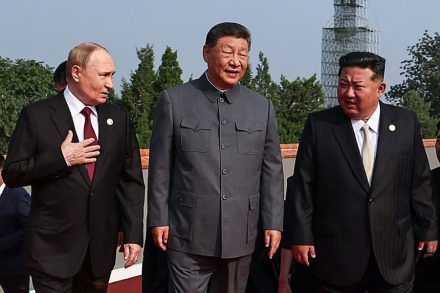
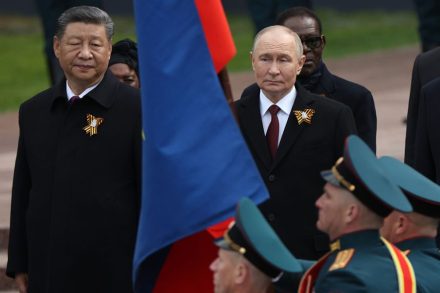
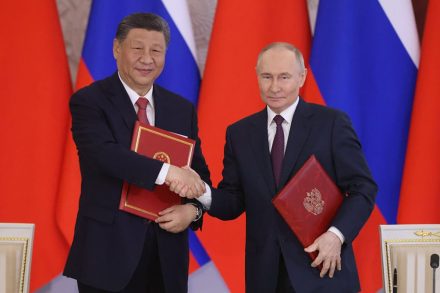
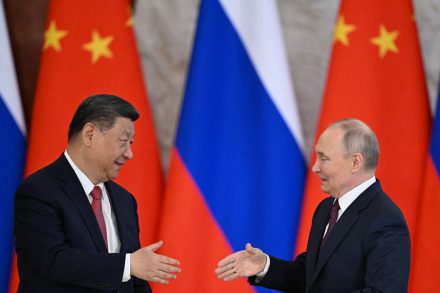
‘They’re vampires’ was my first thought. I had just heard the news that Putin and Xi were discussing how to prolong their lives, as they walked toward their places at the Tiananmen Square military parade. On the official news footage, Putin’s translator could be heard saying in Chinese: ‘Biotechnology is continuously developing.’ And then: ‘Human organs can be continuously transplanted. The longer you live, the younger you become, and [you can] even achieve immortality.’ Xi responded: ‘Some predict that in this century humans may live to 150 years old.’ Kim Jong-un was there too, but is not known to have contributed to the conversation. Maybe the blood-sucking image came to
China's parade spells trouble for Taiwan

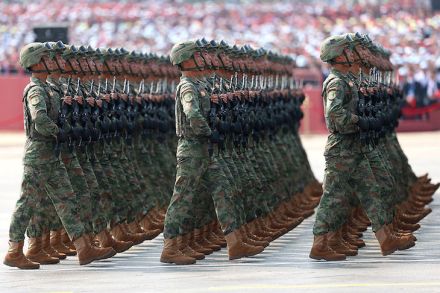
The massive military parade in Beijing today definitively marks the end of the post-World War Two era. Nominally, the 80th Anniversary of China’s victory in ‘The War against Japanese Aggression and the World Anti-Fascist War’, it has been used by China’s president Xi to, in the words of Reuters, ‘…demonstrate Xi’s influence over nations intent on reshaping the Western-led global order’ – an order that began with the end of World War Two. Sharing the podium with Xi – but not invited to review the parade – were presidents Putin of Russia and Kim Jong-un of North Korea. Their client status to China is also clear: without China’s financial and industrial support, Putin

What China's show of force means for the new world order

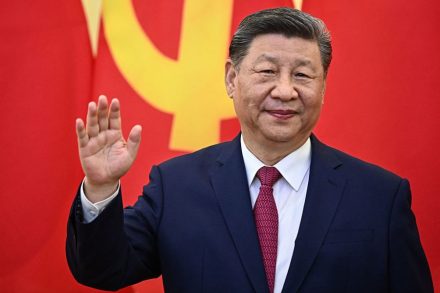
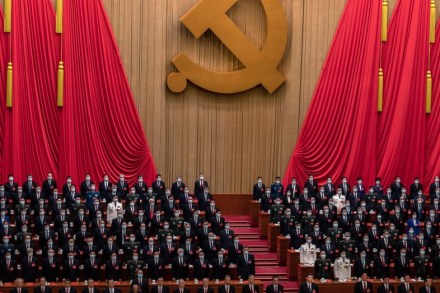
Today’s vast military parade in Beijing is the climax of three days of political theatre orchestrated by President Xi Jinping, with supporting roles played by those pantomime villains Vladimir Putin and Kim Jong-un. The smirking North Korean and Russian dictators joined Xi to witness the People’s Liberation Army’s goose-stepping soldiers and shiny weaponry rumbling through Tiananmen Square. ‘Today, humanity is again faced with the choice of peace or war, dialogue or confrontation, win-win or zero-sum,’  Xi told the crowd of some 50,000 carefully selected spectators (which roughly matched the number of soldiers). He said the Chinese people ‘firmly stand on the right side of history’. Xi warned that China was

Kim Jong-un’s alliance with Xi and Putin is growing stronger

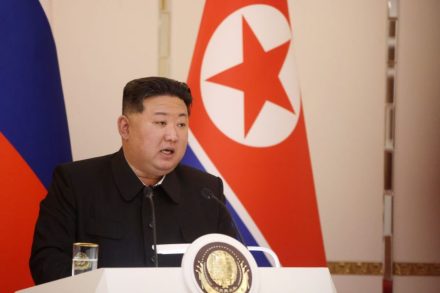
When analysing authoritarian states, not least North Korea, most of the time we have to read between the lines. But on other occasions, things are more obvious. Today, China celebrates eighty years since its victory over Japan in the second world war. Xi Jinping has invited Western and non-Western leaders past and present, but all eyes will be on the guest list’s top two invitees: Vladimir Putin and Kim Jong-un. Marking the first multilateral gathering of all three leaders since the Cold War, today’s spectacle aims to send a clear signal to the West. Xi, Putin, and Kim might have their differences in foreign policy priorities, their relations may fluctuate,

Why is Putin so happy in China?

The often dour Vladimir Putin is looking very cheery in China, which has just hosted the summit of the Shanghai Cooperation Organisation (SCO) in Tianjin to the north, and is preparing for a grand parade to commemorate the 80th anniversary of the end of the Second World War in Beijing tomorrow. Xi Jinping is clearly the man of the hour, Vladimir Putin seems to be having a good trip, too While Xi Jinping is clearly the man of the hour, Vladimir Putin seems to be having a good trip, too. Even as his Alaska summit saw him getting the literal red carpet treatment from Donald Trump, this is a chance

Is Xi Jinping still in charge of China?

China will celebrate the 80th anniversary of the end of the ‘war of resistance against Japanese aggression’ (i.e. what we call VJ day) tomorrow. Given that Japan’s invasion of China started some four years earlier than Japan’s attack on Pearl Harbour in 1941, and cost an estimated 20 to 30 million Chinese lives, this week’s military parade is a major milestone. As the People’s Liberation Army Daily newspaper has explained: One of the highlights is a grand military parade at Beijing’s Tian’anmen Square themed on commemorating the great victory and promoting the enduring spirit of the War of Resistance. Not surprisingly, China is pushing the boat out in terms of

Can 'China Studies' still be trusted?

It is generally agreed that Britain needs to improve its China capabilities. That a greater understanding of Chinese culture, history and language is needed in the UK was one of the few tangible findings from the government’s ‘China audit’, the bare bones of which were published earlier this year. But what happens when institutions responsible for building those capabilities are compromised by the Chinese Communist Party (CCP)? That is the worrying question arising from a report published this week into the state of China Studies in British universities, which details a chilling pattern of spying, intimidation, harassment and self-censorship at the hands of the CCP. The report, by UK-China Transparency,

Is Taiwan ready for an attack by China?

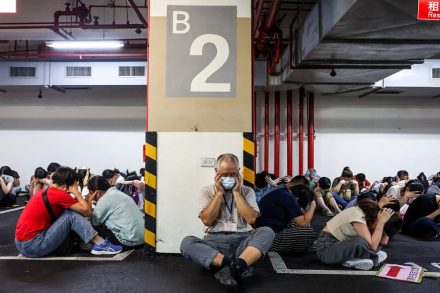
It’s still lunchtime in Taipei but the streets are strangely quiet. A few people are running with their bags, despite the sweltering summer heat, desperate to get somewhere before 1.30 p.m. I’m enjoying the air-conditioning in a local supermarket when an announcement politely informs me and the only other customer still in the shop that we need to hurry if we want to buy something. The checkout assistant rushes to hand me my change, and I head back out into the heat. The Taiwanese government is certainly taking the risk of an attack by China seriously At precisely 1.30 p.m., my phone buzzes with a yellow alert in Chinese and

Is China cooking the books on its economy?

A Western financial analyst based in Shanghai once described China’s economic statistics to me as ‘one of greatest works of contemporary Chinese fiction’. Not even the Communist party’s (CCP) own officials believed them. A cottage industry of esoteric techniques developed to try and measure what was really going on, ranging from diesel and electricity demand to the fluctuating levels of the country’s chronic air pollution, car sales, traffic congestion, job postings and construction – even the sale of underwear or pickled vegetables. One enterprising analyst regularly sent spies to Shanghai port to count the ships and throughput of trucks. Questioning the official figures has become increasingly dangerous in the China

Nato should not ignore Russia's 'coalition of murderers'

This week’s Nato summit could not come at a more pivotal moment. As recent months have shown, the challenges to contemporary global security are no longer limited to the individual threats posed by Moscow, Tehran, or Pyongyang. What makes the current situation even more concerning for the West is the multiple threats posed by the heightened bilateral and trilateral collaborations between these actors, alongside those with Beijing. Whilst the so-called CRINK (China, Russia, Iran, and North Korea) does not yet constitute any formal strategic alliance, it would be naïve and dangerous to dismiss their ties as merely superficial. On his visit to the United Kingdom on Monday, Volodymyr Zelensky called

Why is China rushing to grow its nuclear arsenal?

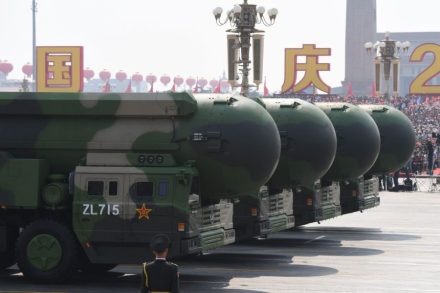
China is growing its nuclear arsenal at a faster pace than any other country on the planet, according to new figures from the Stockholm International Peace Research Institute (SIPRI). It estimates that Beijing now has more than 600 nuclear warheads and is adding about 100 per year to its stockpile. That means that by 2035, it will have more than 1,500 warheads, still only a third of the arsenal of each of Russia and the US, but nevertheless an enormous increase and a marked shift away from its proclaimed policy of ‘minimum deterrence’. To facilitate this expanding arsenal, China is building fields of new missile silos in its western desert

Has Ursula von der Leyen seen the light on China?

Coming from an American politician, the accusations would have been unsurprising. Beijing is unwilling to ‘live within the constraints of the rules-based international system’ and its trade policy is one of ‘distortion with intent’. It splashes subsidies with abandon, undercuts intellectual property protections, and as for China’s membership of the World Trade Organisation (WTO), that was probably a mistake too. It is bold of von der Leyen to raise the WTO, and it will be intriguing to see how she is greeted at the EU-China leaders’ summit Yet this tirade came not from an acolyte of Donald Trump, but from Ursula von der Leyen, the president of the European Commission

Porn Britannia, Xi’s absence & no more lonely hearts?

47 min listen

OnlyFans is giving the Treasury what it wants – but should we be concerned? ‘OnlyFans,’ writes Louise Perry, ‘is the most profitable content subscription service in the world.’ Yet ‘the vast majority of its content creators make very little from it’. So why are around 4 per cent of young British women selling their wares on the site? ‘Imitating Bonnie Blue and Lily Phillips – currently locked in a competition to have sex with the most men in a day – isn’t pleasant.’ OnlyFans gives women ‘the sexual attention and money of hundreds and even thousands of men’. The result is ‘a cascade of depravity’ that Perry wouldn’t wish on

Will America and China call a truce in their trade war?

High-level talks have started in London today between American and Chinese officials aimed at dialling down the trade tensions between the two largest economies in the world. If they result in a breakthrough, perhaps it will be known as the ‘London accord’. But can President Trump strike a ‘grand bargain’ with China? There is every chance that he might – which would give a huge boost to the global economy. The talks in London follow on from a friendly chat on the phone between President Trump and his counterpart in Beijing, President Xi. Both sides have already stepped back from an all-out trade blockade, with the United States reducing the

What the next phase of Trump's trade war with China looks like

For clues as to where US policy towards Beijing goes next, look beyond Donald Trump’s chaotic and erratic tariffs and focus instead on the small print of the US-UK draft trade deal. It has a clear message: that if you want to do business with Washington, keep China at bay. The agreement itself doesn’t quite put it that way. It doesn’t need to. Instead, there are broad pledges to cooperate and coordinate on ‘the effective use of investment and security measures, export controls, and ICT [information and communications technology] vendor security’, and ‘to address non-market policies of third countries’ – all tailor-made for China, even if the country is not

Trump's trade war is driving Russia further into China's arms

Trade between Russia and China is no longer booming as it was immediately after Moscow’s full-scale invasion of Ukraine three years ago. In 2024, annual trade between the two was up 1.9 per cent from the previous year to $240 billion (£182 billion). But in the first four months of 2025, it fell 7.5 per cent from the past year to just $71.1 billion (£54 billion), according to Chinese customs data. Chinese exports to Russia are down 5.3 per cent ($30.8 billion or £23 billion), while Russian deliveries to China are down 9.1 per cent ($40.3 billion or £30.5 billion) between January and April.  The drop in Russian exports can

China has won the trade war with Trump

This weekend, the United States struck a deal with China that will see American tariffs on Beijing’s exports come back down to manageable levels again, while China will lower its levies on imports from the US. The giant container ports on both sides of the Pacific can now be re-opened. The factories across China can get back to work, and Wal-Mart and Target can start placing orders again. The global economy can start moving once more – but significantly, it will very quickly become clear who has won the tariff war: China. The deal that was announced this morning in Switzerland, where negotiations took place, by the US Treasury Secretary

Xi has no right to be 'guest of honour' at Putin's Victory Day

The presence of Chinese president Xi Jinping as ‘guest of honour’ at Vladimir Putin’s Victory Day military parade in Moscow today, which will include soldiers from the People’s Liberation Army (PLA), is both chilling and fraudulent. Chilling, because it is the most explicit endorsement yet by Xi of Russia’s militarism and its poisonous narratives about the Ukraine war, and fraudulent because the Chinese Communist party played a marginal role at best in the Allied victory in the second world war. In the run-up to today’s parade, Putin has linked victory over Nazi Germany with his unprovoked invasion of Ukraine, which he has falsely claimed is to achieve ‘denazification’ of the

A compilation of Chinese Whispers: understanding China

108 min listen

As Chinese Whispers comes to an end, here is a compilation of some of the best discussions Cindy Yu has had across the podcast to understand modern China and President Xi.  On this episode you can hear from: journalist Bill Hayton on what it means to be Chinese (1:10); writer and actor Mark Kitto and author Alex Ash on being foreign in China (13:07); professor of international history Elizabeth Ingleson on whether China’s economic boom was made in America (23:08); professor of Chinese studies and former diplomat Kerry Brown and professor of history Steve Tsang on how the cultural revolution shaped China’s leaders today (47:05); journalist Bill Bishop and professor

Why the new pope won't be welcome in China

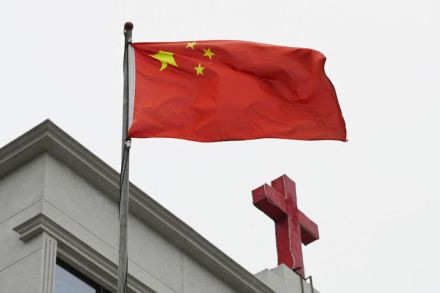
Choosing a new pope has more in common than you might expect with the Chinese Communist Party (CCP) congress’s system for picking a new general secretary. Both processes are autocratic, secret, and rigid; they focus on the leader’s infallibility, and involve a lack of succession planning. And women don’t get a look in. China’s president Xi Jinping commands over 1.3 billion souls; so, too, will the new pope. He will also own the allegiance of an estimated 12 million Chinese. But how will he exercise his pastoral care and oversight? Pope Francis, who was laid to rest yesterday following his death on Monday, had a ‘thing’ about China. He was