Chinese Whispers
A podcast hosted by Cindy Yu on Chinese politics, society, and more.

A podcast hosted by Cindy Yu on Chinese politics, society, and more.
30 min listen
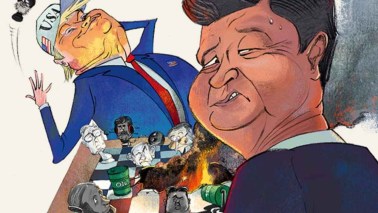
As the crisis in the Middle East has escalated, Donald Trump’s posturing has led many to question his strategy – and if he even has one. Geoffrey Cain, former foreign correspondent, expert on authoritarian regimes – and the author of this week’s cover piece in the Spectator, joins Freddy Gray to explain why Trump’s ultimate target in the war is China. From the Belt and Road development initiative to more tacit bilateral support, President Xi has been playing a game of chess, to try to check America’s power. With Nicolas Maduro arrested and Ayatollah Khamenei assassinated, President Trump is showing his willingness to project American power, at whatever cost –
50 min listen
As the conflict in the Middle East escalates, what is Trump’s game plan? The Spectator’s cover piece this week, by Geoffrey Cain, argues that Trump’s ultimate target in this war is China; every dictator gone, weakens the Chinese regime. As Freddy Gray explains further on the podcast, Trump’s worldview is shaped by the events he grew up with – including then President Nixon’s visit to China in the 1970s. As well as making sense of Trump’s plan, the Spectator team take us through the dramatic events of the past week, including how Starmer appears to have alienated Britain’s allies over Iran. Plus – Lord Glasman makes the case for Reza Pahlavi, the Crown

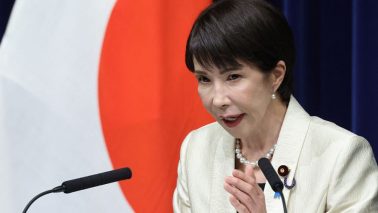
One of the most serious issues in the well-filled in-tray of freshly endorsed Japanese prime minister Sanae Takaichi is Taiwan (which China claims as its own sovereign territory) and the lamentable state of Sino-Japanese relations. Takaichi provoked fury with comments in the Japanese parliament in November when she stated that were China to attack Taiwan, it would be interpreted as a ‘survival-threatening situation’ for Japan, implying a military response could follow. Under the terms of its constitution, Japan is severely limited in its military options but Takaichi appeared to be preparing more solid ground with her phrasing. A 2015 law changed the constitution allowing Japan to retaliate if the country
According to unconfirmed reports, General Zhang Youxia, China’s vice-chairman of the Central Military Commission (CMC), sent a company of troops (over a hundred or more) to the government’s Yingxi Hotel in western Beijing on 18 January. Their mission was to arrest Xi Jinping. A few hours before, the Chinese president – alerted by an informant – set in motion countermeasures. Troops under the command of Cao Qi, head of Xi’s Central Guards Bureau, ambushed Zhang’s soldiers. In the ensuing gunfight at Yangxi Hotel, nine guards were reportedly killed along with dozens of Zhang Youxia’s soldiers. Throughout China, military movements have been banned and troops and officers have been confined to
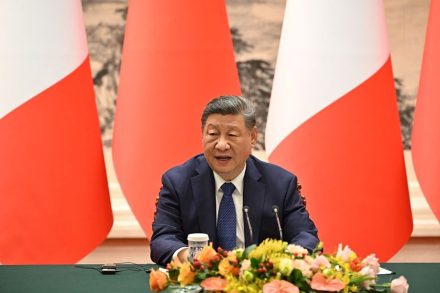
Roedean is now known as ‘Beijing High’. Cheltenham Ladies’ College is ‘Hong Kong College’. In the country’s most elite boarding schools, pupils say that they are one of just a handful of English children. Others note that Chinese has become the dominant language in hallways and dormitories. Many English parents can no longer afford a boarding school education for their children. And the pressure of recently introduced VAT on fees, as well as above-inflation rises year on year, means the number able to cough up will dwindle further. By contrast, China and Hong Kong’s growing economy and cultural obsession with education provides a surfeit of parents with the cash needed
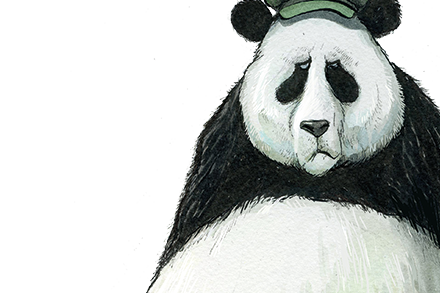
Keir Starmer is poised to give the go-ahead for China’s new mega-embassy near the Tower of London – the biggest diplomatic mission in Europe and a ‘nest of spies’ in the eyes of its opponents. But this will not be the end of the story. A legal challenge seems certain to follow, and the decision will be seen by critics as further evidence of Starmer trying to cosy up to Beijing at the expense of national security. In addition, the timing could not be worse, given the turbulence in geopolitics and strained relations with Trump’s America. The decision is expected as early as today, with Starmer claiming Britain’s intelligence agencies
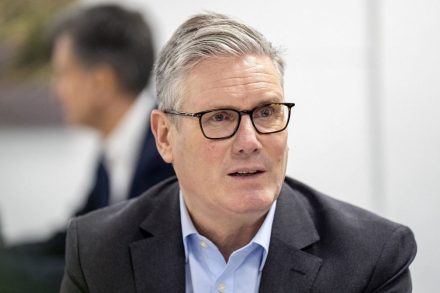
Donald Trump is playing hemispheric monopoly. Depending on what day of the week it is, the President’s focus alternates between Venezuela, Canada, the Panama canal – and for the last twelve months or so, Greenland. Given what Trump and his team have said over the past week, their acquisition plans for the island are well advanced. But why exactly does he want Greenland? The world’s largest island is an integral part of the Kingdom of Denmark and is about three times larger than Texas. While the term du jour is geopolitics, perhaps the most plausible reason for why Trump is gunning for Greenland is ego-politics. We have a president eager

Krill – the small, shrimp-like crustacean – is a keystone species. It underpins the marine ecosystem of the Southern Ocean, where it is estimated that between 300 and 500 million tonnes of them live. They are consumed by marine animals, including whales, seals and penguins, as well as fish and squid. But is krill now at risk of being overfished? And are the warnings of conservationists being ignored by countries more interested in making a quick profit? Nowadays, krill features in dietary supplements, livestock food and pet food. It is also processed to produce fish food for use in aquariums and aquacultures. The global krill industry was valued at well over

The conviction of 78 year-old British citizen, Hong Kong entrepreneur and pro-democracy campaigner Jimmy Lai yesterday on two counts of conspiracy to collude with foreign powers and one charge of conspiracy to publish seditious publications is one of the great travesties of our time. It was yet another dark day for Hong Kong and a direct assault on the values of freedom, human rights and the rule of law. It was not, however, a surprise. Ever since Lai was arrested and jailed five years ago on multiple other trumped-up charges, and ever since his trial under Hong Kong’s draconian national security law began two years ago, the verdict has been
Donald Trump’s meeting with President Xi was the standout moment of this month’s Asia-Pacific leaders’ summit in South Korea. Yet almost as much attention focused on the rumours that Trump’s gaze had turned once again to North Korea. Addressing suggestions he would meet Kim, the American President told reporters, ‘I’d be open 100 per cent. I get along very well with Kim Jong Un.’ A meeting never materialised, but speculation – and tension – has only grown since. Days after Trump’s departure, US Defence Secretary Pete Hegseth arrived as part of his own tour of Asia. In Seoul, he became the first defence secretary in nearly eight years to visit
It was only a matter of time before Japan’s Iron Lady would be targeted by China. Prime Minister Sanae Takaichi mentioned how Tokyo might resort to force were Beijing to take military action over Taiwan: ‘If there are battleships and the use of force, no matter how you think about it, it could constitute a survival-threatening situation,’ she said. In response, China’s consul-general in Osaka, Xue Jian, threatened, on Monday, to ‘cut off’ the Japanese prime minister’s ‘filthy neck…without a moment’s hesitation’. Xue’s vitriolic online reaction, which he subsequently deleted from his X account, underscores how China’s wolf-warrior diplomacy has anything but abated. Yet, the incident highlights a more important

It is rare to see Xi Jinping burst into laughter. But something must have tickled China’s Paramount Leader when he met South Korean President Lee Jae-myung on the sidelines of the Asia-Pacific Economic Cooperation (APEC) summit in Gyeongju, South Korea. The summit will largely be remembered this year for Donald Trump’s tête-à-têtes with East Asian leaders, whether Xi Jinping, Lee Jae-myung, or Sanae Takaichi – despite the US president deciding to give the actual summit a miss. Yet, in what was a bumper week for South Korea, the summit’s host, other bilateral meetings must not go unacknowledged. When Lee met Xi Jinping on Saturday, few expected the two leaders to
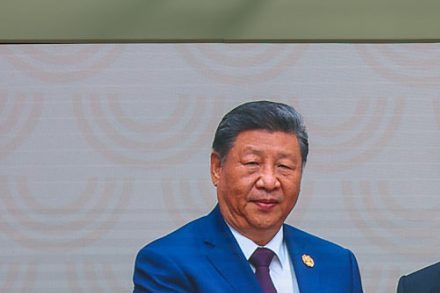
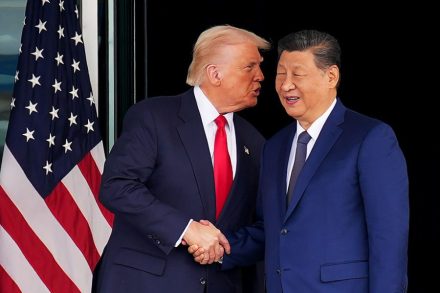
Donald Trump says his meeting with Xi Jinping on the sidelines of the APEC summit in South Korea today was ‘amazing’ and that, on a scale of one to 10, it merited a 12. Which means that on a scale for scepticism, it probably deserves a 13. Its biggest achievement appears to have been to at least put the trade war between the world’s two biggest economies on hold, though stock markets, excitable all week as the summit approached, opened flat this morning. Fundamental issues remain unchanged, the momentum towards economic separation will continue, possibly accelerating during the breathing space provided by an extended truce that is unlikely to last.
When Dominic Cummings claimed this week that China had hacked into Britain’s most secret systems, the government rushed to deny it – understandably, given the political heat over the collapsed Chinese spy trial. But even if Cummings’ story proves false, the underlying truth remains: China has been systematically targeting Western networks for years, and extracting vast quantities of sensitive information. What is striking is not the allegation, but the reaction by a government so anxious not to call China a threat that it pretends not to see one. It is a surreal position, because the danger has been obvious for years. The truth is that China poses a greater strategic threat to Britain than any state since the
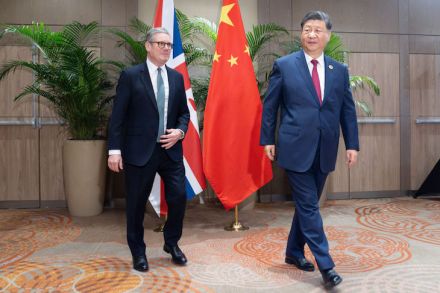
Exactly a year ago, this magazine warned that ministers were showing a dangerous naivety towards China. We revealed that the Chancellor, the Foreign Secretary and the Prime Minister were all intent on cosying up to Beijing. They were scornful of the wariness Conservative ministers had shown towards the Chinese Communist party. The Labour leadership believed that their pursuit of growth could be supercharged by Chinese investment. They hoped one of their missions – the drive to decarbonise the grid – could be facilitated by Chinese tech. They thought Tory attitudes to China were warped by ideology and a more pragmatic line towards Beijing would be economically rewarding. A ‘China Audit’
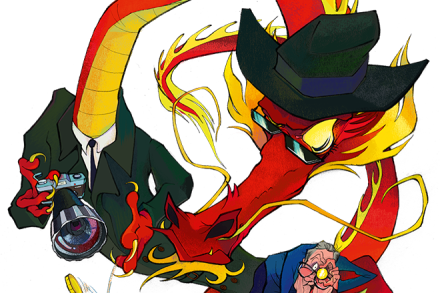
On 3 July a Chinese man, Xu Zewei, was arrested in Milan to face extradition on nine charges relating to the hack carried out by a group called Haf-nium during the Covid pandemic. Western companies had secrets stolen in 2020 and 2021 when a weakness in the Microsoft Exchange servers was exploited. The National Cyber Security Centre (NCSC), part of GCHQ, later said 70 British firms had fallen victim to ‘a malicious act by Chinese state-backed actors’. The court documents claim that officers of China’s ‘Ministry of State Security and the Shanghai State Security Bureau directed Xu to conduct this hacking’. China is constantly probing for ‘weaknesses’ in British defences
13 min listen
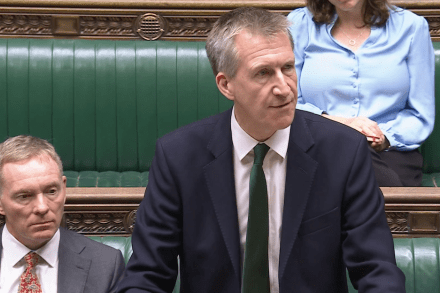
Tim Shipman and Charles Parton, China adviser at the Council on Geostrategy, join James Heale to discuss the ongoing fallout over the collapse of the Westminster spy case. Security minister Dan Jarvis answered an urgent question on the matter late on Monday in Parliament, stringently denying that the government played an active role in collapsing the case. But, as Charles and Tim stress, the case still doesn’t add up. Is it as simple as the government not wanting to offend China? And is the deputy national security adviser being ‘hung out to dry’? Produced by Patrick Gibbons.
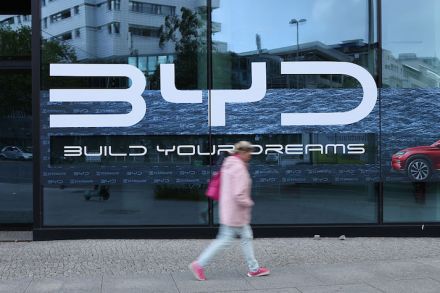
From Thailand to Brazil, a surge of imports from Chinese electric vehicle (EV) producer BYD has the familiar pattern of being followed by the destruction of domestic automotive jobs. The UK is unlikely to be the exception. This week’s news that Britain has become the number one market for BYD should ring alarm bells. Our domestic automotive producers, that have already announced thousands of job losses this year, are unlikely to emerge unharmed. BYD increased its sales in the UK by 880 per cent in September For two years, analysts and policymakers have warned of the economic risk Chinese EVs pose to the legacy automotive industry through a new wave of deindustrialisation and
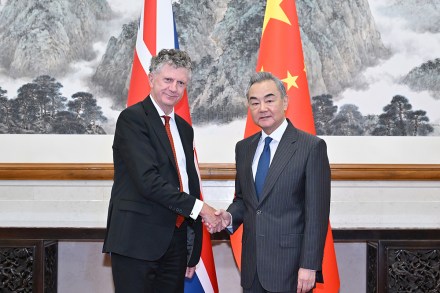
The antics of Keir Starmer and his top security adviser over the collapsed China espionage case bring to mind the slapstick British movie Carry On Spying – which is precisely the message it will have conveyed to Beijing. Instead of Bernard Cribbins, Kenneth Williams and their team of fictional incompetents, the real-life Whitehall farce has Jonathan Powell on a single-minded mission to appease China. Powell, Starmer’s national security adviser, has been accused of torpedoing the trial to avoid embarrassing China at a time when he is leading efforts to rebuild diplomatic ties with Xi Jinping. One can only imagine the despair in Britain’s security agencies and the Crown Prosecution Service,

Xi Jinping effectively vanished in July and the first half of August. Some China watchers speculated that his unexplained absence was a sign that he was losing his grip on power. But he has since reappeared and been very visible again. At the end of last month, he visited Tibet, then indulged in a high-profile, back-slapping meeting with Vladimir Putin and the Indian Prime Minister Narendra Modi in Tianjin. He capped off his busy fortnight with the 3 September military parade in Beijing and a second meeting with his star guest Putin, this time accompanied by Kim Jong-un. So, a great triumph for the neo-Maoist leader and the new Axis