Food & Drink

Americans deserve burrito abundance

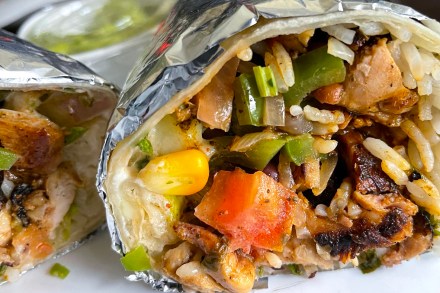
It’s a tough time to be in the business of burrito-making. The price of beef is on the rise. A farm supplying Taco Bell’s shredded lettuce was linked to the spread of cyclospora – a parasite whose laxative effects have been, for at least two people in Michigan, fatal. The latest salmonella outbreak, traced to jalapeños from Mexico, has driven Chipotle and Qdoba to announce recalls. And now, a $20 burrito has become a symbol of GOP infighting. It’s tainted, through and through. The argument began when Andrew Kolvet, a spokesman for Turning Point USA, wrote on X: “One of our TPUSA college students gave me his take on affordability: ‘A burrito shouldn’t cost $20.

The $20 burrito has become an unlikely point of contention in Republican politics

Drinking with Geoffrey Madan

Geoffrey Madan (1895-1947) was an English aesthete of the first water. Although he fought and was wounded in the Great War, his main passions were quiet: wine, old silver, and books, especially books. Madan was an accomplished classicist – he procured a schoolwide holiday while at Eton for his account of the establishment written in Herodotean Greek. He published no books. He did compile a large collection of aphorisms, mostly in English but many in other languages. A selection of these were published in 1981 by Oxford under the title Geoffrey Madan’s Notebooks. In one of the handful of entries Madan himself contributed to this chrestomathy, he described the collection as “an anthology of the forgotten sayings of great men, and the great sayings of forgotten men.

london-style pizzerias

What ‘London-style’ pizzerias could learn from America

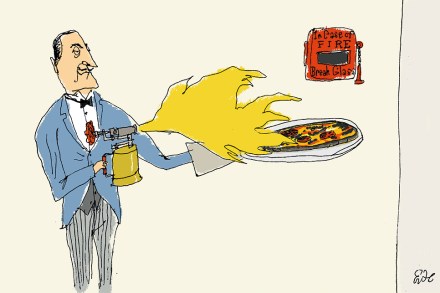
“London-style pizza.” People think there is such a thing. Somewhere over the past three years, the pizza hype in Britain’s capital city has gotten out of control. Our economy is struggling and chefs have turned to the food that literally nobody dislikes. Loads of new places have opened: we’ve had Vincenzo’s, Carmy’s, Breadstall, Gracy’s, Lenny’s, Dough Hands, etc. Can’t you tell they’re all incredibly different? All of them really (although they would quibble) have been putting out the exact same style of pizza. The problem is: what do you call it? It’s hard to describe. Critics say it’s “burnt.” There’s some truth to that.

Grasshopper Pie is like a teenage fever dream

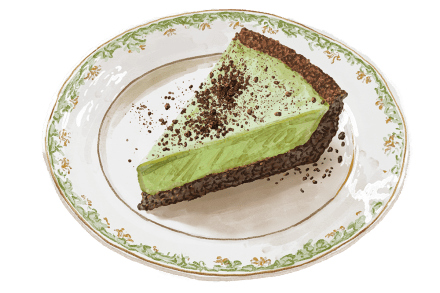
Grasshopper pie is an unlikely dish: bright green, mint-flavored, combined with obscure liqueurs and set with marshmallows, all sitting in an Oreo crust. It feels like the fever dream of a sweet-toothed teenager who’s been let loose on their parents’ drinks cabinet, and will regret it tomorrow. The pie is based on the cocktail of the same name, which combines equal parts crème de menthe, crème de cacao blanc and cream. It’s a heady mix of mint, white chocolate, dairy and alcohol. The cocktail hails from New Orleans and its origin is claimed by Tujague’s in the French Quarter, where it was supposedly invented by the owner, Philip Guchet, in 1918. It tastes exactly as you’d imagine and is, forgive me, far better suited to a pie filling than it is to a drinks party.

grasshopper pie

My night searching for Lindsey Graham

Di Vino Rosso is one of the few political watering holes in Columbia, South Carolina. It’s popular in its own right thanks to a Michelin recommendation last year and the kinds of bartenders who convince you they’re pouring drinks out of friendship, not economic necessity. It's frequented by state senators, congressional staffers of the 2nd and 6th districts, and their benefactors. It’s where you take a cohort of soon to depart home-office interns to feel special. It has Instagram-forward warm lighting; it feels like you’re n+1 drinks deep as you cross the threshold. It’s nominally Italian and devoid of Italians.

Why Anthony Bourdain’s shows leave a bitter taste

The Unabomber, Ted Kaczynski, never knew of Anthony Bourdain, I’d guess, but he understood his type well. Bourdain, who died in 2018, was an oversocialized leftist. A man who, to avoid a deep sense of guilt and worthlessness, overidentified with the system and presented conformity with its values as a kind of rebellion. That might sound complicated, but it’s really not. “Generally speaking,” Kaczynski once wrote, “the goals of today’s leftists are NOT in conflict with the accepted morality. On the contrary, the left takes an accepted moral principle, adopts it as its own and then accuses mainstream society of violating that principle.

bourdain

Is barbecue a summer food?

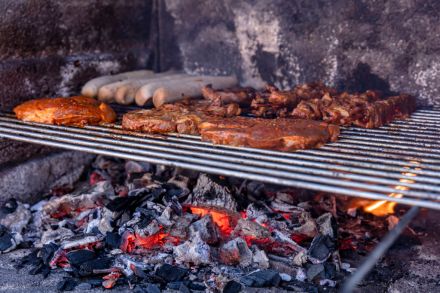
As someone born and raised in the American South, I’ve never understood why people consider barbecue a summertime food. If you do it right, barbecue is cooked outdoors over a wood fire. It’s frequently eaten outdoors, too, whether at a friend’s backyard gathering or at barbecue joints with picnic tables outside. Barbecue isn’t exactly the lightest food, with all the well-marbled brisket and thick slabs of ribs – not to mention hearty sides such as mac ’n’ cheese. Just thinking about eating a big barbecue platter on an August afternoon makes me want to lie down in a cool room to nap. Still, in the minds of magazine editors and television producers, at least, “barbecue season” starts with Memorial Day and runs through Labor Day.

Drinking 2009 Mouton Rothschild at Butterworth’s

I have always wondered whether The Compleat Angler, Izaak Walton’s piscine classic, would have enjoyed its wide and longstanding recognition absent the antique spelling “compleat.” I somehow suspect that a book titled The Complete Angler would not have made the same impression, especially on modern readers. First published in 1653, the book went through many editions in Walton’s life and after. It is a charming, leisurely guide, “not unworthy,” as its original title page observed, “the peruſal of moſt Anglers.” (Those long “s”es add a little something, don’t you agree?) It is said that Walton, a staunch anti-Cromwellian, good fellow, was particularly fond of the saying “Study to be quiet.

Adams

Time for Americans to give tea a second chance

“Last night,” John Adams confided in his diary on December 17, 1773, just after the Boston Tea Party, “3 Cargoes of Bohea Tea were emptied into the Sea... This is the most magnificent Movement of all. There is a Dignity, a Majesty, a Sublimity, in this last Effort of the Patriots, that I greatly admire.” Some things – like hyperbole and random capitalization – never seem to go out of style in American politics. Tea has been less fortunate. Once the most beloved non-alcoholic beverage in the 13 colonies, it fell so low in America’s regard, as Emily Dickinson would say, we heard it hit the ground. Or the water, in the case of the Boston bunfight.

constitution

The republic’s public life started with dinner

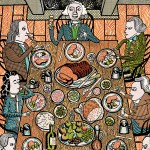
The Constitution was signed on a Monday. That much everyone knows. What the official record tends to skip is what happened right afterward. Forty-two men – some of them barely on speaking terms, three of them having refused to sign at all – stepped out of the Pennsylvania State House into the thin September air. Their wigs were damp from the long, sticky summer. Instead of heading back to their lodgings at the Indian Queen or Mrs. Marshall’s boarding house, they turned south on Chestnut, walked a couple of blocks, and went to City Tavern. At the tavern, on the corner of Second and Walnut, they sat down and ate together.

Bryan Cranston and Aaron Paul’s cocktail of choice for toasting the 250th

There’s something special about raising a glass with people you’ve built history with. For us, Dos Hombres has always been about friendship, craftsmanship and creating moments that bring people together. As America turns 250, we’ll be toasting to the freedom to build something of your own, the people who’ve been with you from the beginning and the simple joy of slowing down long enough to appreciate it all. Ingredients for one serving 1 oz Dos Hombres Blanco Tequila 60ml cranberry juice 1 oz Cranberry Juice (sweetened) 1/2 oz Aperol 1/2 oz Fresh Lime Juice Add all the ingredients into a mixing pitcher with ice. Shake well and strain into a large rocks glass rimmed with salt and chili powder.

Dos Hombres

Chicken Milanese is the king of homemade fast food

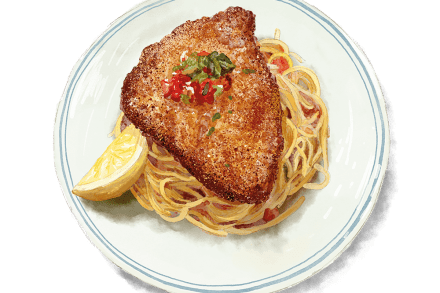
When it comes to home cooking, we’re obsessed with optimization. Today this manifests itself in reels on Instagram offering a "hack" to make the time you spend in your kitchen shorter and your dinner to arrive more quickly. Harder, faster, better, stronger. None of this is new: there was a time when every Jamie Oliver cookbook shaved ten minutes of the promised cooking time off the last. Delia Smith’s How to Cheat at Cooking caused a public outcry (can you believe she advocated for frozen mashed potato?). The whole appeal of air fryers is that they’re fast, and while slow cookers don’t exactly get to their destination quickly, they do so with as little intervention as possible from the cook.

chicken milanese

Who stands to gain in the pistachio wars?

If you’ve ever lived in Marseille – where the habit of exaggeration is imbibed with mothers’ milk – you’ve heard about the sardine that blocked the port. But that’s nothing compared to the pistachio that took over the world. In late 2023, Dubai chocolate, a new kind of chocolate bar filled with pistachio cream, tahini and crunchy, toasted phyllo pastry, went viral. Chocolate brands, bakeries and purveyors of fine foods were quick to jump on the trend. Coffee chains began offering pistachio chocolate drinks (iced Dubai-chocolate matcha, anyone?) and delectable pistachio bomboloni – soft donuts filled with pistachio cream – came back on the menu in Italian restaurants.

pistachio wars

Fourth of July barbecue traditions through the years

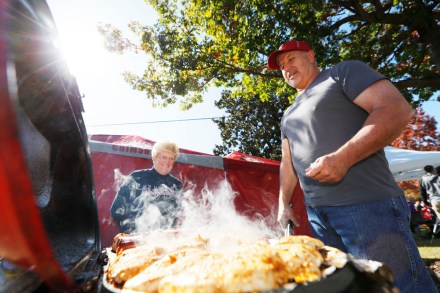
Barbecue, like fireworks and flying red, white and blue flags, is one of our oldest Independence Day traditions, dating back to the early days of the American republic. A celebratory feast was the centerpiece of the holiday from the very beginning. On July 4, 1777, the Continental Congress in Philadelphia commemorated the first anniversary of the signing of the Declaration of Independence with “an elegant dinner,” as newspapers described it, followed by rounds of toasts to liberty and the memory of those who had fallen in the ongoing war. In the decade that followed, the public dinners grew larger, and perhaps a little less elegant, as they moved outdoors and began to feature whole animals cooked on pits in the ground.

Three delicious but unpronounceable wines

Some years ago, I edited and provided an introduction and notes for an edition of Walter Bagehot’s book Physics and Politics (1872). The book has nothing to do with physics in the modern sense of the word (though an argument could be made that it does bear on the original meaning of the Greek word physis, nature. Rather, its elaborate subtitle sheds light on the book’s content: “Thoughts on the Application of the Principles of ‘Natural Selection’ and ‘Inheritance’ to Political Society.” Bagehot was writing a scant dozen years after the publication of On the Origin of Species.

california

How California disrupted the French wine industry

Much as I love France, who sold us the idea of superior French taste in the first place? Why do we continue to beat ourselves up about their supposedly ultra-cool cinema, peerless fashion sense and exquisite food and drink? Has anyone contemplating the pool of congealing demi-glace set before them at a standard-issue Paris café been able to maintain any delusion of French grandeur? As it happens, a significant blow to French national pride in these matters came almost exactly 50 years ago, at the Paris Intercontinental Hotel, where, in a blind tasting watched over by the world’s media, ten of the host country’s best vintages were set in contest against upstarts from California.

Why is May National Barbecue Month?

We’re almost to the end of May, which means National Barbecue Month will soon be drawing to a close. I hope you’ve been celebrating appropriately. You did know that May is National Barbecue Month, right? And that May 16 was National Barbecue Day? I, for one, can never forget, for each year my email is flooded with pitches from PR reps convinced I have completely run out of things to write about. “With it being National Barbecue Month,” one begins, “I wanted to check in and see if you have any roundups planned of must-try barbecue spots in Little Rock.”  Another generously offers, “In honor of National Barbecue Month, we’re sharing this coveted BBQ Shrimp & Grits recipe from Nashville’s [restaurant name redacted].

national barbecue month

The challenge of dining al fresco in Chicago

The food and drink editor was taken with my idea for a piece on the challenges of outdoor dining in the big city, specifically Chicago, the big city where I live. “Do you know when you might be able to file?” she asked. “Ma’am,” I replied, “this morning it was 23 degrees Fahrenheit. One of the challenges of outdoor dining in Chicago is avoiding frostbite. How far can you push it out?” The number of outdoor diners in Chicago killed by shrapnel is remarkably low I would have preferred the Fourth of July. She gave me till the end of April. Fine, I said. Even in Chicago, two straight months of inhospitable weather would be unusual, setting aside that 43-day stretch when the mercury never got above freezing. (No joke. December 28, 1976 to February 8, 1977. Look it up.

An excuse to drink

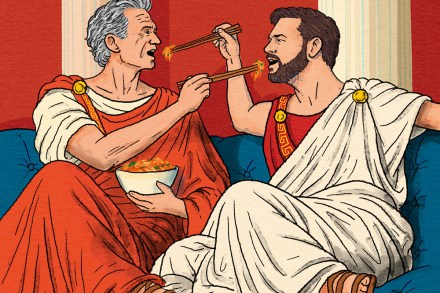
We have only fragments of The Satyricon by Titus Petronius (AD 27–66). The centerpiece of the narrative that survives is the so-called “Cena Trimalchionis,” the banquet of Trimalchio in which a dazzling array of exotic foods and rare wines are paraded before a handful of gratefully stupefied guests. While the host of this feast was the aforementioned Trimalchio, the narrator was a young buck called Encolpius. He is appropriately amazed by the delicacies and potations that appear one after the next before him. The Satyricon is a work of satire (Menippean satire for those keeping track). The antics recounted are recited partly tongue in cheek. Everything is turned up to eleven. The point is parody.

Roadside produce stands: the last enclave of social trust

One of the more dystopian aspects of modern life is that in nearly every major American city, you cannot simply walk into a convenience store to buy something. Instead, you often have to ring a small bell and wait for a clerk to come unlock your tube of toothpaste or bottle of shampoo from behind a glass case. This is considered normal, even sensible, in a cultural moment where social trust hovers around a record low. One place this doesn’t feel normal, however, is at America’s many local farm stands. The roadside farm stand emerged in the early 20th century as automobiles became more widespread. Traditionally, farmers would set up small tables or wagons to sell surplus produce, eggs and dairy goods to passersby.