Economy

  • AAPL

    213.43 (+0.29%)

  • BARC-LN

    1205.7 (-1.46%)

  • NKE

    94.05 (+0.39%)

  • CVX

    152.67 (-1.00%)

  • CRM

    230.27 (-2.34%)

  • INTC

    30.5 (-0.87%)

  • DIS

    100.16 (-0.67%)

  • DOW

    55.79 (-0.82%)

Is Britain losing its sense of fairness?

Has Britain become a freeloader’s paradise, asks the Spectator’s economics editor Michael Simmons in our cover piece this week. Michael analyses ‘the benefits of benefits’, at a time when Britain’s welfare bill is burgeoning and most households are struggling with cost of living. For example, while a family of four can expect to pay £111 to visit the Tower of London, that is just £4 total on Universal Credit (UC), and for London Zoo it is £108 compared to £26. Michael is not arguing against the idea of helping those in need, but pointing out that – as the benefits bill continues to increase – this is another case of

Spotlight

Featured economics news and data.

Cutting Britain’s giant welfare bill would be an act of kindness

Does having money really matter that much? There are those, usually with quite a bit of it, who want us to care less about materialism. But, unequivocally, money really does matter – not because of any status it supposedly brings, but for the freedom it buys: freedom to choose how we live and how we look after others. Considering this, it seems that the deep disillusionment with mainstream politicians in recent years stems from a protracted and ongoing period of stagnant living standards over which they have presided. But the truth is that the average person has not got poorer since the global financial crisis. They have got a little

Japan has been stunned by the Trump tariffs

Virtually the whole world is waking up to the reality, not threat now, of President Trump’s Liberation Day tariffs, but in few places will the sense of shock and resultant anxiety be greater than Japan, where a whopping 24 per cent has been slapped on exports to the US. The Japanese, who have grown used to a decent relationship with successive American administrations and a whopping trade surplus, will have many sleepless nights ahead. The reaction here has not been one of anger or resentment – more stunned bemusement. Prime Minister Shigeru Ishiba, who did his best to cozy up to Trump on a recent summit in Washington (he presented Trump

Trump’s tariffs are just bizarre

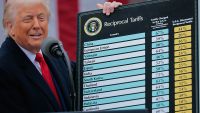
They would restore manufacturing, force trade barriers to be taken down, and allow new industries to be created. There have been various different explanations for why President Trump’s new tariff regime made sense. And yet when they were finally revealed yesterday one point was clear. There was no logic. The tariffs were just weird. The big reveal turned out to be a board that flapped around in the wind outside the White House. Donald Trump marked Liberation Day by holding up a placard with a list of countries – each one with a number next to it. The White House has worked out the tariffs it estimates American goods face in

Can Trump defend his tariff calculations?

When President Trump held up an easel in the White House Rose Garden illustrating each country’s ‘tariffs charged to the USA’ and the new ‘U.S.A. discounted reciprocal tariffs’, there appeared to be some small print underneath the first column, barely readable. Then printed copies started to circulate the garden. Underneath the column showing each country’s ‘tariffs charged’, it read: ‘including currency manipulation and trade barriers’.  It was clear that the figures published by the Trump Administration were their interpretation of tariff calculations. It was also immediately clear that some countries were going to dispute the figures. But exactly what had been calculated was not immediately obvious. The picture is still hazy

Britain needs a Rearmament Isa

The City’s self-styled ‘cheerleader in chief’, Lord Mayor Alastair King, on a recent visit to Beijing and Shanghai found leading Chinese banks keen to expand in London. What with Chinese diplomats also keen to establish a fortress-embassy at Royal Mint Court on the City’s eastern edge, that may ring alarm bells with those who regard Xi Jinping’s neo-Maoist regime as anything but friendly. But as King also observes, ‘the tectonic plates are shifting’. All geopolitical relationships are up for review – though what follows is my own analysis, not the Lord Mayor’s. A previous British visitor to Shanghai, chancellor George Osborne in 2015, declared an urge to be ‘China’s best

Trump has bet the house on tariffs

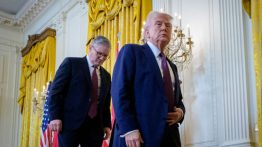
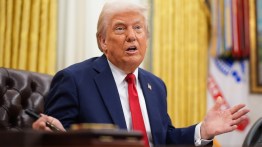
‘My fellow Americans, this is Liberation Day’, Donald Trump told the audience that had gathered in the Rose Garden for his official signing of his executive order to put import levies on goods imported to the United States from around the world. There was no hesitation, there were no caveats: only utter enthusiasm from both the President and almost his whole cabinet, who cheered Trump on as he declared 2 April ‘the day America’s destiny was reclaimed’. Vice President J.D. Vance, Health Secretary Robert F. Kennedy, Secretary of State Marco Rubio, Secretary of Homeland Security Kirsti Noem and House Speaker Mike Johnson were just some of the attendees, who all

Trump prepares to take his tariff war global

In just a few hours, Donald Trump is set to take his tariff war global. At 9 p.m. UK time (4 p.m. in Washington), the American President will unveil a sweeping set of trade tariffs, on what he’s dubbed ‘Liberation Day’. What exactly Trump plans to announce remains unclear, but reports suggest everything from global reciprocal tariffs to the enforcement of the 25 per cent duties originally aimed at Mexico and Canada could be on the table. As Katy Balls noted in today’s Lunchtime Espresso, any hopes in Whitehall of securing a UK exemption have all but evaporated. The focus has now shifted from lobbying to damage control, as the economic

Labour’s welfare crackdown is a sham

You can already sense Rachel Reeves’s spin machine whirring into action. It was Donald Trump wot ruined my careful book-keeping, the Chancellor will tell us as once again her fiscal headroom disappears and she ends up banging her scalp painfully on the ceiling. But could it be unrealistic expectations for her welfare reforms which prove her undoing? Tucked away in the government’s own figures is the revelation that Labour’s welfare shake-up could result in 400,000 more people signed off unfit for any work. Britain’s workshy culture has received another boost The contents of the impact assessment on her Spring Statement, published by the Office for Budget Responsibility (OBR) last week,

Trump’s tariff plan has been tried before. It failed

Donald Trump thinks ‘tariff’ is the ‘most beautiful word in the dictionary’. Today is ‘Liberation Day’, and the US president is holding true to his campaign trail promise to impose tariffs on imports. Cars, steel and aluminium are expected to be hit with levies of up to 25 per cent. A 10 to 20 per cent universal tariff on all goods imported into the United States is also said to be on the cards. Trump isn’t the first to think tariffs are a secret weapon. A century ago, the British Conservatives’ were obsessed by tariffs. Like Trump, they saw them as an ideal tool to promote industrial revival and lower taxes.

Trump’s tariffs could damage the dollar

Donald Trump says his tariffs are about liberation. But his aggressive turn toward protectionism may signal the beginning of a shift away from the foundations that have upheld American prosperity for decades. The US dollar’s status as the world’s reserve currency has long enabled the United States to consume far more than it produces, to run massive deficits without consequence, and to project unparalleled geopolitical power. Trump’s decision to slap tariffs of up to 25 per cent on imports could put that all at risk. When French president Valery Giscard d’Estaing referred to the United States’ ‘privilège exorbitant‘ he was not referring to America’s central position in the post-WW2 world

The minimum wage is too high

Council tax is going up. Train fares are rising. Broadband will cost more, and so will electricity and water. April opens with a blizzard of price rises that will make it far harder for everyone to make ends meet, especially if they are on a low income. The one compensation is that the minimum wage is going up as well. There is just one catch, however. The UK now has one of the highest minimum wages in the world – and very soon it is going to become painfully clear it will start costing jobs. It is the one statistic the government will be boasting about on Tuesday. The National Living

Starmer’s costly failure to get a Trump tariff carve-out

The UK should have been doing everything possible to secure an exemption from Trump’s tariffs. We could have scrapped the digital services tax that is largely levied on the American tech giants. We could have opened our agricultural markets – even to chlorinated chicken. Heck, we could have offered President Trump his own apartment in Buckingham Palace, given how much he loves the royal family. This was the opportunity of the decade – but the Starmer government has already blown it. We will find out the full extent of the tariffs Trump plans to levy on all of America’s main trading partners tomorrow on what he has oddly termed ‘Liberation

There’ll be no liberty on Trump’s ‘Liberation Day’

Beware the words ‘liberty’ and ‘liberation.’ There are no end of evils committed in their names. Wednesday, according to Donald Trump, will be America’s Liberation Day, as citizens are freed from the yoke of free-ish trade. That is the day that importers who have been showering US consumers with cheap goods will be slapped with punitive tariffs. So far, the only thing that US consumers appear to have been liberated from is their money. Stock markets in the US and around the world have suffered a slide as markets digest the implications. They do not like what they foresee, which is the prospect of the golden years of globalisation going

Welcome to Terrible Tuesday

Britain’s real economic pain starts today. Overnight, the cost of living has jumped once again: energy, water, broadband, public transport, TV licences – all up. So too are council tax bills, capital gains, and vehicle taxes. And that’s before we even get to the slow stealth march of fiscal drag. Last week, the Office for Budget Responsibility warned that inflation will hover close to 4 per cent this year – driven by higher food and energy prices – and won’t fall back to the Bank of England’s 2 per cent target until 2027. One of the biggest culprits? Energy. Ofgem’s latest price cap hike – up 6.4 per cent –

Can we trust our economic data anymore?

Britain’s economic outlook may have been skewed by bad data – and it could be costing billions. Wage data pored over by the Bank of England’s Monetary Policy Committee (MPC) is set to be revised in the coming weeks – and the implications could be serious. The nine economists who decide the country’s interest rates – currently at 4.5 per cent – have consistently said they want to see pay rises slow before they can be sure that the inflationary shock brought about by Covid has worked its way out of the system fully. But wage growth remains strong. Private sector wages have gone from below 5 per cent in

MPs deserve more than a £2,500 pay rise

It looks set to be a happy April for MPs who are in line for a 2.8 per cent pay rise, lifting their salaries to £93,904. Your reaction to that figure likely depends on how much you earn. So does mine – and since I’m about to argue that MPs are underpaid, it’s only fair I give a sense of my own finances. I’ll stay schtum about my books and biotech startup, but I’ll admit – no boasting intended – that this piece will net me, after tax, somewhere in the mid to high two figures. Can it be right that we pay our MPs significantly less than hospital consultants? As

Can German cars survive Donald Trump?

In 2003, Donald Trump took delivery of a Mercedes-Benz SLR McLaren, a $450,000 German supercar that blended precision engineering with Formula 1 bravado. Photographed grinning over its bodywork in Manhattan, he looked every bit the unabashed playboy flaunting a new toy. Two decades on, he’s threatening to hammer the very firm that built it – and Germany’s car industry as a whole – with a 25 per cent tariff on European auto imports. Germany’s post-Cold War boom was built on a single assumption: that ever-deeper globalisation was here to stay. As we explore in our book Broken Republik and its German sibling Totally Kaputt?, the country’s carmakers made an all-in

Michael Heseltine on Thatcher, Boris and Badenoch

30 min listen

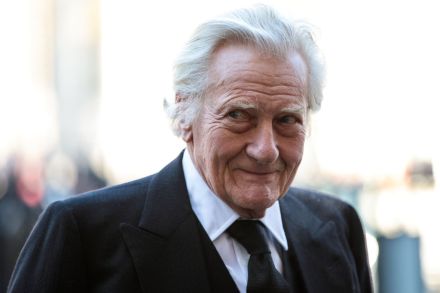
An MP for 35 years, Michael Heseltine served as Environment Secretary and then Defence Secretary in Margaret Thatcher’s government. Following his well-publicised resignation in 1986, he returned to government under John Major and was Deputy Prime Minister for the last two years of Major’s premiership. Once seen as a potential successor to Thatcher and Major, he has sat in the Lords since stepping down as an MP in 2001, and in recent years has been an outspoken critic of Brexit. Lord Heseltine sits down with James Heale to discuss his thoughts on the current Labour government, how to fix Britain’s broken economy and why devolution should go further. ‘Deeply depressed’

Give holiday home owners a break

If you have had your eye on a bungalow along the Devon coast, a cottage in the New Forest, or a tastefully painted terrace in one of the sea-facing villages in Norfolk, this could be your moment. Many holiday home owners are choosing to sell up to avoid a hike on council taxes. From next week, local authorities will be allowed to charge double the normal rate for second home owners. Average bills are set to rise from £2,280 to £4,560. This crackdown is likely to be popular. After all, who has sympathy with those who own two homes, when many young people are struggling to get on to the