Will Prescott

Will Prescott is a Senior Research Fellow at Bright Blue. He has a DPhil in history from the University of Oxford on the British Conservative Party and the role of the state between 1929 and 1940

The Tories should beware the fate of Lloyd George’s Liberals

From our UK edition

Reform leader Nigel Farage likes to claim that his latest political vehicle is on course to replace the 'old fuddy duddy' Conservative party as the dominant force on the centre-right. While the parallel is not exact, comparing today’s battle for the centre-right with the last major party realignment – when Labour replaced the Liberals as the dominant force on the centre-left after the first world war – suggests there are real danger signs for the Tories. When Herbert Henry Asquith replaced Henry Campbell-Bannerman as Liberal prime minister in April 1908, he inherited one of the largest parliamentary majorities in 20th century history. Yet by the time he finally handed over the reins in 1926, the once-great Liberal party was on its knees.
What Keir Starmer can learn from Ramsay MacDonald

From our UK edition

Since Labour’s triumphant return to power barely a year ago, the party in government has floundered amid a struggling economy, a lack of political vision, and an inability to pass difficult reforms. Unfortunately for Keir Starmer, the situation could yet deteriorate much further. Just look at the implosion of the Labour government in 1931. Like the Starmer government almost a century later, Labour won the 1929 election on a relatively weak share of the vote. Former prime minister Ramsay MacDonald won 287 seats and just 37.1 per cent of the vote. Last July, Keir Starmer won 33.7 per cent of the vote. Much like 2024, the 1929 election also occurred when the two-party system was, at least by 20th century standards, unusually weak.

Trump’s tariff plan has been tried before. It failed

From our UK edition

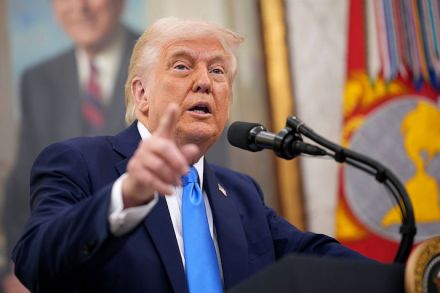
Donald Trump thinks 'tariff' is the 'most beautiful word in the dictionary'. Today is ‘Liberation Day’, and the US president is holding true to his campaign trail promise to impose tariffs on imports. Cars, steel and aluminium are expected to be hit with levies of up to 25 per cent. A 10 to 20 per cent universal tariff on all goods imported into the United States is also said to be on the cards. Trump isn't the first to think tariffs are a secret weapon. A century ago, the British Conservatives’ were obsessed by tariffs. Like Trump, they saw them as an ideal tool to promote industrial revival and lower taxes. Unfortunately, as Trump will likely discover, the results were disappointing.