Economy

  • AAPL

    213.43 (+0.29%)

  • BARC-LN

    1205.7 (-1.46%)

  • NKE

    94.05 (+0.39%)

  • CVX

    152.67 (-1.00%)

  • CRM

    230.27 (-2.34%)

  • INTC

    30.5 (-0.87%)

  • DIS

    100.16 (-0.67%)

  • DOW

    55.79 (-0.82%)

UBI will make us miserable

It’s hard to avoid the constant prophecies of doom about how AI is going to take our jobs – with some of these already being borne out. However, AI leaders such as Elon Musk have declared that the population will be supported by Universal Basic Income (UBI) instead, in which the government will financially support everyone through the huge revenues produced by AI. “Universal HIGH INCOME via checks issued by the Federal government is the best way to deal with unemployment caused by AI,” Musk posted on X earlier this year. Musk imagines that we wouldn’t be unemployed but rather liberated – UBI would allow us to live without the mundane tasks of everyday life, like making PowerPoint presentations, writing emails or finding synergies in our deliverables.

Spotlight

Featured economics news and data.

Cutting Britain’s giant welfare bill would be an act of kindness

Does having money really matter that much? There are those, usually with quite a bit of it, who want us to care less about materialism. But, unequivocally, money really does matter – not because of any status it supposedly brings, but for the freedom it buys: freedom to choose how we live and how we look after others. Considering this, it seems that the deep disillusionment with mainstream politicians in recent years stems from a protracted and ongoing period of stagnant living standards over which they have presided. But the truth is that the average person has not got poorer since the global financial crisis. They have got a little bit richer. Employment levels are still exceptionally high. And, both historically and internationally, we are a very rich country.

Should we fear Facebook’s cryptocurrency?

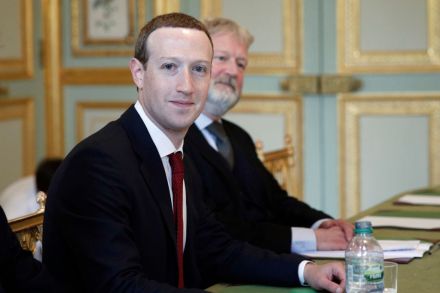
The cryptocurrency winter has turned to spring: having slumped from $20,000 in late 2017 to $3,200 a year later, bitcoin has lately risen like a rocket to $8,800. Though it doesn’t change my negative opinion, I admit that if I had bought a fistful of these wacky gaming chips last October when I gave the crypto concept a kicking at our Spectator conference on the subject, I’d be up almost 40 percent. Evidently, hints from the US Federal Reserve and the European Central Bank that further bouts of ultra-low interest rates and quantitative easing may be in the offing have spurred what the FT calls ‘a rally in riskier assets’. Crypto is the new gold for those who distrust central banks and seek stores of wealth that governments can’t reach.

cryptocurrency

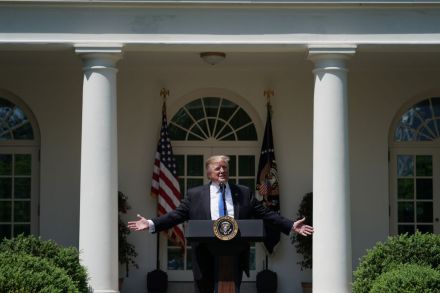
Donald Trump’s one-front trade war

At 12:01 a.m. on Monday, President Donald Trump went a long way toward defusing a potential war – not with Iran, but Canada and Mexico, where Trump revoked tariffs he had imposed in the name of national security. Why the sudden bout of tariff reduction? The president is focusing on a one-front trade war with China. The restrictions began as two fronts of the same war. Trump imposed 25 percent tariffs on steel and 10 percent tariffs on aluminum imported from China last March. Then he extended those tariffs to the EU, Canada, and Mexico on June 1. But the president seems to have concluded that the US can no more fight a two-front war in trade than on the battlefield.

Donald Trump one-front trade war

How I learned to stop worrying and love Trump’s trade war

Alarmist news reports and panicky stock sell-offs. A threat to impose tariffs on US goods in retaliation for President Trump’s threatened levies. You’d think that Beijing had just ruthlessly shut down a major engine of American growth. But the truth is that tariff fear-mongering reveals the gulf between America’s financial markets and its real economy that provides everyday goods and services. The Chinese economy has grown spectacularly since Beijing turned away from Maoism in the 1980s. It’s true that major American industries from aircraft to agriculture have profited handsomely from supplying Chinese demand. The offshoring model supercharged by China’s admission to the World Trade Organization (WTO) in 2002 has been especially lucrative.

donald trump trade war

Our real problem with China: Xi Jinping

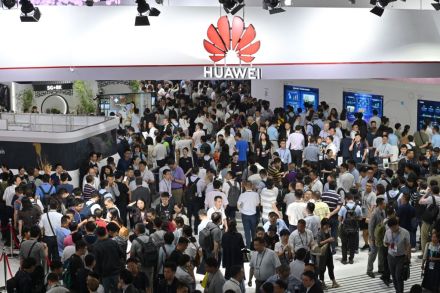
At the last minute the Chinese Communist Party chief Xi Jinping vetoed the trade deal with the United States, after his representatives had negotiated and agreed to it. Xi claimed that he will take the responsibility for ‘all possible consequences.’ This left President Trump no choice but to impose higher tariffs on some Chinese imports. This battle over trade marks only the early rounds of the US struggle with China. China’s economic success was achieved in large measure by taking advantage of the working people of both China and the US. It was made possible because the US allowed it to enter the world’s free trade system. Because China entered the West’s economic ecosystem a generation ago, it has flourished.

xi jinping

The future of world trade is in the balance

Ongoing trade talks between American and Chinese officials took an unexpected turn on Sunday: President Trump took to Twitter and announced a plan to impose tariffs on all Chinese imports by Friday. The tariff threat adds urgency to negotiations that will continue on Wednesday, when a Chinese delegation is due to arrive in Washington, DC. The move is a departure from last week when US Treasury Secretary Steven Mnuchin and Trade Representative Robert Lighthizer arrived in Beijing to initiate a fresh round of trade talks with China. Despite chronic trade tensions, both sides had sounded optimistic ahead of the meeting. State Councilor Wang Yi, China’s top diplomat, expressed hopes the two sides could ‘reach a mutually beneficial, win-win agreement’.

world trade

A booming economy makes Trump look wiser than his detractors

What delicious reading it makes going back over Paul Krugman’s missive in the New York Times on the morning after Donald Trump was elected in 2016. ‘Global recession with no end in sight...when are markets going to recover? A first pass answer is never...’ Those words should be carved into a façade somewhere in Wall Street and held up for ever after as an example of hubris of economic forecasters. In liberal circles nowadays there is always misery. The end of the world is always around the corner, where from economic calamity in the global capitalist system, climate change, rise of fascism, AI taking our jobs and creating mass unemployment, or whatever. But let’s get back to the real world for a moment.

donald trump booming economy

Will Donald Trump tackle the vampire squid?

Goldman Sachs isn’t just unpopular in the United States: their reputation black hole is expanding worldwide. In December 2018, Malaysia filed criminal charges against the investment giant over the 1MDB scandal, referred to as ‘the biggest financial scam in history’ — though Kuala Lumpur has indicated that it might be willing to drop the charges if Goldman pays $7.5 billion in reparations. After years of turning a blind eye to Goldman’s predatory behavior, hopefully 1MDB will push governments to take action against the firm memorably described as ‘a vampire squid’.

goldman sachs vampire squid

Is the Fed caving to the demands of the market?

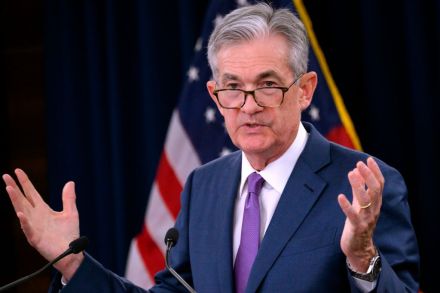
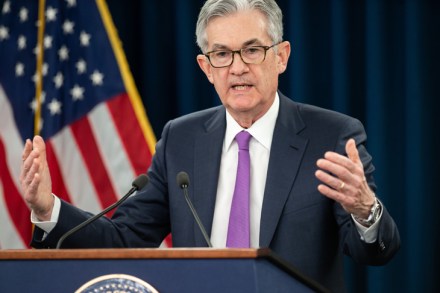
Has ‘Jay’ Powell gone wobbly, or does he know something we don’t? That was the question being asked after the US Federal Reserve, of which Powell is chairman, kept dollar interest rates on hold last week — rather than continuing to notch them upwards as it has been doing for two years — and hinted that the next move might actually be downwards. Trade tension with China, the impact of Donald Trump’s government shutdown and the risk of a no-deal Brexit were all cited as ‘cross-currents’ affecting the decision, but pundits led by Wall Street ‘bond king’ Jeffrey Gundlach declared the Fed to be ‘caving in’ to the demands of the stock market and the President.

fed jerome powell

The rise and rise of the daddy big bucks candidate

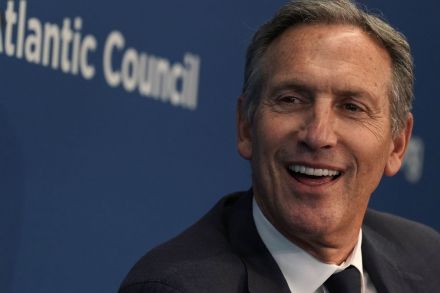
We live in a time of hatred of elites, yet all these billionaires keep running for president. Howard Schultz, the ex-Starbucks CEO, has declared he is considering a run as an independent because he, like many others, is fed up with the current president and politics in general. Funnily enough, that is why the current billionaire president ran three years. That, plus ego. ‘This president is not qualified to be the president,’ says Schultz. That’s also what Michael Bloomberg (net worth: $44 billion) says, and the whispers that he is about to announce his candidacy are stronger than usual in this pre-election cycle. Bloomberg calls Trump a ‘pretend CEO’, and his would-be voters thrill at the thought that he is considerably richer than the Donald.

howard schultz billionaire

Leading Brexiteers in DC to talk US-UK free trade agreement

David Davis, the former Brexit minister, and Owen Paterson, another pro-Brexit ex-minister, confirmed Friday morning that they’re meeting with Trump administration officials to discuss a US-UK free trade agreement. Theresa May, the stricken British prime minister, refuses to discuss a US-UK FTA until after Britain has withdrawn from the EU in March 2019, and after Britain and the EU have made a new trade deal. This week, May forced a draft of her withdrawal bill through her cabinet, but sparked resignations from her cabinet and open revolt from pro-Brexit Conservatives. ‘We’re clearly here to advocate for a US-UK free trade agreement,’ said Shanker Singham of the Institute for Economic Affairs, who serves as an outside adviser to Boris Johnson.

david davis owen paterson washington

Peter Navarro slams Wall Streeters as ‘foreign agents’ hindering the White House

‘Wall Street and Goldman Sachs…here’s the most important thing,’ said Peter Navarro, the White House trade policy pointman, at a Washington think tank Friday. ‘When these unpaid foreign agents engage in this kind of diplomacy – so-called diplomacy – all they do is weaken this president and his negotiating position.’ The factionalism within the White House itself and the in-fighting over Washington’s China policy was on full display. The president’s encouragement of rival camps battling it out has often spilled over into plain view during the first two years of this administration.

peter navarro

The failure of globalization and the return of inflation

Most of today’s political debates are at heart about globalization. Terrorists, tree huggers, and Trumpists have their cultural complaints, but the great wave of Western populism is fueled by economic anger. Owing to the large amount of money that has been printed, financial asset prices have risen. But median incomes have stagnated. There is much truth in the claim that metropolitan elites have prospered, while the unvisited hinterlands have lost out, and much danger in the myth that all stakeholders benefit equally. Has globalization failed? On its economic merits, globalization can stand tall — not through increasing everyone’s income, though it has done this in many emerging economies, but by reducing everyone’s costs.

globalization

Women don’t need big government’s help to climb the corporate ladder

Publicly-traded companies in California are now required to have a woman on their board of directors thanks to Gov. Jerry Brown, who signed a bill enacting the new mandate on in September. Although they intended to diversify corporate boardrooms, California legislators actually revealed that they believe adult women should be treated like helpless children. Ostensibly ‘feminist’ policies that give women an advantage based solely upon their gender will in fact undermine women’s equality. Women do not need hand-holding from the government to get ahead in their careers, and such legislation is counterproductive and patronising.

jerry brown women corporate ladder

No, Donald Trump’s climate policies aren’t going to ‘boil the planet’

‘The Trump administration knows the planet is going to boil. It doesn’t care,’ claims Canadian eco-activist Bill McKibben in a Guardian editorial. With enemies as unhinged as this, who needs friends? McKibben is basing his claim on a few paragraphs buried within a 500-page ‘Draft Environmental Impact Statement’ issued by the National Highway Traffic Administration (NHTSA) and subsequently bigged up by the Washington Post as conclusive proof that Trump is the ultimate Gaia-raping super villain. According to the report, on current projections the global mean temperature is going to rise by around 4 degrees Celsius (7 degrees Fahrenheit) by the end of the century.

donald trump’s climate change

Donald Trump’s US-Canada-Mexico trade deal is YUGE

As Kamala Harris presents evidence that Brett Kavanaugh habitually exposed himself to several nurses upon being born and then to other females for months, nay, years afterwards, Donald Trump just secured a new trilateral trade deal between the United States, Canada, and Mexico. This, friends, is yuge, yuge! The deal replaces, or amends, the 24-year-old North American Free Trade Agreement between the three countries. From the moment he announced his candidacy, way back in 2015, until the day before yesterday, President Trump has assailed the original Nafta as ‘the worst deal ever.’ The fact that US trade with Mexico has gone from a modest surplus in the early years of Nafta to a $68 billion deficit now highlights his concern.

donald trump trade
occupy wall street

How the Occupy movement saved Wall Street

Amid the slew of articles commemorating the 10th anniversary of the financial crisis there has been a curious silence about the role played by the Occupy movement. And Occupy did play a key role in developments, though not at all in the way its leaders intended. For a few months in 2011-12, Occupy had the attention of the world.

Seeing red: where did all the deficit-cutting Republicans go?

An acquaintance recently told me that I have become a ‘Red Tory.’ The description probably fits. Indeed, I rather like it. As I get older, when it comes to matters related to social justice I find myself reaching conclusions of the sort commonly heard from Senators Bernie Sanders of Vermont or Elizabeth Warren from Massachusetts. I’ve long since outgrown any social Darwinian inclinations that I might have entertained as a young man. Use public resources to help the downtrodden and distressed and to ensure equal opportunity for all? You bet: I’m as Left as they come. Similarly, on issues related to war and peace, I’ve become a thoroughgoing dove. My idea of ‘supporting the troops’ is to keep them out of harm’s way, except when genuinely vital interests are at stake.

kevin hassett graphs deficit-cutting

How China sees the trade war

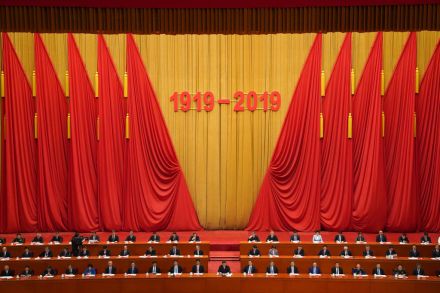
What started out as one of those trade wars that Donald Trump believes are ‘easy to win’ has turned into a far broader confrontation between the US and China which is set to expand and deepen further. In his no-nonsense manner, the President has brought the era of ‘constructive engagement’ between the world’s two largest economies to a shuddering halt. Gone are the days when successive administrations thought economic growth would make the Chinese and their leaders ‘more like us’. Instead, the last major country ruled by a Communist Party is identified as a strategic competitor whose further economic political and military expansion has to be checked in America’s national interest.

china xi jinping

The Trump economy, like Obama’s, is a big, fat, ugly bubble

If the Democrats want to surf a real blue wave in the midterm elections they will have to stop conceding the economy to President Trump. Look at a current snapshot and consider: job numbers are great, minority unemployment is at record lows, the stock market is happy. But beneath this cheery – temporary – façade, the same problems that caused the 2008 financial crash are still lurking. In fact, the contributing factors of the last recession have, in many respects, worsened. Ultra-high-risk financial behaviour, increasing deregulation and rosy political rhetoric telling us all to forget about the problems of the past: these are a few hallmarks of the current situation that also echo loudly with the lead-up to the 2008 collapse.

donald trump economy bubble

The case for a conservative labour movement

Over the summer, the Supreme Court ruled that public sector unions cannot require non-members to pay the fees that fund collective bargaining efforts, in American Federation of State, County and Municipal Employees v. Janus. While publicly defiant, the Los Angeles Times reported that AFSCME privately estimated that it could lose half of its members under the ruling. Public sector unions like AFSCME and the Service Employees International Union were among the last important labour organisations in the country and the Janus ruling left them reeling. In Harper’s, Garret Keizer writes that ‘American workers may soon be engaged in a virtual Armageddon with capital’.

conservative labour movement