Paddy Ryan

Would Britain really be first in line for a US trade deal?

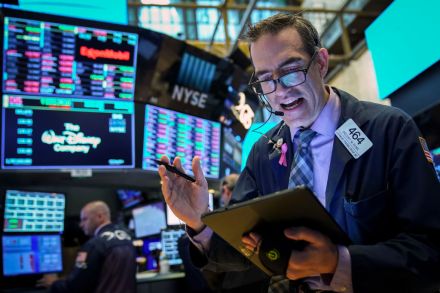
The animosity between the Trump administration and Europe has not yet damaged military relations, but the same can't be said for economic ties. Negotiations for an EU-US free trade agreement, the Transatlantic Trade and Investment Partnership (‘economic NATO,’ as the organization’s former secretary general, Anders Fogh Rasmussen, had called it), have stalled, perhaps permanently. Negotiations are at ‘a stalemate,’ said EU trade commissioner Cecilia Malmström. The Council went a step further, declaring the mandate for the talks to be ‘obsolete and no longer relevant.’ TTIP’s demise, and the frustration it has caused the Americans, might augur well for another possible transatlantic trade deal.
trade deal

Mitt Romney called. He wants his foreign policy back

‘Eight years ago, I argued that Russia was our number one geopolitical adversary,’ Mitt Romney said this week in his maiden Senate speech. And who could forget Barack Obama’s burn in the televised presidential debate of 2011? ‘The 1980s are now calling to ask for their foreign policy back,’ Obama said. Four years later, with the US and Russia at loggerheads and Russian ‘collusion’ a theme of the 2016 election, Romney was vindicated. But it was Obama who was the outgoing president.

mitt romney

Russia and China are watching Iran, and waiting

As US-Iran tensions rise, America’s sway over its allies is falling. Last week, Major General Christopher Ghika, the British officer second in command of anti ISIS forces in Iraq and Syria, publicly contradicted the rationale behind American troop build-ups in the region. US Central Command was quick to rebuff Ghika, but Britain’s Ministry of Defence supported him. Other NATO allies, too, are balking at confrontation with Iran. Spain has withdrawn a frigate from the American-led, Gulf-bound carrier group. Federica Mogherini, the EU’s High Representative for Foreign Affairs, has called for ‘maximum restraint’. If there is to be a third Gulf War, the US might find itself with fewer friends than in the last.

iran

The future of world trade is in the balance

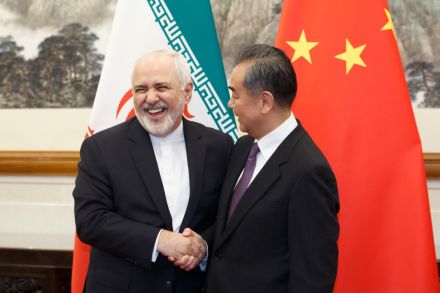
Ongoing trade talks between American and Chinese officials took an unexpected turn on Sunday: President Trump took to Twitter and announced a plan to impose tariffs on all Chinese imports by Friday. The tariff threat adds urgency to negotiations that will continue on Wednesday, when a Chinese delegation is due to arrive in Washington, DC. The move is a departure from last week when US Treasury Secretary Steven Mnuchin and Trade Representative Robert Lighthizer arrived in Beijing to initiate a fresh round of trade talks with China. Despite chronic trade tensions, both sides had sounded optimistic ahead of the meeting. State Councilor Wang Yi, China’s top diplomat, expressed hopes the two sides could ‘reach a mutually beneficial, win-win agreement’.

world trade

The US and Yemen: stopping Iran or appeasing Saudi Arabia?

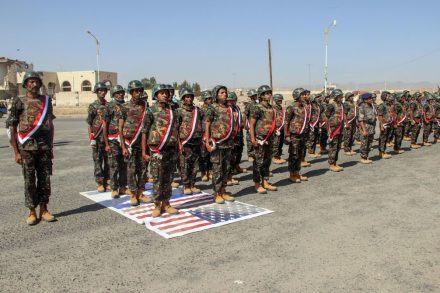
On Monday, Sen. Bernie Sanders circulated an open letter, calling on Congress to override last week’s presidential veto of a bill demanding a halt to US participation in Yemen’s civil war. The bipartisan bill was the first time Congress invoked the 1973 War Powers Resolution to check presidential foreign policy. Amid the president’s myriad other current problems, a potential veto override could be a chance to rub salt in the wounds. The issue of Yemen, then, will linger. Was Yemen worth the veto? The war, occurring the most secluded and oil-poor corner of the Arabian Peninsula, seems, to many, tangential to American interests.

yemen saudi arabia iran

We should be watching Chinese meddling, not Russian

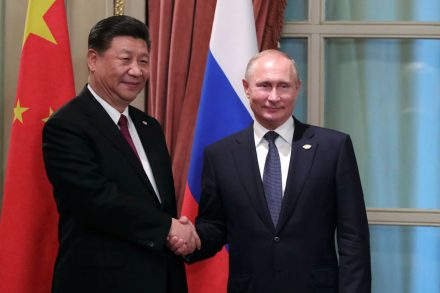
‘Russian influence’ is everywhere these days, especially if you’re a liberal. From the White House to Brexit, the Donbass to the Baltics, the specter of Russian expansionism is inescapable in the news. But have Western media identified the wrong zeitgeist? For a malevolent power, Russia is all too conspicuous. Real mastery of subterfuge entails a degree of subtlety. ‘Russia is very aggressive...up-in-your face,’ says Donald N. Jensen, of the Center for European Policy Analysis. ‘China seems to be a bit more discreet...even when it fails, you don’t really know it.’ Chinese meddling may go unnoticed in Europe and North America, but it is more conspicuous in Australia and New Zealand.

chinese meddling

How I learned to start worrying and fear the bomb

‘This is not the Cold War redux; it is even worse than the Cold War.’ That’s how Nicolas Roche, of the French Ministry of Foreign Affairs, described the current climate around nuclear weapons. Roche spoke at the Carnegie International Nuclear Policy Conference, a veritable Woodstock for the nuclear policy community (organizers insisted on referring to the shindig as ‘#NUKEFEST’), which convened for two days in Washington, DC. Despite the party-like atmosphere at ‘Nuke Fest’, despondency pervaded the gathering. North Korea received substantial attention at the conference, while Iran and South Asia were relatively neglected. The dominant topic of conversation, and predominant reason for despair, was the US-Russia relationship.

nuke fest

It’s not just New York having trouble with Amazon

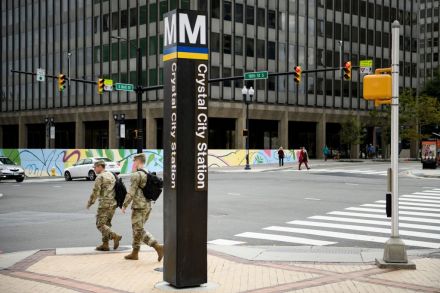
‘Pay-to-play is not OK; we want a public hearing today.’ That was the chant heard at HQ2-Apalooza, a recent event held by Amazon in Arlington, Va., the Washington, DC suburb that will host the Seattle-based internet giant’s second headquarters. The scene might have conjured some unpleasant and recent memories for Amazon. The firm’s search for a place to build its ‘HQ2’, a year-long, highly publicized sweepstakes that received entries from over 200 localities across North America, concluded with the decision to split the headquarters between New York and Arlington, only to see public opposition force Amazon to scuttle its New York plans. Now, the backlash has spread to Virginia.

crystal city amazon hq2